Strawberry Varieties
Types and Varieties of Strawberries
Strawberries are among the most productive and profitable small-space fruit crops, but successful harvests depend on selecting the right variety for your growing conditions. Climate, daylight length, temperature patterns, and planting systems all influence how strawberries flower, set fruit, and produce throughout the season.
This guide compares the three primary strawberry types—June-bearing, everbearing, and day-neutral varieties—explaining how each performs in gardens, container systems, high tunnels, and commercial plantings. By understanding their growth habits, fruiting cycles, and yield potential, growers can select cultivars that match their season length and production goals.
Start here: Berry Varieties Hub • Plan outputs: Plant Yield • Garden Yield • Farm Yield.
Strawberry varieties are commonly grouped by their fruiting pattern. June-bearing strawberries produce one large harvest in late spring or early summer, everbearing strawberries produce two main harvests (typically early summer and early fall), and day-neutral strawberries produce fruit continuously throughout the growing season when temperatures remain moderate. Choosing the right type helps growers match harvest timing with climate conditions and desired yield.
• A well-managed strawberry plant can produce ½–1 pound of berries per season, depending on variety and growing conditions.
• Day-neutral strawberries are widely used in high tunnels and container systems because they can produce fruit continuously when temperatures stay between 60–80°F.
• Strawberries are technically not true berries—the red flesh is an enlarged flower base, and the tiny seeds on the surface are actually individual fruits called achenes.
Choose a production type first, then refine with climate fit, disease pressure, and your harvest goals.
The three primary types of strawberry plants differ mainly in harvest timing and productivity. This table helps gardeners quickly decide which type best fits their climate and harvest goals.
| Type | Harvest pattern | Best for | Notes |
|---|---|---|---|
| June-bearing | Single concentrated crop | Processing, freezing, bulk harvest | Great for one big pick; strong spring push. |
| Everbearing | 2–3 flushes | Home gardens; extended fresh harvest | Trade peak yield for a longer season. |
| Day-neutral | Continuous in mild temps | Containers; tunnels; shoulder-season markets | Heat can reduce summer set; excels in protected systems. |
Quick take: Choose June-bearing for volume, everbearing for a longer fresh harvest, and day-neutral for steady production in mild or protected growing conditions.
Climate conditions often determine strawberry success more than the variety name alone. Temperature patterns, winter chill hours, summer heat, and humidity all influence flowering, fruit set, and overall yield. Choosing varieties that match your regional climate improves plant vigor, fruit quality, and harvest consistency.
The following recommendations highlight strawberry varieties that perform well in different growing conditions—from cool northern climates to hot summer regions and container systems.
Hot climates can stress traditional June-bearing strawberries. In warm regions, growers typically favor heat-tolerant everbearing or day-neutral varieties that can continue flowering when temperatures remain high.
Container gardens, strawberry plant supports, and raised systems benefit from compact plants that produce fruit over an extended season. Day-neutral strawberries are typically the best option because they continue producing berries throughout the growing season when temperatures are moderate.
In colder regions with strong winter dormancy, traditional June-bearing strawberries often perform best because they rely on winter chill hours to trigger heavy spring flowering. Hardy cultivars with strong cold tolerance provide reliable yields in northern climates.
Matching strawberry varieties to your regional climate improves plant health, fruit quality, and harvest reliability. Many growers also combine several varieties—early, mid-season, and day-neutral—to extend the harvest window across the entire growing season.
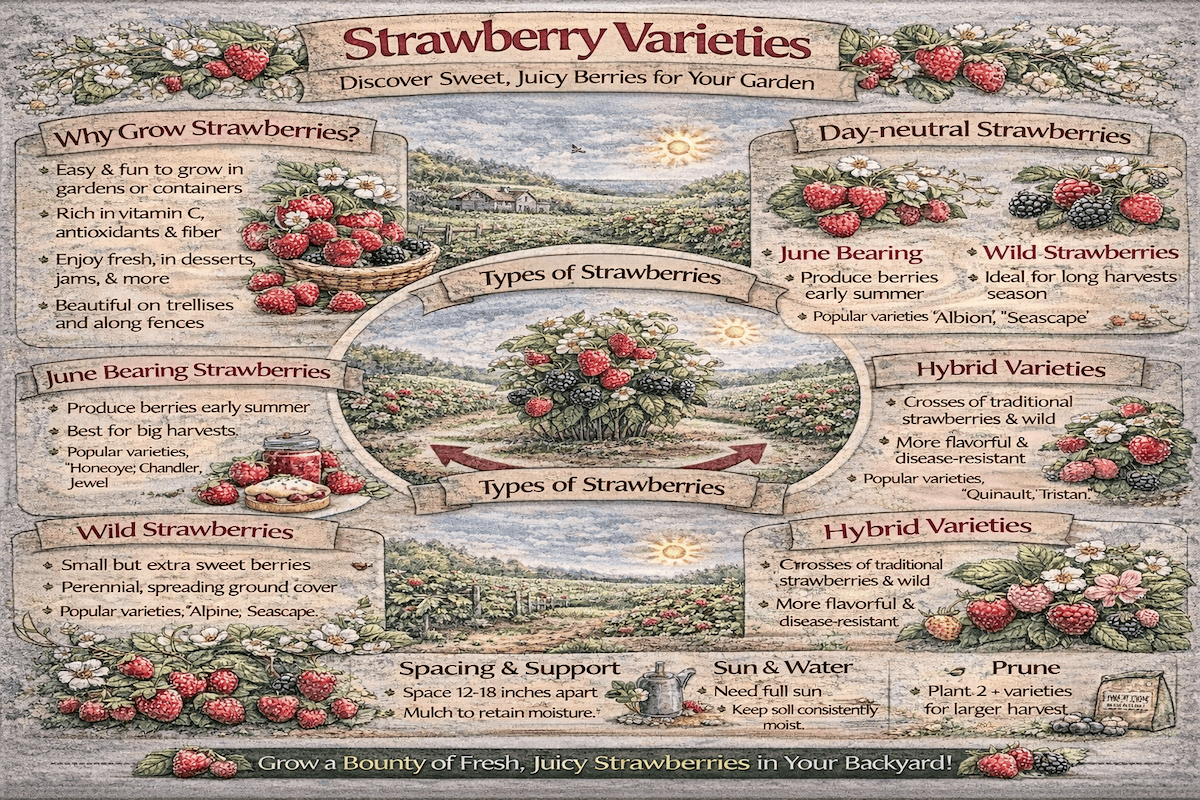
The infographic below summarizes the three main strawberry plant types, harvest timing, and growing characteristics.
Feel free to share this strawberry varieties infographic on your website or blog. Please include a link back to this page as the source.
Climate fit usually determines success more than “best variety” lists. In hot-summer regions, prioritize heat tolerance, mulch, and irrigation control. In mild-winter zones, choose low-chill selections or day-neutral systems under protection.
Strawberries are ideal for containers and vertical towers when you control moisture and nutrition. Day-neutral cultivars are commonly preferred for extended harvest.
ROI depends on plant density, season length, market price, and labor. Start small, record yield per plant, then scale confidently. Use these tools to model outputs:
Conservation agriculture often improves margins by reducing inputs while stabilizing yields. Use these tools to estimate production, spacing, and efficiency gains.
Estimate yield per crop or planting unit.
Plan rows, spacing and total harvest.
Tip:Open pruning and mildew-resistant varieties improve fruit quality and usable yield.
June-bearing strawberries are the most widely grown type of strawberry for both home gardens and commercial production. These plants produce one concentrated harvest each year, typically over a 2–3 week period in late spring or early summer. Because of their strong productivity and large berry size, June-bearing varieties are often favored by growers who want a large single harvest for fresh eating, freezing, or making jams and preserves.
June-bearing strawberries are commonly grouped into early-season, mid-season, and late-season cultivars depending on when their berries ripen. By planting several varieties from different harvest windows, gardeners can extend the strawberry harvest over several weeks while maintaining high yields. These varieties also perform well in diverse growing systems including raised beds, traditional row plantings, and regenerative garden layouts inspired by sustainable agriculture principles.
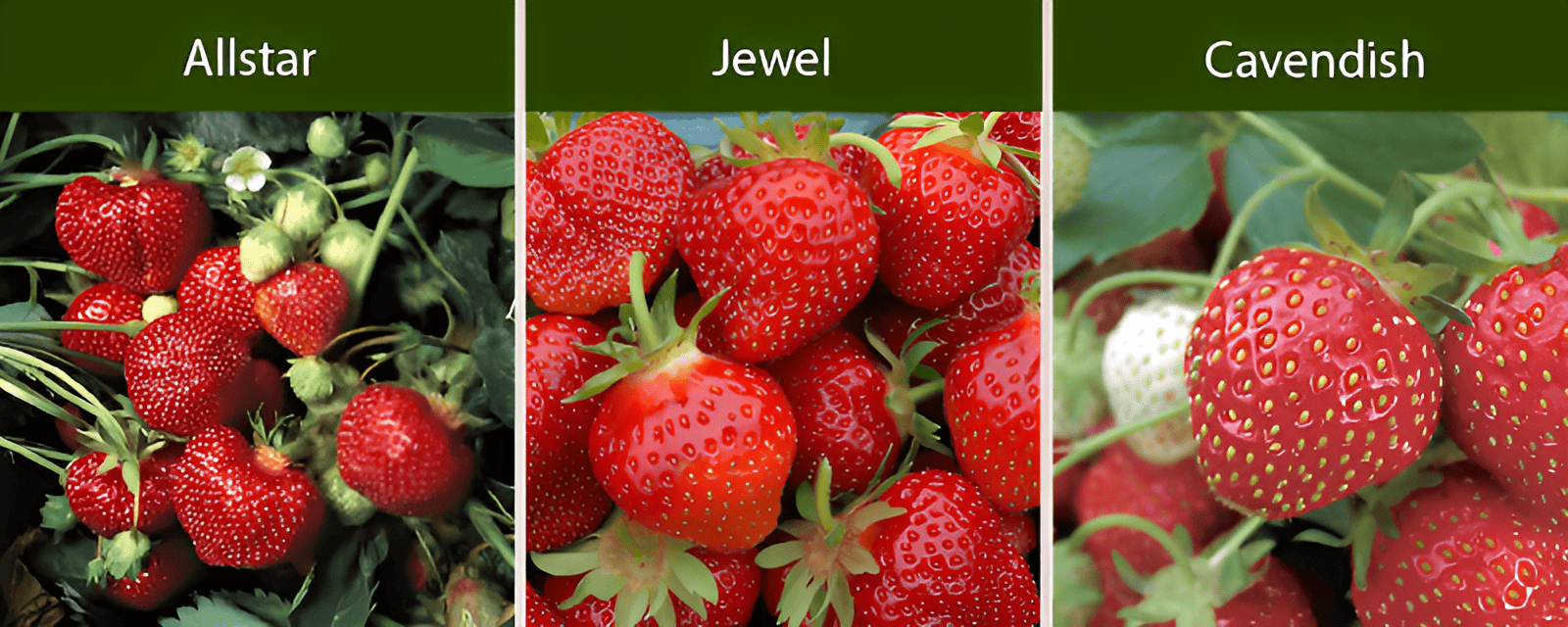
Allstar: A reliable mid-season variety known for producing large, sweet berries with excellent flavor. Allstar plants are vigorous and show strong resistance to several common strawberry diseases.
Chandler: One of the most popular commercial varieties, Chandler produces large, bright red berries with exceptional flavor. It performs well for fresh eating, freezing, and desserts.
Earliglow: A classic early-season strawberry prized for its rich, sweet flavor. Earliglow is often one of the first varieties to produce berries each spring.
Honeoye: A productive early variety known for its vigorous growth and adaptability to many soil types. Honeoye berries are sweet and versatile for fresh eating or freezing.
Surecrop: A hardy and dependable variety valued for its strong disease resistance and consistent annual harvests.
Sparkle: A late-season variety famous for its outstanding flavor. Sparkle berries are particularly popular for jams, preserves, and freezing.
Jewel: A high-quality mid-season strawberry producing large, firm berries that are excellent for fresh eating, freezing, or processing.
Cabot: Known for producing exceptionally large berries and impressive yields, Cabot is a favorite among home gardeners and small-scale growers.
Northeaster: A vigorous and productive variety producing very large berries with excellent flavor and strong disease resistance.
Cavendish: A dependable variety known for its strong productivity, sweet flavor, and good resistance to common strawberry diseases.
Day-neutral strawberries are capable of producing fruit continuously throughout the growing season when temperatures are moderate. Unlike June-bearing varieties that produce one large spring harvest, day-neutral strawberries can generate multiple flushes of berries from late spring through early fall. This extended harvest period makes them especially popular for home gardens, container growing, and small-scale market gardens where steady production is desirable.
Because they flower and fruit regardless of day length, these varieties are well suited to intensive growing systems such as raised beds, high tunnels, and container plantings. When combined with pollinator-friendly plantings and diverse cropping systems described in the biodiversity hub, day-neutral strawberries can contribute to a longer harvest window while supporting healthy garden ecosystems.
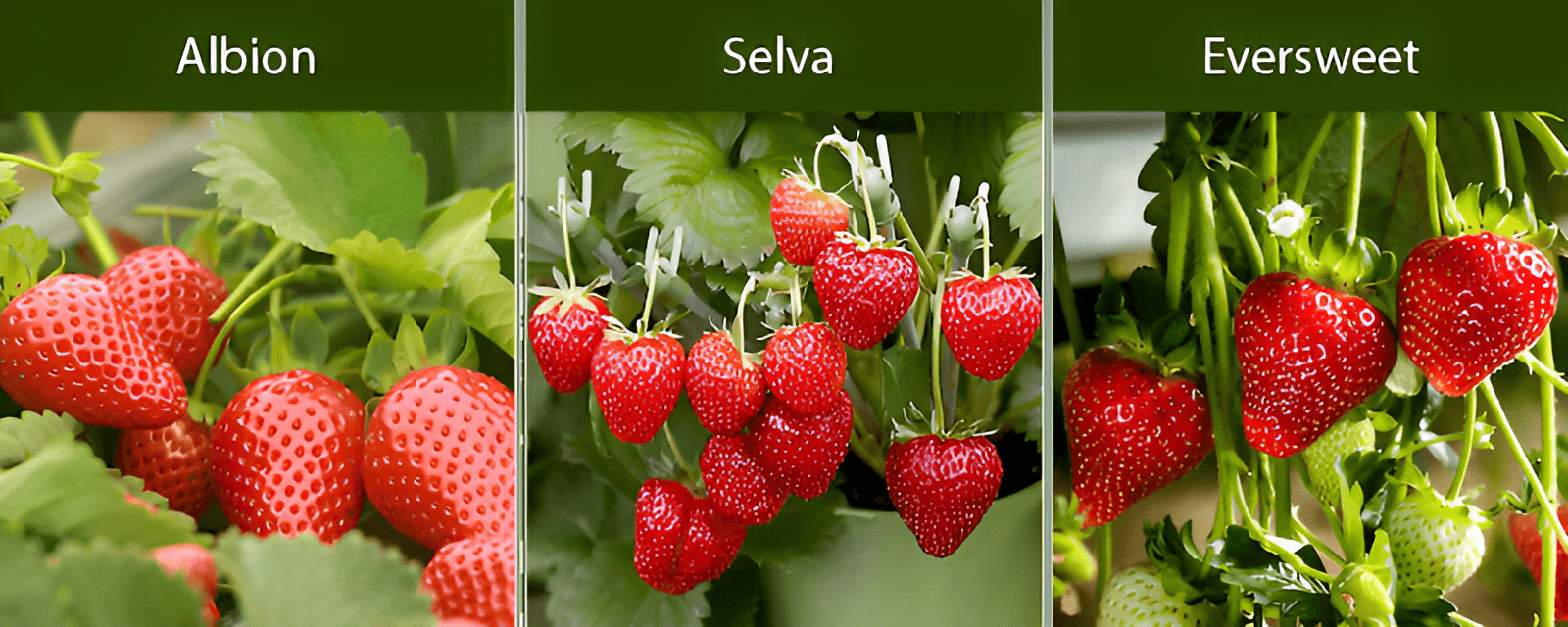
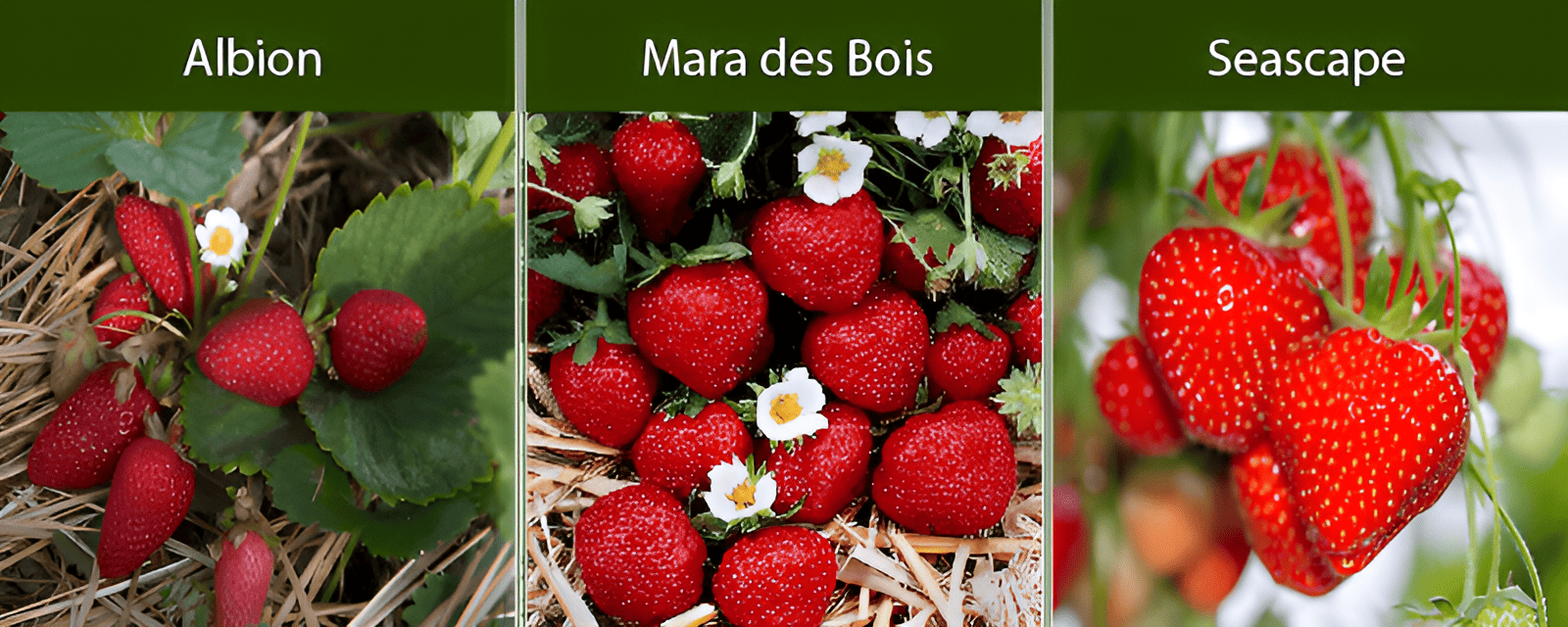
Albion: A widely grown day-neutral variety producing large, firm berries with excellent sweetness. Albion plants are vigorous, disease-resistant, and known for their long harvest season.
Evie 2: A productive variety that produces large, sweet berries and performs well in cooler climates with consistent yields throughout the season.
Seascape: Known for its large, flavorful berries and strong adaptability, Seascape performs well in many climates and is particularly suited to container gardening.
Monterey: A modern day-neutral cultivar that produces large, well-flavored berries over an extended harvest season. Monterey plants are vigorous and highly productive.
San Andreas: Similar to Albion but often with slightly earlier peak production, San Andreas produces large berries with excellent firmness and flavor.
Portola: Known for exceptional productivity, Portola produces large, bright orange-red berries and is widely grown in commercial berry production systems.
Mara des Bois: A gourmet French variety producing small to medium berries with a distinctive aroma and flavor reminiscent of wild woodland strawberries.
Aromas: A high-yielding cultivar that produces large, firm berries with very good flavor, suitable for fresh markets and home gardens.
Diamante: Known for large, firm berries and strong productivity, Diamante adapts well to a variety of soil types and growing conditions.
Wild and species strawberries are typically smaller than modern garden strawberries but are often prized for their intense aroma, sweetness, and complex flavor. These strawberries grow naturally in forests, meadows, mountains, and coastal ecosystems around the world. Many cultivated strawberry varieties were originally developed through hybridization of these wild species, which is why they remain important for breeding, genetic diversity, and long-term crop resilience.
Wild strawberries also play an important role in sustainable garden ecosystems. Their spreading growth habit can help protect soil, support pollinators, and contribute to healthy planting systems when combined with practices such as improved soil fertility management and regenerative planting techniques described in conservation agriculture. Although the fruits are usually smaller than commercial varieties, they are often exceptionally flavorful and well adapted to diverse climates.
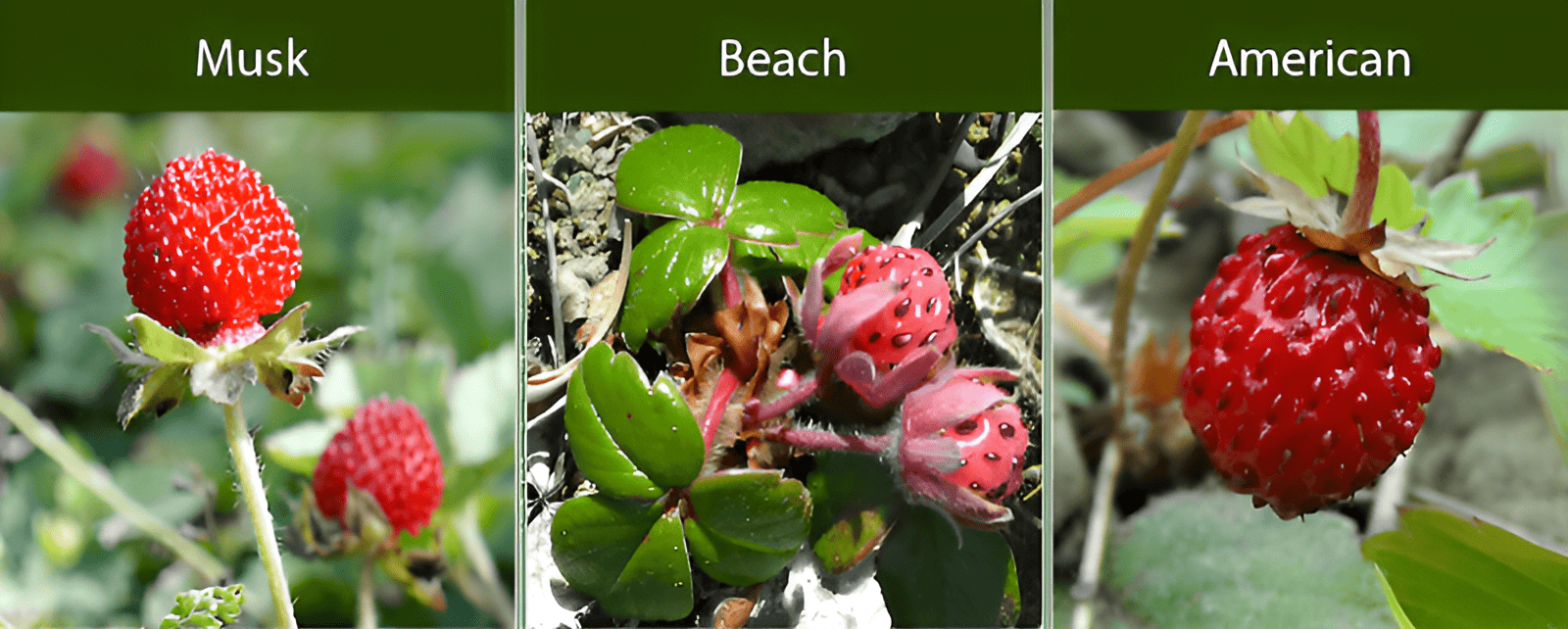
Fragaria vesca (Alpine or Woodland Strawberry): One of the best-known wild strawberry species, producing small but highly aromatic berries with exceptional sweetness. Alpine strawberries are often grown in gardens and containers because they fruit repeatedly and have an intense, wild strawberry flavor.
Fragaria virginiana (Wild American Strawberry): Native to North America, this species produces small, sweet berries and is one of the original parent plants of modern cultivated strawberries. It is hardy and well adapted to colder climates, making it suitable for northern gardens including regions such as Alaska.
Fragaria chiloensis (Beach Strawberry): Native to coastal regions of North and South America, this species spreads along sandy shorelines and produces small but flavorful berries. It was one of the key species used in developing modern cultivated strawberries.
Fragaria nubicola (Himalayan Strawberry): Found in mountainous regions of the Himalayas, this species produces small, tart berries and thrives in cool, high-elevation environments.
Fragaria moschata (Musk Strawberry): A traditional European strawberry known for its distinctive musky aroma and rich flavor. Musk strawberries were widely grown in Europe before modern hybrids became dominant.
Fragaria × ananassa (Garden Strawberry): The modern cultivated strawberry is actually a hybrid developed from crosses between Fragaria virginiana and Fragaria chiloensis. Nearly all commercial strawberry varieties grown today descend from this hybrid.
Fragaria iinumae (Japanese Wild Strawberry): Native to Japan and eastern Russia, this species is adapted to cooler climates and contributes genetic diversity to strawberry breeding programs.
Fragaria nilgerrensis (Indian Wild Strawberry): Native to South and Southeast Asia, this species produces small fruits and is valued primarily for its role in maintaining strawberry genetic diversity.
Modern strawberry breeding has produced numerous hybrid varieties that combine desirable traits such as improved disease resistance, stronger yields, enhanced flavor, and adaptability to different climates. Many of these hybrids were developed by crossing traditional garden strawberries with other species to improve fruit quality, plant vigor, and harvest consistency.
Hybrid strawberries are widely used in both commercial farms and home gardens because they offer dependable productivity and excellent fruit quality. Many also perform well in diverse growing systems and benefit from strong pollinator activity, making them a good companion crop in gardens designed to support pollinators and beneficial insects. Healthy pollinator populations—especially bees—play an important role in strawberry fruit development, as explained in the guide To Bee or Not to Bee.
Mara des Bois: A gourmet French hybrid known for producing small to medium berries with a rich aroma and a flavor reminiscent of wild woodland strawberries.
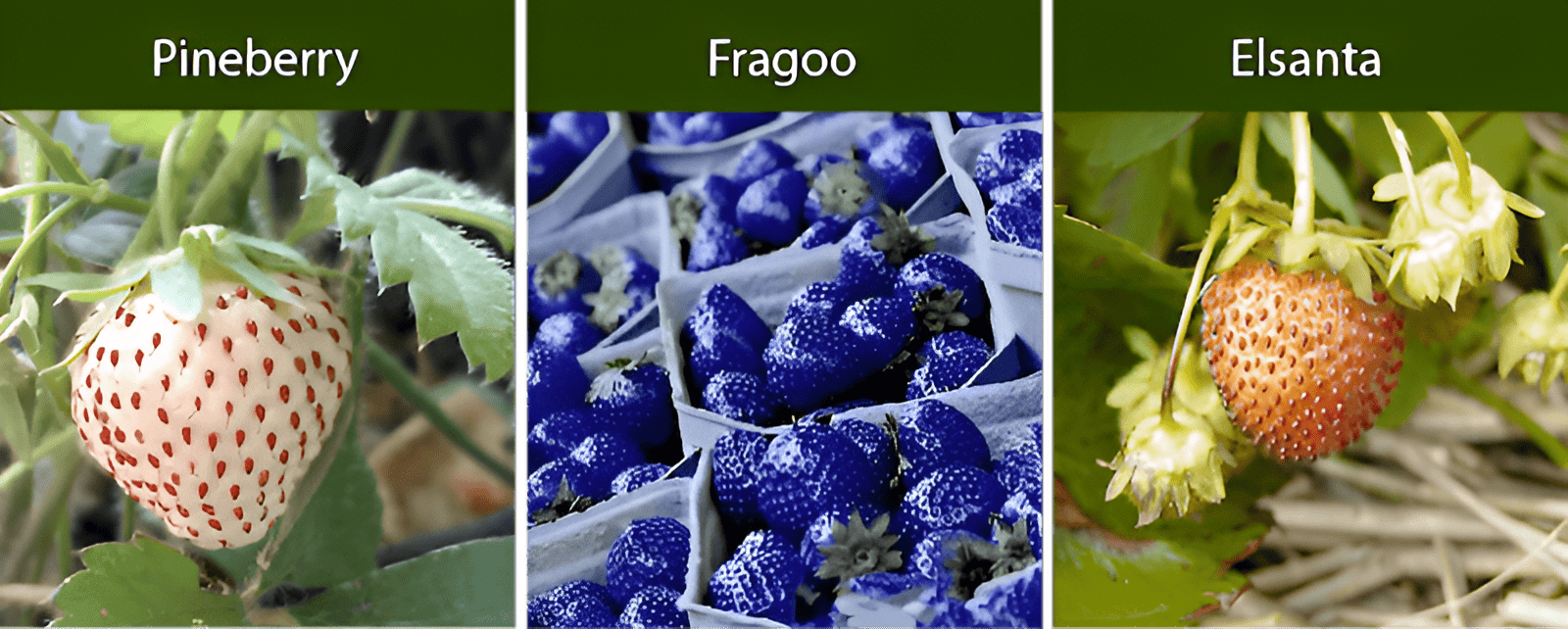
Pineberry: A unique hybrid strawberry with white to pale pink fruit and bright red seeds. Pineberries have a distinctive flavor often described as a blend of strawberry and pineapple.
Sonata: A productive European hybrid variety valued for its balanced sweetness, disease resistance, and consistent yields. Sonata performs well in many temperate climates and is widely grown in home gardens and commercial plantings.
Elsanta: One of the most widely cultivated hybrid strawberries in Europe, Elsanta produces firm, bright red berries with excellent flavor and good shelf life.
Fragoo Pink or Fragoo Red: These ornamental hybrid strawberries are notable for their colorful pink or red flowers, making them popular in decorative gardens as well as edible landscapes.
Monterey: A modern day-neutral hybrid that produces large, well-flavored berries over an extended harvest season. Monterey plants are vigorous and continue fruiting even when day length changes.
Flavorfest: This variety, developed by the USDA Agricultural Research Service , is known for its high yield, disease resistance, and excellent flavor.
San Andreas: This variety is similar to Albion but often has a slightly earlier peak production period. It is known for its high productivity and large, sweet berries.
Diamante: Known for its large, firm, flavorful berries, this hybrid variety does well in a variety of soil types.
Selva: This everbearing hybrid is known for its disease resistance and large fruits that are typically very sweet and flavorful.
Turn your 1 acre into a high-yield, profitable farm.
Crop Circle Farms specializes in designing and building fully engineered, low-impact farm systems that use 90% less water, 85% less fertilizer, and deliver two to three times the yield of traditional farming.
Whether you have a vacant lot, an empty field, a resort, school, island community, or small family farm, we’ll build it from the ground up for you. Our team handles everything from farm layout and installation to irrigation, root systems, training, and first planting.
Contact Us to explore a custom Crop Circle Farm design for your property.
Help us expand our mission to revolutionize agriculture globally. We are seeking partners to implement Crop Circle Farms to feed people in need. Together, we can build scalable food production systems that save water, reduce costs, and feed thousands of people. Contact Growing To Give
Use this quick guide to compare harvest timing, best-use cases, and management tradeoffs so you can match the right strawberry type to your garden, tunnel, or market plan.
| Type | Harvest pattern | Best for | Notes |
|---|---|---|---|
| June-bearing | Single concentrated crop | Processing, freezing, bulk harvest | Best when you want one heavy seasonal pick and strong spring production. |
| Everbearing | 2–3 flushes | Home gardens; extended fresh harvest | Produces over a longer window, though usually with less peak volume than June-bearing types. |
| Day-neutral | Continuous in mild temperatures | Containers; tunnels; shoulder-season markets | Performs especially well in protected systems; summer heat can reduce fruit set. |
Quick take: Choose June-bearing for volume, everbearing for a longer home harvest, and day-neutral for steady production in mild or protected growing conditions.
June-bearing strawberries like Allstar, Chandler, Honeoye, and Jewel produce one big crop over a 2–3 week window in late spring or early summer, making them ideal for jam, freezing, and “strawberry blitz” harvests. Everbearing strawberries such as Albion, Ozark Beauty, Quinault, and Fort Laramie typically give two to three main harvests spread from spring through fall. Day-neutral strawberries like Seascape, Monterey, Evie 2, San Andreas, Portola, and gourmet types such as Mara des Bois can flower and fruit continuously through the growing season whenever temperatures are suitable.
For an extended harvest, focus on everbearing and day-neutral strawberries. Everbearing types like Albion, Eversweet, Ozark Beauty, Quinault, and Fort Laramie give repeat flushes from spring to fall when they are fed regularly. Day-neutral cultivars such as Seascape, Evie 2, Monterey, San Andreas, Portola, Aromas, and Diamante keep setting flowers and fruit all season, especially in mild climates with steady moisture and nutrition.
In warmer or hot-summer areas, heat-tolerant everbearing and day-neutral varieties usually perform better than traditional June-bearing types. Eversweet is specifically noted for handling heat well, while Albion, Seascape, Monterey, San Andreas, and Portola are good choices where summers are long. Provide afternoon shade, mulch to cool the roots, and consistent drip irrigation to maintain flower set and fruit quality.
If you want one large, concentrated harvest for freezing and preserves, plant June-bearing strawberries. Reliable workhorses include Allstar, Chandler, Earliglow, Honeoye, Surecrop, Sparkle, Jewel, Cabot, Northeaster, and Cavendish. These cultivars are grouped into early, mid-, and late-season types, so you can combine a few to stretch the harvest window in spring while still enjoying big flushes of fruit.
Wild strawberries are naturally occurring species that typically produce small fruits with intense flavor. Examples include Fragaria vesca (Alpine or woodland strawberry), Fragaria virginiana (Wild American strawberry), Fragaria chiloensis (Beach strawberry), Fragaria moschata (Musk strawberry), and regional species such as Fragaria nubicola, F. iinumae, and F. nilgerrensis. Compared to modern hybrids, wild types usually have smaller berries, more complex flavor, and strong regional adaptation, making them ideal for gourmet gardens and naturalized plantings.
Hybrid strawberries are cultivars bred for specific traits such as flavor, firmness, disease resistance, climate fit, or unusual appearance. Popular hybrids include Mara des Bois (wild-strawberry aroma), Pineberry (white fruit with pineapple-like flavor), Sonata, Elsanta, Flavorfest, Monterey, San Andreas, Diamante, and Selva. Many of these hybrids combine heavy yields with firm, attractive berries that ship and store well while still delivering good flavor for fresh eating and desserts.
Day-neutral and everbearing strawberries that stay relatively compact and fruit continuously are best for containers and vertical growing. Varieties such as Seascape, Albion, Evie 2, San Andreas, Portola, Aromas, Mara des Bois, and Diamante are good candidates for towers, rails, and hanging baskets. In tight spaces, pair them with drip irrigation and a high-quality potting mix; for a full berry patch effect on a small footprint, integrate them into Crop Circle Garden rings or raised-bed modules.
Strawberries prefer well-drained, organic-rich soil or high-quality soilless media with a slightly acidic pH around 5.8–6.5. Raised beds and mounded rows help keep crowns from sitting in cold, wet soil and reduce root and crown rots. Work in compost before planting, avoid fresh manures, and consider crop rotation with cover crops to maintain soil structure and fertility between plantings.
Many June-bearing strawberries rely on a certain number of chill hours to synchronize flowering and yield a strong spring crop, so choosing the right chill requirement for your climate is essential. In mild-winter regions, low-chill or day-neutral types like Seascape, Albion, Monterey, and San Andreas are often better choices. Look for cultivars with resistance or tolerance to common problems such as Verticillium wilt, leaf spots, powdery mildew, and anthracnose, especially if you’re planting in soils that have grown strawberries, tomatoes, potatoes, or other solanaceous crops recently.
For in-ground beds, use raised rows or matted-row systems for June-bearing strawberries and tighter, drip-irrigated blocks for everbearing and day-neutral types. In a Crop Circle layout, plant strawberries on inner rings for quick harvests and fast visual checks on irrigation, and interplant insectary flowers to attract pollinators and beneficial insects. In containers and towers, choose compact, day-neutral varieties, plant generously, and combine mulch or reflective films to keep crowns cool and fruits clean.