Crop Smart Irrigation
Optimizing Water Use in Modern Agriculture
Crop smart irrigation represents one of the most important advancements in modern agriculture. As water scarcity increases and climate variability places greater pressure on food production systems, farmers are shifting from fixed irrigation schedules to intelligent, data-driven water management.
Rather than watering crops based on tradition or calendar timing, smart irrigation systems apply water precisely when and where plants need it. By combining soil sensors, weather data, satellite imagery, and automation technologies, crop smart irrigation improves yields while dramatically reducing water waste.
In many regions, smarter irrigation is no longer simply an efficiency upgrade — it is becoming essential for sustainable farming.
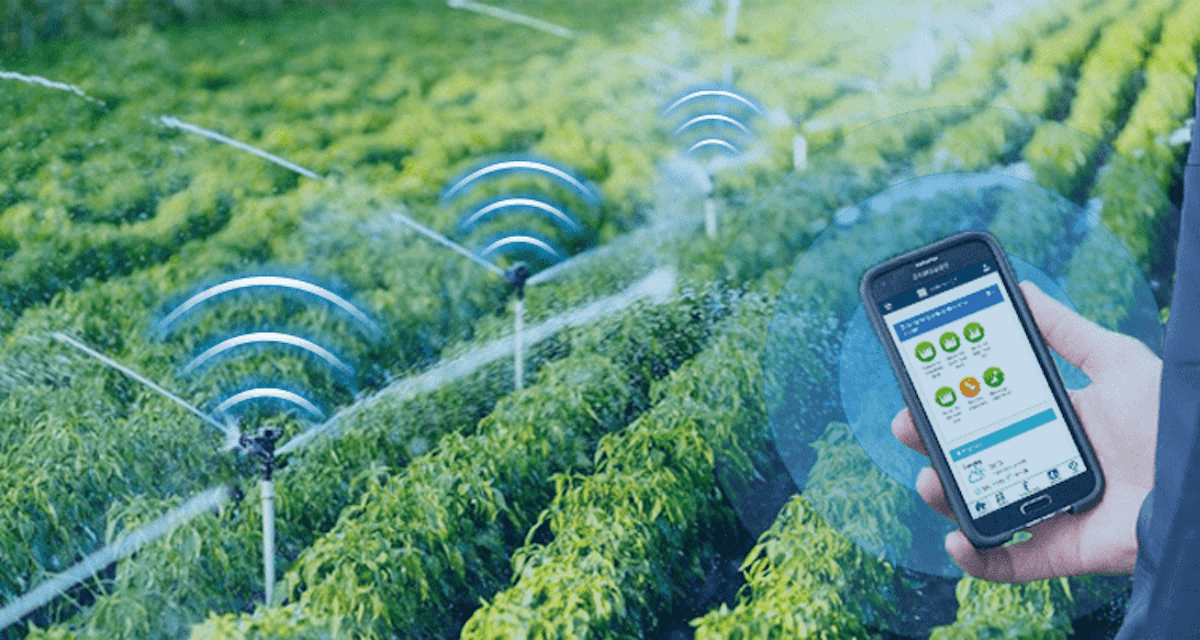
Crop smart irrigation refers to irrigation systems that adjust watering decisions using real-time environmental and crop data. These systems monitor plant conditions continuously and deliver water according to actual crop demand.
Smart irrigation typically integrates:
The objective is simple: provide crops with optimal moisture levels without overwatering or underwatering.
Conventional irrigation methods often rely on fixed schedules such as watering every two or three days regardless of changing conditions.
This approach can lead to:
Plants rarely need identical amounts of water throughout the growing season. Smart irrigation adapts to changing crop stages and environmental conditions.
Sensors installed at root depth measure how much water is actually available to plants.
Common sensor types include:
These devices help farmers irrigate only when soil moisture falls below optimal thresholds.
Smart irrigation systems use weather data such as:
Evapotranspiration (ET) models estimate how much water crops lose each day, allowing irrigation systems to replace only the moisture consumed.
Remote sensing technologies help identify field variability.
Vegetation indices such as NDVI reveal areas experiencing water stress before visible symptoms appear. Drone thermal imagery can detect canopy temperature differences that indicate insufficient irrigation.
This allows growers to irrigate specific zones rather than entire fields.
Automation connects sensors directly to irrigation equipment such as:
When soil moisture reaches predefined limits, irrigation systems automatically activate or shut off.
While most smart irrigation systems focus on improving existing technologies such as drip irrigation, micro-sprinklers, or center pivot systems, Crop Circle Orchards demonstrate a fundamentally different approach: redesigning irrigation around the biological needs of the tree itself.
Traditional orchard irrigation distributes water across rows or large surface areas, even though active root absorption occurs within concentrated zones surrounding each tree. Crop Circle Orchards address this inefficiency through crop circle irrigators, a regenerative irrigation design that creates circular, moisture-optimized growing environments centered on individual trees.
Each crop circle functions as a self-regulating micro-ecosystem that combines:
Unlike linear irrigation systems, water is applied only within biologically active planting zones, dramatically increasing water-use efficiency while supporting long-term soil health.
This orchard model aligns closely with diversified perennial systems such as those outlined in the Fruit Tree Plantation Systems, where maximizing tree productivity while minimizing resource inputs is essential for sustainable production.
Field implementation and monitoring at Crop Circle Orchards have demonstrated that restructuring irrigation geometry — rather than simply automating watering schedules — produces transformative efficiency gains.
Measured outcomes include:
In effect, Crop Circle Irrigation represents an emerging fourth category of agricultural irrigation, complementing existing systems:
| Irrigation Type | Primary Method | Water Efficiency |
|---|---|---|
| Flood Irrigation | Surface distribution | Low |
| Center Pivot | Broad mechanical coverage | Moderate |
| Drip / Micro-Irrigation | Targeted delivery lines | High |
| Crop Circle Irrigation | Root-zone ecosystem design | Ultra-High |
Rather than asking when to irrigate more efficiently, Crop Circle Orchards ask a deeper question: where should water actually be applied to support plant biology?
This shift moves smart irrigation beyond automation toward ecological engineering — an approach increasingly important as agriculture adapts to water scarcity, climate variability, and long-term soil restoration goals.
A powerful example of next-generation crop smart irrigation can be seen in Root Tube Container Farm & Gardens, where water efficiency is achieved not by increasing irrigation technology alone, but by redesigning how roots access water, oxygen, and nutrients inside containers.
Traditional container growing systems often struggle with compacted soil, poor aeration, and root binding. As roots circle within confined containers, water absorption declines, nutrients are lost through runoff, and plants require frequent irrigation and fertilization to maintain productivity.
Root Tube Farm & Gardens solve this problem at the source — the root environment itself.
At the center of each container, a biodegradable root-guidance structure delivers continuous nutrition while improving aeration and regulating water movement through the soil profile. Instead of water passing quickly through compacted soil, moisture is distributed efficiently throughout the active root zone, allowing plants to absorb resources gradually and consistently
Because irrigation water remains available longer and nutrients are directed toward active root growth zones, plants maintain stable hydration with far fewer watering cycles.
Implementation of Root Tube Container Farm & Gardens has demonstrated dramatic efficiency improvements compared with conventional container systems.
Documented performance outcomes include:
Unlike traditional smart irrigation systems that adjust watering schedules externally, Root Tube Gardens function as an internal irrigation efficiency system, enabling roots to self-regulate moisture uptake while maintaining optimal growing conditions for extended production cycles.
This technology is particularly valuable for urban agriculture, container farms, patios, rooftops, schools, and food-security programs where water access, soil replacement, and fertilizer costs often limit long-term success.
By engineering the root zone rather than simply increasing irrigation volume, Root Tube Container Gardens demonstrate how smart irrigation can evolve beyond automation toward biologically optimized water and nutrient efficiency — producing more food with dramatically fewer inputs.
Root Tube Gardens redesign container agriculture by optimizing the root zone for improved aeration, nutrient delivery, and water retention. The system enables dramatic reductions in irrigation demand while supporting healthier, more productive plant growth in compact growing environments.
| Performance Factor | Conventional Container Farm & Gardens | Root Tube Container Farm & Gardens |
|---|---|---|
| Space Efficiency | Standard spacing required; root binding limits plant density | Higher planting density through vertical root guidance and optimized root zones |
| Water Use | Frequent watering required due to runoff and evaporation losses | Up to 85% reduction in water use through root-zone moisture retention |
| Fertilizer Requirement | Regular fertilizer applications needed due to nutrient leaching | Up to 90% reduction in fertilizer costs with directed nutrient delivery |
| Crop Yield Performance | Yield variability caused by root restriction and moisture stress | Increased productivity and multi-season growth from healthier root systems |
Smart irrigation is rapidly shifting from an “efficiency upgrade” to a core requirement for modern agriculture. The reason is simple: water and energy constraints are tightening at the same time that farms are expected to produce more food with fewer inputs. In many regions, the farms that remain profitable and resilient will be the ones that can match irrigation precisely to plant demand—delivering water only when and where crops need it.
Longer, hotter dry seasons increase evapotranspiration and raise irrigation demand exactly when water supplies are most limited. Smart scheduling and root-zone targeting reduce waste during peak stress periods.
Aquifers are being drawn down in many agricultural regions. When water tables fall, pumping becomes harder and more expensive. Smart irrigation reduces withdrawals by improving application precision and timing.
Weather is becoming less predictable: sudden heat spikes, irregular rainfall, and shifting seasons make fixed irrigation schedules unreliable. Smart irrigation adapts in near-real time to changing conditions.
Stable yields depend on stable water management. By preventing water stress and reducing nutrient leaching, smart irrigation helps protect production, improve quality, and build resilience in local and regional food systems.
Problem → solution pages perform well because they answer a real constraint. Smart irrigation addresses the global challenge of producing more food under tighter water and energy limits, making it one of the most essential technologies in climate-smart agriculture.
Modern crop smart irrigation does not operate as a standalone technology. It functions as part of an integrated agricultural intelligence system where sensing, prediction, automation, and regenerative design work together to optimize productivity while reducing resource use.
Together, these technologies form a connected agricultural intelligence stack — transforming irrigation from a mechanical process into a predictive, data-driven ecosystem designed for climate resilience, resource efficiency, and high-productivity regenerative farming.