Crop Circle Fertilizer
Grow Bigger, Better Plants
Modern farming methods and continuous cropping have stripped vital nutrients from the soil. Many soils are now low in key trace minerals and organic matter, which means the vegetables grown in them are often significantly deficient in important vitamins and minerals.
Even when vegetables are freshly picked, nutrient levels begin to drop from the moment they are harvested. After a week in storage and transit, they may retain only a fraction of their original nutrition and flavor. Feeding the soil with natural, mineral-rich fertilizers is one of the best ways to restore nutrient density, improve taste, and grow resilient plants.
Standard compost and many “complete” fertilizers still lack a full spectrum of mineral trace elements that give vegetables their complex flavors and dense nutrition. By combining natural fertilizers, quality compost, and a targeted trace-mineral blend like Crop Circle Fertilizer®, growers can rebuild their soil and grow better tasting, more nutrient-rich crops in any types of soil .
Put soil fertility and plant nutrition into practice with Crop Circle Farms growing guides for tomatoes, beans, peppers, and corn.
Learn about tomato soil preparation, spacing, irrigation, fertility, pruning, plant support, and harvest management for productive plants.
Explore Growing Tomatoes →Explore bush and pole beans, planting and spacing, trellising, irrigation, soil fertility, nitrogen management, and harvest timing.
Explore Growing Beans →Learn how soil, balanced fertility, irrigation, spacing, temperature, and plant management influence healthy pepper growth and production.
Explore Growing Peppers →Explore corn planting, spacing, plant populations, irrigation, nutrient requirements, soil management, and Crop Circle production.
Explore Growing Corn →Different crops have different nutrient demands, making crop selection, soil testing, irrigation, and appropriately timed fertility important parts of an effective plant-nutrition program.

Crop Circle Fertilizer® is a trace-mineral-rich soil amendment designed to complement your existing compost and natural fertilizer program. It contains a carefully balanced blend of macro and micronutrients, including 18 essential minerals that support strong growth, deep flavor, and long-term soil health.
Key minerals in the Crop Circle Fertilizer trace-mineral blend include:
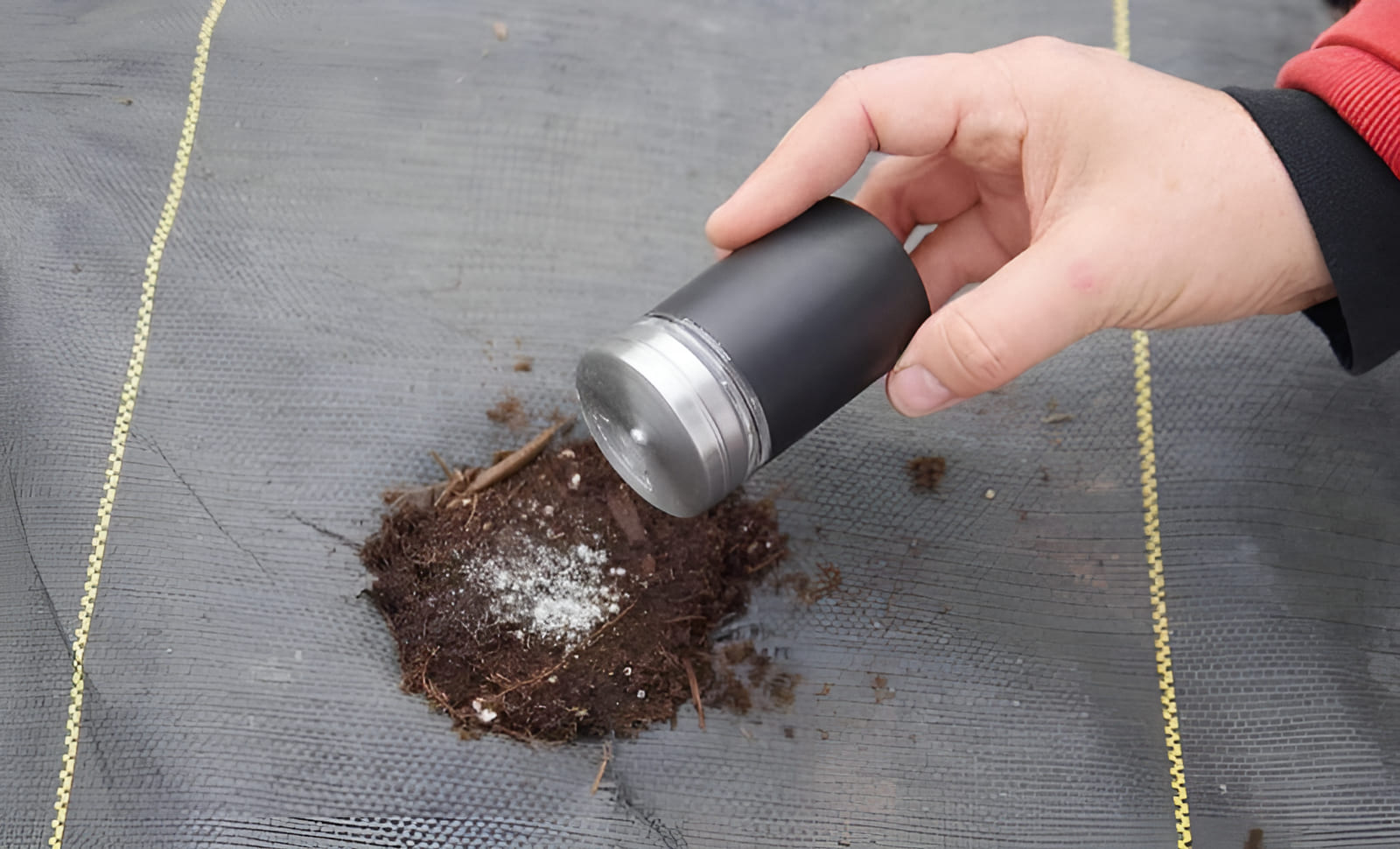
Farmers and gardeners have two main options for fertilizing plants: natural (organic) and synthetic (artificial) fertilizers. Both can be applied as granulated solids, slow-release pellets, or dissolved liquids delivered through irrigation systems.
Synthetic fertilizers are highly concentrated and fast-acting, but repeated applications can damage soil biology and contribute to pollution. Over time, heavy use of man-made fertilizers can create depleted “dead zones” in open fields, reduce soil carbon, and increase nutrient runoff into rivers, lakes, and oceans.
By contrast, natural fertilizers and mineral amendments work with living soil systems. They feed soil microbes, build organic matter, and support long-term fertility. A defining feature of a Crop Circle Farm is its use of very little fertilizer relative to traditional row crops. Carefully targeted applications and efficient irrigation reduce input costs, while healthier soils and plants maintain high yields.
Given today’s high prices and supply challenges for synthetic fertilizers, it makes practical and economic sense to rely on locally sourced natural fertilizers supplemented with trace-mineral blends like Crop Circle Fertilizer® that do not pollute the environment when used in proper and controleed combinations with plants.
As an additive, Crop Circle Fertilizer is best utilized mixed into a composted blend of aged animal manure and plant matter. This creates a rich, biologically active soil amendment that provides a full spectrum of nutrients and trace minerals for optimum plant health and great tasting vegetables.
In addition to being incorporated into soil and compost, Crop Circle Fertilizer can be used to make a mineral-enriched compost tea . Used as a drench or foliar spray, compost tea helps quickly deliver soluble nutrients and beneficial microbes to plant roots and leaves, supporting strong growth and fast recovery from stress.
Many Crop Circle growers use a layered approach: a base of high-quality compost and natural fertilizer, a trace-mineral boost from Crop Circle Fertilizer blended into the soil, and periodic applications of compost tea during peak growth stages.
Ready to explore a productive, resource-efficient farm? Crop Circle Farms designs site-specific growing systems based on climate, soil, water availability, crop selection, irrigation, labor, operating requirements, and market goals. Contact Us to explore a Crop Circle Farm design for your property or project.
We work with partners interested in expanding resource-efficient food production in food-insecure communities, island regions, and areas facing water stress. Projects can support local food access, education, workforce development, and community-scale food production. Contact Growing To Give to discuss an initiative or partnership.
These frequently asked questions cover Crop Circle Fertilizer®, plant nutrition, trace minerals, soil fertility, compost, fertigation, containers, rooftop agriculture, application rates, and fertilizer management in Crop Circle growing systems.
Crop Circle Fertilizer® is a mineral-rich soil amendment and plant-nutrition program designed to complement compost, organic matter, natural fertilizers, and other fertility inputs. It combines essential plant nutrients with selected trace and beneficial elements that can be incorporated into a broader soil-management program.
The appropriate nutrient blend depends on the crop, type of soil, existing fertility, irrigation water, climate, and stage of plant growth.
Plants require a combination of primary nutrients, secondary nutrients, and micronutrients. Nitrogen, phosphorus, and potassium are the three nutrients most commonly represented by the N-P-K numbers on fertilizer labels, while elements such as calcium, magnesium, sulfur, iron, manganese, zinc, boron, molybdenum, copper, chlorine, and nickel are required in different amounts.
Learn more about the roles of nitrogen, phosphorus, and potassium in plant growth and soil fertility.
Crop Circle Fertilizer is intended for targeted nutrient management rather than unnecessary broad application. Combining measured fertilizer rates with drip irrigation or low-pressure fertigation can place water and soluble nutrients closer to active root zones and reduce avoidable losses.
Crop Circle growing systems can also incorporate crop-smart irrigation, mulching, soil monitoring, and carefully scheduled applications to improve overall water and nutrient efficiency. Actual fertilizer and water savings vary by crop, soil, climate, irrigation design, nutrient program, and comparison method.
Yes, mineral fertilizers and amendments can be incorporated into container and rooftop growing programs when the formulation and application rate are appropriate for the growing media and crop. Container systems generally require closer attention to drainage, nutrient concentration, salt accumulation, irrigation frequency, and water quality because their root zones are smaller than those of field-grown plants.
For rooftop projects, see our Rooftop Agriculture guide for additional considerations involving growing media, irrigation, drainage, structural loads, wind, and crop selection.
Yes. Crop Circle Fertilizer is intended to complement soil-building practices rather than replace them. Compost and other suitable organic materials can contribute organic matter, support soil structure, and supply nutrients, while mineral fertilizers can be used to address specific crop requirements or identified nutrient deficiencies.
Growers may also incorporate compost tea as part of a broader soil-management program. Fertility decisions should be based on the crop, soil or growing media, water quality, and the nutrients already available in the system.
Crop Circle Fertilizer can be incorporated into mineral or hybrid fertility programs alongside compost, aged manures, plant-based amendments, and other soil-building inputs. Whether a particular product or ingredient qualifies for certified organic production depends on its formulation and the requirements of the applicable certification program.
Growers seeking organic certification should verify each fertilizer and amendment with their certifier before application rather than assuming that a mineral or naturally derived ingredient is automatically approved.
Application rates should be based on crop type, growth stage, soil or growing media, existing nutrient levels, irrigation water, climate, and application method. Soil tests, growing-media tests, irrigation-water analysis, and crop observations can all help determine whether additional nutrients are needed.
Seedlings and young plants generally have different nutrient requirements from rapidly growing, flowering, or fruiting crops. Applying nutrients according to plant demand helps reduce unnecessary fertilizer use and lowers the risk of nutrient imbalance or salt accumulation.
Yes. More fertilizer does not automatically produce more growth. Excess nutrients can increase soluble salts around roots, interfere with water uptake, create nutrient imbalances, damage foliage or roots, and increase the potential for nutrients to move beyond the growing area.
This is why Crop Circle Farms emphasizes measured applications, appropriate irrigation, soil or media testing, and adjusting fertility to the needs of individual crops rather than applying nutrients on a fixed high-rate schedule.
Not necessarily. Plant nutrient content is influenced by genetics, soil chemistry, nutrient availability, growing conditions, crop maturity, irrigation, harvest timing, and post-harvest storage. Correcting a genuine nutrient deficiency can improve plant health, but adding additional trace elements does not automatically increase the nutritional value of edible crops.
Trace-element applications should therefore be purposeful and carefully managed, particularly for elements that plants require only in very small quantities or that are not considered essential plant nutrients.
Soil pH influences the chemical form and availability of many plant nutrients. When pH moves outside the range suited to a particular crop, nutrients may become less available even when they are physically present in the soil.
Understanding your soil type and structure, testing pH when appropriate, and monitoring plant response can help avoid unnecessary fertilizer applications and improve nutrient management.
Suitability depends on the specific formulation, application method, product label, site requirements, and applicable regulations. Fertilizer products should always be stored, handled, and applied according to their label and safety documentation.
Safety data sheets (SDS), when applicable, should be reviewed by facility managers before use in school gardens, public spaces, rooftop farms, or community agriculture projects.
Fertilizer should be kept in its original or properly labeled container, securely closed, and stored in a cool, dry location protected from excessive moisture and direct weather exposure. Keep fertilizer separate from food, animal feed, and drinking-water supplies and out of reach of children and animals.
Follow the storage instructions and shelf-life information provided with the specific Crop Circle Fertilizer formulation. If a product has been exposed to moisture, contamination, damaged packaging, or prolonged improper storage, inspect it before use and follow the applicable product guidance.