Blueberries
Types and Varieties of Blueberries
Blueberries are one of the most adaptable berry crops, but successful production depends on selecting varieties that match your climate, soil conditions, and seasonal temperature patterns. Blueberry plants are grouped into several major types—northern highbush, southern highbush, rabbiteye, lowbush, and half-high—each bred to perform best in specific growing regions.
Among these groups, northern highbush blueberries are widely grown in cooler climates and are known for producing large berries with excellent flavor. Well-known cultivars such as Bluecrop, Jersey, and Duke are valued for their reliability, productivity, and adaptability across many northern growing zones.
Blueberries also have unique soil requirements. Most varieties thrive in highly acidic soils with a pH between 4.5 and 5.5. Maintaining this acidity—along with organic mulches, steady moisture, and balanced nutrition—supports healthy root systems and consistent fruit production. Matching the plant’s chill-hour requirements to your local winter climate further improves flowering, pollination, and harvest reliability.
This guide compares blueberry types and popular cultivars by climate suitability, soil preferences, growth habits, and pollination needs—helping gardeners and growers choose varieties that perform well in garden beds, containers, tunnels, and structured Crop Circle systems.
Northern highbush blueberries (Vaccinium corymbosum) are upright deciduous shrubs native to eastern North America and are the most widely cultivated blueberry type in temperate regions. They typically grow 5–7 feet tall and produce large, flavorful berries during early to mid-summer. Northern highbush varieties require significant winter chilling hours and thrive in cool climates with acidic soils rich in organic matter.
• Blueberry plants can remain productive for 30 years or more when grown in properly
acidic soil and maintained with regular pruning.
• Unlike many fruit crops, blueberries have very fine roots and rely heavily on organic
mulch and consistent soil moisture to stay healthy.
• Different blueberry types ripen at different times, allowing growers to combine varieties and
extend the harvest season for 6–10 weeks.
Feel free to share this blueberry varieties infographic on your website or blog. Please include a link back to this page as the source.
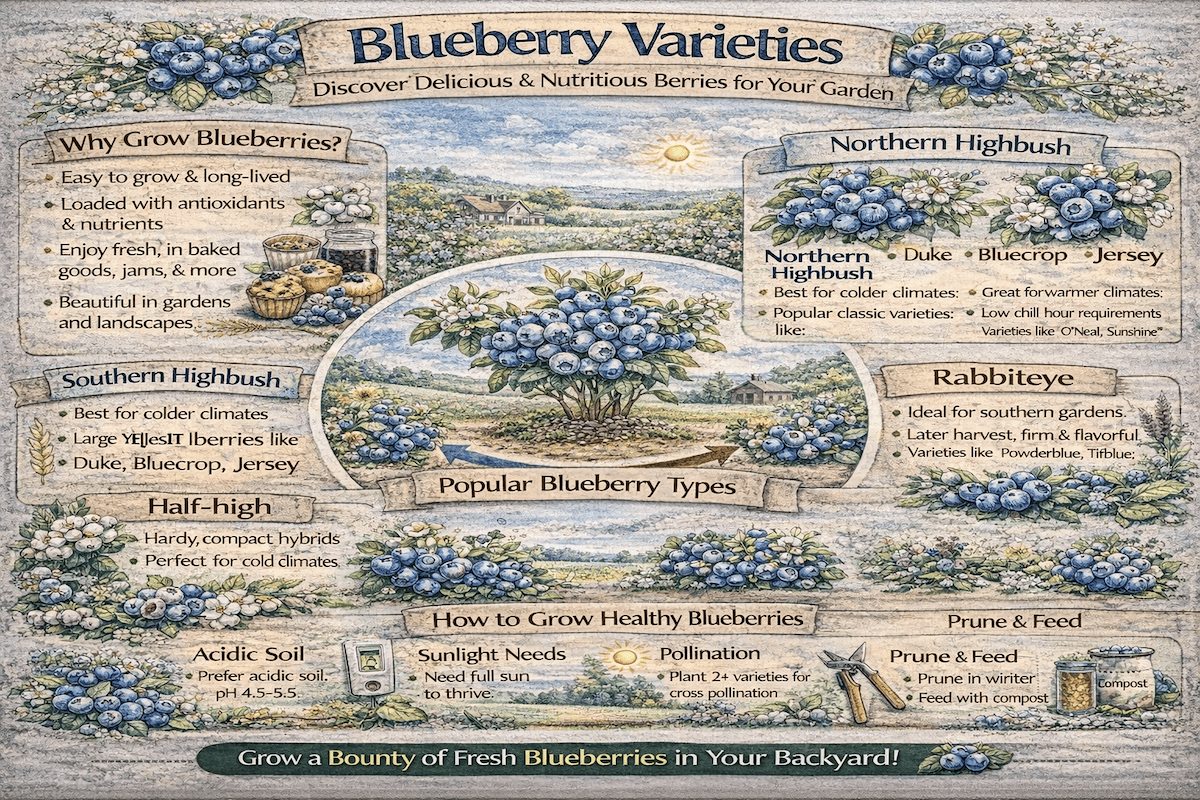
Blueberries are grouped by climate adaptation, chill requirements, and growth habit. Choosing the right type ensures reliable flowering, proper fruit set, and long-term vigor.
Northern Highbush blueberries (Vaccinium corymbosum) are the most widely cultivated blueberry species in North America. They are valued for their large berry size, exceptional flavor, and consistent productivity. These plants perform best in cool to temperate climates with adequate winter chill and acidic soils, typically thriving when soil pH ranges between 4.5 and 5.5.
Northern Highbush plants usually grow between 5–7 feet tall and produce berries that are ideal for fresh eating, baking, and commercial fruit production. Strong yields are supported by healthy soil management, proper pruning, and reliable pollination. Blueberries depend heavily on bee activity, so maintaining healthy habitats for pollinators can significantly improve fruit set and berry size.
These berries are also valued for their nutritional benefits and are widely featured in recipes and meal plans built around a plant-based diet. In modern agriculture, growers increasingly use tools such as remote sensing agriculture technologies to monitor plant health, irrigation needs, and crop productivity across large blueberry fields.
Below are several well-known Northern Highbush blueberry varieties grown in home gardens and commercial plantings.
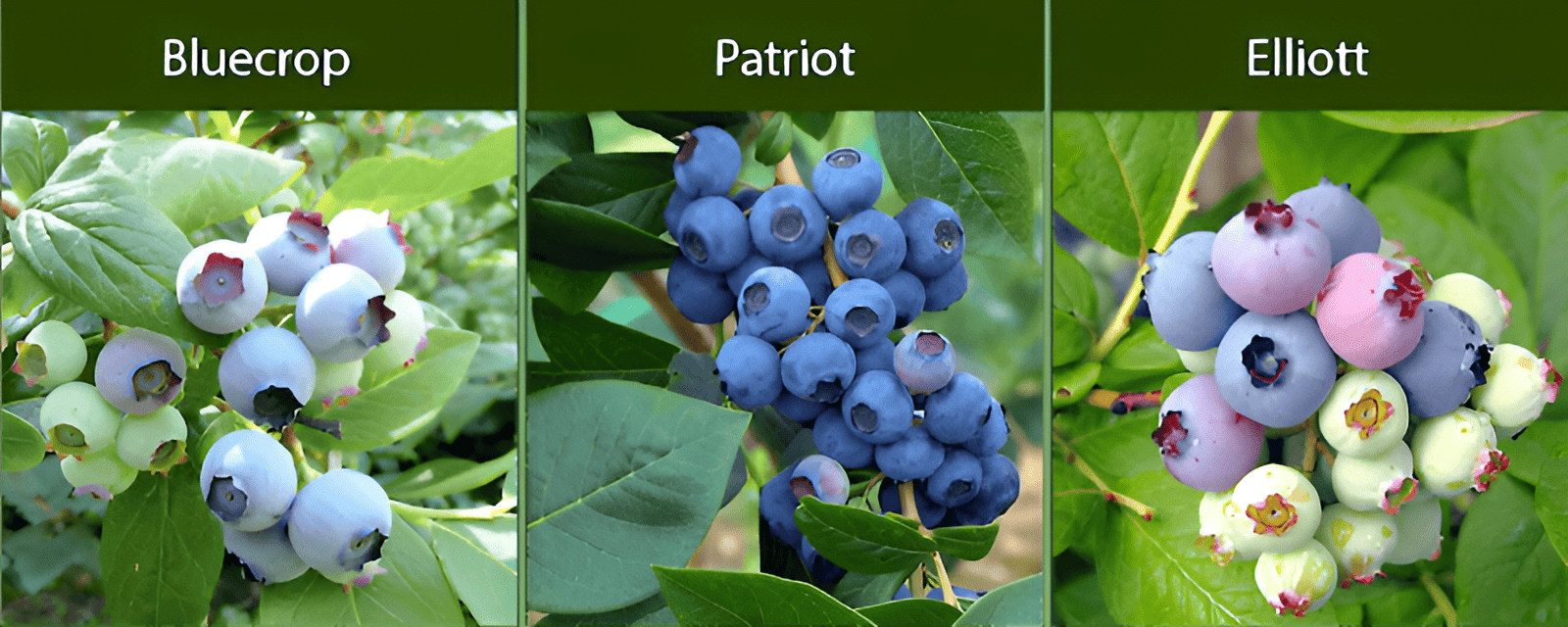
Bluecrop: One of the most widely planted blueberries in the world, Bluecrop is valued for its dependable yields, excellent flavor, and large berries. The plants are vigorous and adaptable, making them a reliable choice for both commercial growers and home gardeners.
Jersey: A classic late-season variety known for its cold hardiness and consistent production. Jersey produces medium-sized berries with a rich, sweet flavor and has long been a staple in northern blueberry plantings.
Duke: Duke is an early-ripening cultivar that produces firm, light-blue berries with excellent flavor. It is highly productive and performs particularly well in cooler climates.
Patriot: Patriot is recognized for its large berries and strong cold tolerance. It adapts well to heavier soils and produces flavorful fruit early in the season.
Chandler: Famous for its exceptionally large berries, Chandler also offers a long harvest window, providing a steady supply of fruit over several weeks.
Spartan: Spartan produces large, premium-quality berries with outstanding flavor. It performs best in well-drained acidic soils and is often favored for fresh-market fruit.
Blueray: Known for its large berries and vigorous growth, Blueray is a heavy producer and also admired for its vibrant red fall foliage.
Elliott: A late-season cultivar that extends the blueberry harvest into late summer. The berries are firm and store well, making Elliott useful for extended production.
Brigitta: Brigitta produces large, high-quality berries with excellent shelf life and reliable yields, which has made it popular among commercial growers.
Sunrise: As its name suggests, Sunrise is an early-season variety producing medium-sized berries with pleasant sweetness and dependable productivity.
Blueberry yield depends on plant spacing, variety type, and management. Use these calculators to plan plant counts, bed layout, and realistic harvest expectations for gardens and small farms.
Estimate how many pounds of blueberries a single plant can produce and project total harvest across your garden or small farm. Use it to plan plant counts, forecast seasonal yields, and compare productivity between different blueberry varieties.
Plan blueberry bed layouts, row spacing, and container plantings to estimate total garden production. This tool helps you determine how many plants fit in your space and forecast realistic seasonal harvests.
Tip: Cross-pollinating compatible varieties often increases berry size and total yield.
One of the most important factors for successfully growing blueberries is maintaining the correct soil pH. Unlike most garden crops, blueberries require strongly acidic soil to absorb nutrients properly. If the soil pH is too high (too alkaline), blueberry plants may struggle to grow, produce fewer berries, or develop yellow leaves due to nutrient deficiencies.
Most blueberry varieties thrive in soil with a pH between 4.5 and 5.5. This acidic range allows the plants to efficiently absorb key nutrients such as iron, nitrogen, and magnesium. When soil pH rises above this range, nutrient availability decreases and plants may show symptoms of poor growth.
| Blueberry Type | Ideal Soil pH | Notes |
|---|---|---|
| Northern Highbush | 4.5 – 5.5 | Best production in cool climates with acidic soils. |
| Southern Highbush | 4.5 – 5.5 | Often grown in amended soils or raised beds in warmer regions. |
| Rabbiteye | 4.8 – 5.5 | More tolerant of slightly higher pH than other types. |
| Lowbush | 4.0 – 5.2 | Naturally adapted to acidic forest soils. |
| Half-High | 4.5 – 5.5 | Cold-hardy hybrids that prefer strongly acidic soil. |
If your garden soil is too alkaline, several natural soil amendments can help lower the pH and create a better environment for blueberry plants:
Before planting blueberries, it is best to test your soil and amend it if necessary. Many gardeners grow blueberries successfully in raised beds or containers filled with acidic soil blends designed specifically for berries and acid-loving plants.
Blueberries belong to the same plant family as azaleas, rhododendrons, and cranberries. All of these plants evolved in acidic forest soils and struggle to grow in alkaline garden soil. Maintaining the proper soil pH is one of the most important steps for producing large, sweet blueberries.
Southern Highbush blueberries were developed specifically for regions with mild winters and lower chill-hour requirements. These cultivars are hybrids created by crossing Northern Highbush blueberries with several southern-adapted species. The result is a group of varieties capable of producing high-quality fruit in warm climates where traditional northern varieties often struggle.
Southern Highbush plants are widely grown throughout the southern United States, coastal regions, and other mild climates because they offer earlier harvests, large berries, and excellent flavor. Many varieties begin ripening several weeks earlier than Northern Highbush types, making them valuable for both home gardens and commercial farms seeking an early-season blueberry crop.
Successful production of Southern Highbush blueberries also depends on maintaining healthy soil biology and proper nutrient balance. Growers often rely on soil management practices highlighted in the Soil Fertility Hub to support long-term productivity. Blueberries have also become an increasingly important crop in discussions around food security, as high-yield berry systems can provide nutrient-dense food for communities while supporting small-scale agriculture. Proper harvest handling and production practices are also essential for maintaining quality and protecting consumers through responsible food-safe agriculture.
Below are several well-known Southern Highbush blueberry varieties valued for productivity, flavor, and adaptability.
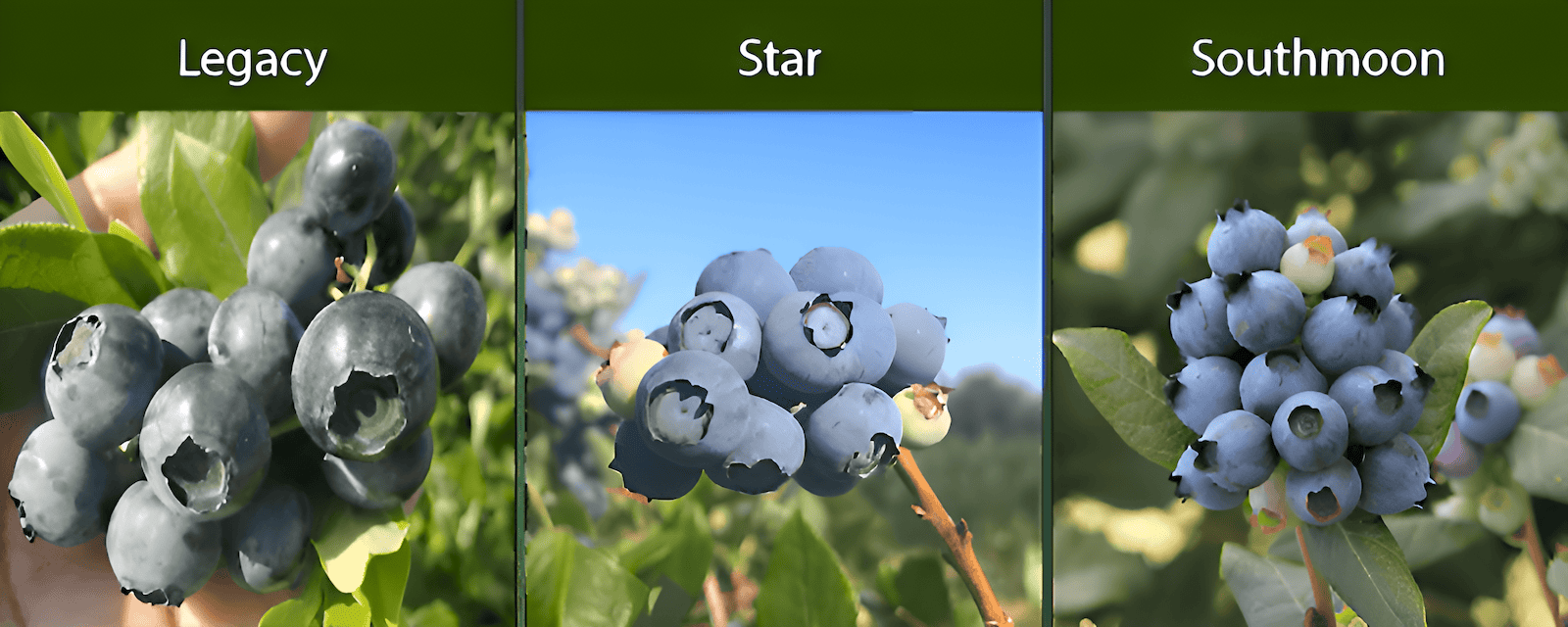
Legacy: Legacy produces large berries with a balanced sweet-tart flavor and excellent firmness. It is known for vigorous growth and a long harvest window that can extend the blueberry season.
Jubilee: Jubilee is valued for its dependable productivity and consistent yields of medium-sized berries. The plants are vigorous and also display attractive foliage during the fall.
O'Neal: One of the earliest Southern Highbush varieties to ripen, O'Neal produces large, light-blue berries with exceptional flavor and is often considered one of the best-tasting early blueberries.
Misty: Misty is prized for its heavy early-season production and firm, sweet berries. The plants are also ornamental, producing attractive pink and white spring blossoms.
Sunshine Blue: A compact and highly ornamental variety, Sunshine Blue is popular for containers and small gardens. It produces medium-sized berries with a pleasant sweet-tart flavor.
Sharpblue: One of the most widely planted Southern Highbush varieties, Sharpblue is known for its adaptability, vigorous growth, and reliable production over an extended harvest period.
Southmoon: Southmoon produces large, high-quality berries with excellent flavor and performs best in regions with mild winters and properly managed acidic soils.
Star: Star is an early-ripening cultivar producing large, firm, light-blue berries with excellent sweetness. It is widely grown in commercial plantings due to its fruit quality and productivity.
Reveille: Reveille is valued for its early harvest and adaptability. The berries are medium-sized, light blue, and mildly sweet, making them suitable for fresh eating or baking.
Camellia: A newer Southern Highbush cultivar, Camellia produces large, firm berries with outstanding sweetness. Its extended harvest window makes it useful for lengthening the picking season.
Lowbush blueberries (Vaccinium angustifolium), often referred to as wild blueberries, are native to the cool forests and rocky soils of northeastern North America. Unlike tall highbush varieties, lowbush blueberries grow as low, spreading shrubs that typically reach only 6–24 inches in height. These hardy plants are valued for their intensely flavored fruit, exceptional cold tolerance, and ability to thrive in rugged climates and nutrient-poor soils.
Although the berries are smaller than those produced by highbush plants, lowbush blueberries are widely considered to have the most concentrated blueberry flavor. For this reason they are commonly used in jams, baked goods, syrups, and frozen berry products. Lowbush plants also perform well as groundcovers in naturalized landscapes, woodland gardens, and cold-climate growing systems.
Modern berry production increasingly combines traditional plant breeding with advanced agricultural monitoring systems. Technologies such as remote sensing agriculture help growers track plant health, soil moisture, and crop vigor across berry fields. In more advanced operations, digital twin farming models simulate crop performance under different environmental conditions, while emerging approaches in smart regenerative agriculture combine ecological soil management with data-driven farming techniques to improve both yield and ecosystem health.
Below are several compact blueberry varieties and dwarf cultivars commonly grown in gardens that mimic the growth habit and flavor profile of traditional lowbush blueberries.
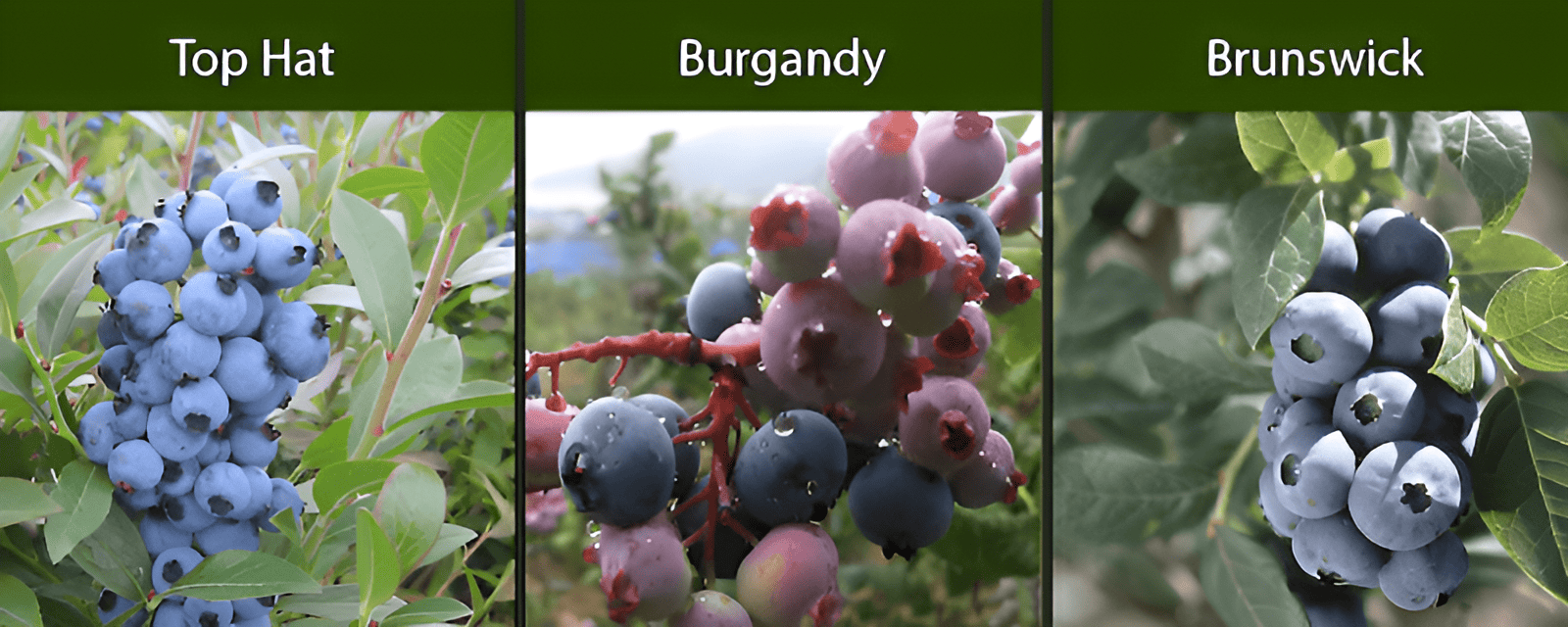
Top Hat: A true dwarf blueberry that grows only about 12 inches tall, Top Hat is ideal for container gardens, patios, and small raised beds. Despite its compact size, it produces abundant crops of intensely flavored berries.
Putte: Originally developed in Sweden, Putte is an extremely hardy low-growing blueberry suited to colder climates. The plants produce generous harvests of small, sweet berries.
Burgundy: This attractive variety is named for its striking burgundy-colored foliage in autumn. The compact plants produce small, dark blue berries with excellent flavor.
Brunswick: A classic lowbush variety known for its sweet, light-blue berries and brilliant red fall foliage. It performs well in naturalized plantings and cold-climate gardens.
Sunshine Blue: Although technically a semi-dwarf Southern Highbush hybrid, Sunshine Blue shares several traits with lowbush types, including compact growth and container adaptability. It produces small to medium berries with a pleasant sweet-tart flavor.
Rabbiteye blueberries (Vaccinium virgatum, formerly Vaccinium ashei) are native to the southeastern United States and are prized for their exceptional heat tolerance, vigorous growth, and reliable productivity in warm climates. These plants are particularly well suited to regions with hot summers and mild winters where many northern blueberry varieties struggle to thrive.
Rabbiteye blueberry bushes typically grow 8–12 feet tall and produce medium to large berries that ripen from early summer through late summer depending on the cultivar. One important characteristic of Rabbiteye blueberries is that they generally require cross-pollination with another Rabbiteye variety to achieve optimal fruit set, berry size, and yield.
Because of their adaptability and productivity, Rabbiteye blueberries are widely grown in the southern United States, including Georgia, Alabama, Mississippi, and Texas. Growers often focus on soil management and nutrient efficiency to maintain high yields. Tools such as the Saving Fertilizer Calculator can help optimize nutrient inputs, while improved soil amendments like biochar are increasingly used to enhance soil structure, retain nutrients, and support beneficial microbial activity in berry plantings.
Rabbiteye blueberries are also valued by both home gardeners and commercial growers for their high yields, drought tolerance, and strong resistance to many common blueberry diseases. Production planning systems—such as comparing traditional row planting with circular growing layouts using the Spiral vs Row Acre Yield Calculator—can help farmers estimate potential harvest improvements in intensive berry systems.
Below are several popular Rabbiteye blueberry varieties known for productivity and flavor.
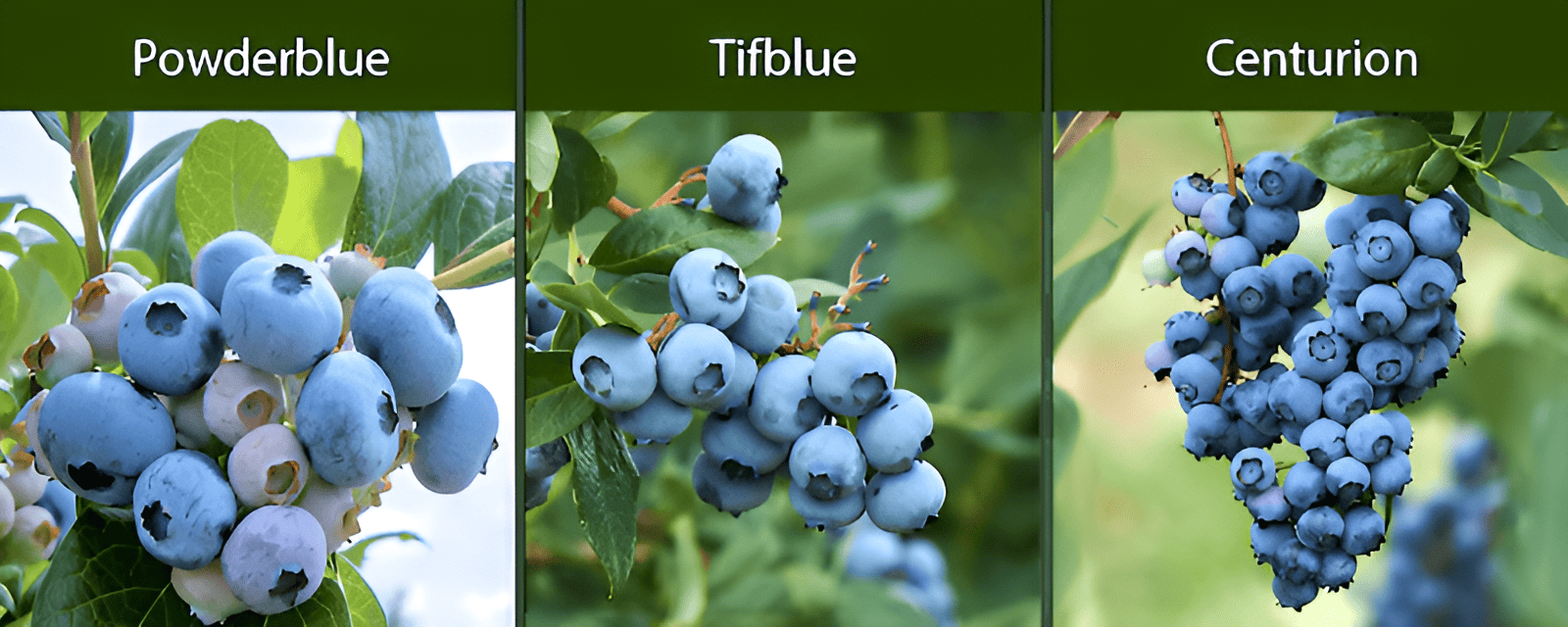
Tifblue: One of the most widely planted Rabbiteye varieties, Tifblue is valued for its dependability and adaptability. It produces medium to large berries that ripen in the mid- to late-season.
Powderblue: Known for its light blue berries and excellent productivity, Powderblue is a late-season variety that produces heavy crops and performs well in warm climates.
Brightwell: A vigorous and adaptable cultivar, Brightwell produces large, light blue berries with excellent flavor and performs well across a wide range of southern growing conditions.
Climax: Climax is one of the earliest ripening Rabbiteye varieties, producing large berries with a sweet flavor. Its early harvest window makes it popular among growers seeking an early crop.
Woodard: Known for its particularly sweet berries, Woodard produces large fruit during the early to mid-season and is widely appreciated for its flavor.
Premier: Premier produces large, light blue berries with outstanding flavor and reliable yields. It is an early-ripening variety commonly planted in commercial orchards.
Centurion: A vigorous variety that produces medium-sized dark blue berries with a sweet flavor. Centurion is known for heavy yields and strong plant growth.
Baldwin: A late-season Rabbiteye cultivar that produces medium-sized berries with a pleasant sweet-tart flavor. Baldwin is valued for extending the blueberry harvest later into the season.
Half-High blueberries are compact hybrid cultivars developed by crossing Northern Highbush blueberries (Vaccinium corymbosum) with the extremely cold-tolerant Lowbush blueberry (Vaccinium angustifolium). These hybrids were specifically bred for regions with long, cold winters and short growing seasons. They combine the larger fruit size and quality of Highbush blueberries with the exceptional winter hardiness and compact growth habit of Lowbush plants.
Most Half-High blueberries grow only 2–4 feet tall, making them ideal for small gardens, raised beds, containers, and northern landscapes. Their shorter height allows winter snow cover to naturally insulate the plants, helping protect buds and roots from extreme cold. Because of these traits, Half-High varieties are widely grown throughout the northern United States, Canada, and other cold-climate regions where traditional blueberry varieties may struggle to survive.
Successful production also depends on proper soil preparation. Blueberries perform best in well-drained, acidic soils rich in organic matter. Understanding the types of soil present in your garden or farm can help determine the best amendments and planting strategy. Key nutrients such as phosphorous play an important role in root development and early plant establishment, particularly in colder regions where growing seasons are shorter.
Because Half-High plants are compact but productive, they can be used in intensive berry systems where space efficiency and yield are important. Innovative small-acre farming models even explore high-density berry production strategies capable of generating significant returns—sometimes approaching the concepts explored in one million dollars an acre farming systems when combined with careful crop selection, soil management, and efficient irrigation.
Below are several well-known Half-High blueberry cultivars valued for their productivity, flavor, and ability to withstand harsh winter conditions.
Northcountry: A compact variety prized for its sweet, wild-style blueberry flavor. Northcountry produces medium-sized berries and performs well in containers, small gardens, and cold-climate landscapes.
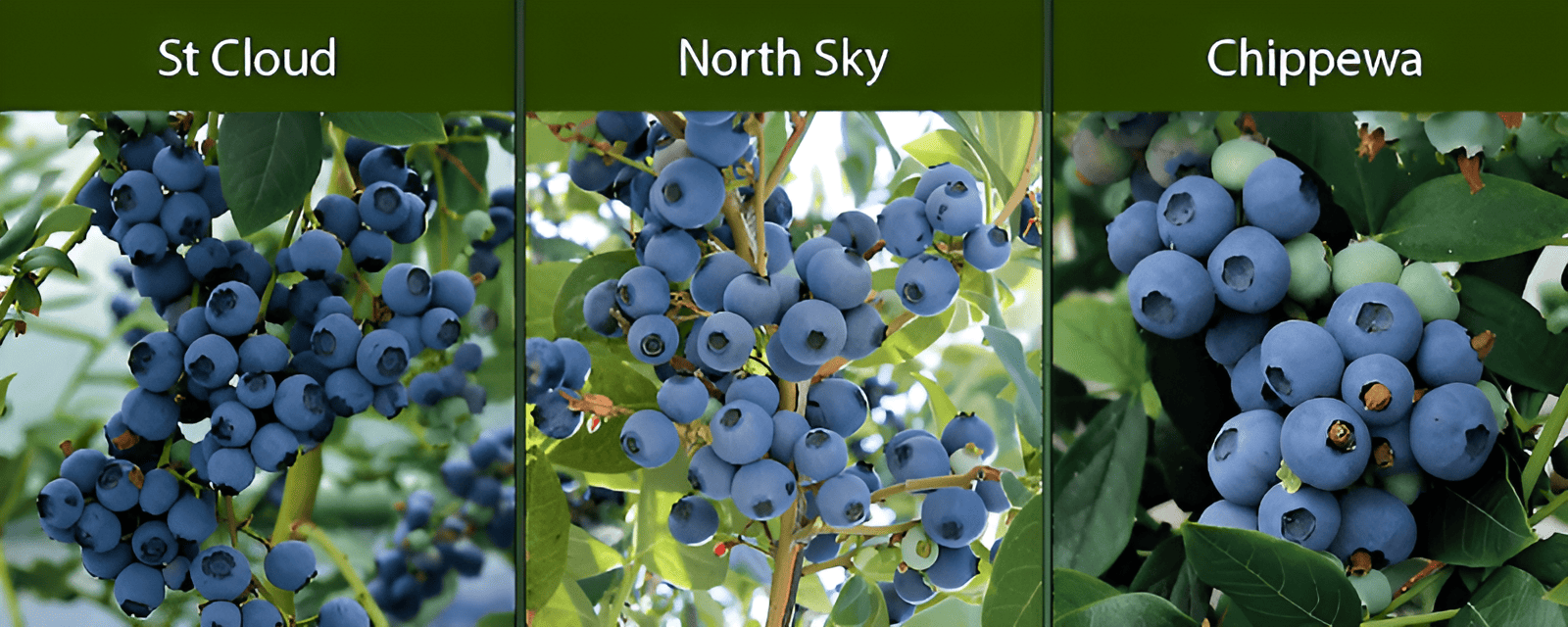
Northsky: One of the most cold-hardy blueberries available, Northsky can tolerate temperatures approaching -45°F. The plants remain very compact and produce small, intensely flavored berries.
Polaris: An early-ripening cultivar that produces large, light-blue berries with excellent sweetness. Polaris is known for its reliable productivity and strong winter hardiness.
Chippewa: Chippewa is valued for its relatively large berries and high yields. The plants maintain a manageable size while still offering excellent cold tolerance.
Northblue: One of the best-known Half-High varieties, Northblue produces large, dark-blue berries with a rich flavor. It is highly productive and extremely cold hardy.
St. Cloud: Developed in Minnesota, St. Cloud is appreciated for its large berries, good sweetness, and ability to withstand harsh northern winters.
Superior: A late-ripening Half-High variety known for strong yields and large, high-quality berries. Superior performs especially well in colder climates where other blueberries may struggle.
Crop Circle Farms designs and builds resource-efficient agricultural systems tailored to site conditions, crops, water availability, and production goals. Our field-tested systems have demonstrated up to 90% lower water use, up to 85% lower fertilizer requirements, and two to three times the production with selected crops and configurations compared with conventional layouts.
Services can include farm layout, irrigation planning, root-zone systems, crop selection, production modeling, training, and first planting.
Contact Us to discuss a Crop Circle Farm design for your property.
Through nonprofit and community partnerships, Crop Circle farming systems can support sustainable food production, smallholder agriculture, food security, education, and climate-resilience projects in communities around the world. Contact Growing To Give to explore smallholder farm clusters, school farm hubs, and community Crop Circle projects.
Compare popular berry crops, varieties, climate requirements, growing characteristics, harvest patterns, and production strategies.
Explore thorned and thornless blackberries, growth habits, climate fit, trellising, fruit quality, harvest timing, and productive cultivars.
Explore Blackberry Varieties →Compare American, European, and hybrid gooseberries by climate, mildew resistance, fruit size, flavor, pruning, and harvest potential.
Explore Gooseberry Varieties →Compare summer-bearing and primocane raspberries, including red, black, purple, and golden varieties by climate, pruning, trellising, and harvest season.
Explore Raspberry Varieties →Compare June-bearing, everbearing, and day-neutral strawberries by climate, harvest pattern, containers, disease resistance, and yield potential.
Explore Strawberry Varieties →Compare major blueberry types by climate fit, chill requirement, berry size, and the growing situations where each performs best.
| Type | Climate Fit | Chill Hours | Berry Size | Best Use |
|---|---|---|---|---|
| Northern Highbush | Cold / Temperate | High | Large | Commercial farms & cold regions |
| Southern Highbush | Warm / Mild | Low–Medium | Large | Low-chill regions |
| Rabbiteye | Hot / Humid | Low | Medium–Large | Heat-tolerant production |
| Lowbush | Very Cold | High | Small | Wild flavor & groundcover |
| Half-High | Extreme Cold | High | Medium | Compact gardens & containers |
Quick take: Northern and Southern Highbush types cover the widest production range, Rabbiteye excels in hot climates, and Lowbush or Half-High are best for colder or smaller-space systems.
Answers to common questions about northern and southern highbush, rabbiteye, lowbush, and half-high blueberry plants—and how to match them to your garden or farm.
Blueberries are grouped into several types based on their growth habit and climate fit: northern highbush (e.g., Bluecrop, Jersey, Duke, Patriot, Chandler), southern highbush (e.g., Legacy, Jubilee, O’Neal, Misty, Sunshine Blue), lowbush or “wild” blueberries (e.g., Top Hat, Putte, Brunswick), rabbiteye (e.g., Tifblue, Powderblue, Brightwell, Climax, Premier), and half-high hybrids (e.g., Northcountry, Northsky, Polaris, Northblue, Superior) that combine cold hardiness with good fruit quality.
For regions with cold winters and reliable chill hours, choose northern highbush varieties such as Bluecrop, Jersey, Duke, Patriot, Chandler, Spartan, Blueray, Elliott or Brigitta. For very cold, exposed sites, compact half-high blueberries like Northcountry, Northsky, Polaris, Chippewa, Northblue, and Superior add extra cold hardiness and work well in smaller gardens or containers.
In areas with mild winters and hot summers, look to southern highbush and rabbiteye types. Southern highbush varieties such as Legacy, Jubilee, O’Neal, Misty, Sunshine Blue, Sharpblue, Southmoon, Star, Reveille, and Camellia are bred for lower chill requirements and warmer conditions. In the deep South, heat-tolerant rabbiteye blueberries like Tifblue, Powderblue, Brightwell, Climax, Woodard, Premier, Centurion, and Baldwin perform especially well once established.
Blueberries prefer acidic soil in the pH range of about 4.5–5.5. Before planting, test your soil and lower the pH with elemental sulfur if needed. Mix in acidic organic materials such as peat moss, pine fines, conifer bark, or well-rotted sawdust. Avoid lime and high-pH irrigation water, which can push pH up and cause nutrient lock-out. Planting into raised, amended beds or large containers makes it easier to maintain the right acidity over time.
Many blueberry cultivars are self-fertile, but yields and berry size usually improve when you plant two or more compatible varieties that bloom at the same time. This is especially true for northern and southern highbush and rabbiteye blueberries. Mixing cultivars such as Bluecrop and Jersey or Tifblue and Powderblue helps bees move pollen between plants and boosts overall production.
Yes. Compact varieties like Top Hat (dwarf lowbush) and Sunshine Blue (a semi-dwarf southern highbush type) are excellent for containers, patios, and small gardens. Use a large pot with drainage holes and fill it with an acidic, peat-based mix blended with pine bark. Keep the container evenly moist with drip irrigation or regular deep watering, and refresh the mulch and top few inches of mix as the plant matures.
Chill hours—the accumulated hours between roughly 32–45°F—help determine whether a variety will flower and fruit reliably in your climate. Northern highbush generally need higher chill, so they suit cooler regions. Southern highbush and rabbiteye blueberries are bred with lower chill requirements, making them better for warm winters. Matching cultivar chill requirements to your local climate is key to avoiding poor bloom or inconsistent crops.
Blueberries have shallow, fibrous roots that prefer even moisture but hate waterlogging. Install drip irrigation or a soaker system to keep the root zone consistently moist, especially during bloom and fruit fill. Apply a 2–4 inch mulch layer of pine needles, wood chips, or shredded bark to conserve water, suppress weeds, and help maintain acidic conditions around the root zone.
Once plants are established, prune during dormancy to maintain a mix of 1–6-year-old canes. Remove weak, low, or crossing shoots, and cut a portion of the oldest canes back to the base each year to stimulate new growth. Light summer touch-up pruning can open the canopy for better light and airflow, improving fruit quality and reducing disease pressure.
In a Crop Circle layout, blueberries can be placed on cooler, well-drained rings with acidified soil and thick organic mulch. Group compatible varieties together to maximize cross-pollination, and route drip laterals so each plant has consistent moisture. Adding bands of pollinator-friendly flowers near your blueberry rings helps attract bees and other beneficial insects, increasing fruit set and yield.