Tomato Volcanoes
Natural Plant Support: The Only Way to Grow
Tomato plants are by far are the most popular plant to grow in the garden and garden containers and the one of the most profitable to grow on a farm. As a result of this popularity, there are hundreds of tomato plant varieties to choose from, all bred from heirlooms common over sixty years ago. Before that tomato seeds were saved from one year to the next and passed down from generation to generation.
There are two types of tomato plants, determinate and indeterminate. Determinate tomato plants grow to a genetically, pre-determined size, which can range from less than a foot to just over two feet tall. Paste tomato plants are almost always determinate and as such are grown commercially in field and mechanically harvested for the food processing industry. Other determinate varieties are grown in gardens and garden containers.
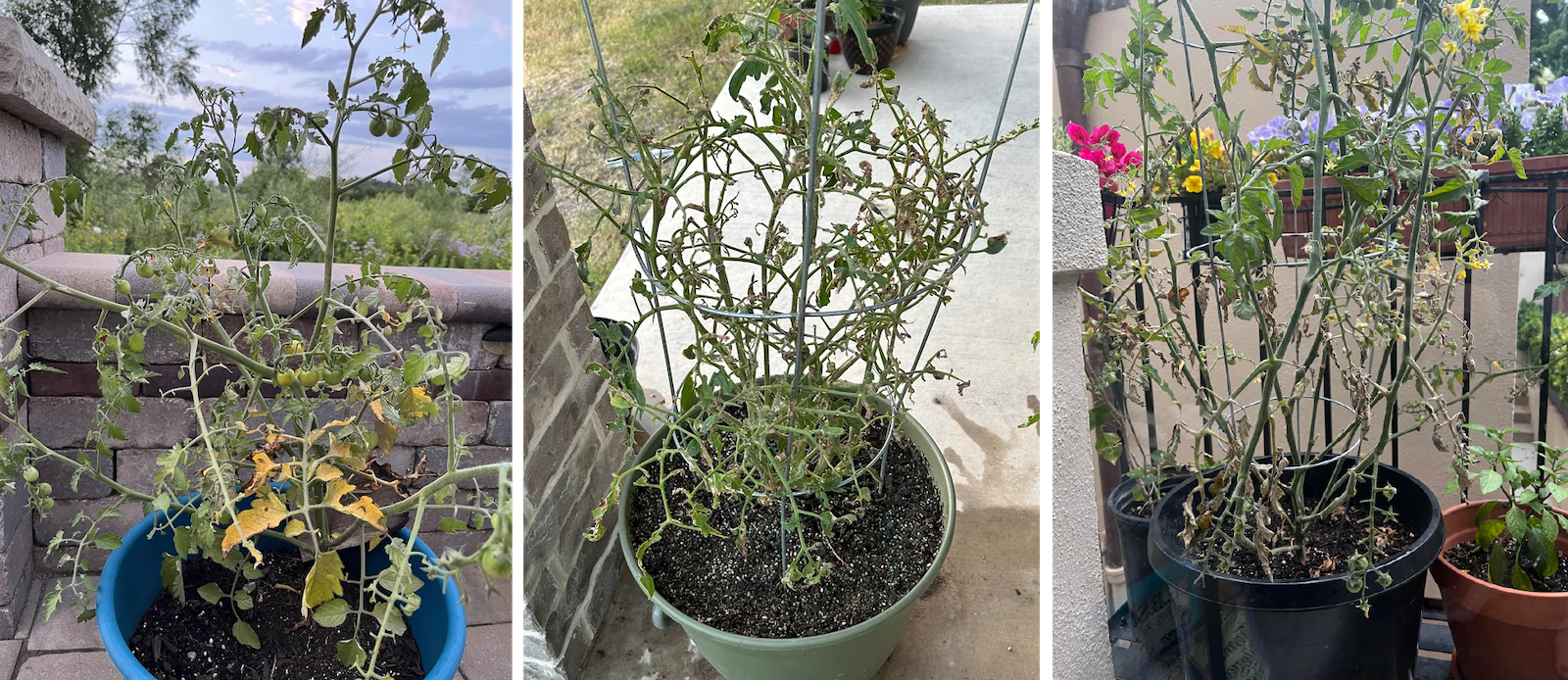
Indeterminate tomato plants grow vines whose length is determined by the first fall frost rather than a generic modification. The long vines of determinate tomato plants require support, particularly if they are grown in garden containers. A vertically orientated wire tomato trellis is typically used.
For generations, gardeners have been taught to grow tomatoes vertically using trellises and stakes. While this approach keeps plants tidy, it comes with a hidden cost — it can reduce total fruit production by half or more. When allowed to grow naturally and sprawl like a cucumber vine, indeterminate tomato plants produce more flowers and set fruit more frequently, significantly increasing overall yield.
Tomato Volcanoes ™ offer a new approach to growing tomatoes by creating a natural plant support for uninterrupted vining and increased flower and fruit set.
Instead of guiding by tying one or more tomato plants up through a vertical tomato trellis, a Tomato Volcano creates a parabolic surface for plants and in particular vines of plants to grow over. The surface mimics an undulating ground surface indeterminate tomato plants would grow over where a protective leaf canopy, flowering and fruit set occur in abundance.
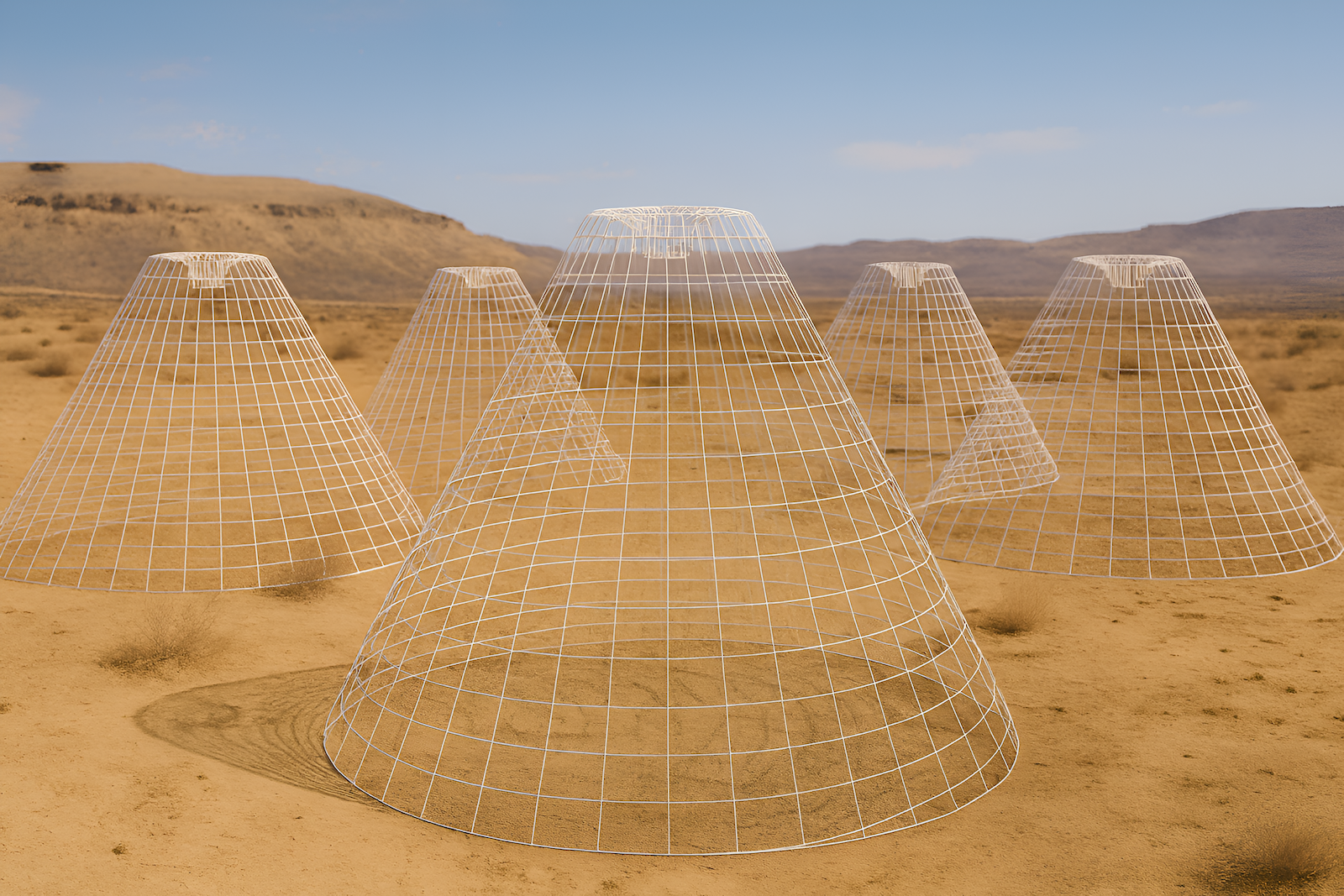
Tomato Volcanoes are exactly what the name implies — a powerful, high-performance way to grow tomatoes that erupt with fruit. Just as lava rises from the core of a volcano, the tomato plant grows upward and outward from the central core of the Tomato Volcano, forming a living dome of vines and fruit in every direction.
Every Tomato Volcano is compatible with all indeterminate (vining) tomato varieties including beefsteak, globe, roma, heirloom, and cherry types. The system is engineered so the vines naturally support their own weight, even when loaded with heavy clusters of fruit. No trellising or tying is required. Only in consistently high-wind areas plant ties are recommended to prevent vines from leaning in the direction of the prevailing wind.
One of the biggest advantages of the Tomato Volcano system is its ability to keep producing over multiple growing cycles without replanting. Throughout the season, or in a controlled shade house or greenhouse, growers can trim vines back to the core once peak production slows. Because the mature root system remains in place, the plant responds by pushing out new growth, producing fresh blooms, and setting even more fruit. This process of trimming and regrowth can be repeated continuously for up to two years before the plant tires and naturally declines.
The Tomato Volcano Shade House is a 42 × 185-foot water-smart growing system that produces nearly 100,000 pounds of premium tomatoes every two years using only 24–48 gallons of water per day. Inside the structure are 24 Commercial Tomato Volcano units, each supporting 9 indeterminate tomato plants that grow continuously for up to two years without replanting.
This system is designed specifically for tropical island markets where conventional farming struggles due to pests, water scarcity, hurricanes, and high import costs. With farm-gate revenues of $229,000–$250,000 per year, low operational costs, a facility lifetime of 100 years or more, and a capital payback of approximately 2.1 years, it offers a profitable, scalable solution for community agriculture projects and island nations in particular.
The Shade House was built specifically for island nations , where traditional farming faces major barriers:
LIMITED LAND SPACE
Most island nations have very little arable land due to mountainous terrain, urban development, tourism infrastructure, and protected natural areas. What farmland does exist is often fragmented and overused, preventing crop rotation and long-term soil health.
PESTS AND DISEASE
Warm, humid island climates are ideal breeding grounds for insects, fungal pathogens, and bacterial diseases. Pests such as lizards, fruit flies, leafminers, and aphids attack tomatoes at every stage, while fungal diseases like blight and mildew thrive in constant humidity. Once an infestation begins, it can spread rapidly.
LIMITED FRESHWATER RESOURCES
Many islands rely on rainfall, shallow aquifers, or expensive desalination for freshwater. Agriculture competes directly with households, tourism, and industrial needs, making large-scale irrigation difficult and often not economical.
LIMITED ACCESS TO RELIABLE ELECTRICITY
Some islands lack stable electrical infrastructure. Power outages, high costs of fuel-generated electricity, and limited grid access make it difficult to operate energy-intensive farming technologies like climate control systems, LED-lit greenhouses, and refrigeration.
HIGH IRRIGATION COSTS
Transporting, pumping, and storing water for agriculture often requires electricity or diesel fuel, making irrigation one of the highest operating costs for farmers. Desalinated water can cost 2–5¢ per gallon before even reaching the field, making water-heavy crops financially impractical.
HURRICANE EXPOSURE AND SEASONAL CROP DESTRUCTION
Island farmers face repeated losses from tropical storms, monsoons, cyclones, and hurricanes. High winds flatten crops, salt spray contaminates soil, and flooding damages infrastructure. Fields may recover in months but markets, hotels, and hospitals need fresh produce immediately.
HEAVY DEPENDENCY ON COSTLY FOOD IMPORTS
Because local production is unreliable, islands import 70–90% of their fresh produce from mainland suppliers. Shipping delays, port closures, global price fluctuations, and fuel costs drive up retail prices; often $4–$7 per pound for tomatoes. This reduces food security and drains local economies.
The Tomato Volcano Shade House solves these challenges with its enclosed design, Tomato Volcanoes, high-yield production, hurricane-disassembly/reassembly capability, near-zero soil exposure, and ultra-low water and fertilizer use.
The Tomato Volcano is more than an intensive tomato-growing system. It can also become a highly visible community demonstration of how productive food can be grown in a compact space using efficient irrigation, vertical growing, and Crop Circle design.
Through Growing To Give, individuals, schools, nonprofits, businesses, community organizations, and other local partners can become Food Ambassadors and help demonstrate practical ways to grow fresh food for their communities.
A Tomato Volcano can serve as a Food Ambassador demonstration garden, educational project, community food-production site, or starting point for a larger Crop Circle growing system.
These frequently asked questions explain how Tomato Volcanoes work, which tomatoes they are designed for, irrigation and plant support, commercial and community applications, and how a Tomato Volcano can become part of the Growing To Give Food Ambassador program.
A Tomato Volcano is a circular growing system designed around a raised central core and a sloping support structure. Indeterminate tomato vines grow outward across the structure rather than being trained vertically on conventional stakes or trellises, creating a dome of foliage, flowers, and fruit around the growing area.
Determinate tomatoes grow to a genetically limited size and generally produce their crop within a more concentrated period. Indeterminate tomatoes continue producing vines throughout the growing season until growth is limited by weather, disease, pruning, or other conditions. Tomato Volcanoes are primarily designed for indeterminate varieties.
A conventional trellis trains tomato vines upward using stakes, cages, strings, or wire supports. A Tomato Volcano provides a sloping surface over which vines can spread outward from a central growing area. The design is intended to support the vines while providing access for airflow, irrigation, plant care, and harvesting.
Water is delivered near the central root zone rather than sprayed across the entire plant canopy. The system can be connected to drip irrigation or another controlled water source. Crop Circle Root Tubes can also be incorporated to concentrate fertilizer and other root-zone inputs where the plants can access them.
Tomato Volcanoes are designed primarily for indeterminate, vining tomato varieties. These can include cherry, globe, beefsteak, heirloom, Roma, and other indeterminate cultivars. Variety selection should also consider climate, disease pressure, market demand, fruit size, and the length of the local growing season.
The Tomato Volcano is designed so vines can spread across and receive support from the structure without conventional vertical tying. Plant ties may still be useful in consistently windy locations or where a grower wants additional control over vine direction and plant access.
In climates or protected structures where frost and severe weather do not end the season, mature indeterminate plants may continue growing after portions of the vines are trimmed back. The established root system can produce new shoots, flowers, and fruit. How long a plant remains productive depends on variety, climate, disease pressure, nutrition, pruning, and overall plant health.
Yes. The commercial Tomato Volcano described by Crop Circle Farms uses a larger structural frame intended for intensive production in facilities such as shade houses and greenhouses. A smaller community version is intended for educational projects, community gardens, farmyards, backyards, neighborhood gardens, and local food initiatives.
Tomato Volcanoes can be incorporated into protected growing systems designed around limited land, targeted irrigation, pest management, local food production, and reduced dependence on imported produce. Crop Circle Farms also explores larger shade-house configurations for communities where freshwater, agricultural land, energy, and reliable food supply may be constrained.
Yes. A Tomato Volcano can serve as a visible Food Ambassador demonstration garden, educational project, community food-production site, or starting point for a larger Crop Circle growing system. Individuals, schools, nonprofits, businesses, and community organizations interested in participating can learn more through the Growing To Give Food Ambassador program .