Gooseberries
Types & Varieties of Gooseberries
Gooseberries are resilient, cool-season berry shrubs valued for their tart-sweet flavor, culinary versatility, and adaptability to diverse garden systems. Modern growers can choose between American, European, and hybrid gooseberries, each offering different strengths in berry size, disease resistance, and climate tolerance. Understanding these differences is essential for planning pruning, spacing, and long-term productivity.
American gooseberries tend to be tougher and more mildew-resistant, making them a strong choice for warmer or more disease-prone regions. European varieties often produce larger, dessert-quality fruit with complex flavor but benefit from careful site selection and airflow. Hybrid types bridge the gap, combining improved fruit size with enhanced resilience.
This guide compares gooseberry varieties by origin, growth habit, flavor profile, and management needs, helping gardeners and small-scale growers select cultivars that fit their climate, space, and yield goals—from backyard bushes to structured Crop Circle layouts.
Gooseberries are hardy deciduous berry shrubs in the Ribes genus, closely related to currants. They produce small, translucent berries that range in color from green and yellow to red and deep purple. Gooseberries are prized for their balance of tartness and sweetness and are commonly used in fresh eating, baking, jams, sauces, and preserves. Most cultivated varieties fall into three categories: European gooseberries, American gooseberries, and hybrid crosses that combine traits from both species.
• Gooseberries were widely cultivated in Europe as early as the 1500s, with English gardeners developing hundreds of named varieties.
• American gooseberries later became popular with
American gardeners
because of their hardiness and strong resistance to powdery mildew,
a disease that can affect European types in humid climates.
• With proper pruning and care, gooseberry bushes can remain productive for 15–20 years, making them one of the longest-lived berry crops for home gardens.
Feel free to share this gooseberry varieties infographic on your website or blog. Please include a link back to this page as the source.
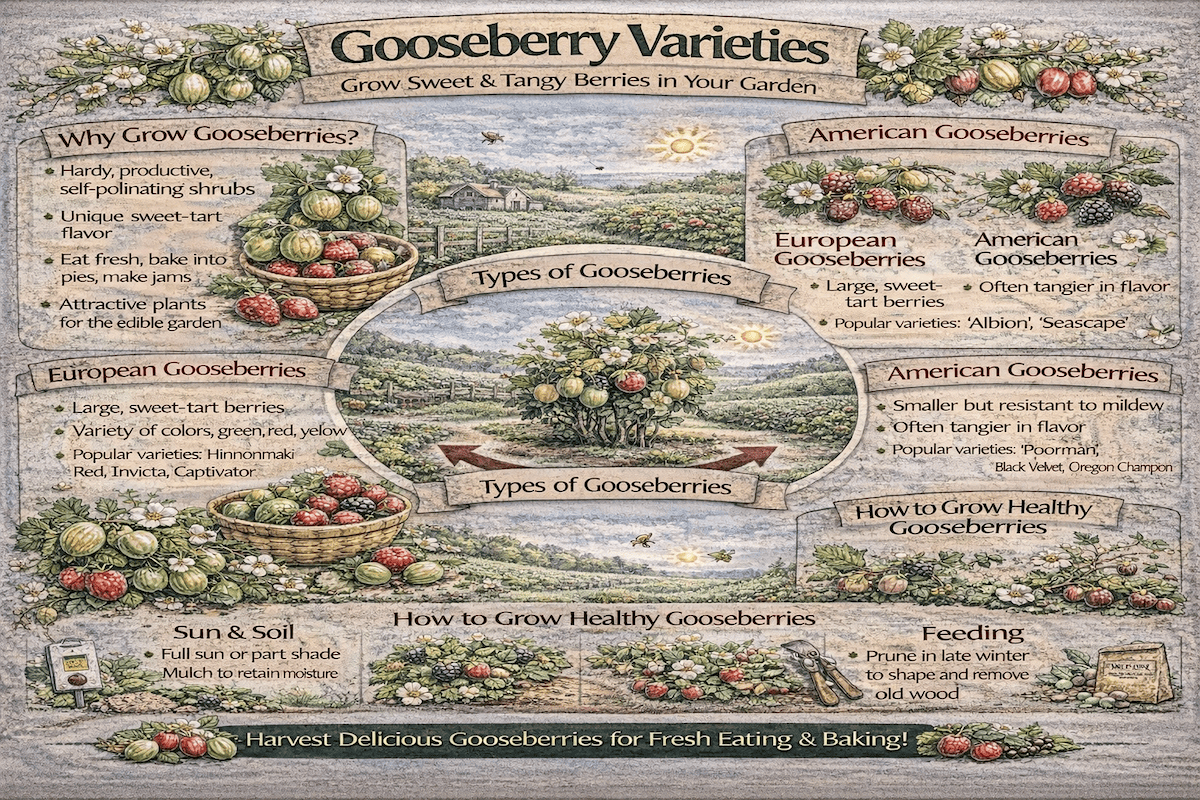
Start with type and disease pressure—then choose a cultivar that matches your climate, harvest goals, and pruning capacity.
Use this quick comparison to match gooseberry types to your climate, disease pressure, and harvest goals.
| Type | Typical strengths | Best climates | Notes |
|---|---|---|---|
| American | Hardiness, vigor, mildew tolerance | Humid or variable summers | Great starter choice in disease-prone areas. |
| European | Large berries, rich flavor | Cooler or drier climates with good airflow | Prioritize pruning and site selection to reduce mildew pressure. |
| Hybrid | Balanced berry size and resilience | Broad adaptability | Often ideal for small farms and mixed home gardens. |
Quick take: American gooseberries are the safest pick for humid regions, European types excel for dessert-quality fruit in cooler climates, and hybrids offer a strong middle ground.
Gooseberries can be a strong niche crop because of their distinctive flavor, processing value for jams, sauces and desserts, and relatively long productive life. Growers can model expected harvests by plant count, spacing, variety, plant age, and anticipated yield per bush before expanding a garden or commercial planting.
Compare popular berry crops, varieties, climate requirements, growing characteristics, harvest patterns, and production strategies.
Explore thorned and thornless blackberries, growth habits, climate fit, trellising, fruit quality, harvest timing, and productive cultivars.
Explore Blackberry Varieties →Compare highbush, lowbush, rabbiteye, and other blueberries by climate, chill requirements, soil pH, pollination, fruit quality, and harvest season.
Explore Blueberry Varieties →Compare summer-bearing and primocane raspberries, including red, black, purple, and golden varieties by climate, pruning, trellising, and harvest season.
Explore Raspberry Varieties →Compare June-bearing, everbearing, and day-neutral strawberries by climate, harvest pattern, containers, disease resistance, and yield potential.
Explore Strawberry Varieties →European gooseberries (Ribes uva-crispa, sometimes listed as Ribes grossularia) are traditional berry shrubs that have been cultivated across Europe for centuries. They are valued for their large fruit size, complex flavor, and dessert-quality berries. Compared with American gooseberries, European varieties typically produce larger berries with thicker skins and a more pronounced sweet-tart taste.
European gooseberries grow on compact, thorny shrubs that thrive in cool to temperate climates. The berries range in color from pale green and yellow to red, pink, and deep purple. Depending on the cultivar and ripeness, the flavor can vary from bright and tart to rich and honey-sweet. Because of this flavor range, European gooseberries are widely used in jams, pies, sauces, compotes, and fresh desserts.
One challenge historically associated with European gooseberries is susceptibility to American gooseberry mildew, a fungal disease that can affect foliage and fruit in humid climates. Modern breeding programs have introduced improved cultivars with better disease resistance, allowing these traditional varieties to perform well in many gardens and small farms.
Below are several well-known European gooseberry varieties grown for their flavor, productivity, and culinary quality.
Invicta: One of the most widely grown modern European gooseberries, Invicta is valued for its strong resistance to American gooseberry mildew. It produces heavy crops of large, pale green berries with a pleasant sweet-tart flavor, making it suitable for both fresh eating and cooking.
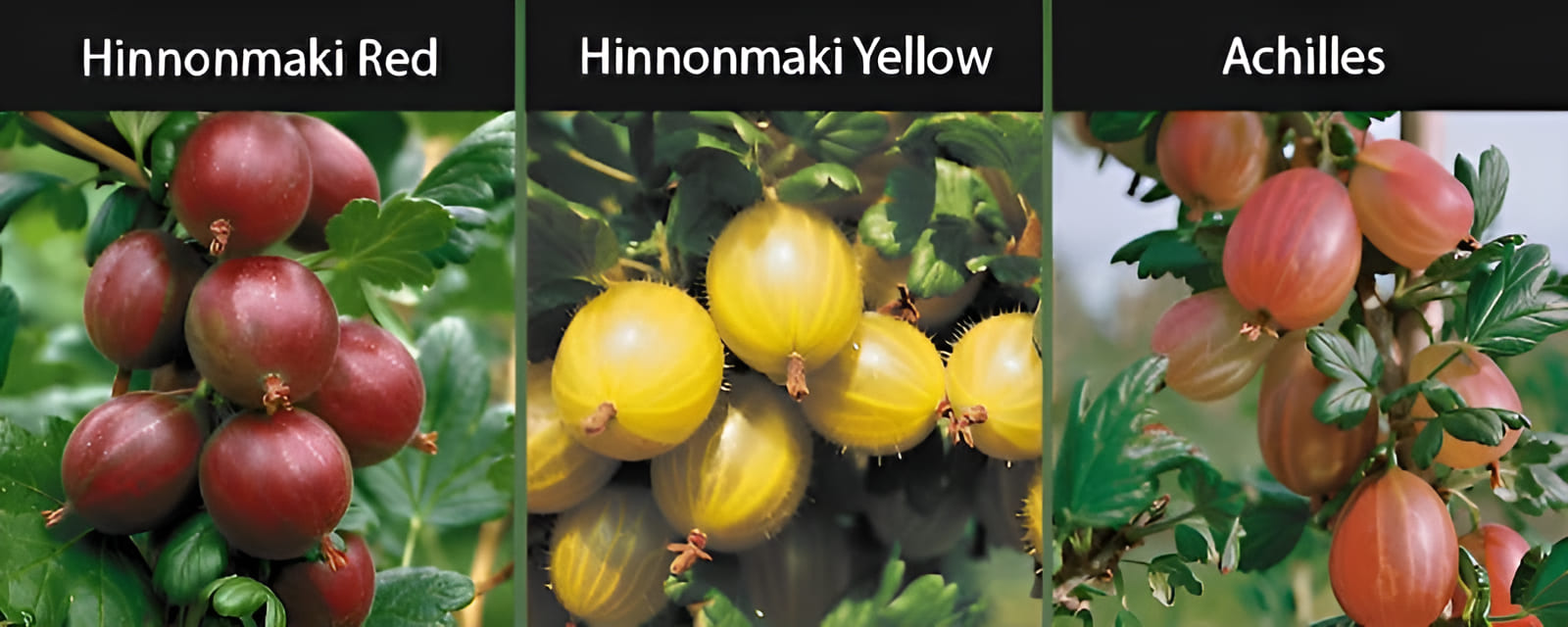
Hinnonmaki Red: Originally bred in Finland, this variety is known for its excellent disease resistance and reliable productivity. The berries are deep red with a tart skin and sweet interior flesh, creating a balanced flavor that works well for desserts and preserves.
Hinnonmaki Yellow: Another Finnish cultivar, Hinnonmaki Yellow produces generous crops of yellow-green berries with a distinctive aromatic sweetness. The plants are hardy and well adapted to cooler climates.
Greenfinch: Greenfinch is prized for its mildew resistance and dependable yields. The plants produce medium-sized yellow-green berries with a rich flavor that develops more sweetness as the fruit ripens.
Careless: A vigorous and productive variety, Careless produces abundant light-green berries that hold their shape well in cooking. It has good resistance to mildew and is commonly used in pies, jams, and traditional gooseberry desserts.
Leveller: Known for its large, golden-yellow fruit, Leveller produces berries with a sweet, dessert-quality flavor. The fruit is often eaten fresh when fully ripe but also performs well in preserves.
Achilles: An older heritage variety, Achilles produces large oval berries that are yellow-green with a refreshing tartness. This cultivar has long been valued for cooking and traditional gooseberry recipes.
Whitesmith: An early-season variety that yields medium to large berries with pale green to yellow skins. When fully ripe, the fruit becomes notably sweet, making it popular for fresh eating as well as culinary use.
European gooseberries remain some of the most flavorful berry cultivars available. When planted in well-drained soil with good airflow and moderate sunlight, these shrubs can produce reliable harvests for 15–20 years, making them a long-term addition to home gardens and diversified berry plantings.
American gooseberries (Ribes hirtellum) are native to the northeastern and north-central regions of the United States and Canada. These hardy berry shrubs evolved in cooler forest environments and are widely valued for their disease resistance, cold tolerance, and adaptability. Compared with European gooseberries, American varieties typically produce slightly smaller berries but are far more resistant to common fungal diseases such as powdery mildew.
American gooseberries grow on compact, thorny shrubs that thrive in a wide range of soils and climates, from northern gardens to moderate temperate regions. The berries vary in color from pale green and yellow to pink and deep red. Their flavor tends to be milder and less intensely tart than many European cultivars, making them versatile for both fresh eating and cooking.
Because of their strong natural resistance to disease and environmental stress, American gooseberries are often recommended for home gardens, organic orchards, and small farms. Many modern cultivars are also used in breeding programs to create hybrid varieties that combine the large fruit size of European gooseberries with the resilience of American species.
Below are several well-known American gooseberry varieties recognized for their productivity, flavor, and reliability in garden settings.
Pixwell: One of the most widely planted American gooseberry varieties, Pixwell is known for its adaptability and mildew resistance. It produces medium-sized berries that ripen from green to pink. The fruit has a tart flavor when fresh but becomes pleasantly sweet when cooked in pies, sauces, and preserves.
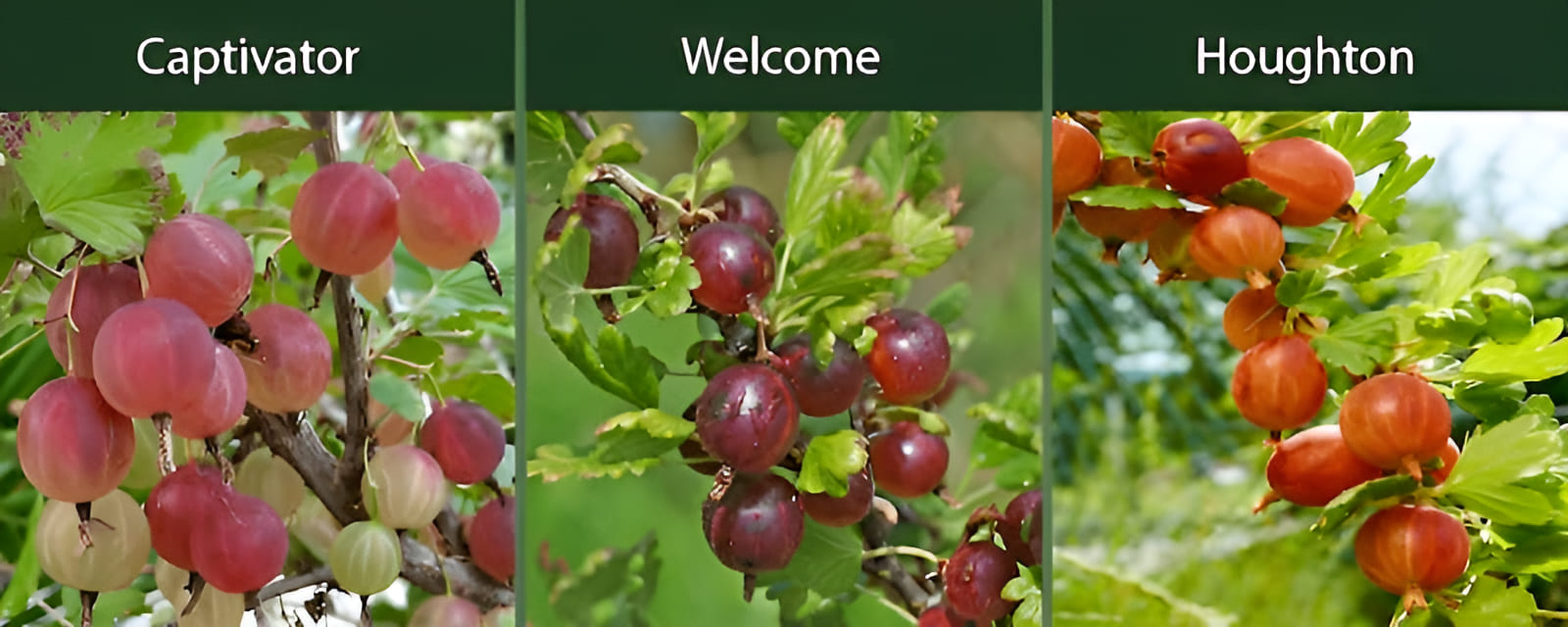
Welcome: A productive cultivar that yields large, deep red berries with a balanced sweet-tart flavor. Welcome gooseberries are resistant to mildew and perform well in cooler climates, making them a reliable choice for fresh eating and jams.
Poorman: Despite its unusual name, Poorman is considered one of the best American gooseberries for flavor. The berries are aromatic and sweet when fully ripe and are well suited for fresh eating, baking, and preserves. Plants are vigorous and resistant to powdery mildew.
Captivator: A nearly thornless hybrid gooseberry, Captivator produces large pinkish-red berries with a sweet flavor. Its reduced thorniness makes harvesting easier, and the plant shows good resistance to powdery mildew and leaf spot diseases.
Oregon Champion: This vigorous and productive variety produces large light-green berries that are excellent for cooking, especially in pies and traditional gooseberry desserts. The plants are hardy and perform well in cool climates.
Downing: An heirloom American gooseberry introduced in the 19th century, Downing produces pale green berries with a juicy, sweet flavor. It is well known for its resistance to mildew and leaf spot and remains a popular choice among traditional gooseberry growers.
Houghton: One of the earliest American gooseberry cultivars, Houghton is valued for its strong disease resistance and reliable productivity. The berries are small to medium in size with a pinkish-red color and a pleasantly sweet flavor when fully ripe.
American gooseberries are particularly well suited for gardeners seeking low-maintenance berry shrubs. With proper pruning, mulch, and sunlight, these plants can produce consistent harvests for 15 years or more, making them a durable addition to edible landscapes and diversified berry plantings.
Selecting the best gooseberry variety depends on several factors, including your local climate, disease pressure, flavor preferences, and how you plan to use the fruit. European, American, and hybrid gooseberries each offer different advantages. Understanding these differences will help you choose plants that thrive in your garden while producing the flavor and yield you want.
The following guidelines can help you decide which gooseberry types are best suited to your growing conditions and culinary goals.
1. Climate and Growing Conditions:
European gooseberries (Ribes uva-crispa) generally perform best in cooler climates with moderate
summer temperatures and consistent soil moisture. These varieties are widely grown in northern regions
and maritime climates where summers are mild. In contrast, American gooseberries (Ribes hirtellum)
are better adapted to warmer conditions and can tolerate heat and occasional drought more effectively.
If you live in an area with hot summers, American or hybrid varieties are often the most reliable choice.
Regardless of species, gooseberries prefer fertile, well-drained soil and benefit from organic mulch
to retain moisture and regulate temperature.
2. Disease Resistance:
Disease pressure can be an important factor when selecting gooseberry plants. American gooseberries
are naturally more resistant to common fungal diseases such as powdery mildew and
white pine blister rust. European varieties can be more susceptible in humid climates,
although many modern cultivars have improved resistance. Gardeners in areas with frequent rainfall or
high humidity often achieve the best results with American or hybrid varieties bred for disease tolerance.
3. Berry Size and Flavor:
European gooseberries are widely known for their large berries and complex flavor. Many cultivars
produce fruit that becomes quite sweet when fully ripe, making them excellent for fresh eating and desserts.
American gooseberries generally produce smaller berries with a brighter, tangier flavor that works well
for cooking, jams, and sauces. Hybrid varieties often offer a balance between the two—combining the larger
fruit size of European types with the resilience of American species.
4. Plant Growth Habit and Maintenance:
European gooseberry shrubs typically grow in a more upright and compact form, which can make pruning and
training somewhat easier. American gooseberries often have a more spreading habit and may require
additional pruning to maintain airflow and manageable plant size. Regular pruning is important for
all gooseberry plants, as it encourages new fruiting wood and improves light penetration within the shrub.
5. Thorn Density and Harvesting:
Most gooseberry plants develop sharp thorns along their stems, which help protect the fruit from wildlife.
American gooseberries often have denser thorn coverage than European types, which can make harvesting
slightly more challenging. Gardeners who prefer easier picking may want to consider cultivars with fewer
or softer thorns, or modern hybrids developed for improved harvestability.
6. Hybrid Gooseberries:
Hybrid gooseberries combine characteristics from both European and American species. These varieties
often deliver larger berries with improved disease resistance and stronger environmental adaptability.
One well-known example is the jostaberry, a hybrid between gooseberries and black currants.
Hybrids can be an excellent choice for American gardeners seeking the productivity and fruit size of European
gooseberries with the durability and resilience of American varieties.
By matching gooseberry varieties to your climate, soil conditions, and culinary preferences, you can establish shrubs that remain productive for many years. With proper pruning, good airflow, and healthy soil, gooseberry plants can provide reliable harvests for 15–20 years or more, making them a valuable long-term addition to home gardens and diversified berry plantings.
Crop Circle Farms designs and builds resource-efficient agricultural systems tailored to site conditions, crops, water availability, and production goals. Our field-tested systems have demonstrated up to 90% lower water use, up to 85% lower fertilizer requirements, and two to three times the production with selected crops and configurations compared with conventional layouts.
Services can include farm layout, irrigation planning, root-zone systems, crop selection, production modeling, training, and first planting.
Contact Us to discuss a Crop Circle Farm design for your property.
Through nonprofit and community partnerships, Crop Circle farming systems can support sustainable food production, smallholder agriculture, food security, education, and climate-resilience projects in communities around the world. Contact Growing To Give to explore smallholder farm clusters, school farm hubs, and community Crop Circle projects.
European gooseberries (Ribes uva-crispa / Ribes grossularia) typically produce larger, dessert-quality berries with bold sweet-tart flavor in shades of green, yellow, red, and purple. American gooseberries (Ribes hirtellum) are usually smaller with a milder flavor but shine for their toughness, heat tolerance, and disease resistance. Many growers plant a mix of both for flavor range and resilience.
European types like Invicta, Hinnonmaki Red, Hinnonmaki Yellow, Greenfinch, Careless, Leveller, Achilles, and Whitesmith are all excellent for desserts. They offer large, juicy berries with complex sweet-tart flavor that work beautifully in jams, pies, fruit crumbles, and sauces.
American varieties such as Pixwell, Welcome, Poorman, Captivator, Oregon Champion, Downing, and Houghton are known for hardiness and disease resistance. Many of these handle a wider range of climates and are a good choice if you’re new to growing gooseberries or gardening in a challenging site.
Yes. American and hybrid types such as Captivator were bred with reduced thorns to make pruning and harvest more comfortable. Even on thorny varieties, thoughtful pruning to open the bush and train branches outward will make picking easier.
Gooseberries thrive in cool to temperate climates and appreciate winter chill. European types tend to like cooler, moist summers; American types tolerate more heat and some drought stress. Plant them in full sun in cooler regions and in morning sun with light afternoon shade where summers are hot. As with currants and other Ribes, they need well-drained soil that doesn’t stay waterlogged.
Gooseberries prefer fertile, organic-rich loams with slightly acidic to neutral pH (about 6.0–7.0). Work in compost before planting and maintain a mulch layer to conserve moisture and keep roots cool. Avoid heavy, soggy soils that encourage root and cane diseases.
For traditional bush-form gooseberries, a spacing of about 3–5 feet between plants and 8–10 feet between rows gives good airflow and room for pruning. For tighter hedgerows or cordon-trained plants on a trellis, you can plant closer (around 2–3 feet apart) as long as you prune regularly to keep the canopy open.
Gooseberries can be grown either as freestanding bushes or trained on a cordon or fan trellis. Bush form is simple and traditional, while cordon or fan training on wires:
Choose the system that fits your space and how intensively you want to prune.
Start by opening the center of the plant so light and air reach all fruiting wood. Remove dead, damaged, or crossing branches at the base, and each winter thin out the oldest canes to encourage new, productive shoots. European and American types both fruit best on young wood, so regular renewal pruning keeps berries large, clean, and easy to pick.
Powdery mildew is the main concern, especially on older European varieties. Choosing mildew-resistant cultivars (such as Invicta, Hinnonmaki Red, and Greenfinch), maintaining good airflow with proper spacing and pruning, and avoiding excessive nitrogen all help reduce problems. As with other berry crops like raspberries and blueberries, remove fallen leaves and prunings to limit disease carryover.
Yes. Compact European or American gooseberries can do well in large containers filled with well-drained, compost-rich media and watered by drip irrigation. In commercial or high-value gardens, high tunnels help:
Most gooseberry varieties are self-fertile and will set fruit with just one plant. However, planting two or more compatible varieties can improve fruit set and yields. Healthy pollinator populations—supported by insectary plants and bee-friendly practices—will also boost berry size and uniformity.
Start with your climate and disease pressure, then match flavor and berry size to your end use:
For mixed berry plantings, you can pair gooseberries with blackberries, currants, and other small fruits to extend your harvest season and diversify flavors.
In a Crop Circle or spiral layout, gooseberries can be planted on the cooler, slightly shaded arcs with drip irrigation and deep mulch. Cordoned rows along ring paths make it easy to prune and harvest without wrestling with thorns, while interplanting insectary flowers and companion plants supports pollinators and beneficial insects for healthier, more productive bushes.