Growing Currants
Types & Varieties of Currants
Currants are compact, cold-hardy berry shrubs in the Ribes genus, valued for their intense flavor, early-season harvest, and adaptability to home gardens and diversified farms. Red, white, pink, and black currants—as well as hybrid jostaberries—offer different strengths in flavor, disease resistance, and culinary use, making variety selection an important first step.
Red and white currants are prized for bright, translucent berries ideal for fresh eating, jams, and jellies, while black currants are known for their bold aroma and high vitamin content used in juices and syrups. Pink currants bridge the gap with milder sweetness, and jostaberries combine black currant richness with larger fruit and thornless growth.
This guide compares currant types by climate tolerance, spacing needs, pruning approach, and yield potential, helping gardeners and growers choose the right plants for backyard beds, berry rows, and high-efficiency Crop Circle layouts.
Each type of currant offers unique flavors and characteristics, making them a versatile choice for gardening and cooking. Their diverse range of flavors makes them an excellent choice for a variety of culinary applications, from sweet to savory dishes, while their vibrant colors can liven up any garden.
Conservation agriculture often improves margins by reducing inputs while stabilizing yields. Use these tools to estimate production, spacing, and efficiency gains.
Estimate yield per crop or planting unit.
Plan rows, spacing and total harvest.
Tip:Open pruning and mildew-resistant varieties improve fruit quality and usable yield.
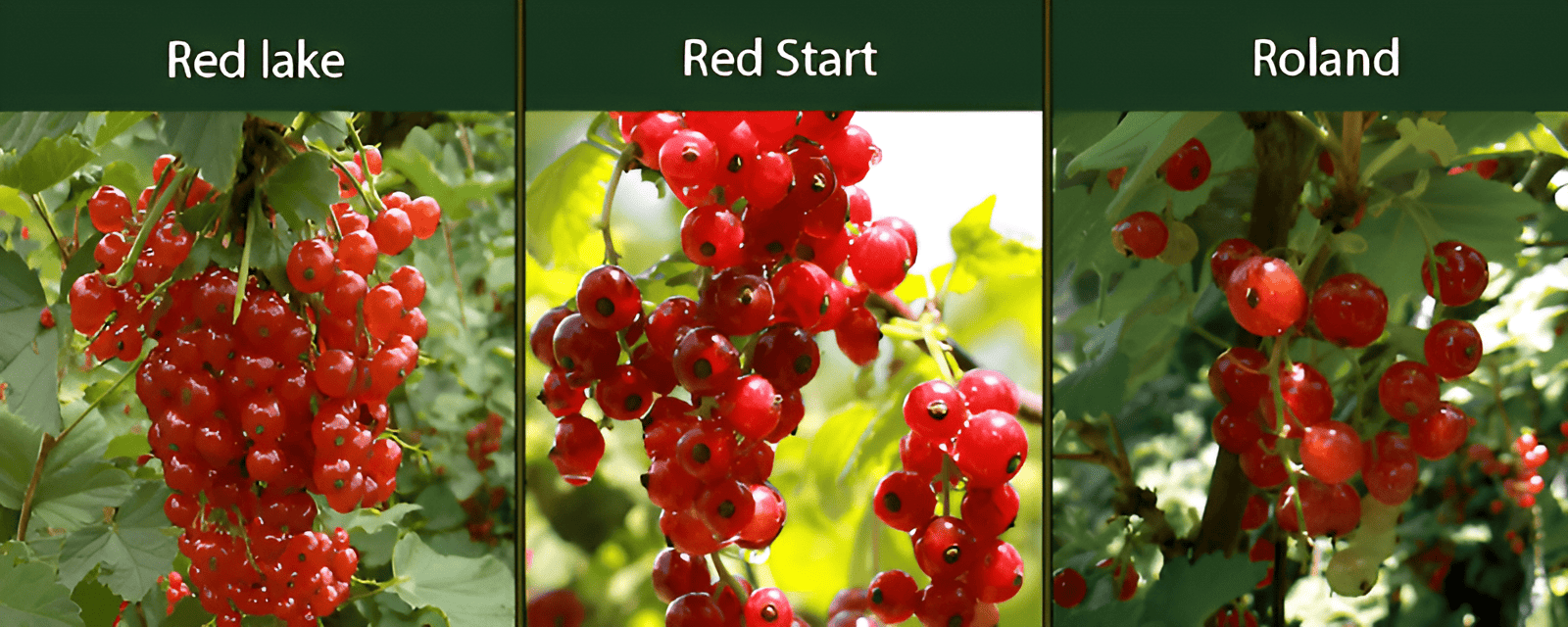
Red currants (Ribes rubrum) are small, round fruits that grow on deciduous shrubs native to western Europe. They are known for their bright red color, glossy sheen, and a tart flavor, often used in jams, jellies, sauces, and desserts due to their pectin content and distinctive taste.
Jonkheer Van Tets: This variety is early fruiting and known for its high yield.
Rovada: Known for its late maturity, this variety produces large, sweet berries on long strings.
Red Lake: A popular variety in the United States, it produces large, sweet berries.
Stanza: This variety is known for its strong growth and heavy yield.
Redstart: An early fruiting variety, 'Redstart' is known for its large berries.
Rotet: This variety is resistant to diseases and known for its high yield of large berries.
Junifer: An early fruiting variety, it is resistant to mildew and known for its heavy yield.
Detvan: This variety has a medium growth rate and produces sweet, large berries.
Roland: Known for its late maturity, this variety produces large berries.
Rosetta: This variety is late fruiting and known for its very sweet, large berries.
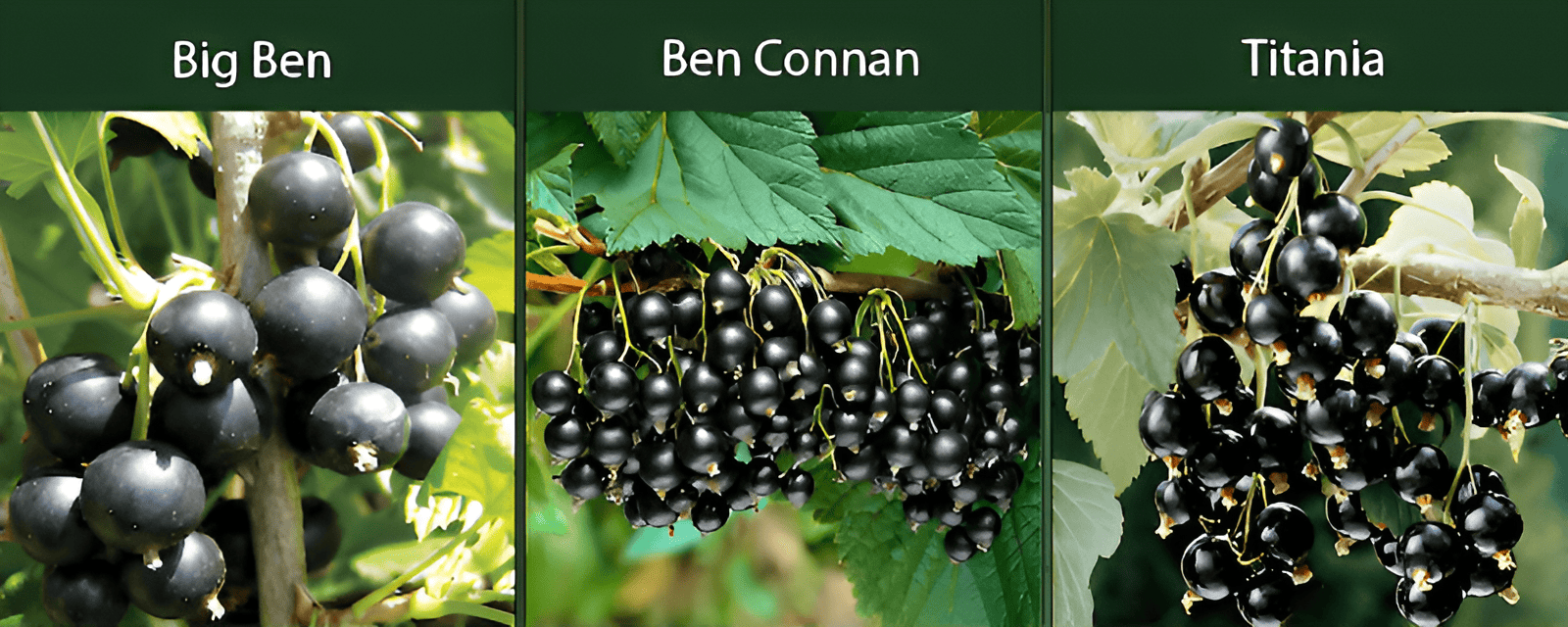
Black currants (Ribes nigrum) are small, dark purple berries that grow on perennial shrubs native to temperate parts of central and northern Europe and northern Asia. They are highly valued for their intense, tart flavor and are widely used in culinary applications such as syrups, jams, jellies, and desserts, as well as being a key ingredient in the liqueur known as Crème de Cassis.
Ben Sarek: Compact and suitable for smaller gardens, this variety is resistant to mildew and produces large, high-quality fruit.
Ben Hope: This variety is resistant to reversion virus and produces heavy crops of medium-sized berries.
Ben Lomond: One of the most common types due to its resistance to frost and mildew. It produces large fruits and has a high yield.
Ben Connan: Known for its large and sweet berries, this variety is resistant to mildew and has a high yield.
Ben Tirran: This late-fruiting variety is resistant to reversion virus and produces small to medium-sized berries.
Big Ben: As the name suggests, this variety produces very large berries. It's resistant to frost and has a good yield.
Titania: A Swedish variety, 'Titania' is known for its resistance to disease and produces large, sweet berries.
Ojebyn: Another Swedish variety, it's valued for its productivity and hardiness in cold climates.
Goliath: An older variety known for its large berries and high yield.
Wellington XXX: A New Zealand variety, it's known for its strong black currant flavor and productivity.
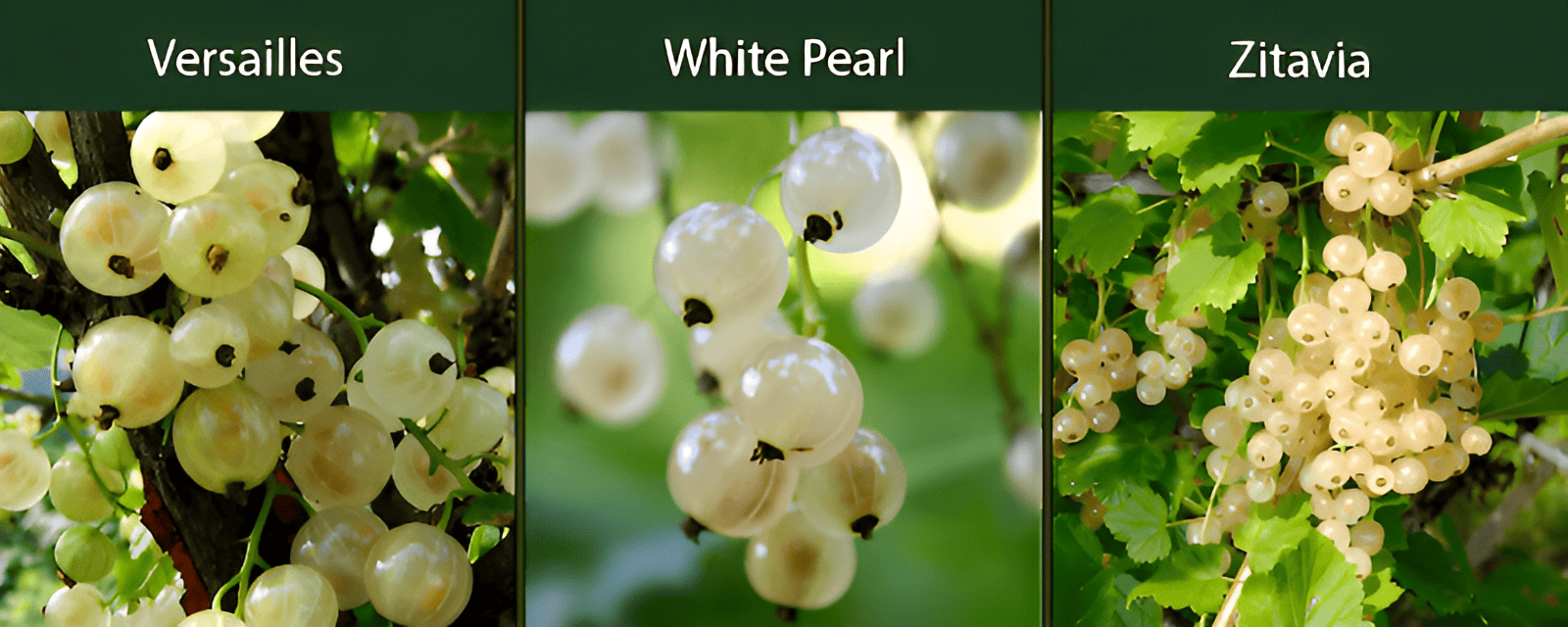
White currants are a type of currant that is often a white or light-colored variant of red currants. They are usually milder and sweeter than their red counterparts. Here are a few varieties of white currants:
White Pearl: A variety that yields a high quantity of sweet, light-yellow berries.
White Imperial: Known for its large, sweet berries and vigorous growth habit.
White Versailles: An older variety known for its large, sweet berries.
Primus: This variety has a high yield and produces aromatic, sweet berries.
Zitavia: Known for its high yield of medium to large, flavorful berries.
Blanka: This variety produces large clusters of sweet, yellowish-white berries.
Gloire des Sablons: Also known as Pink Champagne, this variety actually produces pinkish berries with a sweet flavor.
Snowball: This variety produces clusters of sweet and aromatic berries.
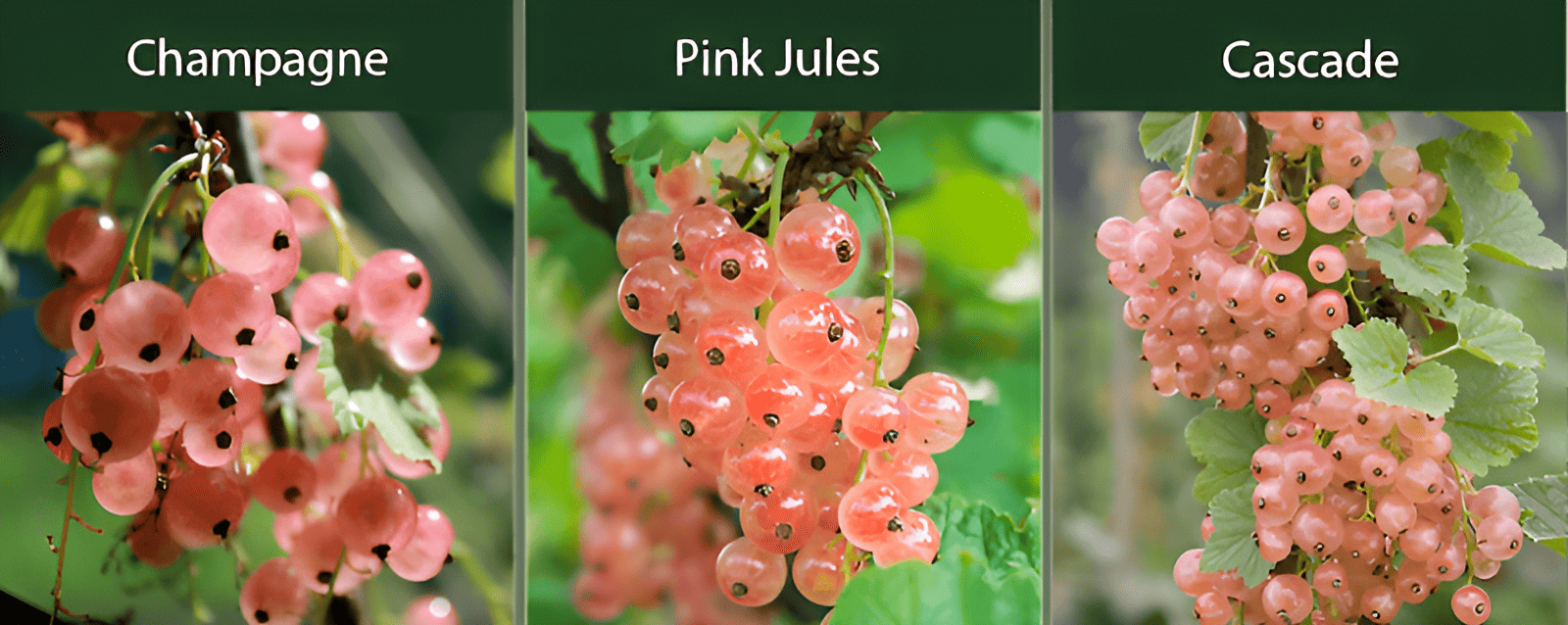
Pink currants are less common than their red, white, and black counterparts, but they offer a unique, delicate flavor and color that can be a great addition to your garden. Here are a few varieties of pink currants:
Gloire des Sablons: Also known as Pink Champagne, this variety produces pinkish berries with a sweet, delicate flavor. It's often considered a type of white currant, but the color is closer to pink.
Pink Jules: This variety is known for its hardiness and productivity, with clusters of vibrant pink berries.
Cascade: This variety yields a high volume of translucent pink berries and is prized for its resistance to mildew.
Rosa Sport: An early ripening currant bush that produces pale pink, sweet fruit.
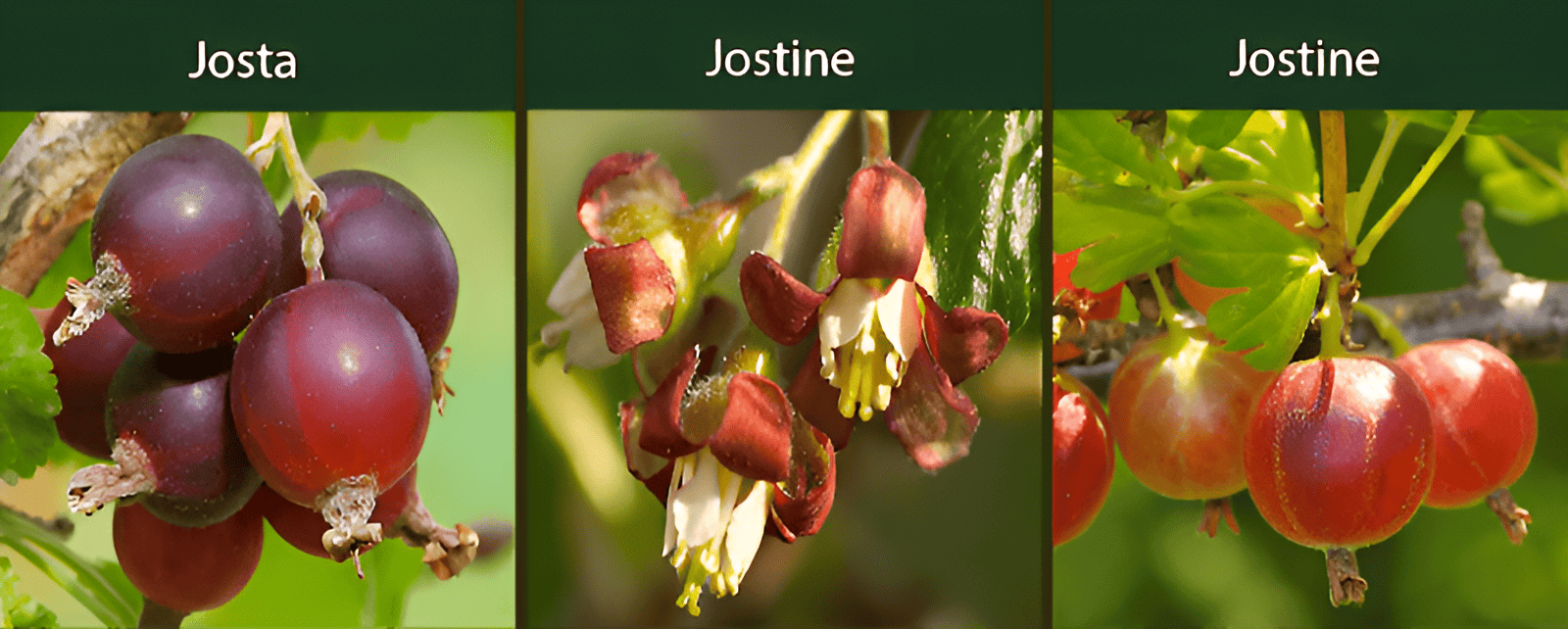
The Jostaberry is a complex-cross fruit that is a cross between the black currant, the North American coastal black gooseberry, and the European gooseberry. The fruit is larger than a black currant and unlike other currants, it doesn't have a musky scent. The Jostaberry is relatively new and there are not as many varieties compared to other berries. Here are a few known varieties:
Northcountry: A variety known for its sweet, wild flavor, Northcountry produces medium-sized berries and has a compact growth habit, making it excellent for small gardens or containers.
Josta: This is the most common variety and is often what people refer to when they talk about Jostaberries. The bushes can grow quite large, and the berries are bigger and sweeter than most black currants.
Jostine: This variety is slightly smaller than 'Josta' but produces a higher yield of berries.
Jogranda: A variant known for its slightly larger and juicier berries.
Crop Circle Farms can help evaluate farm layout, crop selection, irrigation, soil-management practices, production goals, and site conditions for a more efficient growing system.
Contact Us to discuss a Crop Circle Farm design for your property.
Growing To Give works with partners interested in practical food production, water efficiency, soil health, and agricultural resilience in communities where locally grown food can make a meaningful difference.
Learn More about supporting an initiative or program.
Compare berry varieties, plan spacing, and estimate harvest totals using the guides and calculators below. These resources can help move from “which variety?” to “how many plants?” and “how much harvest?”
Compare June-bearing, everbearing, and day-neutral strawberries with practical variety-selection considerations.
Compare primocane and floricane raspberries along with red, black, and purple raspberry types.
Explore highbush, rabbiteye, and other blueberry types, including soil pH and pollination considerations.
Compare thornless, trailing, erect, and primocane blackberry types with basic trellis considerations.
Compare American, European, and hybrid gooseberries and consider climate, fruit characteristics, and growing conditions.
Estimate production per plant and scale projected harvests across larger plantings.
Plan planting areas, rows, and beds while estimating the potential total harvest from a garden.
Tip: Harvest estimates become more useful when you track plant spacing, plant age, variety, growing conditions, and early-, mid-, or late-season production.
Red currants are the classic tart jelly and cordial fruit, while blackcurrants have a stronger, aromatic flavor used for juices, syrups, and medicinal products. White currants are usually sweeter selections of red currants, with translucent berries and a milder taste. Pink currants (often selections of red or white types) offer a balance of sweetness and color for fresh eating and desserts. All four types grow on similar shrubs and can be mixed in the same berry patch with gooseberries, raspberries, and blackberries.
For fresh eating, many gardeners prefer sweeter white and pink currants such as ‘White Pearl’, ‘Gloire des Sablons’, or ‘Blanka’. Tart red varieties like ‘Red Lake’, ‘Rovada’, and ‘Jonkheer van Tets’ shine in jams, jellies, and sauces. Blackcurrant workhorses such as ‘Ben Lomond’ or ‘Ben Sarek’ are ideal for juice, cordial, and preserves. Mix plantings of several varieties to cover fresh snacking, baking, and long-term pantry storage alongside other small fruits like strawberries and blueberries.
Currants grow best in deep, moisture-retentive, well-drained soil with plenty of organic matter. A slightly acidic to neutral pH of about 6.0–7.0 is ideal for most red, white, and pink currants, while blackcurrants tolerate slightly more acidity. Before planting, incorporate composted plant matter and well-aged manure, as you would when preparing beds for other berry crops or Crop Circle Gardens. Avoid waterlogged spots or hot, exposed slopes where plants will dry out quickly.
Currants prefer full sun in cooler climates but benefit from light afternoon shade in hot summer regions. Red and white currants usually perform well with 4–6+ hours of sunlight; blackcurrants are a bit more shade-tolerant. Space bushes about 3–5 feet apart in rows, with 6–8 feet between rows, depending on the vigor of the variety. In intensive plantings, you can interplant currants with other shrubs like gooseberries and small fruits in a circular or spiral layout to maximize yield per square foot.
Currants bear most heavily on 2–3-year-old wood. Each winter, remove any dead, damaged, or weak canes, then thin older stems so that you keep a mix of 1-, 2-, and 3-year-old shoots (often 8–12 per plant). Aim for an open, vase-shaped bush where light and air can reach the center. Blackcurrants are often pruned more heavily, with older wood removed regularly to encourage vigorous new shoots. Good pruning, combined with fertile soil and regular watering, boosts berry size and overall production—just as careful pruning does with raspberries and blackberries.
Common problems include aphids, currant fruit fly, currant sawfly, and spider mites, along with diseases like powdery mildew, leaf spot, and rusts. Encourage beneficial insects, use row cover where practical, and avoid overhead watering that keeps foliage wet. Regular sanitation—removing fallen leaves and infected fruit—goes a long way. For broader integrated pest management ideas that apply to currants and other crops, see our Farm and Garden Pests guide.
Under good conditions, a mature currant bush can yield several pounds of fruit per season, with productive varieties often producing multiple quarts of berries per plant. Yields depend on variety, plant age, pruning, soil fertility, and water. To estimate how many bushes you need to supply your family or a market garden, combine currants with other berries using tools like the Garden Yield Calculator to plan your annual harvest.
Yes. Compact currant varieties can be planted in large containers (at least 15–20 gallons) filled with rich, well-drained media. In small courtyards or patios, group currants with container-grown strawberries or blueberries to create a portable berry patch. In ground, a circular or spiral design—like a mini Crop Circle Garden—makes currant harvesting easy from all sides.
Jostaberry is a complex hybrid between blackcurrants and gooseberries, combining the rich flavor of blackcurrant with the larger berry size and thornless habit of some gooseberries. Jostaberry shrubs are vigorous, productive, and resistant to many diseases that affect traditional Ribes crops. They make a perfect companion to classic currant bushes and can be planted alongside gooseberry varieties in mixed berry hedgerows.
Currants are ideal understory or edge plants in a layered berry system. Their compact size, shade tolerance, and early-season bloom make them excellent companions for taller crops and perennials. You can ring fruit trees with currant bushes, stitch them between rows of raspberries and blackberries, or integrate them into Crop Circle Gardens and spiral beds. The result is a resilient, high-yield berry system that provides fresh fruit, preserves, and value-added products from spring through fall.