Biochar: Terra Preta
Carbon Sequestration and Sustainable Agriculture
Biochar is a stable, carbon-rich material created by heating organic biomass in a low-oxygen environment. When added to soil, it improves water retention, nutrient availability, and microbial activity while locking carbon into the ground for decades or longer.
Unlike compost or raw organic matter, biochar does not break down quickly. Instead, it acts as a long-term soil amendment that enhances fertility, reduces nutrient loss, and supports healthier root systems across a wide range of crops. These properties have made biochar increasingly important in regenerative agriculture, climate-smart farming, and sustainable food production systems.
This page explores how biochar is made, how it functions in soil, how it should be charged before application, and why it plays a critical role in improving yields, rebuilding degraded soils, and reducing agriculture’s carbon footprint.
Biochar has a rich history that dates back thousands of years. Its origins can be traced to ancient cultures in the Amazon Basin of South America, where it was known as "Terra Preta" or black earth. It was produced and added to the highly weathered, nutrient-poor tropical soils by pre-Columbian civilizations, leading to pockets of remarkably carbon-rich soils that are amazingly fertile today.
Terra Preta is characterized by its high charcoal content, which led scientists to the discovery and understanding of biochar. The presence of this black earth significantly improved the otherwise infertile Amazonian soil, enhancing its nutrient and moisture retention capacities.
This led to a transformation of agriculture that allowed early agrarian culture to thrive. These Amazon basin soils have maintained their fertility for thousands of years and as productive today as they were then. The addition of biochar to infertile soil shows the learning capability and inventiveness of these ancient civilizations indicating a deep understanding of their environment and enhancement agriculture practices.
The potential of biochar remained largely untapped until its rediscovery in the late 20th century when soil scientists studying Terra Preta started to understand its significance for plant growth in the early 1990s. Researchers also soon discovered its potential for carbon sequestration, and with the growing concern over climate change, biochar started gaining attention worldwide.
By the early 21st century, the study of biochar experienced a renaissance. Scientific communities began exploring biochar’s potential beyond soil amendment, focusing on its ability to combat climate change by sequestering carbon. The concept of pyrolysis was perfected, where organic waste is heated in a low-oxygen environment to produce biochar.
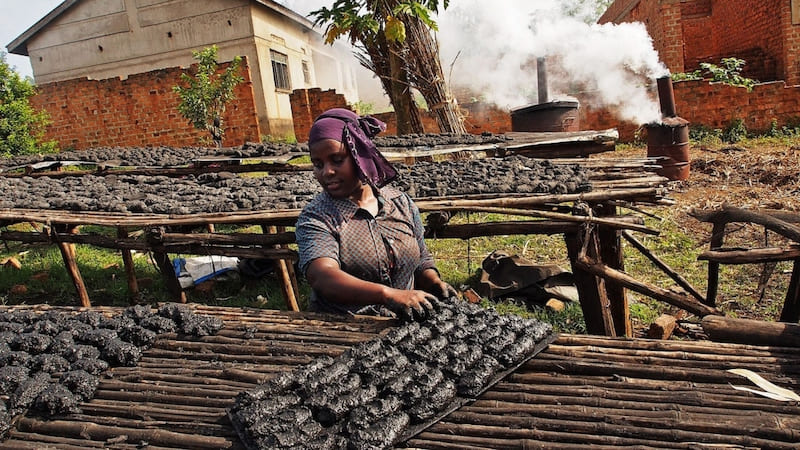
Modern biochar referred to as “green charcoal" by the sustainable agriculture community, is obtained from the pyrolysis of organic biomass such as wood waste, under high-temperature and low-oxygen conditions.
This renewable resource harnesses the energy stored in waste material and converts it into a valuable soil amendment product. Green charcoal is a multifaceted solution that impacts sustainable interests ranging from carbon sequestration to soil fertility, thereby offering a renewable approach towards sustainable agriculture and climate change mitigation.
Integrating biochar into agricultural systems promotes sustainable farming practices. The combination of biochar's nutrient retention capabilities, its ability to improve soil fertility, and its carbon sequestration properties makes it a “win-win” for farmers.
One of the more significant biochar properties of biochar is its stable carbon structure, which allows it to function as an effective, year-after-year carbon sink. With a higher carbon content than the original biomass, biochar efficiently captures and stores atmospheric carbon dioxide as sequestered carbon.
Affordability, ease of use, resilience, and longevity make biochar a great asset for carbon farming, a climate-smart agricultural practice aimed at sequestering carbon in the soil.
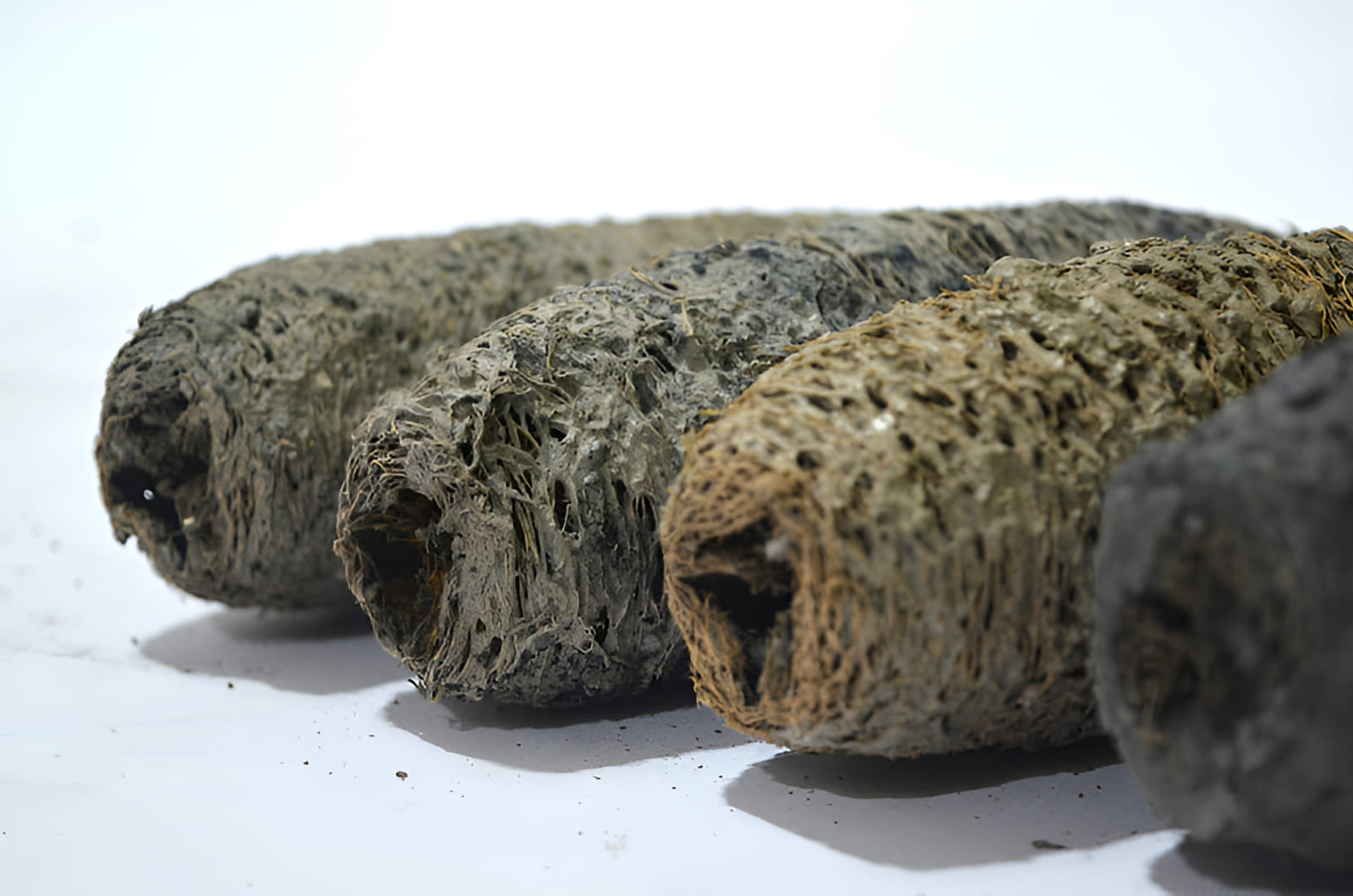
Biochar has the potential to significantly decrease or virtually eliminate reliance on traditional fertilizers, leading to more sustainable and environmentally friendly agricultural practices. Its unique physical properties and high nutrient content make it an effective soil amendment, enhancing soil fertility without the use of synthetic or natural fertilizers and promoting healthier crop growth.
Biochar's porous structure increases the soil's water-holding capacity and cation exchange capacity, improving nutrient retention and reducing nutrient leaching. This means that biochar-amended soils can hold onto nutrients longer, providing plants with a slow-release source of essential elements typically supplied by other types of soil amendments.
Furthermore, biochar has been shown to boost soil microbial activity, which plays a key role in nutrient cycling and soil fertility. The addition of biochar to soils can create a habitat for beneficial soil microorganisms that facilitate nutrient transformation and availability, while synthetic fertilizer in particular can damage soil microbes.
As such, biochar can either replace or reduce the need for synthetic fertilizers and most organics, contributing to environmentally friendly and cost-effective farming systems. However, it's crucial to note that the specific benefits can vary depending on the type of biochar and soil, as well as the specific crops grown.
Today, biochar is recognized globally for its multi-functional potential. Its use in carbon sequestration offers an affordable solution for reducing greenhouse gas emissions. It is seen as a promising tool in carbon farming and plays a significant role in promoting soil health, increasing agricultural productivity, and conserving water.
Moreover, its role in producing renewable energy through the pyrolysis process has created new paths in sustainable energy production. These developments have pushed Biochar to the forefront of the battle to fight climate change.
Biochar, from its ancient beginnings in Terra Preta to its modern applications as green charcoal for carbon sequestration and sustainable agriculture, has a fascinating history and offers tremendous potential for a more sustainable future for all of us.
Biochar is a carbon-rich material produced by heating biomass such as wood, crop residues, or other organic materials under conditions with limited oxygen. When produced appropriately and added to soil, its porous structure can influence water retention, nutrient holding, soil structure, and microbial habitat.
Biochar is generally produced through pyrolysis, a process that heats organic material at elevated temperatures with little or no oxygen. The process converts part of the original biomass into a relatively stable carbon-rich solid while also producing gases, vapors, and other energy-containing products. Biochar properties vary with the feedstock, temperature, residence time, and production system.
Biochar and charcoal can be produced through similar thermal processes, but they are generally made for different purposes. Biochar is specifically produced and characterized for uses such as soil amendment and carbon management. Charcoal intended for cooking or fuel may contain additives or have properties that make it unsuitable for agricultural soils.
Depending on the type of biochar and the soil in which it is used, biochar can increase pore space, influence water-holding capacity, provide surfaces for microorganisms, and improve the soil's ability to retain some nutrients. Responses vary considerably with soil texture, climate, crop, biochar properties, application rate, and existing soil fertility.
Charging biochar means mixing or soaking it with nutrient-rich materials before applying it to soil. Compost, compost extracts, manure-based materials, or appropriately prepared nutrient solutions may be used for this purpose. Preconditioning biochar can help fill some of its porous surfaces with nutrients and microorganisms before it is incorporated into the root zone.
It can be, but freshly produced biochar may temporarily interact with nutrients, moisture, and soil chemistry in ways that are not beneficial for every crop or soil. Mixing biochar with compost or another suitable organic amendment before application is often a more predictable approach. Biochar should also be allowed to cool completely and should be free from contaminants before agricultural use.
There is no single application rate that is appropriate for every garden or farm. The amount should depend on soil type, crop, biochar properties, existing organic matter, nutrient conditions, and management goals. Small-scale testing is useful before applying biochar across a large area, particularly when using a new feedstock or production source.
It can. Many biochars are alkaline and can raise soil pH, but the effect varies substantially according to the feedstock and production conditions. This can be useful in some acidic soils but undesirable in soils that are already alkaline. Soil testing and information about the biochar itself should guide application decisions.
Biochar contains forms of carbon that can be more resistant to biological decomposition than the original plant material. When appropriately produced biochar is incorporated into soil, some of this carbon can remain there for extended periods. The overall climate benefit depends on the feedstock, production process, energy use, transportation, alternative uses of the biomass, and how the biochar is ultimately managed.
Choose biochar made from clean, appropriate feedstocks and produced under controlled conditions. Important characteristics can include particle size, pH, ash content, carbon content, nutrient content, and the presence of unwanted contaminants. Agricultural biochar should be selected for the specific soil and crop rather than assuming that every biochar product will perform the same way.
Crop Circle Farms can help evaluate farm layout, crop selection, irrigation, soil-management practices, production goals, and site conditions for a more efficient growing system.
Contact Us to discuss a Crop Circle Farm design for your property.
Growing To Give works with partners interested in practical food production, water efficiency, soil health, and agricultural resilience in communities where locally grown food can make a meaningful difference.
Learn More about supporting an initiative or program.