Companion Plants
Repel Pests the Natural Way
Companion planting is an ancient gardening technique that involves growing different plants together to improve their growth and yield. The phrase "companion plant" is used to describe a plant that is cultivated near another plant with the aim of offering mutual advantages, including boosting the fertility of the soil, warding off pests, luring pollinators, and augmenting flavor.
Companion planting has been practiced for centuries by cultures around the world. Indigenous agricultural traditions in the Americas include variations of the Three Sisters system combining corn, beans, and squash. Corn can provide vertical structure for climbing beans, beans add a nitrogen-fixing legume to the system, and squash forms a broad canopy that covers the soil and can help suppress weeds and reduce evaporation.
In Europe, medieval monks used companion planting to create productive and sustainable gardens. They observed that certain plants grown together had beneficial effects on one another, such as deterrence of pests and diseases.
Companion planting works by exploiting the natural synergies between plants. For example, some plants secrete chemicals that repel or attract insects, while others have deep or shallow roots that access different layers of soil and nutrients. By planting complementary plants together, gardeners can improve soil health, increase yields, and reduce the need for synthetic fertilizers and pesticides.
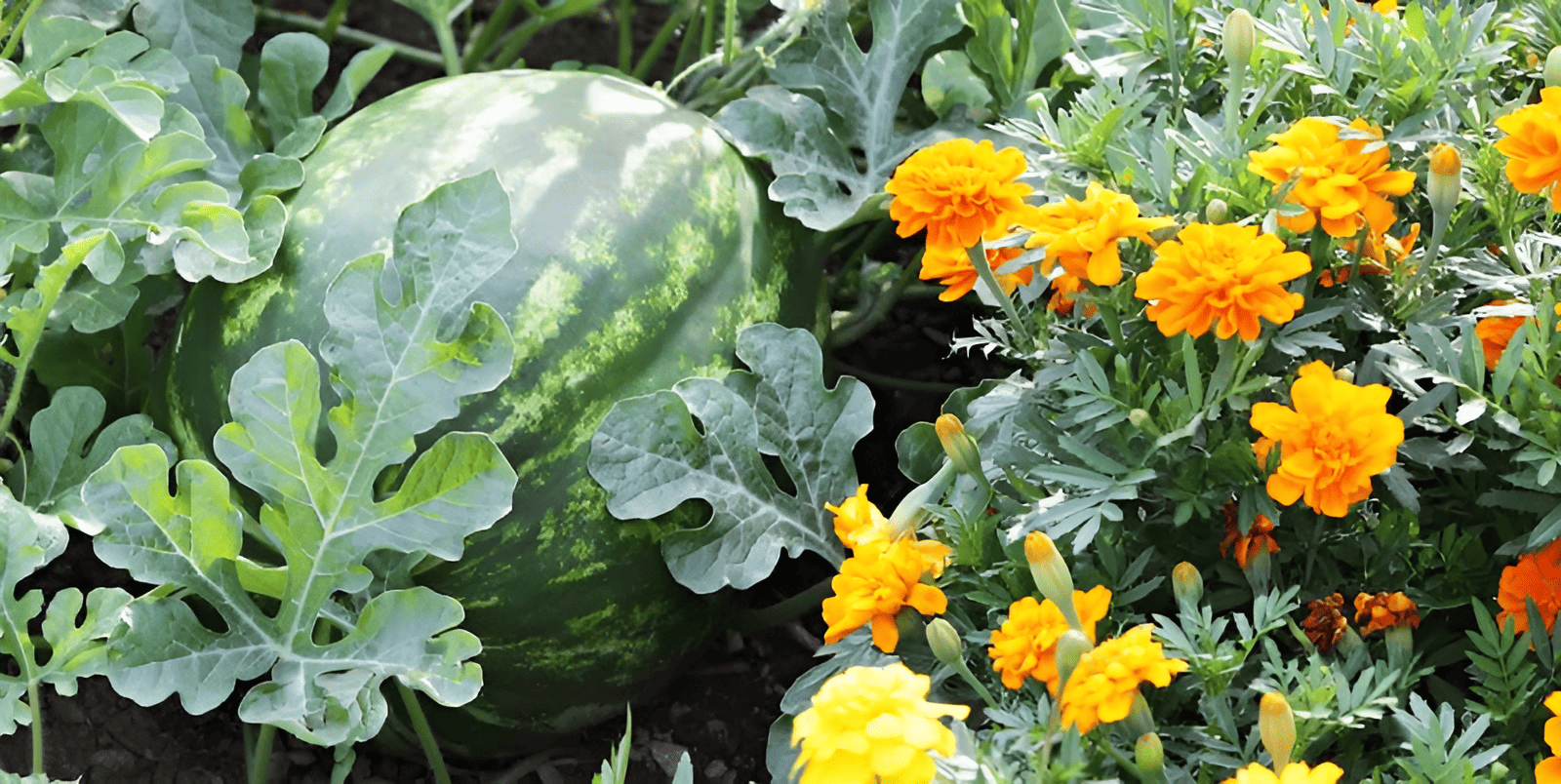
There are different types of companion plants, each with its unique benefits. Here are some of the most common types:
Nitrogen fixers: Plants like beans, peas, and clover, have the ability to fix nitrogen from the air and store it in their roots, making it available to other plants in the soil.
Pest repellents: Plants like marigolds, garlic, and onion, produce chemicals that repel pests, reducing the need for synthetic pesticides.
Pollinator attractors: Plants like sunflowers, lavender, and thyme, attract bees, butterflies, and other pollinators, improving fruit and vegetable yields.
Here are some examples of companion planting and the reasons why they work:
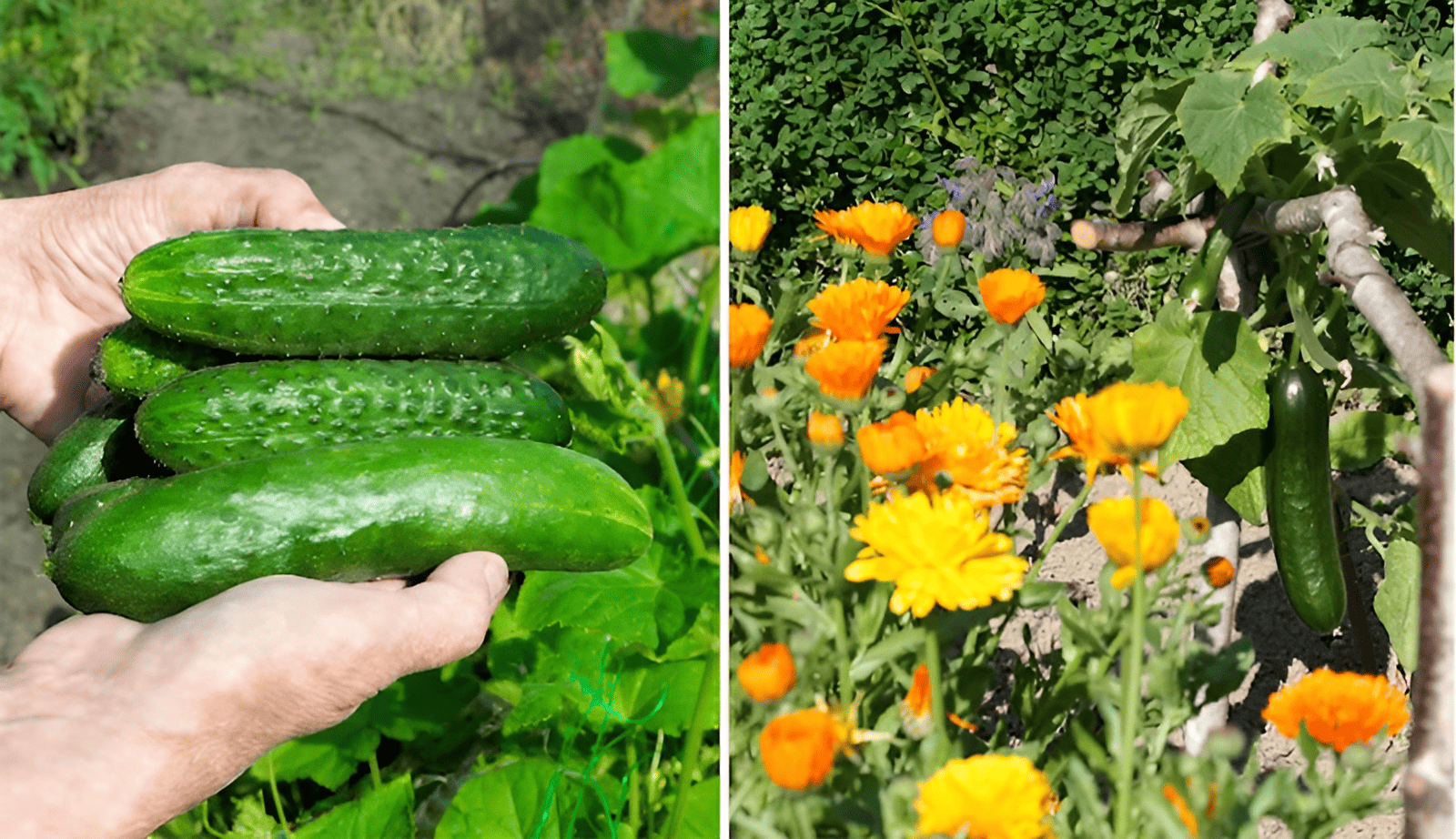
Here is a plan that a farmer can use to plant companion plants to benefit farm soil, diversity, increase production, pollinate, and repel insects, along with a list of companion plants that should be planted alongside farm crops and why:
Evaluate your farm and identify areas where you can plant companion plants to benefit soil, increase production, and repel pests. Consider the specific needs of your crops and the pests and diseases that are common in your area and choose companion plants that are known to benefit your crops and repel pests. Here are some examples:
Plan your planting schedule and spacing to ensure that your companion plants are planted at the right time and in the right location. Some companion plants can be planted in between rows of crops, while others can be planted as border plants around the perimeter of the field.
Prepare the soil by removing weeds and adding organic matter, such as compost or manure. This will provide a healthy environment for your crops and companion plants to thrive.
Plant your companion plants in the designated areas, ensuring that they are spaced appropriately and planted at the right depth. Be sure to water and fertilize your plants as needed, and monitor them for pests and diseases.
Use integrated pest management techniques to manage pests and diseases without relying on synthetic pesticides. This may include using physical barriers, such as row covers, to protect your crops, and using biological controls, such as beneficial insects, to control pests.
Monitor your crops and companion plants throughout the growing season to ensure that they are healthy and productive. Make adjustments as needed, such as thinning or replanting your companion plants, to ensure that they are providing maximum benefits to your crops.
By following these steps and planting the appropriate companion plants, you can create a healthy and productive farm ecosystem that benefits both your crops and the environment.
Turn your 1 acre into a high-yield, profitable farm.
Crop Circle Farms specializes in designing and building fully engineered, low-impact farm systems that use 90% less water, 85% less fertilizer, and deliver two to three times the yield of traditional farming.
Whether you have a vacant lot, an empty field, a resort, school, island community, or small family farm, we’ll build it from the ground up for you. Our team handles everything from farm layout and installation to irrigation, root systems, training, and first planting.
Contact Us to explore a custom Crop Circle Farm design for your property.
Help us expand our mission to revolutionize agriculture globally. We are seeking partners to implement Crop Circle Farms to feed people in need. Together, we can build scalable food production systems that save water, reduce costs, and feed thousands of people. Contact Growing To Give
Companion planting is the practice of growing different plant species near one another to perform useful functions within a garden or farm. Depending on the species and layout, mixed plantings may provide flowers for beneficial insects, physical support, ground cover, greater crop diversity, improved use of growing space, or contributions to long-term nutrient cycling.
Companion planting works best when plants are chosen for specific, observable functions rather than assuming that every traditional pairing will improve growth, repel pests, or increase yield.
Useful combinations include corn with appropriately sized climbing beans, taller crops with shade-tolerant greens, vegetables with flowering insectary plants such as sweet alyssum or dill, and main crops with low-growing plants that cover otherwise open soil.
The traditional Three Sisters system combines corn, beans, and squash with different growth habits. Other combinations should be selected according to crop size, rooting depth, water requirements, pest pressure, airflow, and available sunlight rather than relying only on traditional pairing lists.
Insectary strips contain flowering plants that provide nectar, pollen, shelter, or alternative food for pollinators and beneficial insects. Plants such as sweet alyssum, dill, coriander, phacelia, yarrow, and other nectar-producing species can support hover flies, lacewings, parasitoid wasps, bees, and other beneficial organisms.
Maintaining overlapping bloom periods through the growing season can provide a more continuous food source. Insectary plants can be grown along field borders, between crop blocks, or in dedicated strips where they do not overcrowd the main crop.
A trap crop is a plant grown because a particular pest may prefer it over the crop being protected. When the crop-pest combination is appropriate, trap cropping can concentrate pests in a smaller area and make monitoring or control easier.
Trap crops require active management. They should be inspected frequently because pests can reproduce on them and later move into the main crop. Heavily infested trap plants may need to be removed or otherwise managed before they become a source of additional pest pressure.
Avoid combinations that create excessive competition for sunlight, water, nutrients, or root space. Tall crops can shade shorter sun-loving crops, vigorous plants can overwhelm slower-growing neighbors, and overly dense plantings can restrict airflow and make harvest or pest monitoring difficult.
Some plants also produce compounds that can affect nearby vegetation. Black walnut is a well-known example because susceptible plants may be affected by juglone. Plant size, growth habit, water demand, and known allelopathic effects should all be considered when designing mixed beds.
Start by giving the primary crop enough space to reach its expected mature size. Smaller, shallow-rooted, or quick-growing companion plants can then be placed in unused spaces when they will not significantly compete for light, nutrients, water, or airflow.
Avoid treating companion planting as a reason to overcrowd a bed. Dense foliage can increase humidity, restrict air movement, make pest scouting difficult, and increase competition among plants. Adjust spacing as the canopy develops and thin or prune where appropriate.
Legumes such as beans, peas, clovers, and cowpeas can form associations with nitrogen-fixing bacteria that convert atmospheric nitrogen into forms used by the legume.
Most of that nitrogen is initially used by the legume itself rather than being immediately transferred to neighboring crops. Nitrogen can contribute to the wider cropping system as roots, nodules, leaves, and other residues decompose. Legumes are therefore especially valuable for long-term nutrient cycling and crop rotations.
Group plants with similar water requirements whenever possible. Drip irrigation can be divided into zones so crops with different rooting depths or moisture needs can be watered separately without keeping the entire bed equally wet.
Mulches and low-growing plants can help reduce evaporation and moderate soil temperature, but irrigation should still be adjusted according to soil, weather, crop stage, rooting depth, and local conditions rather than using one schedule for every plant in a mixed bed.
Companion planting can contribute to disease management when the design improves spacing, airflow, soil coverage, irrigation efficiency, or crop diversity. However, simply planting a particular herb or flower beside a crop should not be expected to prevent disease.
The most reliable disease-management practices remain accurate diagnosis, resistant varieties, sanitation, crop rotation where appropriate, suitable spacing, healthy soil, and irrigation practices that limit unnecessary leaf wetness or chronically saturated roots.
Crop Circle layouts can organize companion plants according to height, rooting depth, harvest frequency, irrigation needs, and ecological function. Tall or trellised crops can be positioned where they will not excessively shade shorter plants, while herbs, greens, flowers, and other frequently harvested crops can be placed in accessible areas.
Flowering insectary plants can be distributed through selected arcs or rings, and irrigation zones can be arranged according to crop water requirements. The goal is to maintain diversity without sacrificing airflow, access, sunlight, or adequate growing space for the primary crops.
Related topics: Explore integrated pest management, crop rotation, building healthy soil, and plant disease management for additional guidance on diversified and prevention-first growing systems.