Climate Stress Resilience Calculator
Compare yield on 1 acre: straight rows vs spiral (lbs)
The Climate Stress Resilience Calculator estimates total crop production, input costs, and revenue potential for commercial-scale growing systems. This tool is designed for market farms, cooperatives, NGOs, grant applicants, and food-security projects.
Use this calculator to model yield per acre, planting density, water and fertilizer inputs, labor assumptions, and market pricing. Compare scenarios to evaluate return on investment (ROI), resource efficiency, and production capacity across different farm layouts and crop mixes.
For acreage-level planning, budget modeling, and profitability forecasting, this calculator provides clear insight into operational performance and ROI.
Knowing how to calculate crop production per acre is one of the most important skills a grower can develop. Whether you run a small urban farm, a market garden, or a diversified vegetable operation, yield estimates drive every major decision: what to plant, how much to plant, how to price your produce, and how to plan labor, irrigation, and inputs throughout the season.
Traditionally, farmers used a simple mathematical formula to estimate farm yield per acre. While accurate enough for its time, it required several manual steps and often involved a clipboard, a calculator, and a fair amount of guesswork. Today, tools like the Climate Stress Resilience Calculator on this page make it much easier to compare vegetable yield per acre and to visualize the impact of modern planting systems such as a Spiral Acre.
Quick note: the calculator below is the fastest way to model yields, but understanding the traditional method helps you sanity-check assumptions and spacing.
The old-school method to calculate farm yield still has value, especially if you want to understand how plant spacing and density affect production. A general formula for estimating production for vegetable crops per acre looks like this:
Production per Acre = (Plants per Acre) × (Yield per Plant)
To calculate these values, you need a few key measurements:
A common way to determine plants per acre is to convert your row and in-row spacing to feet, then divide the number of square feet in an acre by the space each plant occupies. Once you have plants per acre, you multiply by the expected yield per plant to get an estimate of total pounds of vegetables per acre.
This method is useful for teaching and planning, but it still leaves growers with a lot of guesswork—especially when you are comparing traditional row crops to high-density systems or new concepts like Crop Circle Farm grow models.
A simpler, modern way to calculate crop production per acre is to use the Climate Stress Resilience Calculator below. Instead of doing the math by hand, you select a vegetable from the dropdown menu and let the calculator instantly show you the estimated pounds produced on:
With just a click, a side-by-side comparison appears in the “Farm Acre” and “Spiral Acre” boxes. This makes it easy to see how much production you might gain by transitioning from a traditional layout to a Spiral Acre that is designed to maximize yield per square foot, reduce waste, and lower input costs.
Compare how a conventional cultivated acre and a spiral acre may respond to heat, drought, and flooding under the same climate, soil, and management conditions.
Set your baseline climate, soil, and management practices to compare resilience side by side.
Score range is 0–100. Higher scores indicate better buffering against climate extremes.
Notes: This is a planning estimator. Actual resilience also depends on topography, irrigation reliability, event timing, and crop choice.
Heat waves, drought years, and flood events don’t affect every system the same way. The goal is not “zero risk” — it’s buffering: keeping soil structure, water access, and crop function stable when conditions swing.
Heat spikes hit hardest when soil is exposed and evapotranspiration surges. Shade + mulch reduces leaf temperature and water demand.
Drought resilience is “soil as a sponge.” Organic matter + roots + efficient delivery extend how long crops can coast.
Flood risk is about infiltration + overflow planning. Systems that slow and spread water reduce root suffocation and erosion.
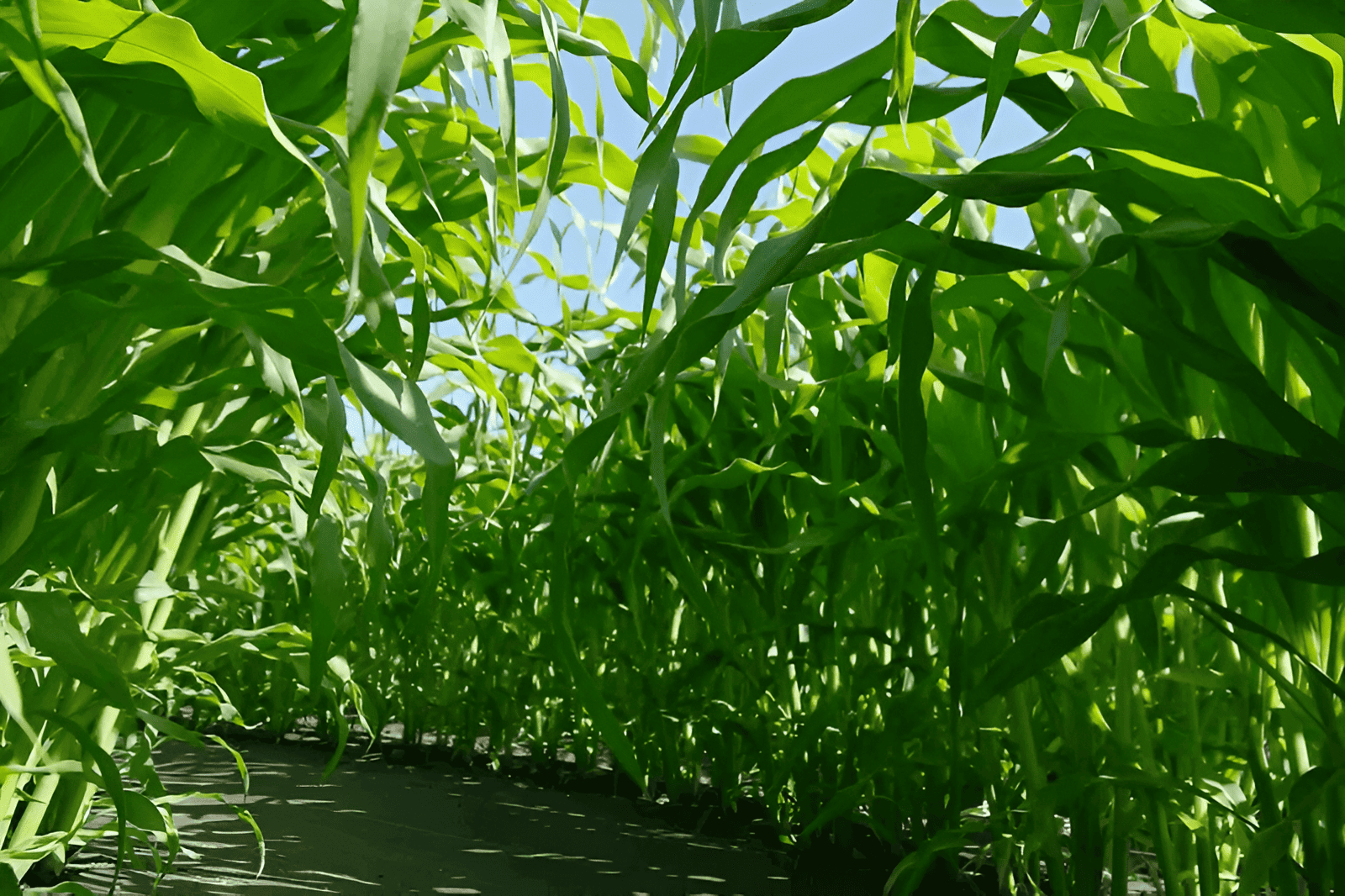
The Climate Stress Resilience Calculator is especially valuable for urban farmers and local food projects that want to grow food close to the communities they serve. By estimating how many pounds of vegetables a particular land area will produce, small-scale farms can design planting plans that match local demand, CSA shares, restaurant contracts, and farmers’ market sales.
The ability to calculate crop yield per acre (or per fraction of an acre) is essential when you are:
Designing an urban farm on an irregularly shaped property can be a challenge using a conventional “growing vegetables in rows” approach. Crop Circle Farming, however, is ideal for growing vegetables on land that does not conform to the typical rectangular shape of a farm. Spirals and circular beds can fill corners, wrap around buildings, and make use of otherwise wasted space.
The Climate Stress Resilience Calculator lets you estimate expected production per acre foot from each vegetable selected for the farm. You can then scale the numbers down for smaller plots, raised beds, or rooftop gardens, or scale them up for multi-acre installations that combine several Spiral Acres.
When you combine these higher yields with reduced water use, targeted fertilization, and lower weed pressure, you get a system that is not only more productive but also more resilient and profitable. Growing food close to market shortens supply chains, reduces transportation emissions, and delivers fresher, more nutrient-dense produce to customers—often within hours of harvest.
Ready to transform your land into a high-yield, sustainable farm? Let Crop Circle Farms design and build a custom, low-impact, and water-efficient farm tailored to your site and market. From yield modeling and farm layout to irrigation design and crop selection, we help you double your income and cut your costs in half. Contact Us to explore a Crop Circle Farm design for your property.
Help us expand our mission to revolutionize agriculture globally. We are seeking partners to implement Crop Circle Farms in food-insecure communities, island nations, and water-stressed regions. Together, we can build scalable food production systems that save water, reduce costs, and feed thousands of people year after year. Contact Growing To Give to support a spiral farm project or sponsor a Crop Circle Market Garden.
Jump to the next tool, or explore supporting resources.