Sweet Corn, Cow Corn, Popcorn
Corn Plants, Crop Circle Farms
Corn plants are among the most widely grown and economically important crops in the world. In the United States alone, millions of acres are planted each year to produce grain used for food, livestock feed, biofuels, and a wide range of industrial products. From sweet corn grown for fresh eating to field corn, flint corn, flour corn, popcorn, and waxy varieties, corn remains one of the most adaptable crops in modern agriculture.
Successful corn production depends on a combination of environmental conditions and careful crop management. Farmers and gardeners pay close attention to soil temperature at planting, block spacing for reliable wind pollination, balanced fertility—especially nitrogen and potassium—and consistent soil moisture during the critical tasseling and silking stages. Small adjustments in timing, fertility, and irrigation during these growth phases can significantly influence ear development, kernel fill, and final yield.
This guide explores the major types of corn plants grown by American farmers, along with their growing requirements, traditional and modern production practices, and yield considerations for backyard gardens, Crop Circle beds, and larger field-scale farming systems.
Corn is a wind-pollinated plant, which means each tassel can release millions of pollen grains that must land on the silk of developing ears for kernels to form. Because of this, corn is typically planted in blocks or clusters rather than long single rows to improve pollination and maximize kernel fill.
Feel free to share this corn plants infographic on your website or blog. Please include a link back to this page as the source.
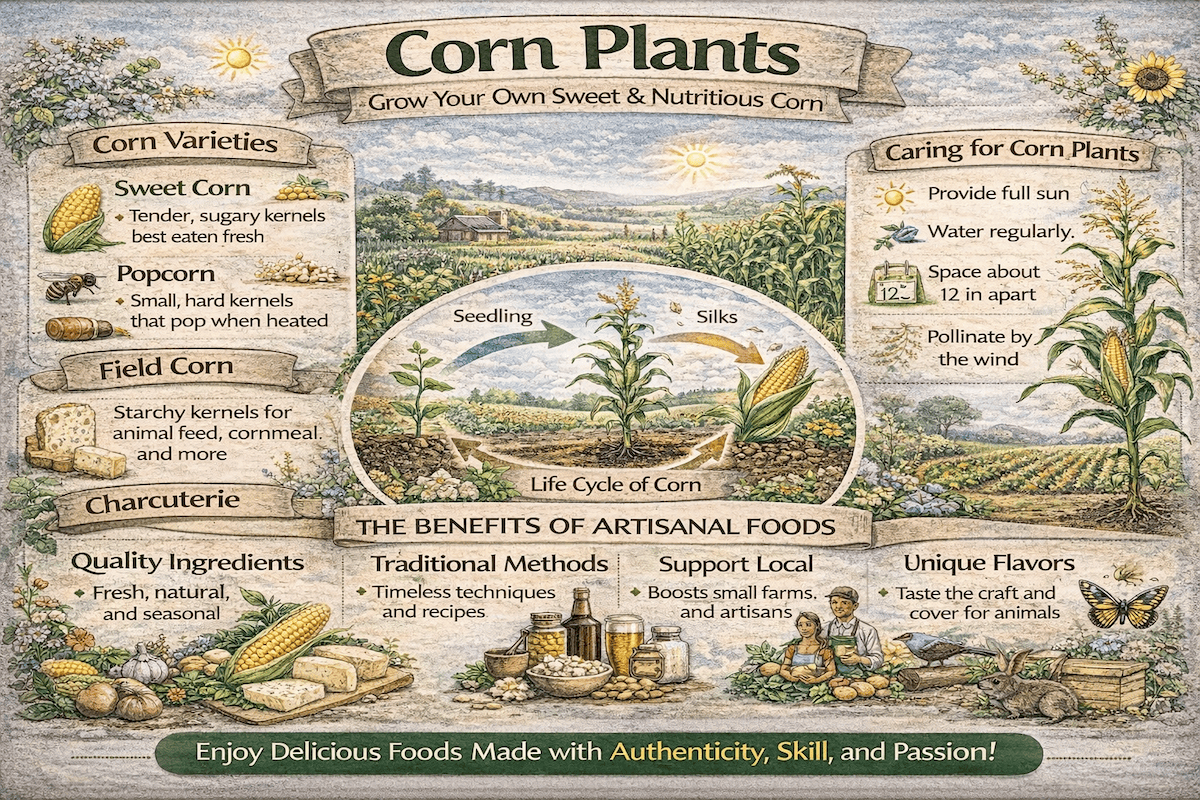
Corn—known as maize in many traditional agricultural systems— is one of the world's major cereal crops. Archaeological and genetic evidence indicates that maize domestication began roughly 9,000 years ago in southwestern Mexico, from populations related to the wild grass teosinte. Indigenous farmers subsequently selected and diversified maize as it spread throughout the Americas.
Following European contact in the late 15th century, corn spread rapidly across the globe. Within a century, it had become an important staple crop in parts of Europe, Africa, and Asia because of its adaptability to different climates and soils. Today corn is grown on every continent except Antarctica and is a cornerstone of modern food systems, livestock production, and industrial agriculture.
For many Native American communities across North and South America, corn was far more than a crop—it was a foundation of daily life, culture, and community. One of the most well-known traditional growing systems is the Three Sisters planting method, which combines corn, beans, and squash in a single planting system.
Each plant supports the others in a natural form of polyculture farming. Corn provides a living trellis for climbing bean vines. Beans add nitrogen to the soil, improving fertility for the corn and squash. Meanwhile, the broad leaves of squash plants shade the soil surface, helping retain moisture and suppress weeds. This cooperative growing system allowed Indigenous farmers to produce reliable harvests while maintaining soil health.
| Corn Type | Primary Uses | Key Characteristics |
|---|---|---|
| Sweet Corn | Fresh eating, grilling, freezing, canning | High sugar content and tender kernels harvested while immature. |
| Dent Corn | Animal feed, ethanol fuel, cornmeal, industrial products | Large grain corn with a dent on the kernel when dry. |
| Flint Corn | Cornmeal, masa, hominy, decorative corn | Very hard outer kernel layer with colorful heirloom varieties. |
| Flour Corn | Corn flour, tortillas, traditional foods | Soft starch kernels that grind easily into fine flour. |
| Popcorn | Snack food, caramel corn, kettle corn | Small, hard kernels that explode into fluffy popcorn when heated. |
| Waxy Corn | Food starch, sauces, industrial products | High amylopectin starch giving kernels a sticky, waxy texture. |
Indigenous farmers also developed several practical planting techniques that improved corn production long before modern agricultural science emerged. One approach involved planting corn in circular or clustered arrangements sometimes referred to as a “magic circle,” where corn formed a protective outer ring around other crops. This arrangement helped shield young plants from wind and created a more resilient planting system.
Another common technique was planting corn in mounds. Farmers formed small raised hills of soil and planted several seeds in each mound. Raised mounds improved drainage, warmed the soil more quickly in spring, and concentrated fertility where young corn plants needed it most.
Crop rotation was also widely practiced. By rotating corn with crops such as beans, squash, or other plants, farmers reduced soil nutrient depletion and improved long-term productivity. These traditional methods, refined through generations of observation and experience, helped maintain fertile soils and stable food supplies across diverse landscapes.
Today, modern corn production still reflects many of these early principles—careful soil management, crop diversity, and thoughtful planting patterns remain essential for healthy corn crops and productive harvests.
There are several different types of corn plants grown today, each with distinct characteristics and uses. One of the most widely cultivated types is dent corn, used extensively for livestock feed, processed foods, and industrial products.
Corn is a wind-pollinated crop, which means proper spacing and planting patterns are essential for full ear development. Planting corn in blocks or clusters—rather than single rows—improves pollen distribution and helps ensure strong kernel fill.
Use the tools below to plan row spacing, optimize pollination, and estimate potential yield for garden beds, Crop Circle systems, or larger field-scale plantings.
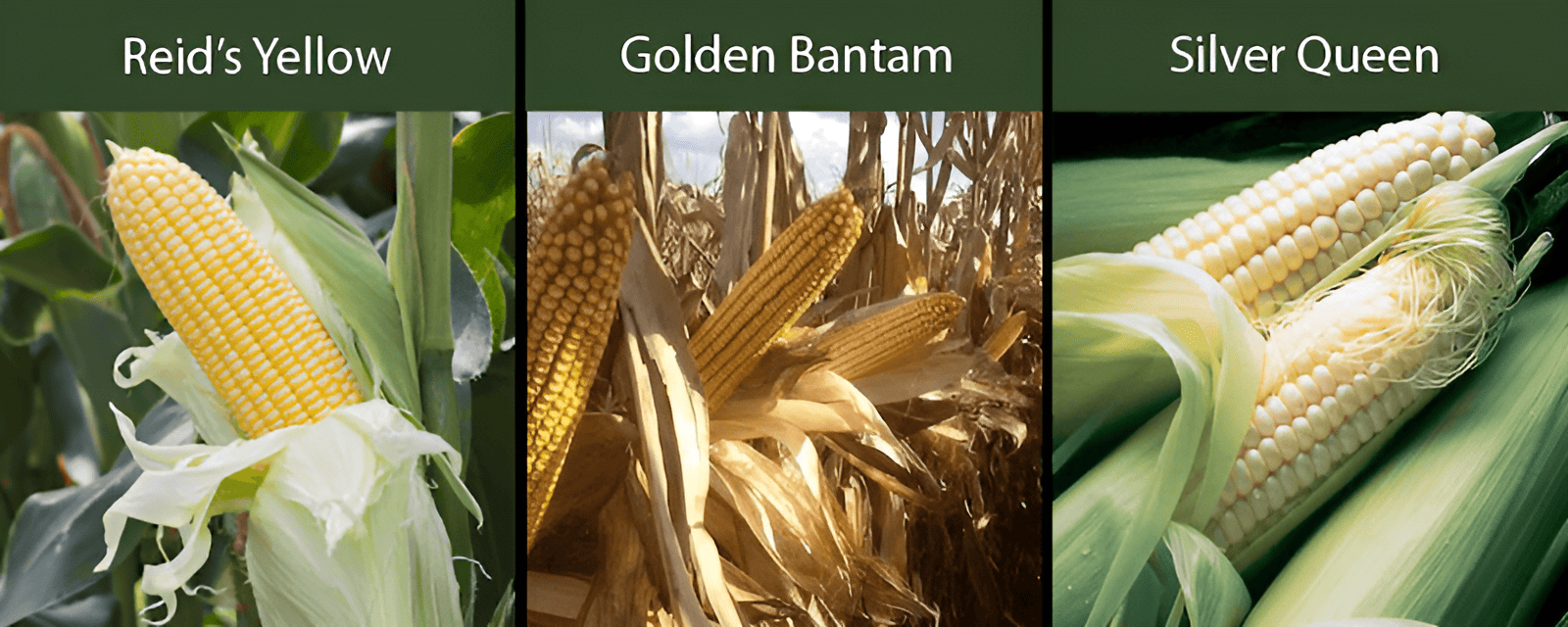
Corn is grown in many different varieties, each developed for specific uses such as fresh eating, animal feed, grain processing, or specialty products. In the United States, farmers commonly grow dent corn for grain and industrial uses, while gardeners and local farms often grow sweet corn varieties for fresh consumption.
Below are several historically important corn varieties that illustrate the diversity of corn types grown across American farms and gardens.
Reid's Yellow Dent is one of the most influential dent corn varieties in American agriculture. Developed in the late 1800s, it became a foundation for many modern hybrid field corns used for grain, livestock feed, and industrial corn products.
Golden Bantam is a classic heirloom sweet corn introduced in the early 20th century. It helped popularize yellow sweet corn in home gardens and farmers markets thanks to its rich flavor and reliable yields.
Silver Queen is one of the most popular white sweet corn varieties grown in the United States. Known for its tender kernels and mild sweetness, it remains a favorite among home gardeners and small farms.
Stowell's Evergreen is a historic heirloom sweet corn variety dating back to the 1800s. It became famous for its ability to stay sweet and tender longer than many other sweet corn varieties, making it a traditional favorite for home gardens and small-scale farms.
Sweet corn is one of the most widely grown garden vegetables in North America. Unlike field corn grown for grain or livestock feed, sweet corn is harvested when the kernels are young, tender, and naturally high in sugar. This is the corn most people enjoy fresh off the cob, grilled, frozen, or canned.
Sweet corn is also valued as a nutrient-dense food, providing fiber, vitamin C, antioxidants, and plant-based carbohydrates that support balanced diets. Modern sweet corn varieties are bred for flavor, tenderness, and reliable production. Many are bicolor hybrids that combine yellow and white kernels for both visual appeal and balanced sweetness.
Successful sweet corn production depends on warm soil, strong sunlight, consistent watering, and planting in blocks to ensure good pollination. Gardeners interested in improving yields can learn more about soil preparation, spacing, and seasonal planting in our guide to growing corn.
In recent decades, discussions about seed technology have also raised questions around hybrid breeding, genetic modification, and agricultural biotechnology. Some researchers and seed developers have explored mechanisms such as the genetic kill switch concept designed to control seed reproduction in certain crop systems.
Sweet corn also plays an important role in regional food production systems. Because it produces high yields in relatively small areas, it contributes to local food supply chains and community agriculture programs focused on strengthening food security.
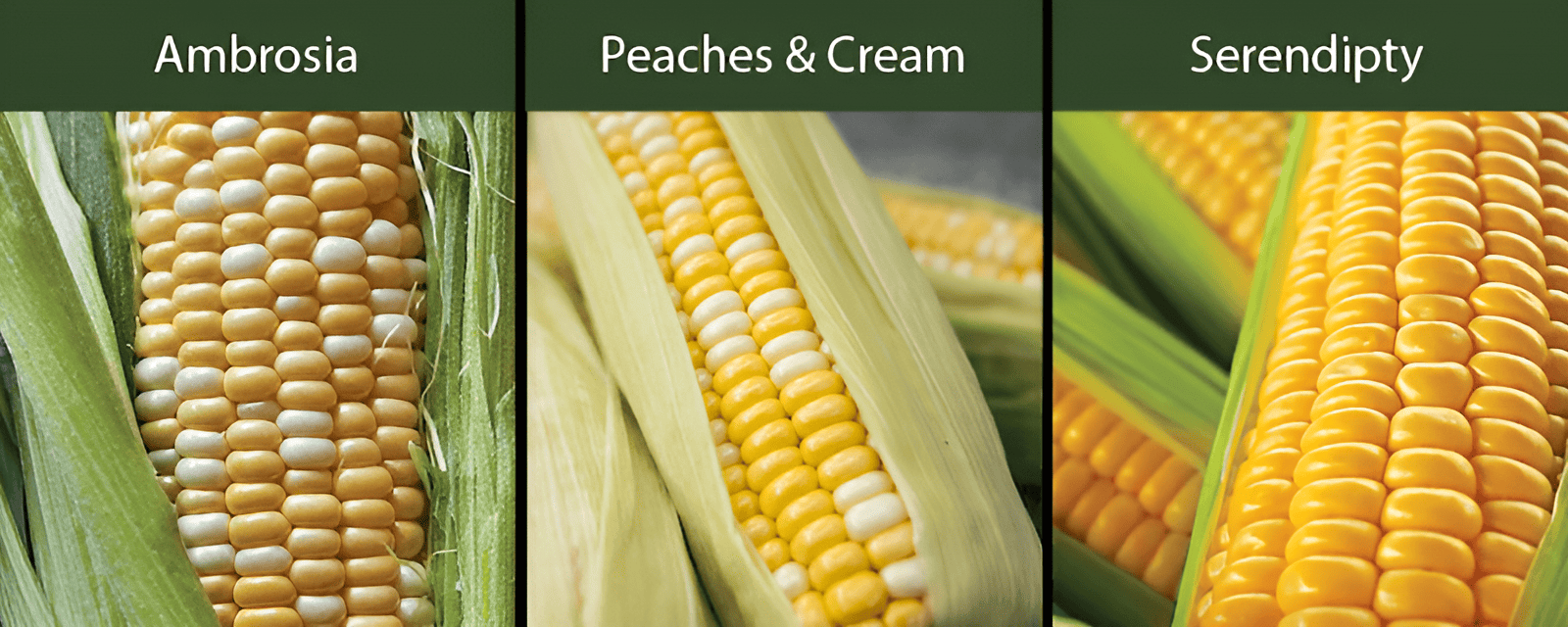
Below are several well-known sweet corn varieties grown in home gardens, market farms, and small-scale agricultural systems.
Peaches and Cream is one of the most recognizable bicolor sweet corn varieties. Its tender kernels and balanced sweetness make it a favorite among home gardeners and farmers market growers.
Jubilee is a long-standing yellow sweet corn variety known for dependable yields and large, flavorful ears. It remains a popular choice for gardens and local food production.
Serendipity is a modern hybrid sweet corn variety known for its exceptional sweetness and strong performance in a wide range of climates.
Butter and Sugar is a traditional bicolor sweet corn variety valued for its classic corn flavor and dependable performance in gardens and small farms.
Honey and Cream is an early maturing bicolor variety that performs well in many home garden environments and shorter growing seasons.
Ambrosia is considered one of the sweetest bicolor corn varieties available today. Its high sugar content and tender kernels make it especially popular among farmers markets and home gardeners.
Popcorn is a special type of maize that pops when heated because the kernel contains a small amount of water sealed inside a hard outer shell. As the kernel heats, pressure builds until the shell bursts, turning the starch inside out and forming the familiar fluffy snack enjoyed around the world.
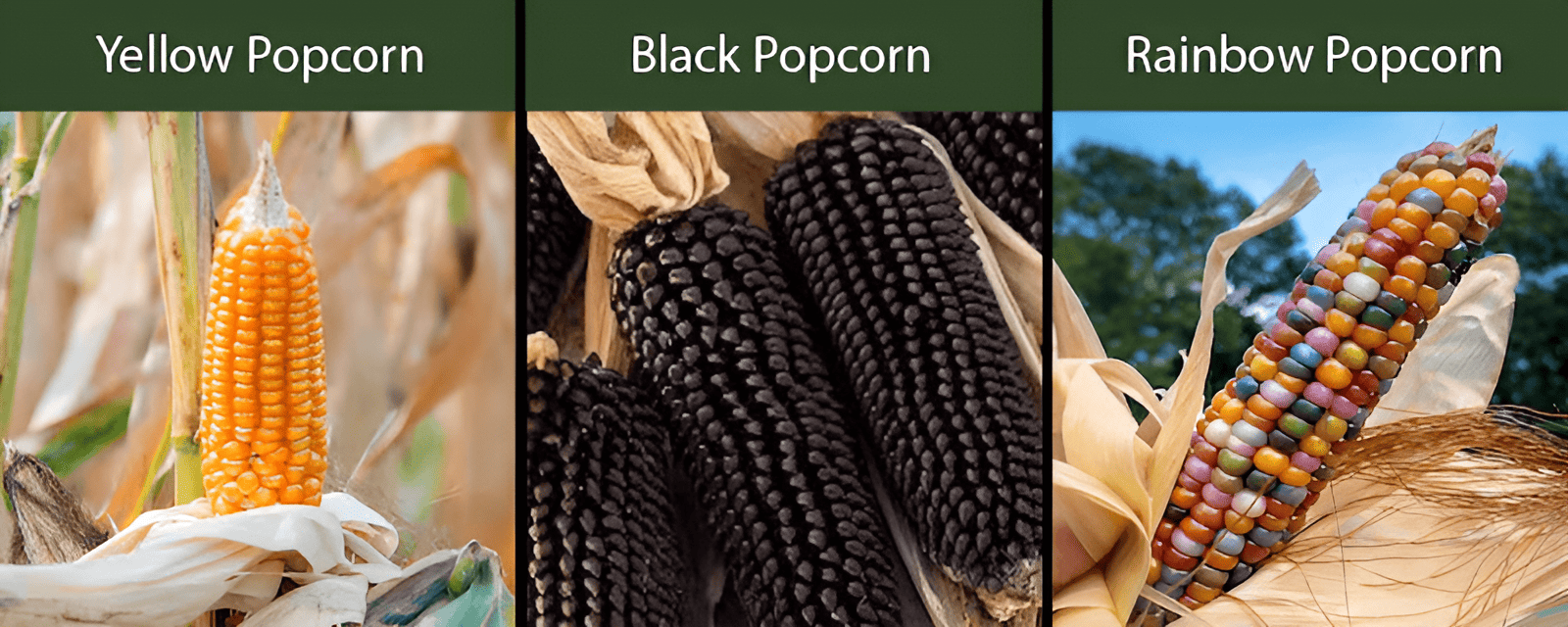
Farmers and gardeners grow several different popcorn varieties, each with unique kernel colors, popping shapes, and culinary uses. While most popcorn is grown for snack production, some varieties are also prized for decorative uses, heirloom seed preservation, and specialty foods.
Yellow popcorn is the most widely produced popcorn type in the world. When popped, its kernels expand into large, fluffy pieces commonly used in theaters and commercial snack production.
White popcorn produces smaller, more delicate flakes when popped. Many people prefer its lighter texture and slightly milder flavor compared to yellow popcorn.
Black popcorn varieties produce striking dark kernels that pop into bright white flakes. These heirloom types are popular among small farms and specialty growers.
Rainbow popcorn produces beautifully colored kernels that make it popular for decorative displays and heirloom gardening. Despite the colorful appearance, the popped kernels are white.
Mushroom popcorn pops into dense, round flakes rather than the irregular shapes seen in butterfly popcorn. This makes it ideal for caramel coatings and other confectionery popcorn products because the kernels hold their shape well.
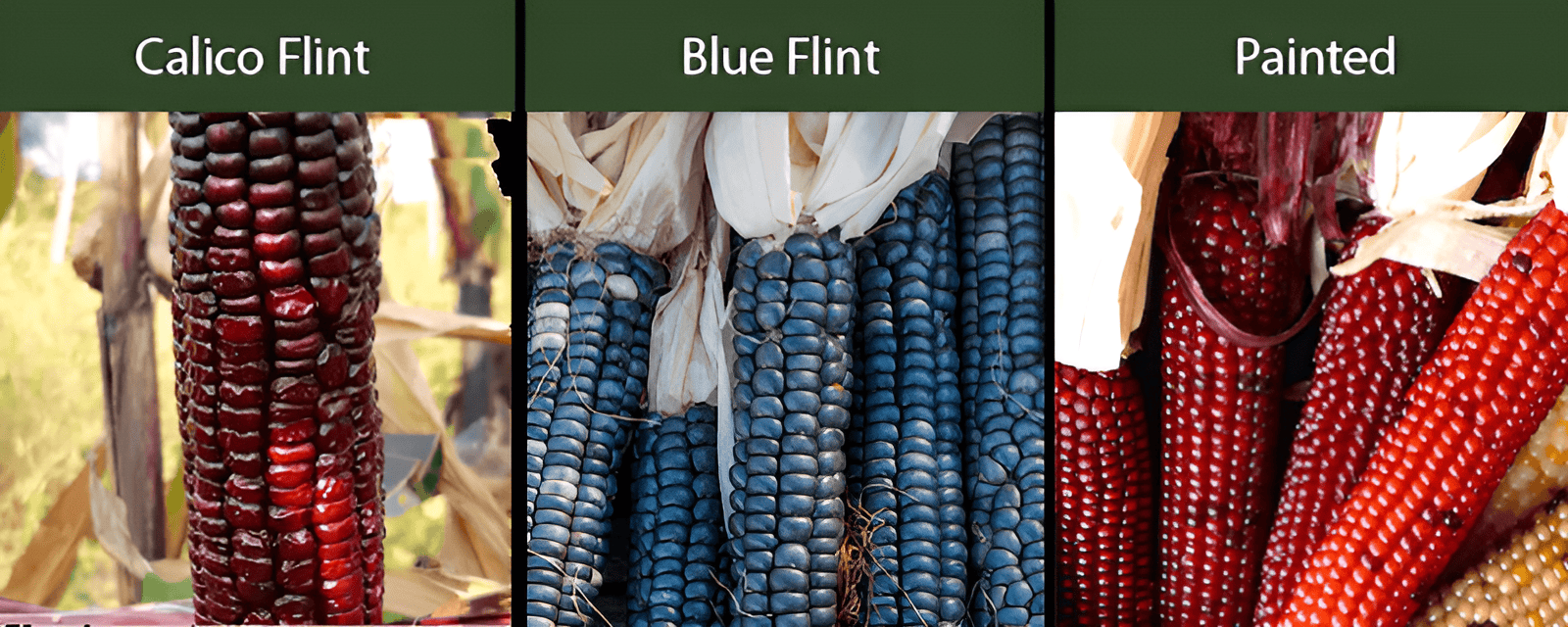
Flint corn, often referred to as Indian corn, is one of the oldest types of maize cultivated in the Americas. Unlike sweet corn or dent corn, flint corn kernels have a very hard outer layer that protects the soft starch inside. This durable kernel structure allows the grain to store well and makes flint corn ideal for grinding into cornmeal, hominy, masa, and many traditional foods.
Historically, flint corn varieties played an important role in indigenous and early agricultural systems across North and South America. Today they remain valuable heirloom crops for seed savers, heritage farms, and gardeners interested in preserving traditional food crops while reducing dependence on industrial food systems tied to fossil fuels and large-scale commodity agriculture.
Flint corn varieties are also known for their vibrant kernel colors—ranging from deep blue and golden yellow to multicolored heirloom ears. While primarily grown for food, some varieties can also be used in small-scale grain production systems that support renewable biofuel research such as ethanol production from high-starch grains.
Modern farmers are increasingly combining traditional crop varieties with digital farming tools. Techniques such as predictive yield modeling help growers estimate production potential based on soil conditions, weather patterns, and planting density. These tools are especially valuable for diversified farms growing heritage grains like flint corn.
Blue flint corn varieties have been cultivated for centuries and are widely used in traditional cornmeal and tortilla production. Their dense kernels grind into flavorful, nutrient-rich blue corn flour.
Yellow flint corn is valued for its durable kernels and excellent grinding quality. It remains a staple grain in many traditional cornmeal and whole-grain flour preparations.
Calico flint corn produces beautifully multicolored ears and is often grown both for grinding into cornmeal and for decorative autumn displays.
Hickory King is a well-known heirloom corn variety that produces some of the largest kernels of any corn type. Its high starch content makes it particularly well suited for milling and traditional hominy production.
Painted Mountain corn was developed for resilience in short growing seasons and cooler climates. Its colorful kernels and strong adaptability make it popular among gardeners, seed savers, and small farms across North America.
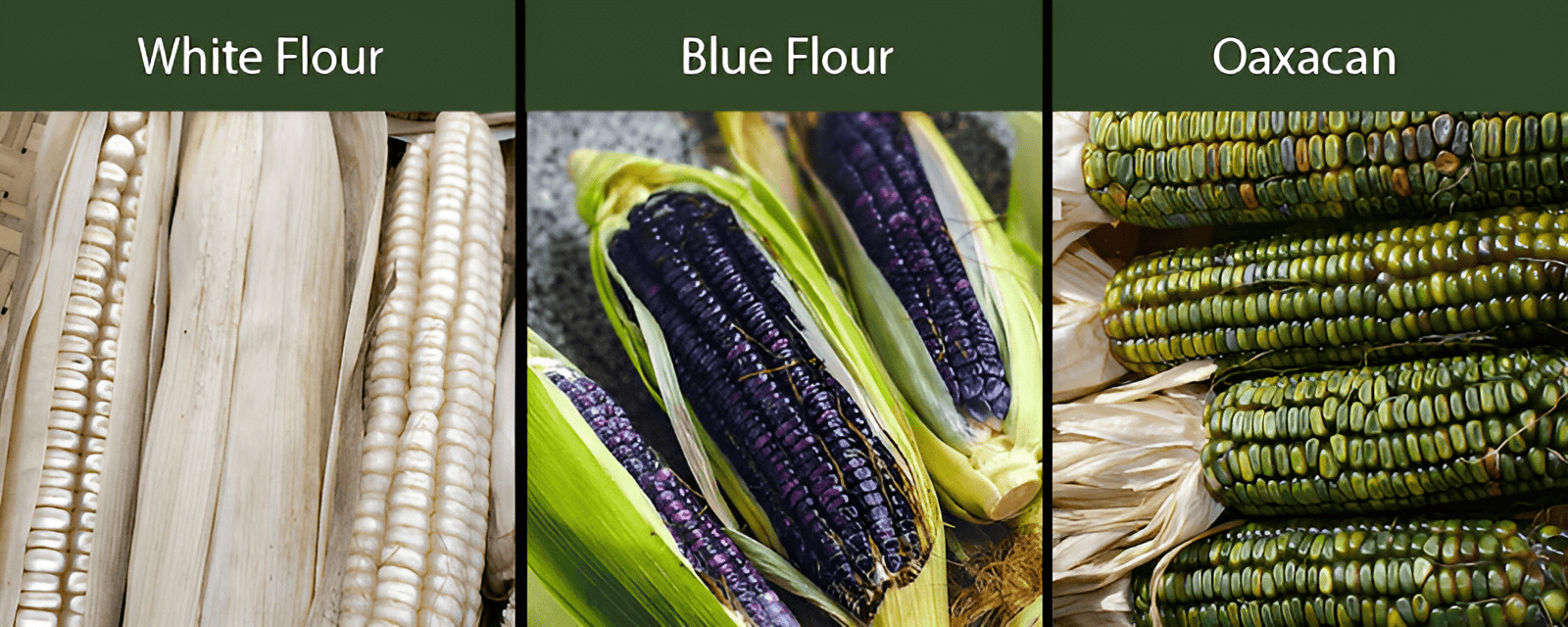
Flour corn, sometimes called soft corn, is a traditional maize type prized for its high proportion of soft starch. Unlike flint corn or dent corn, the kernels grind easily into fine flour, making flour corn ideal for producing cornmeal, masa, tortillas, and traditional corn flour.
Flour corn has been cultivated for thousands of years across the Americas. Many varieties remain important in Indigenous agriculture and regional cuisines, especially in the Southwestern United States and Mexico where corn flour and masa are dietary staples.
White flour corn varieties produce soft kernels that grind easily into fine corn flour. They are commonly used for traditional baking, tortillas, and homestyle cornmeal.
Blue flour corn is widely used in Southwestern cuisine and traditional Indigenous foods. Its distinctive color and nutrient profile make it popular for blue corn tortillas, chips, and specialty cornmeal.
Yellow flour corn varieties are often used for grinding into traditional cornmeal and flour. Their soft kernels make milling easier compared with harder corn types.
Hopi Blue corn is an heirloom variety traditionally grown by the Hopi people in the American Southwest. It is highly valued for both its cultural significance and its nutritious blue corn flour used in traditional dishes.
Oaxacan Green corn is a distinctive heirloom variety from southern Mexico. Its green kernels are prized for producing flavorful masa used in traditional tortillas and regional Mexican cuisine.
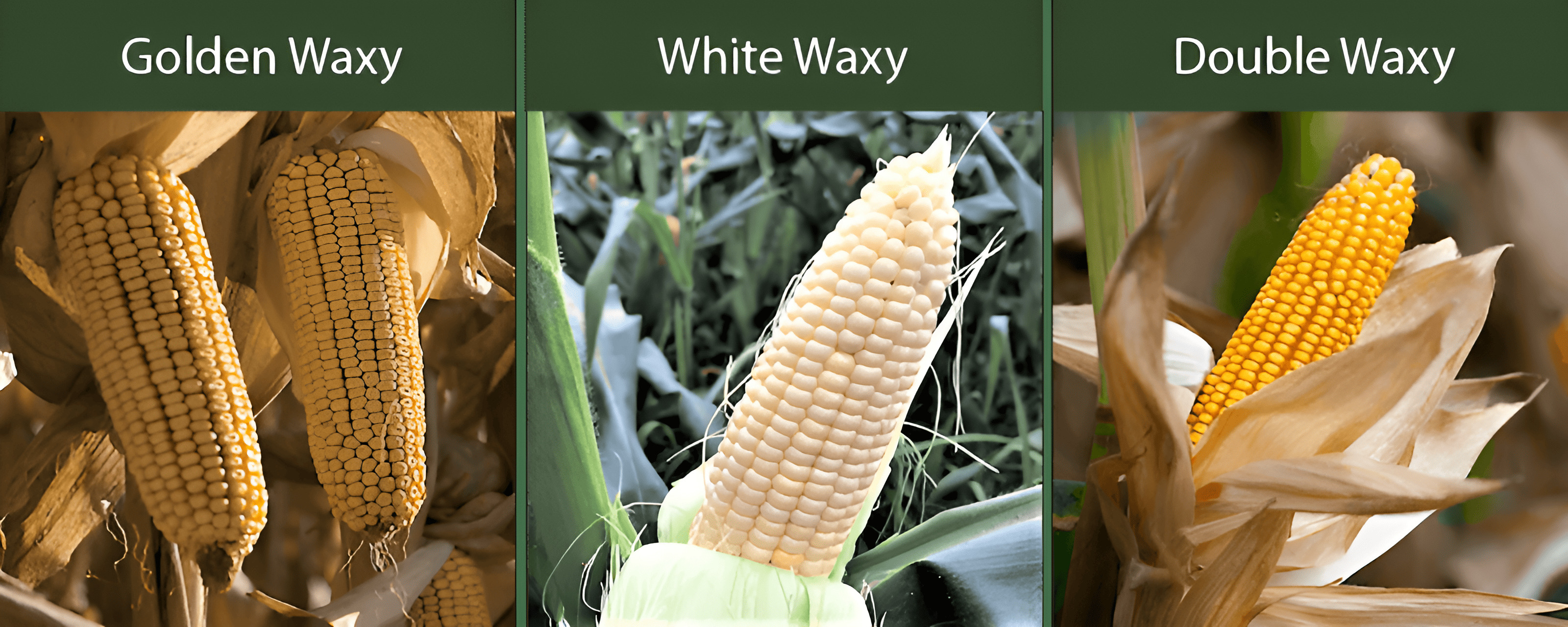
Waxy corn, sometimes called glutinous corn, is a special type of maize known for its unusually high level of amylopectin starch. Unlike most corn, which contains both amylose and amylopectin starches, waxy corn kernels are composed almost entirely of amylopectin. This gives the grain its distinctive sticky, waxy texture when cooked or processed.
Because of this unique starch composition, waxy corn is widely used in food manufacturing, livestock feed, and industrial starch products. It is also grown in some regions for specialty foods and traditional dishes. Below are several notable varieties of waxy corn.
Golden waxy corn varieties are commonly grown for commercial starch production. Their kernels produce smooth, stable starch used in foods, sauces, and processed products.
White waxy corn is widely used in food processing because its starch provides smooth texture and stability in sauces, soups, and processed foods.
High-lysine waxy corn varieties are bred for improved nutritional value, particularly for livestock feed. The added lysine improves the protein quality of corn-based animal diets.
Double waxy corn varieties contain even higher concentrations of amylopectin starch than traditional waxy corn. This makes them particularly valuable in industrial starch processing and specialized food manufacturing.
Related specialty corn types include pod corn, a rare heirloom corn with kernels enclosed in husk-like coverings. Although not widely grown for food, pod corn is sometimes cultivated for seed preservation and ornamental displays.
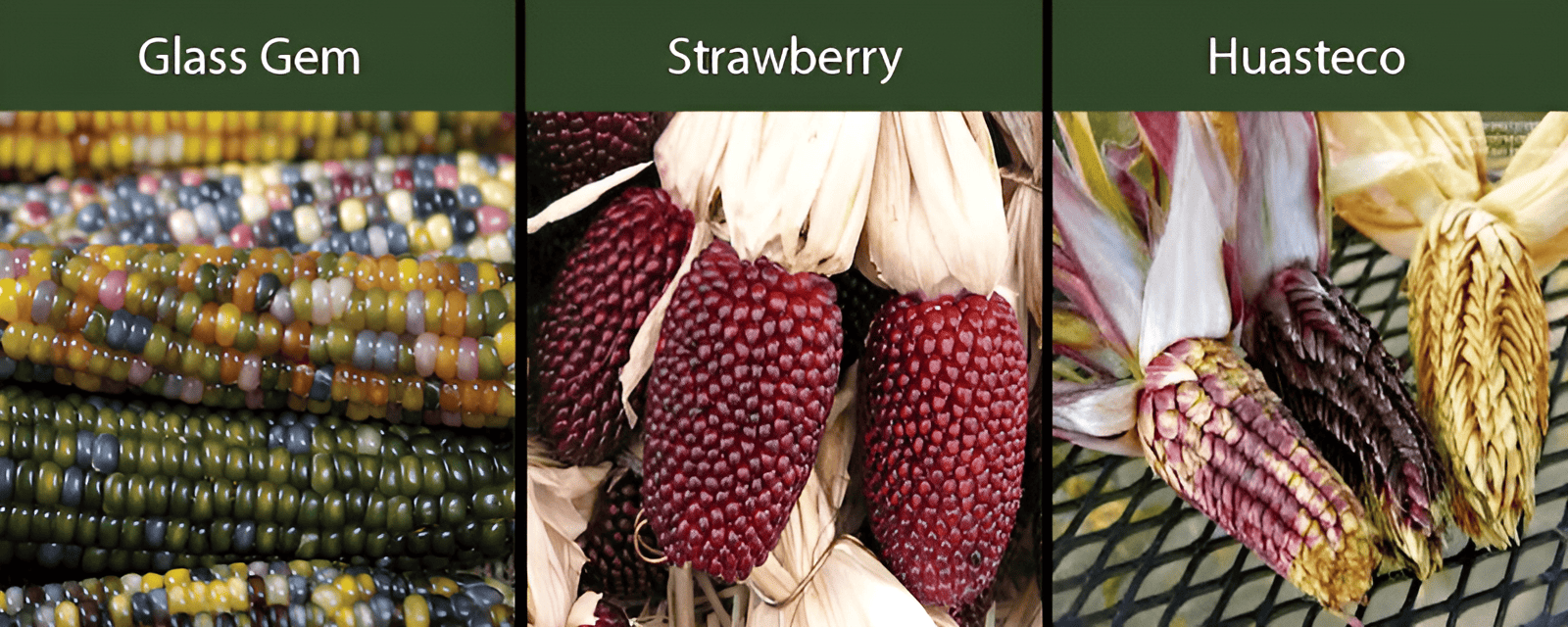
Some of the most visually striking corn varieties are grown not only for food but also for seed preservation, ornamental displays, and specialty grains. These rare and heirloom corn types—including pod corn, decorative popcorn, and multicolored heritage varieties— demonstrate the remarkable seed diversity that exists within maize. Preserving these varieties helps maintain genetic resilience and protects traditional crop heritage for future generations.
One unusual category is pod corn, also known as tunicate corn. Unlike modern corn varieties, pod corn develops husk-like coverings around each individual kernel. Although it is rarely grown for large-scale agriculture today, pod corn plays an important role in research, seed saving, and the preservation of traditional agriculture systems that have supported farming communities for centuries.
Strawberry popcorn produces small ears that resemble oversized strawberries. It is popular among gardeners and decorative corn growers and can also be popped like traditional popcorn.
Glass Gem corn became widely known for its stunning jewel-like kernels that appear almost translucent. Developed through careful seed selection, it is one of the most visually remarkable heirloom corn varieties grown today.
Painted Mountain corn is a resilient heirloom variety bred for northern climates. Its colorful kernels and strong adaptability make it popular among gardeners and small farms across North America.
Huasteco pod corn is a rare tunicate corn variety in which each kernel develops its own protective husk. While not widely grown for food today, it provides valuable insight into the evolutionary history of maize and the genetic diversity preserved by traditional farmers.
Corn remains one of the most important crops grown in the United States. American farmers plant millions of acres each year to supply food products, livestock feed, industrial materials, and renewable fuel.
Farmers carefully select corn varieties suited to their region, soil conditions, climate, and market demand. Different types of corn—such as sweet corn, dent corn, flint corn, and specialty heirloom varieties—serve very different purposes within the agricultural system.
Modern agriculture increasingly combines productivity with sustainability. Many farms are adopting soil-building practices such as composting, crop rotation, and the use of biochar to improve soil fertility, retain nutrients, and support long-term agricultural productivity.
These practices also align with the broader sustainability framework known as people, planet, profit, which encourages farming systems that balance economic viability with environmental stewardship and social well-being.
After harvest, corn is transported to processing facilities where kernels are cleaned, sorted, and prepared for various uses. Some corn is milled into products such as cornmeal, flour, cereals, and snack foods, while other corn is used for livestock feed or processed into industrial ingredients like corn syrup, starch, and biodegradable materials.
A significant portion of U.S. corn production is also used to create ethanol fuel. During ethanol production, corn kernels are ground into meal, mixed with water, and fermented using yeast. The resulting alcohol is distilled and refined into fuel-grade ethanol used to power vehicles and industrial systems.
From tortillas and popcorn to animal feed and renewable energy, corn continues to play a vital role in global food systems and agricultural economies.
Turn your 1 acre into a high-yield, profitable farm.
Crop Circle Farms specializes in designing and building fully engineered, low-impact farm systems that use 90% less water, 85% less fertilizer, and deliver two to three times the yield of traditional farming.
Whether you have a vacant lot, an empty field, a resort, school, island community, or small family farm, we’ll build it from the ground up for you. Our team handles everything from farm layout and installation to irrigation, root systems, training, and first planting.
Contact Us to explore a custom Crop Circle Farm design for your property.
Help us expand our mission to revolutionize agriculture globally. We are seeking partners to implement Crop Circle Farms to feed people in need. Together, we can build scalable food production systems that save water, reduce costs, and feed thousands of people. Contact Growing To Give
Corn germinates best after the soil has warmed. Field corn is commonly planted once soil temperatures are around 50°F (10°C) or warmer, while sweet corn generally emerges more reliably in warmer soil.
Cold, wet soil can slow germination and increase the risk of seed and seedling problems. Supersweet varieties can be especially sensitive to cold soils, so waiting for warmer conditions may improve emergence.
Corn is primarily wind pollinated. Pollen produced by the tassels must reach the silks of developing ears for kernels to form.
Planting several shorter rows together, or using another compact grouping, generally improves pollen movement compared with planting the same number of plants in one long single row. Better pollination can improve kernel fill.
Corn has relatively high nutrient demand, particularly for nitrogen, but the correct fertilizer rate depends on soil fertility, organic matter, previous crops, expected yield, and local growing conditions. A soil test is the best starting point.
Corn also needs adequate soil moisture throughout development. Water stress is especially important to avoid around tasseling, silking, pollination, and early kernel development. Irrigation should be adjusted for rainfall, soil type, rooting depth, temperature, and plant growth stage rather than applied at a fixed rate in every location.
Yes. Sweet corn, popcorn, dent corn, flour corn, flint corn, and other maize varieties can cross-pollinate when they release pollen at the same time.
This is particularly important with sweet corn because pollen from another corn type can affect characteristics of the developing kernels. Gardeners and seed growers can reduce unwanted crossing by separating varieties by distance or by staggering planting dates so their pollination periods do not overlap.
Sweet corn is normally harvested while the kernels are still tender. Ears should feel full, the silks usually become brown and dry, and kernels typically release a milky liquid when punctured at the appropriate eating stage.
Grain corn, flour corn, flint corn, and popcorn are harvested later. These types are generally allowed to mature and dry substantially before storage, milling, seed saving, or popping.
Corn can be affected by insects such as corn earworm, armyworms, cutworms, corn borers, and other region-specific pests. Birds, raccoons, rodents, and other wildlife can also damage developing ears.
Diseases can include rusts, smuts, leaf diseases, ear rots, and stalk or root rots. Crop rotation, suitable spacing, balanced fertility, weed control, healthy soil, resistant varieties where available, and regular field monitoring can help reduce problems.
Yes. Corn can be grown in raised beds, mounds, intensive garden systems, and Crop Circle layouts when plants have enough rooting space, sunlight, fertility, and moisture.
The main design consideration is pollination. Corn plants should be grouped closely enough for wind-blown pollen to move effectively among plants rather than being scattered as isolated individuals.
Corn lodging can result from strong wind, saturated soil, shallow or damaged roots, stalk weakness, insect injury, disease, drought stress, nutrient imbalance, or exceptionally heavy ears.
Strong root development, appropriate plant density, balanced fertility, good drainage, and protection from avoidable plant stress can reduce lodging risk, although severe storms can still knock down otherwise healthy plants.
Sweet corn loses eating quality after harvest as sugars are converted to starch, so it should be eaten, processed, or cooled promptly.
Corn intended for grain, flour, seed, or popcorn requires substantially more drying. Kernels should be properly dried and then stored in clean, dry conditions that limit moisture, insects, rodents, and mold. Safe storage moisture depends on the corn type, storage method, and intended storage period.
Next steps: Explore how to grow corn, nitrogen management, crop-smart irrigation, and polyculture for more detailed guidance on corn production and crop management.