Squash Plants
Squash, Pumpkin, Gourd, and Hybrid Plants
Squash, pumpkins, and gourds are warm-season plants in the Cucurbitaceae family, a group of vine crops valued for their edible fruit, seeds, storage potential, and ornamental uses. They include summer squash harvested young and tender, winter squash harvested mature for storage, pumpkins grown for food and carving, and gourds grown for decoration, crafts, and specialty uses.
Squash plants are grown around the world and include a remarkably diverse range of crops such as summer squash, winter squash, pumpkins, gourds, and modern hybrid varieties. These plants are important to both backyard gardeners and commercial growers because of their productivity, culinary versatility, and ability to thrive in warm-season growing systems.
For growers, squash production is shaped by several practical factors, including vine spread, plant density, fruit count per plant, and expected yield per acre. Some varieties grow as compact bush plants, while others send out vigorous vines that require significant room to sprawl. Understanding these growth habits is essential for planning garden beds, Crop Circle systems, and field-scale squash plantings.
Squash was one of the earliest domesticated crops in the Americas and was a key part of the traditional Three Sisters planting system alongside corn and beans. In this system, squash vines shaded the soil, helped conserve moisture, and reduced weed growth while the other companion crops provided support and fertility.
Archaeological evidence suggests squash was first cultivated in Central and South America roughly 8,000–10,000 years ago, making it one of the oldest domesticated food crops in the world. Squash held immense value for Indigenous peoples of the Americas, serving not only as an important food source but also as a cultural and medicinal plant. In many communities, squash seeds were valued for their oil, nutritional benefits, and long storage life.
Summer squash refers to squash varieties harvested at an early stage, when the skin is still tender, the seeds are immature, and the flesh is mild and delicate. These squash are typically smaller and more perishable than winter squash, but they are prized for their fresh flavor and versatility in the kitchen. Common summer squash types include zucchini, yellow squash, and pattypan squash, each with distinct shapes, colors, and culinary uses.
Most summer squash plants have a spreading growth habit and can take up considerable space in the garden, though some newer varieties are more compact. Under good growing conditions, summer squash plants often produce 3–5 fruits per plant or more over the season. In commercial systems, growers may plant approximately 1,500 to 2,500 plants per acre, with yields often ranging from 7,500 to 12,500 pounds per acre, depending on spacing, variety, fertility, irrigation, and harvest frequency.
Common varieties and types of summer squash, along with their characteristics and culinary uses, include:
Feel free to share this squash plants infographic on your website or blog. Please include a link back to this page as the source.
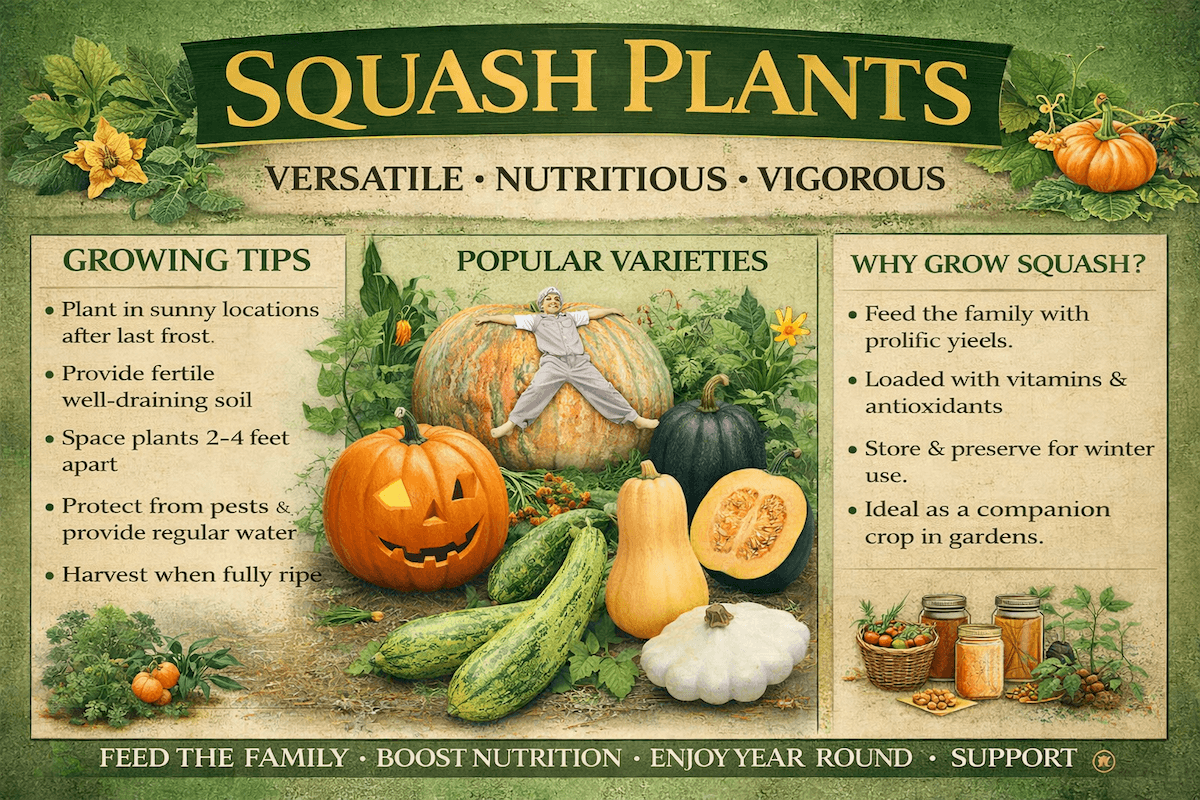
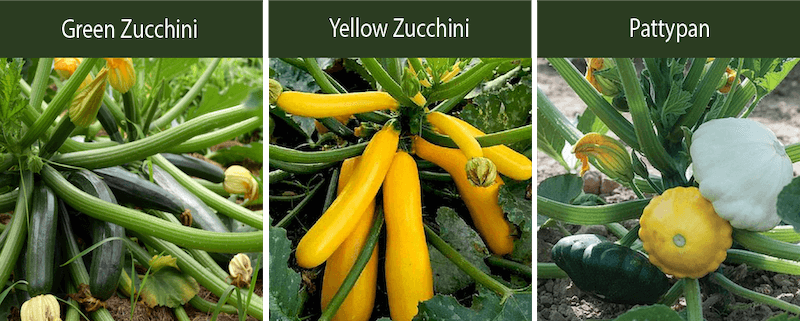
Summer squash refers to a variety of squash that is picked in its early growth stage, when the skin remains soft and fit for consumption. It is generally smaller and more delicate than winter squash. Summer squash has a thin, edible skin and soft seeds. Numerous variations of summer squash exist, notable ones being zucchini, yellow squash, and pattypan squash. These diverse types exhibit differences in their shape, size, and color. The growth pattern of summer squash plants is sprawling, which can occupy a significant amount of garden space. They typically produce between 3-5 squash per plant. Typically, one can expect to cultivate around 1,500 to 2,500 summer squash plants per acre. The resultant produce per acre usually lies within the range of 7,500 to 12,500 pounds. Common varieties and types of summer squash, their detailed description of plant and fruit, and their uses in cooking include:
Yellow squash is another popular variety of summer squash. It has a similar shape to zucchini but has a bright yellow skin. The flesh of yellow squash is creamy white and has a slightly sweeter flavor than zucchini. Yellow squash plants have a spreading vine habit and can grow up to 3-4 feet long. These plants yield large, oblong fruits, potentially reaching up to 10 inches in length. Much like zucchini, yellow squash is a versatile ingredient in numerous recipes, with a particular fondness in Southern and Cajun cooking.
Pattypan squash is a unique variety of summer squash that has a distinctive round or scalloped shape. Its color spectrum spans from white and yellow to green hues. The flesh of pattypan squash is creamy white and has a slightly sweet, nutty flavor. Pattypan squash plants have a spreading vine habit and can grow up to 2-3 feet long. The plants grow between 10 and 15 small, round fruits that are typically harvested when they are about 4 inches in diameter. This squash if often uses as a stuffer, much like a hollowed-out bell peppers and baked.
Crookneck squash is a variety of summer squash that has a distinctive curved shape. It has a bright yellow skin and a creamy white flesh with a slightly sweet flavor. Crookneck squash plants have a spreading vine habit and can grow up to 2-3 feet long. These plants bear petite, round fruits that are typically harvested at a diameter of 2 to 3 inches. Pattypan squash finds its way into numerous dishes, including salads and stir-fries, or simply used as a decorative garnish.
Chayote squash is a unique and versatile variety of summer squash that is popular in Latin American cuisine. This squash variety showcases a pear-like fruit, coated with a thin, light-green skin. Its solid, white interior flesh imparts a subtly sweet and nutty taste. Chayote squash plants have a spreading vine habit and can grow up to 20 feet long. The plants produce many small fruit that can be harvested when they are 3-4 inches in length. Chayote squash is primarily used in soups.
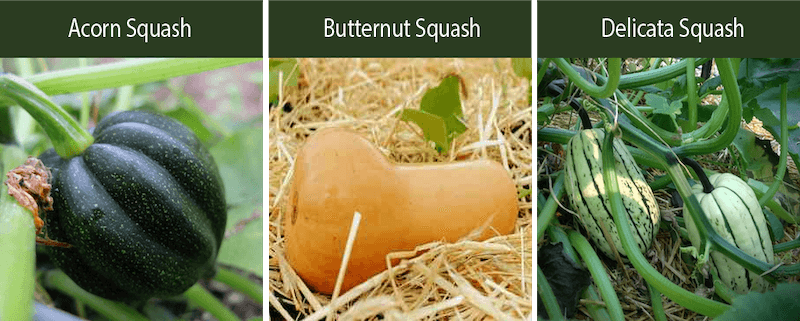
Winter squash refers to the variety of squash that is picked when it has fully ripened, characterized by its tough, inedible skin. It is generally larger and more robust than summer squash. Winter squash has a tough skin and hard seeds, which are usually removed before cooking. A diverse range of winter squash types exists, including notable varieties such as butternut squash, acorn squash, and spaghetti squash. These types exhibit distinct differences in their shape, size, and color. Winter squash plants also have a spreading vine habit, and they typically produce between 2-3 squash per plant. Of particular interest to farmers, an acre produces 10,000 pounds of winter. Common varieties of winter squash, their detailed description of plant and fruit, and their uses in cooking include:
Butternut squash is by far the best tasting and most popular squash to prepare and serve at Thanksgiving. It has a distinctive bell-shaped fruit with a smooth, tan skin and sweet, creamy orange flesh. Butternut squash plants have a spreading vine habit and can grow up to 10-15 feet long. The plants produce large, oblong-shaped fruit that can weigh up to 5-6 pounds. Butternut squash is usually halved lengthways and baked.
Acorn squash is another popular variety of winter squash. It has a distinctive acorn-shaped fruit with a ribbed, dark green skin and bright orange flesh. Acorn squash plants have a spreading vine habit and can grow up to 8-10 feet long. The plants produce small, round fruit that can weigh up to 2-3 pounds. Acorn squash is usually roasted and then cut up into little squares for casseroles, soups, and stews.
Spaghetti squash is a distinctive winter squash known for its stringy flesh that separates into spaghetti-like strands when cooked. The fruit is typically cylindrical with a smooth yellow skin and a mild, slightly nutty flavor. Spaghetti squash plants have a spreading vine habit and can grow 8–10 feet long, producing oblong fruits that may weigh 4–6 pounds. When roasted or boiled, the flesh forms long strands that are commonly served with tomato sauce, herbs, vegetables, or cheese as a low-carbohydrate pasta substitute.
Delicata squash, sometimes called sweet potato squash or peanut squash, is a smaller winter squash recognized by its cream-colored skin with green stripes. Unlike many winter squash varieties, the thin skin is edible when cooked. Delicata plants have a moderate spreading vine habit and typically produce several oval fruits weighing about 1–2 pounds each. The flesh is tender, sweet, and slightly nutty, making delicata a popular choice for roasting, stuffing, or slicing into rings and baking with herbs and olive oil.
Kabocha squash is a unique and versatile variety of winter squash that is popular in Japanese cuisine. It has a round, squat fruit with a green or orange skin and dense, sweet flesh. Kabocha squash plants have a spreading vine habit and can grow up to 10-15 feet long. One plant can produce up to 5 squash weighing 4 pounds. Kabocha squash is often used in soups, stews, and tempura.
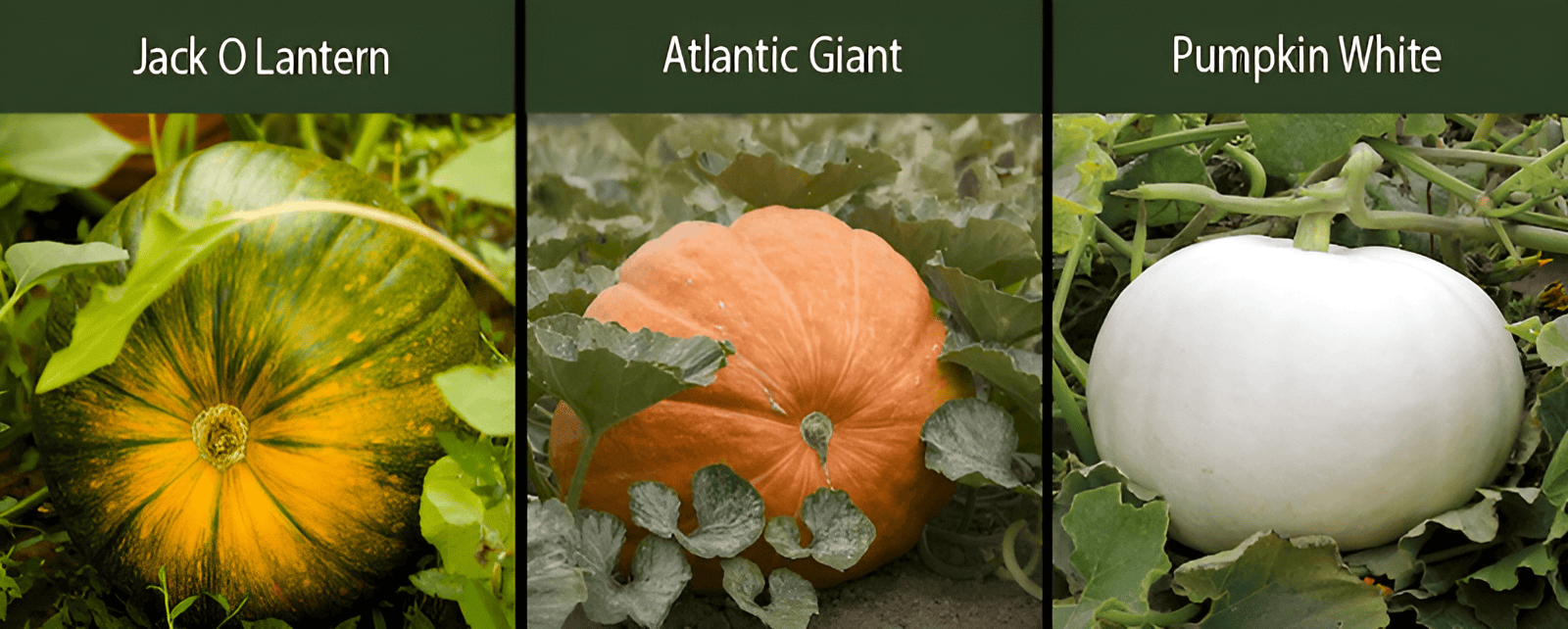
Pumpkins are technically a type of winter squash, though they are often discussed separately because of their large size, round shape, and cultural importance in autumn celebrations. While pumpkins are widely associated with Halloween jack-o’-lanterns and Thanksgiving decorations, many varieties are also prized for their culinary uses in soups, baked goods, and roasted vegetable dishes.
Pumpkin plants grow on vigorous, spreading vines that can extend 10–20 feet or more across the garden. Most plants produce one to three pumpkins per vine, depending on the variety and growing conditions. Commercial growers typically plant 2,000 pumpkin plants per acre, which can yield approximately 10,000 pumpkins per acre with a combined harvest weight approaching 100,000 pounds. Popular pumpkin varieties range from small pie pumpkins to giant exhibition pumpkins grown for competitions.
Common pumpkin varieties and their uses include:
Jack-o’-lantern pumpkins are the most recognizable pumpkin variety in North America. They have large, round fruit with bright orange skin and thick walls that make them ideal for carving. These pumpkins typically weigh between 10 and 25 pounds and grow on vigorous vines that spread across the garden. Although often used for decoration, jack-o’-lantern pumpkins can also be cooked and used in soups or roasted dishes.
Giant pumpkins are grown primarily for agricultural competitions and fall displays. These varieties produce enormous fruits with smooth orange skin and dense flesh. Giant pumpkin vines can stretch 20–30 feet long, and growers often limit the plant to a single fruit to maximize size. Under ideal conditions, competition pumpkins can exceed 500 pounds and sometimes reach over 1,000 pounds.
Peanut pumpkins, sometimes called Thai pumpkins, are known for their distinctive skin covered with peanut-like bumps caused by excess sugar development beneath the rind. These pumpkins have sweet, creamy flesh and are widely used in soups, curries, and roasted dishes. The vines grow 10–15 feet long and typically produce several medium-sized fruits.
Sugar pumpkins—often called pie pumpkins—are smaller and sweeter than carving pumpkins. Their dense, smooth flesh is ideal for baking and is commonly used in pumpkin pies, breads, muffins, and cookies. Sugar pumpkin vines spread widely across the garden, producing multiple fruits that typically weigh between 4 and 10 pounds.
White pumpkins are a striking variety prized for their pale white or cream-colored skin. While they can be cooked, they are most often grown for decorative displays during the fall season. White pumpkin plants grow on spreading vines and usually produce two or three large fruits per plant.
Miniature pumpkins are compact varieties often grown for table decorations and seasonal displays. Unlike most pumpkins, these plants can grow in a bush habit, making them suitable for smaller gardens. The plants produce numerous small fruits that typically weigh 1–2 pounds and are popular in autumn centerpieces and craft displays.
Jarrahdale pumpkins are a distinctive heirloom variety originating in New Zealand. They have flattened, ribbed fruits with a beautiful blue-gray rind and deep orange flesh inside. Known for their sweet, nutty flavor, Jarrahdale pumpkins are excellent for soups, pies, and roasted dishes.
Beyond their culinary appeal, Jarrahdale pumpkins are also valued for decorative fall displays because of their unusual color and shape. When selecting one, look for a pumpkin that feels heavy for its size, has firm skin, and shows no soft spots or blemishes. Properly stored in a cool, dry location, these pumpkins can last through much of the winter.
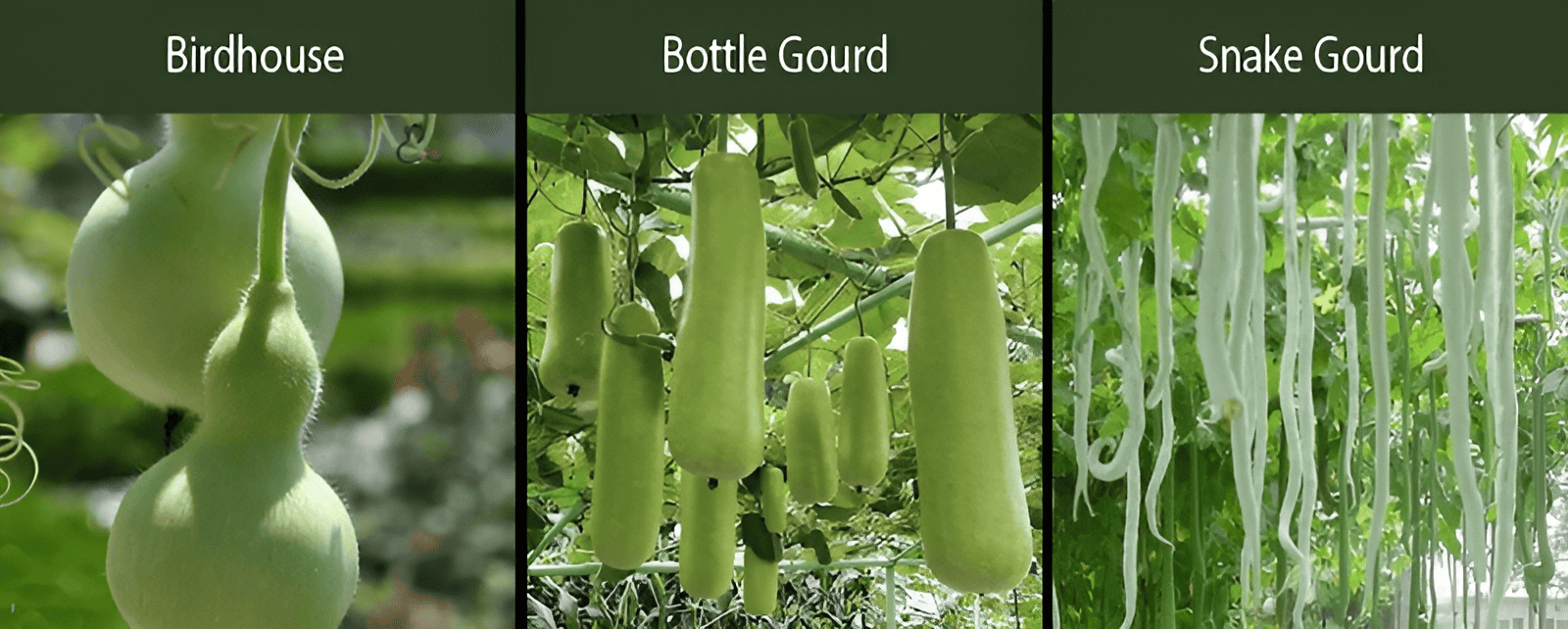
Gourds are a type of squash that are grown for their ornamental value. Gourds grow to form many shapes that make them ideal for decoration. Gourds have a hard, woody skin and are not typically eaten. The popular gourds, include birdhouse gourd, bottle, and snake gourd. Gourds have a spreading vine habit, and they typically produce between 2-3 gourds per plant. Commercially, gourds are grown to hang from elevated trellises typically made of wood. A trellises acre can produce between 9 and 10 thousand gourds. Common varieties of gourds, their detailed description of plant and fruit, and their uses include:
Birdhouse gourds are the most popular because they can be shaped, hollowed, painted, and hung from tree branches as natural birdhouses. They have a large, round fruit with a hard, tan-colored shell and fibrous, white flesh. Birdhouse gourd plants have a spreading vine habit and can grow up to 20-25 feet long. The plants produce large, round fruit that can weigh up to 5-10 pounds. Birdhouse gourds are often dried and used to make birdhouses, bowls, and other decorative items.
Bottle gourds are another popular variety of gourd that are often used for crafting. They have a long, narrow fruit with a hard, pale green or tan-colored shell and fibrous, white flesh. Bottle gourd plants have a spreading vine habit and can grow up to 20-25 feet long. The plants produce long, cucumber like fruit that can weigh 15 pounds or more. Bottle gourds are often dried and used to make bottles, bowls, and other decorative items.
Snake gourds are grown primarily in Asia. They have a long, slender fruit with a hard, green, or white-colored shell and firm, white flesh. Snake gourd plants have a climbing vine habit and can grow up to 20-30 feet long. The plants produce 4 foot long, snake-like fruit that can be used to prepare traditional medicine treatments or as an ingredient in soups, stews, and curries.
Dipper gourds are a decorative variety of gourd that are often used to make ladles and other utensils. They have a large, round fruit with a hard, pale green or tan-colored shell and fibrous, white flesh. Dipper gourd plants have a spreading vine habit and can grow up to 20-25 feet long. The plants produce large, round fruit that can weigh up to 5-10 pounds. Dipper gourds are often dried and hollowed out to make ladles, spoons, and other utensils.
Calabash gourds are a versatile and widely used variety of gourd. They have a long, bulbous fruit with a hard, green, or tan-colored shell and fibrous, white flesh. Calabash gourd plants have a spreading vine habit and can grow up to 20-25 feet long. The plants produce long, slender fruit weighing 10 pounds or more. Calabash gourds are often used to make bowls, musical instruments, and other decorative items.
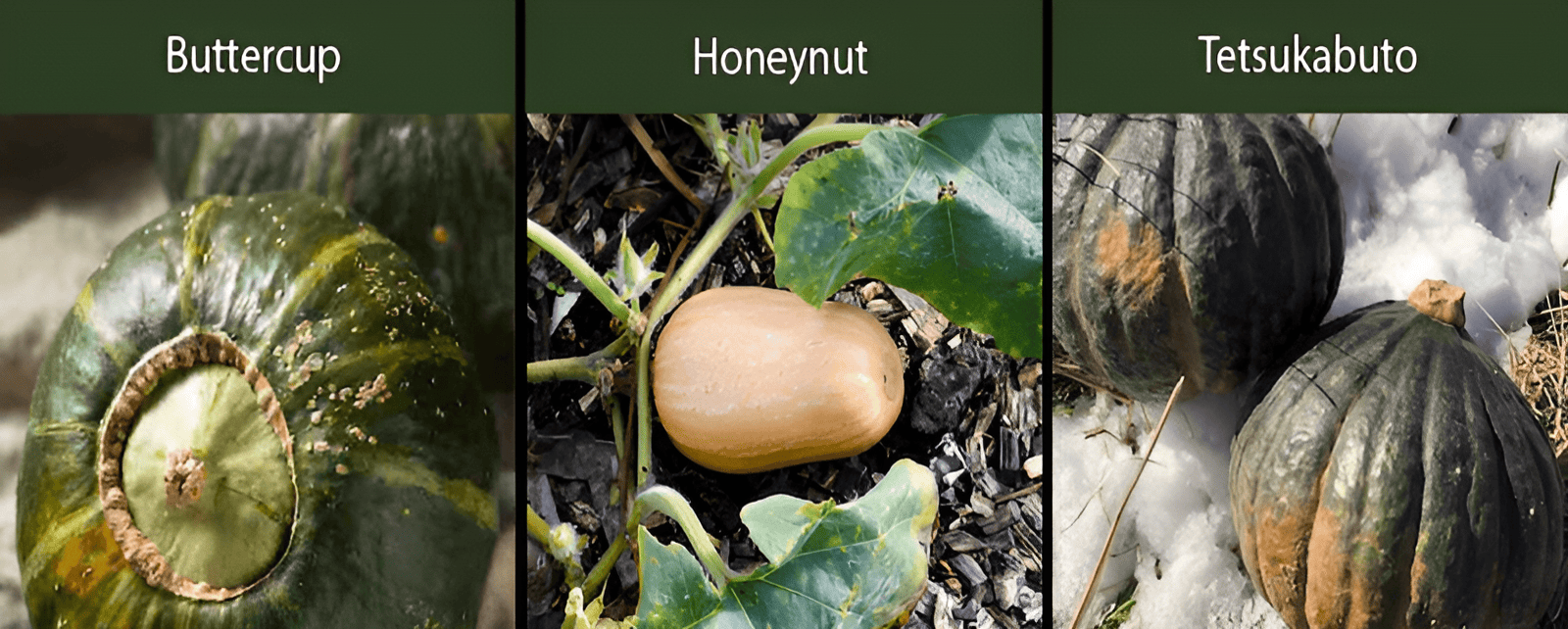
Hybrid squash are varieties that are created by crossbreeding different types of squash to produce a new variety with specific characteristics, such as disease resistance or improved flavor. Examples include the delicata squash and the kabocha squash. Hybrid squash can have a spreading vine habit or a bush habit, depending on the specific variety. The number of squash per plant and the yield per acre can vary depending on the specific hybrid squash variety. Common varieties of hybrid squash, their detailed description of plant and fruit, and their uses in cooking include:
Buttercup squash is often confused with butternut squash, but they are not the same. Buttercup has a round, slightly flattened fruit with a dark green skin and sweet, dense flesh. Buttercup squash plants have a spreading vine habit and can grow up to 10-15 feet long. It is used as a hearty ingredient for soups.
Honeynut squash is a relatively new hybrid variety that is a cross between the butternut squash and the buttercup squash. It has a small, oblong fruit with a deep tan skin and sweet, nutty flesh. Honeynut squash plants have a spreading vine habit and can grow up to 8-10 feet long, each producing several 2 pound fruits all along the vine.
Carnival squash is a popular hybrid variety that is a cross between the acorn squash and the sweet dumpling squash. It has a round, slightly flattened fruit with a mottled green and orange skin and sweet, nutty flesh. Carnival squash plants have a spreading vine habit and can grow up to 10-15 feet long. This squash is often included with potatoes, turnip and carrots in oven roasted dishes, soups, and stews.
Tetsukabuto squash is a popular hybrid variety that is a cross between the butternut squash and the kabocha squash. It has a round, slightly flattened fruit with a dark green skin and sweet, dense flesh. Tetsukabuto squash plants have a spreading vine habit and can grow up to 10-15 feet long. The fruit of a Tetsukabuto squash weighs between 5 and 6 pounds.
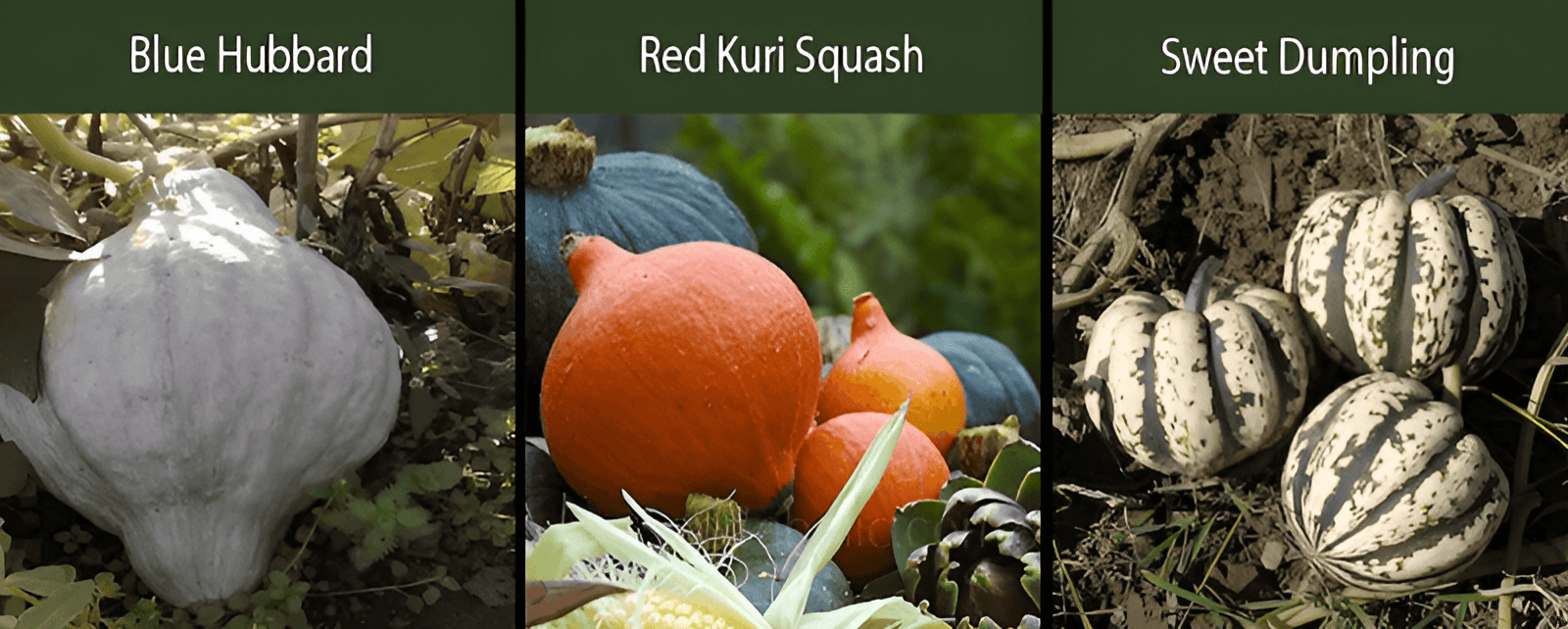
Specialty squash are varieties that are less commonly grown and are often used in specific cuisines or for specific purposes. Examples include the chayote squash, which is used in Latin American cuisine, and the tromboncino squash, which is used in Italian cuisine. Specialty squash can have a spreading vine habit or a bush habit, depending on the specific variety. The number of squash per plant and the yield per acre can vary depending on the specific specialty squash variety. Common varieties of specialty squash, their detailed description of plant and fruit, and their uses in cooking include:
Blue Hubbard squash is a large, oblong-shaped winter squash with a hard, bluish-gray shell and bright orange flesh. The fruit can weigh up to 20-30 pounds and is harvested when fully mature. Blue Hubbard squash plants have a spreading vine habit and can grow up to 10-15 feet long. The flesh has an earthy taste, making it a great ingredient for meals that are prepared on those cold winter days.
Tromboncino squash, also known as zucchetta, is a long, slender summer squash that is often used in Italian cuisine. It has a curved, trombone-like shape with a pale green skin and firm, white flesh. Tromboncino squash plants have a climbing vine habit and can grow up to 10-15 feet long. The flesh is mild and sweet.
Red Kuri squash, also known as Hokkaido squash, is a small, round winter squash with a deep orange skin and sweet, nutty flesh. The fruit can weigh up to 5-7 pounds and is harvested when fully mature. Red Kuri squash plants have a spreading vine habit and can grow up to 8-10 feet long.
Sweet Dumpling squash is a small, round winter squash with a white or cream-colored shell and green stripes. The fruit can weigh up to 1-2 pounds and is harvested when fully mature. Sweet Dumpling squash plants have a spreading vine habit and can grow up to 8-10 feet long. It is often used in soups, stews, and roasted dishes due to its nutty flavor.
Turn your 1 acre into a high-yield, profitable farm.
Crop Circle Farms specializes in designing and building fully engineered, low-impact farm systems that use 90% less water, 85% less fertilizer, and deliver two to three times the yield of traditional farming.
Whether you have a vacant lot, an empty field, a resort, school, island community, or small family farm, we’ll build it from the ground up for you. Our team handles everything from farm layout and installation to irrigation, root tube systems, training, and first planting.
Contact Us to explore a custom Crop Circle Farm design for your property.
Help us expand our mission to revolutionize agriculture globally. We are seeking partners to implement Crop Circle Farms to feed people in need. Together, we can build scalable food production systems that save water, reduce costs, and feed thousands of people. Contact Growing To Give