Growing Tomatoes
Grow Bigger, Better-Tasting Tomatoes
How long do tomatoes take to grow? Many tomatoes are ready in 60–85 days after transplanting (longer from seed), depending on variety and temperature.
When should I plant tomatoes? Transplant after frost when nights are reliably warm and soil has warmed; cold soil slows growth and increases stress.
What spacing is best? Most plants perform well at 18–24 inches apart with strong support; dense plantings need extra pruning and airflow.
How do I prevent blossom end rot? Keep moisture consistent and avoid extreme drought-to-flood swings to support steady calcium uptake.
Pick determinate varieties for compact plants and concentrated harvests, or indeterminate varieties for continuous production. Match varieties to heat tolerance, disease resistance, and your season length.
Start seeds 6–8 weeks before your last expected frost under strong light. Keep media warm and evenly moist, then pot up once seedlings are established.
Harden plants off for 7–10 days. Transplant only after frost risk passes and nights stay reliably warm. Plant deeper to encourage strong rooting.
Typical spacing is 18–24 inches between plants, with sturdy trellising/caging. If you push density, prune more aggressively and prioritize airflow to reduce disease pressure.
Install support at planting to avoid root damage later. Remove lower leaves touching soil and prune suckers as needed based on variety and support system.
Use deep, consistent watering. Avoid drought-to-flood cycles. Feed moderately—too much nitrogen increases foliage at the expense of fruit set.
Harvest at full color for best flavor. For storage/transport, pick at the breaker stage and finish ripening indoors.
Timing is driven by frost risk and soil temperature. In warmer climates, early spring and fall tomato cycles are common. In cooler climates, transplant after frost and prioritize heat buildup with mulch or protected starts.
Related growing guides: Growing Peppers, Growing Beans, Growing Herbs.
Tomatoes are one of the most widely grown and adaptable food crops in the world, valued for their productivity, culinary versatility, and long harvest window. From compact determinate varieties to vigorous indeterminate vines, tomato plants can thrive in gardens, containers, crop circles, and field systems when spacing, nutrition, and water are properly managed.
Successful tomato production depends on soil temperature at transplant, consistent moisture, balanced fertility, and adequate airflow. Spacing, pruning strategy, and support systems directly influence fruit size, disease pressure, and total yield—especially in warm or humid climates.
This guide covers tomato varieties, planting and spacing recommendations, soil preparation, pest and disease prevention, and yield considerations for home gardeners and commercial growers alike.
Tomatoes can be harvested at several stages of maturity, ranging from mature green through breaker, turning, pink, light red, and fully red. The harvest stage depends on variety, market distance, handling requirements, and how quickly the fruit must reach consumers.
Some commercially produced tomatoes are harvested at the mature-green stage and later exposed to ethylene under controlled temperature and humidity. Ethylene is a natural plant hormone produced by tomatoes themselves as ripening begins. Commercial ripening rooms use controlled ethylene exposure to initiate and synchronize the natural ripening process.
Other tomatoes are harvested after color development has already begun, including breaker, turning, pink, and later stages. Tomatoes marketed specifically as tomatoes on the vine are sold while still attached to stems or vines.
Flavor and eating quality depend on many factors, including cultivar, maturity at harvest, growing conditions, temperature, handling, storage, and the stage at which the tomato is eaten. Local growers can differentiate their tomatoes through variety selection, short harvest-to-market times, careful handling, and allowing fruit to reach an appropriate maturity before harvest.
Tomato yield varies widely by variety, spacing, pruning method, and growing system. Use these tools to plan layouts and estimate harvest potential.
Estimate yield per tomato plant and compare spacing scenarios.
Plan beds, containers, or crop circles and estimate total harvest.
Model field-scale tomato production and compare yield assumptions.
Tip: Wider spacing with good airflow reduces disease pressure and improves fruit quality.
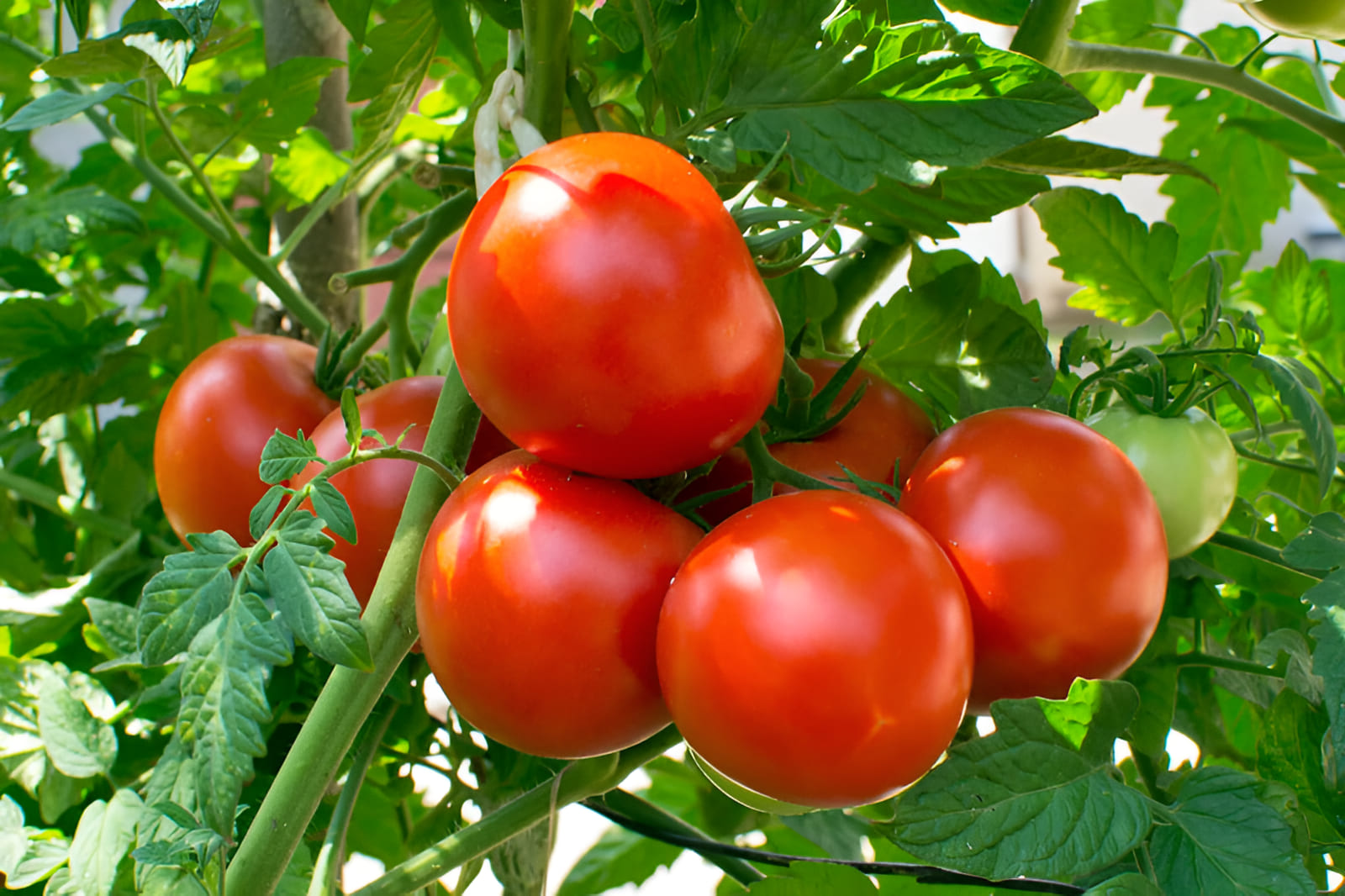
Greenhouse tomatoes grown in controlled agriculture environments are often marketed as “hot house tomatoes.” While field-grown and CEA tomatoes are produced in very different ways, they share several destructive traits: heavy reliance on fossil fuels to run equipment and heat structures, regular applications of artificial fertilizers, and the use of high-pressure irrigation systems. Hydroponic tomatoes grown under glass may look flawless, but many consumers notice that they lack the full-bodied flavor of a sun-ripened tomato grown in living soil.
Lured by the promise of off-season profit, farmers have been encouraged to grow tomatoes in greenhouses and CEA tunnels protected from the elements. But year-round tomato production indoors can be a risky business, particularly in an era of rising energy costs and volatile supply chains.
While indoor tomato farming offers the advantages of season extension and weather protection, its financial and environmental drawbacks are significant. Many growers are searching for alternatives that allow them to grow premium tomatoes with less energy, less water, and less risk—especially in regions already facing water scarcity and climate stress.
Hydroponic tomato systems—nutrient film technique, deep water culture, coco slabs, and drip-to-waste— promise precise control and high yields per square foot. But after the pandemic disrupted supply chains and governments began pushing toward “greener” inputs, the cost of hydroponic fertilizer solutions, plastics, and energy skyrocketed. Many hydroponic tomato operations have downsized or closed, and expansion plans have been put on hold.
Hydroponic cultivation offers some advantages, including meticulous control over the growing environment and efficient water use. However, it presents a distinct set of challenges:
Hydroponic systems can make sense for very specific markets, but there is growing recognition that soil-based, water-smart, small-scale tomato farms near population centers can deliver exceptional flavor, better food security, and a stronger community impact. This is exactly where Crop Circle Farms® and spiral-based tomato systems shine.

Increasing tomato production without sacrificing flavor, nutrition, or environmental integrity is not only possible—it is the core design principle of Crop Circle Farms®. A recent innovation in tomato propagation developed by Crop Circle Farms gives local growers the tools to raise bigger, better tasting tomatoes, protect water and soil, and still earn a strong profit on small parcels of land.
Instead of long straight rows, Crop Circle Farms grow tomatoes in looping Archimedean or Fibonacci spirals. These geometric planting patterns offer important advantages:
A Crop Circle Farm growing tomatoes is considered a “food-safe” agricultural production system. Tomatoes mature on clean ground cover, not bare soil, and are harvested clean and ready to wash and pack. Spiraled plantings create robust, healthy vines capable of defending themselves better against pests and soil-borne disease. For growers exploring regenerative and sustainable agriculture, this approach shows that tomatoes can be grown organically without heavy reliance on toxic chemicals.
Crop Circle Farm tomatoes are ideal for urban and peri-urban farm operations that face land constraints and cannot bring tractors into tight spaces but can leverage community labor. A single spiral system can transform parking lots, vacant lots, or edge-land around buildings into productive tomato acreage, complementing other spiral crops like peppers, beans, and herbs. When combined with the basic principles of growing tomatoes—proper spacing, disease-resistant varieties, and timely harvest—these spiral farms can generate premium, local fruit with a compelling climate-smart story.
A food-safe agricultural system ensures that tomatoes and other crops are free from harmful contaminants at every step, from field to farm stand. Crop Circle Farms integrate food safety into the core design of each spiral field:
Overall, a Crop Circle Farm tomato system supports a holistic, food-safe approach that integrates water conservation, soil health, and clean-handling practices into one unified model.
Thanks to the spiral geometry, high-density planting, and water-smart irrigation, even a modest footprint can produce impressive yields. A quarter-acre Crop Circle Farm growing tomatoes can match or exceed the tomato production of a full one-acre conventional row farm, with far less water and fertilizer and a much lighter environmental impact. For small farmers, nonprofits, and social enterprises looking to serve local markets, that yield advantage translates into real income and real food security.
The final piece of the Crop Circle Farms tomato system is the drill don’t till method of establishing plants. Once the field has been leveled and prepared, a robust ground cover is installed over the entire planting area to prevent weeds and provide a clean, dry surface for vine growth, fruit ripening, and harvest. An irrigation line fastened between plant openings traces a spiral through the field, forming a walk-in path for planting, pruning, and picking.
Tomato plants are watered below the canopy, not overhead. Sub-canopy irrigation creates a dry leaf environment that dramatically reduces the risk of disease and contamination. Watering directly at the root zone also helps mitigate blossom end rot and other moisture-related disorders, whether you are growing determinate paste tomatoes or vigorous indeterminate tomato varieties.
The ground cover itself is engineered to last ten years or more, withstanding UV exposure and foot traffic. At the end of its service life, the cover is quarter-turned so plants can be grown in previously untouched “virgin” soil, maintaining soil structure and fertility under the system. Over the winter, tomato vines are left in place inside their openings to create an in-field mulch and shelter for soil life. As temperatures warm, last year’s plants are pulled, shredded, and returned to the field as organic matter, giving the next crop a biological boost.
A simple household electric drill with an auger attachment is then used to “core” the soil at each plant opening to a depth of about 8 inches. Each hole is filled with a custom mix of compost, mineral amendments, and slow-release organic fertilizer tailored to tomatoes. Transplants are set into this enriched micro-zone, where roots can quickly establish in a nutrient-rich, well-aerated plug.
Because tomatoes are allowed to vine over the ground cover without staking or cages, determinate varieties are often preferred. However, any vigorous indeterminate tomato can also be grown, provided that spacing between spiral loops is increased and access lanes are maintained for harvesting. As long as plants are kept picked, they continue to flower and set fruit right up until the first hard frost.
Turn one acre into a resource-efficient, high-production farm.
Crop Circle Farms designs and builds resource-efficient agricultural systems tailored to site conditions, crops, water availability, and production goals. Our field-tested systems have demonstrated up to 90% lower water use, up to 85% lower fertilizer requirements, and two to three times the production with selected crops and configurations compared with conventional layouts.
Contact Us to explore a custom Crop Circle Farm design for your property.
Help expand our mission to implement proven farm and garden models in food-insecure communities, island communities, schools, and water-stressed regions.
Contact Growing To Give to learn about supporting community food-production projects and resource-efficient growing systems.
Have questions about growing tomatoes in garden rows, containers, or crop circle spiral beds? These frequently asked questions cover varieties, spacing, pruning, trellising, watering, blossom end rot, and harvest.
Determinate tomatoes are compact, set most of their fruit in a short window, and are ideal for containers, raised beds, and canning. They usually need only light staking or a cage. Indeterminate tomatoes grow as vines all season, need strong trellising, and provide continuous harvests for fresh eating and market sales. In spiral tomato plantings and crop circle beds, many growers use indeterminates for maximum yield per square foot.
Tomato seeds germinate best at 75–85°F (24–29°C). Use a seedling heat mat and a light, sterile seed-starting mix for fast, even emergence. Most varieties sprout in 5–10 days if the mix is kept moist (not soggy). As soon as seeds sprout, move them under bright grow lights or a sunny window to prevent leggy, weak seedlings.
Tomatoes can form roots along their buried stems. When transplanting, bury seedlings up to the first true leaves or lay leggy plants sideways in a shallow trench and bend the top upright. Backfill so most of the stem is covered. This creates a larger root system, making plants sturdier, more drought-tolerant, and better able to handle summer heat in both conventional gardens and crop circle systems.
For traditional rows, space determinate tomatoes about 18–24 inches apart and indeterminate tomatoes about 24–36 inches apart, with 36–48 inches between rows. Good spacing improves airflow, reduces fungal disease, and makes harvest easier.
In spiral crop circle beds, maintain similar plant-to-plant spacing along the loop. The curved geometry lets more leaves see the sun as it moves, while still giving enough room for pruning, trellising, and picking.
It depends on the type of tomato and your training system:
Always use clean pruners, and avoid pruning when foliage is wet to limit the spread of tomato diseases.
The best trellis system depends on your space and tomato type:
Install any trellis system at or before planting so you don’t damage roots later in the season.
Blossom end rot (BER) appears as a dark, sunken spot on the blossom end of the fruit. It’s usually caused by irregular watering and disrupted calcium uptake, not a disease.
To prevent BER:
Flower drop, or blossom drop, is often weather-related. Tomatoes set fruit poorly when:
Use shade cloth in extreme heat, maintain steady irrigation, and protect plants from cold snaps with covers. In crop circle tomato systems, the ground cover and spiral layout can help moderate soil temperature swings.
Common tomato pests include aphids, whiteflies, hornworms, spider mites, and thrips. Typical diseases include early blight, late blight, septoria leaf spot, and viral diseases.
To reduce problems:
Tomatoes prefer deep, consistent moisture. In most climates, that means the equivalent of about 1–1.5 inches of water per week, adjusted for rainfall and soil type. Drip irrigation plus mulch is ideal for both traditional rows and water-smart crop circle farms.
Feed tomatoes with a balanced fertilizer or well-made compost and ensure plenty of potassium and micronutrients for fruit quality. Avoid overdoing nitrogen, which delays ripening and leads to big green plants with fewer tomatoes.
Yes. Tomatoes thrive in containers and in raised crop circle beds when given enough soil volume and support:
Harvest tomatoes when they reach their full varietal color (red, yellow, orange, chocolate, or striped) and feel slightly soft to the touch. Fruit picked at the “breaker” stage (just starting to color) will finish ripening indoors with good flavor, which can be useful for market harvests and food-safe handling.
Store tomatoes at room temperature, out of direct sunlight. Refrigeration can dull flavor and change texture, so only chill fully ripe fruit if you must extend shelf life, and let them warm back to room temperature before serving.
Explore tomato varieties, intensive growing systems, companion crops, and pollinator-friendly practices that can help build a more productive and diverse garden or farm.
Learn how indeterminate tomato vines grow, flower, set fruit, and continue producing throughout the growing season.
Explore the Crop Circle Farms Tomato Volcano growing system designed for intensive tomato production in a compact footprint.
Learn how to grow basil and other culinary herbs that can complement tomatoes in productive gardens and market systems.
Explore bees, flowering plants, pollination, habitat diversity, and their roles in productive farms and garden ecosystems.
Combine productive tomato varieties, intensive growing systems, companion crops, and diverse flowering habitat to create a more resilient growing environment.