Plant Diseases
Farm & Garden Plant Diseases
Plant diseases are a leading cause of yield loss in both farms and home gardens, often spreading quickly when conditions favor pathogens. Fungal, bacterial, and viral diseases can weaken plants, reduce harvest quality, and create recurring problems if underlying causes are not addressed.
Effective disease management begins with accurate identification and prevention-first practices. Clean tools, adequate spacing and airflow, proper irrigation timing, crop rotation, and resistant varieties all reduce disease pressure before treatments are ever needed.
This guide explains how to recognize common plant disease symptoms, distinguish major disease types, and apply integrated pest management (IPM) strategies that protect crops while minimizing unnecessary chemical use.
Powdery mildew is a group of fungal diseases that affect many vegetables, fruits, ornamentals, and other plants. It typically appears as white or gray powdery growth on leaves, stems, buds, or flowers. Severe infections can reduce photosynthesis, weaken plants, and cause premature leaf loss.
Improve airflow, avoid overcrowding, remove heavily infected plant material, and avoid excessive nitrogen that encourages susceptible new growth. Where treatment is warranted, sulfur, potassium bicarbonate, horticultural oils, or other fungicides may be appropriate for particular crops. Always use a product specifically labeled for the plant and disease being treated.
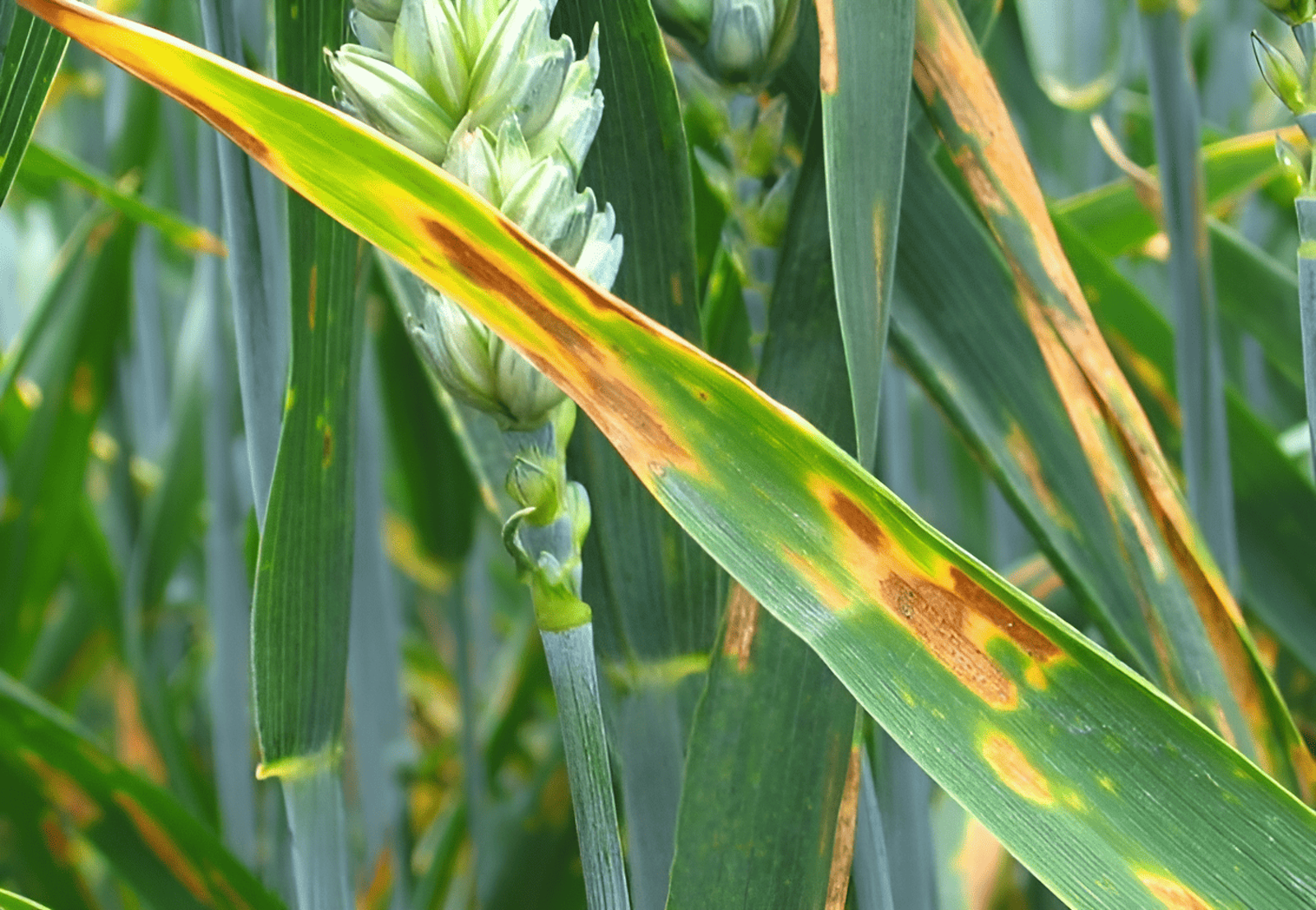
Rust diseases are caused by specialized fungi and commonly produce yellow, orange, reddish-brown, or dark spore-producing pustules on leaves and stems. Different rust fungi infect different host plants, so symptoms and management can vary considerably among crops.
Management may include resistant varieties, removal of infected plant debris where appropriate, adequate spacing and airflow, and practices that reduce prolonged leaf wetness. Fungicides can help manage certain rust diseases, particularly when applied preventively, but the product must be labeled for the specific crop and disease.
“Blight” describes rapid browning and death of plant tissue rather than one specific disease. Blights can be caused by fungi, bacteria, or water molds. Early blight of tomatoes, late blight of tomatoes and potatoes, bacterial blights, and fire blight are different diseases and require different management strategies.
Remove severely infected plant material when appropriate, reduce unnecessary leaf wetness, rotate susceptible crops where the pathogen survives in soil or crop debris, and use resistant varieties when available. Because the causes of blight differ, identify the specific disease before selecting a fungicide, bactericide, or other treatment.
Verticillium wilt is a soilborne fungal disease caused primarily by species of Verticillium. The fungus enters through plant roots and colonizes the vascular system, interfering with water movement. Symptoms can include yellowing, wilting, stunting, vascular discoloration, premature leaf loss, and sometimes plant death. Tomatoes, potatoes, peppers, eggplants, strawberries, raspberries, and many ornamental plants can be susceptible.
Once susceptible plants are infected in the field, effective curative fungicide options are generally unavailable. Management focuses on resistant varieties or rootstocks, disease-free planting material, crop rotation where practical, weed management, sanitation, and avoiding sites known to contain high levels of the pathogen.
Proper spacing, airflow, and irrigation timing reduce disease pressure and stabilize harvests. Use these tools to plan planting density and estimate yield impacts.
Estimate output per crop or plant—then compare spacing scenarios.
Plan spacing, bed size, and total harvest to reduce disease pressure.
Tip: Appropriate spacing, good airflow, and irrigation practices that limit prolonged leaf wetness can help reduce foliar disease pressure.
Black spot is a fungal disease of roses that produces dark, often irregular spots on leaves. Infected leaves may yellow and fall prematurely, weakening susceptible plants when disease is severe. Management includes removing infected leaves and fallen debris, improving airflow, avoiding prolonged leaf wetness, and choosing resistant rose varieties. Where fungicides are needed, use products specifically labeled for black spot and the plant being treated.
Bacterial canker is an important disease of tomato that can cause leaf-edge browning, wilting, stem symptoms, and spotting on fruit. The pathogen can spread through infected seed, transplants, tools, plant debris, and handling. Management focuses on clean seed and transplants, sanitation, crop rotation, dry foliage, and removal of infected plants. Chemical options are limited and are generally more useful preventively than after a systemic infection is established.
Leaf spots are symptoms rather than a single disease. They can be caused by fungi, bacteria, water molds, and sometimes noninfectious stresses. Symptoms may include circular or angular spots, yellow halos, water-soaked tissue, dead centers, or lesions restricted by leaf veins. Correct identification is important before choosing a treatment. Sanitation, airflow, appropriate irrigation, resistant varieties, and crop-specific management can reduce disease pressure.
Root rot can be caused by several soilborne fungi and water molds, and similar symptoms can also develop when roots remain in poorly drained or waterlogged soil. Affected roots may become discolored, soft, or decayed while above-ground growth becomes stunted, yellow, or wilted. Crops such as tomatoes, pepper plants, cucumbers, and many other garden plants can develop root-rot problems under favorable conditions. Improve drainage, avoid chronic overwatering, use healthy planting material, and identify the causal organism before considering a pesticide because no single fungicide controls every root-rot pathogen.
Farm and garden plant diseases are best managed through prevention, early detection, accurate diagnosis, and practices suited to the specific crop and pathogen. Crop rotation, resistant cultivars, sanitation, appropriate spacing, healthy soil, and careful irrigation can all reduce disease pressure.
Treatments should be selected only after the problem has been identified. Some diseases can be managed primarily with cultural practices, while others may justify biological or chemical controls. When pesticides are used, choose a product labeled for the crop and disease, follow the label exactly, and consider resistance-management recommendations.
Prevention-first plant protection strategies that reduce disease pressure with fewer interventions.
Read guide →Use plant diversity to improve airflow, suppress pests, and support healthier beds.
Read guide →Break disease cycles by rotating plant families and reducing pathogen carryover in soil.
Read guide →Healthy soils improve root function and plant resilience—often the best “treatment” is better soil.
Read guide →Turn your land into a productive, efficiently managed farm system.
Crop Circle Farms specializes in designing and building engineered, low-impact farm systems designed to reduce water and fertilizer use while improving production efficiency. Results vary by crop, climate, soil, system design, planting density, and management.
Whether you have a vacant lot, an empty field, a resort, school, island community, or small family farm, we’ll build it from the ground up for you. Our team handles everything from farm layout and installation to irrigation, root systems, training, and first planting.
Contact Us to explore a custom Crop Circle Farm design for your property.
Help us expand our mission to revolutionize agriculture globally. We are seeking partners to implement Crop Circle Farms to feed people in need. Together, we can build scalable food production systems that save water, reduce costs, and feed thousands of people. Contact Growing To Give
Common signs of plant disease include leaf spots, blights, powdery or downy growth, rust-colored pustules, wilting, yellowing, cankers, stem lesions, rotting fruit, root decay, mosaic patterns, distorted growth, and unusual stunting.
Examine the entire plant rather than only the most obvious damaged leaf. Check both sides of leaves, stems, flowers, fruit, crowns, and roots when possible. Insects, nutrient problems, drought, excessive water, herbicide injury, and other environmental stresses can sometimes produce symptoms that resemble infectious disease.
Symptoms can provide useful clues, but appearance alone does not always identify the cause. Fungal diseases may produce spots, mildew, rust pustules, fruit rots, or visible fungal growth. Bacterial diseases can cause water-soaked lesions, angular leaf spots, cankers, wilting, or bacterial ooze. Viral diseases commonly produce mottling, mosaic patterns, distortion, discoloration, or overall decline.
Different diseases can produce very similar symptoms, so accurate diagnosis may require closer inspection, knowledge of the crop and recent weather, local Extension guidance, or laboratory testing before treatment is selected.
Prevention begins with healthy seed and transplants, clean tools and equipment, appropriate plant spacing, good airflow, suitable crop rotation, resistant cultivars, healthy soil, and irrigation practices that avoid prolonged leaf wetness and chronically saturated roots.
Remove diseased plant material when appropriate, manage weeds that may harbor pathogens, avoid working among wet plants when diseases can spread by contact, and clean tools between infected and healthy plants. Mulching can also reduce soil splash that carries some pathogens onto lower leaves.
Integrated pest management (IPM) combines prevention, monitoring, accurate identification, and targeted management rather than relying automatically on pesticides.
Disease-management IPM may include resistant varieties, sanitation, crop rotation, irrigation management, improved airflow, biological controls, environmental modification, and removal of infected material. When a pesticide is justified, the goal is to use an appropriate labeled product as one part of the overall management strategy.
Consider a fungicide, bactericide, biological product, or other treatment only after the problem has been identified well enough to determine that the treatment is appropriate. Many products are preventive rather than curative, and a fungicide will not control a bacterial, viral, or noninfectious problem.
When pesticides are used, choose a product labeled for both the crop and disease being treated, follow all label directions, observe required safety and harvest intervals, and follow resistance-management recommendations when repeated applications are necessary.
Watering practices can strongly influence many plant diseases. Prolonged leaf wetness can favor some foliar pathogens, while waterlogged soil and poor drainage can increase the risk of several root and crown diseases.
Where practical, deliver water directly to the root zone with drip irrigation or similar methods and irrigate early enough for wet foliage to dry. Maintain relatively even soil moisture without keeping roots continually saturated. Irrigation frequency should be adjusted to soil, weather, crop, and rooting conditions rather than following a fixed schedule.
Remove heavily infected leaves, fruit, stems, or entire plants when doing so will reduce the source of disease and is appropriate for the pathogen involved. Avoid carrying infected debris through healthy plantings unnecessarily, and clean tools and hands after handling diseased plants.
Whether infected material can be composted depends on the pathogen and the composting system. If the compost pile does not reliably reach and maintain conditions capable of destroying the pathogen, disposing of severely diseased material by another locally permitted method may be safer.
Nearly every crop can be affected by disease. Tomatoes and peppers can develop wilts, leaf spots, blights, and bacterial diseases; cucurbits are commonly affected by powdery and downy mildews; brassicas can develop diseases such as black rot and clubroot; and beans can be affected by rusts, blights, and other foliar diseases.
Plan ahead by selecting varieties with resistance to important local diseases, starting with clean planting material, rotating crops when rotation is useful, improving drainage and airflow, and monitoring regional disease conditions. Rotation intervals should be based on the specific pathogen because some diseases decline after a few years away from a host while others can persist in soil much longer.
Related topics: Explore integrated pest management, crop rotation, building healthy soil, and companion planting for additional guidance on prevention-first crop and garden management.