Sustainable Agriculture
Climate-Smart Farms & Gardens
According to the United Nations FAO, smallholder farms produce roughly one-third of the world’s food supply.
Sustainable agriculture refers to farming systems that maintain soil health, conserve water, support biodiversity, and produce food without degrading the land for future generations. These systems emphasize long-term productivity rather than short-term yield maximization.
Explore sustainable farming systems, food-security strategies, traditional agricultural methods, and reduced-disturbance farming practices.
Explore water, soil, biodiversity, climate resilience, food production, and regenerative agriculture through our sustainable farming resource hub.
Explore Sustainable Agriculture →Explore food access, local production, resilient food systems, community agriculture, and strategies for strengthening food security.
Explore Food Security →Learn how traditional farming systems, indigenous knowledge, crop diversity, and locally adapted practices support long-term agriculture.
Explore Traditional Agriculture →Explore reduced-disturbance farming practices that protect soil structure, conserve moisture, reduce erosion, and support soil biology.
Explore No-Till Farming →Rather than relying on heavy tillage and high chemical inputs, sustainable agriculture uses water-smart irrigation, targeted fertility, and regenerative practices to grow more food on less land. These approaches help farmers stabilize yields, reduce input costs, and build farms that can withstand drought, heat, and shifting market conditions.
This page explores how sustainable agriculture works in practice, why smallholder farms play a central role, and how Crop Circle Farms applies soil-first, climate-smart design to create productive, scalable food systems for communities around the world.
Understanding the difference between sustainable agriculture and conventional farming helps illustrate why regenerative and water-smart systems are becoming increasingly important for food security and environmental protection.
| Feature | Sustainability-Focused Practices | Higher-Input Conventional Examples |
|---|---|---|
| Water Use | Precision irrigation and targeted watering | Flood irrigation or high-volume watering |
| Soil Health | Organic matter, soil microbes, minimal tillage | Heavy tillage and soil disturbance |
| Fertilizer Use | Targeted nutrients, compost, and mineral blends | Broadcast synthetic fertilizers |
| Biodiversity | Companion planting, pollinator habitat | Monoculture crop production |
| Yield Stability | Long-term resilience and soil regeneration | Short-term yield focus |
Crop Circle Farms are resource-efficient agricultural systems developed through years of field testing for sustainable agriculture and smallholder food production. Instead of relying exclusively on straight-row planting, Crop Circle Farms use pre-set circular and spiral layouts designed to increase productive use of available space, improve light distribution, and support intensive crop production.
At the core of this approach is a “drill-don’t-till” philosophy. Rather than disturbing an entire growing area, Root Tubes® or similar targeted planting zones concentrate water and fertility around plant roots while leaving much of the surrounding soil structure undisturbed. This approach is designed to support the soil food web while reducing unnecessary soil disturbance.
Water-smart Crop Circle Irrigators deliver water and nutrients directly to individual root zones. Crop Circle Farms field testing has demonstrated substantial reductions in irrigation requirements together with increased production across multiple crops and growing configurations.
Explore sustainable agriculture systems including climate-smart water strategy, living soil fertility, production models, biodiversity, food security, urban and indoor growing, and restoration frameworks.
Explore agricultural systems by climate and geography, from tropical and monsoon farming to drylands, islands, mountains, boreal regions, and saline agriculture.
For smallholder farmers, every square foot of land counts. Traditional row crops often leave pathways, unused corners, and compacted headlands that do not produce food. Crop Circle layouts reclaim this “lost” space, re-organizing the farm into concentric rings of productivity. Each circle is designed for efficient watering, harvesting, and crop rotation, allowing farmers to grow multiple crops in layers rather than in single, uniform rows.
This pattern works especially well with high-value crops such as tomatoes, peppers, okra, leafy greens, and herbs. By stacking short-season crops under or between longer-season plants, smallholders can increase both diversity and income per square foot. When combined with local markets, school feeding programs, or community-supported agriculture (CSA) models, these farms can become engines of rural and village-level prosperity.
Crop Circle Farms also simplify training. Because each circle follows a repeatable pattern, it is easy to teach new farmers, youth, and community partners how to plant, fertilize, irrigate, and harvest. This repeatability makes it easier for NGOs, nonprofits, and social enterprises to replicate smallholder farm clusters across regions and countries.
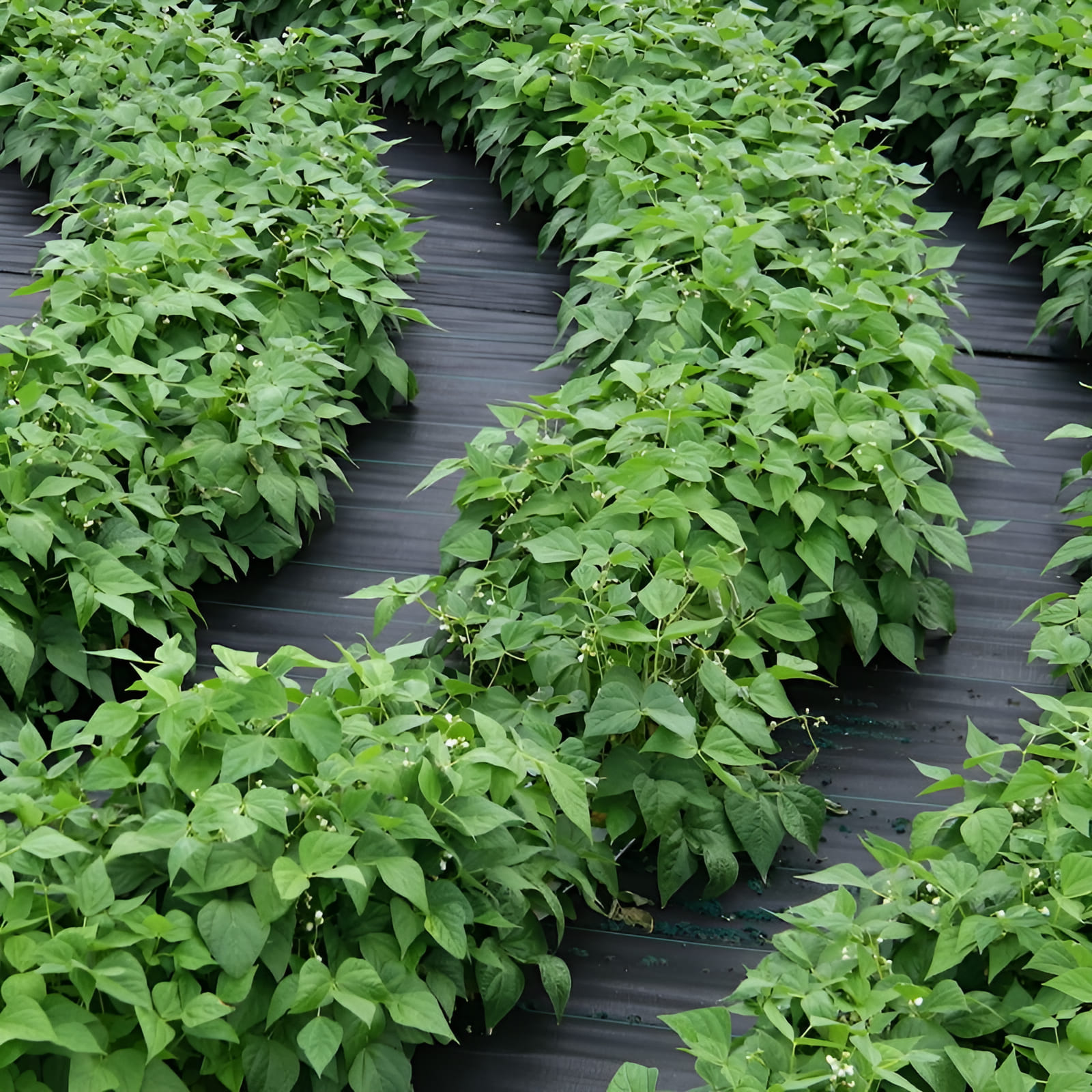
What happens when smallholder farms everywhere adopt Crop Circle technology? The potential impact of 1 million Crop Circle Farms is genuinely transformative—not just for farmers, but for water systems, soils, and global food security.
The modeled benefits of 1 million Crop Circle Farms include:
Feel free to share this infographic on your website or blog. Please include a link back to this page as the source.
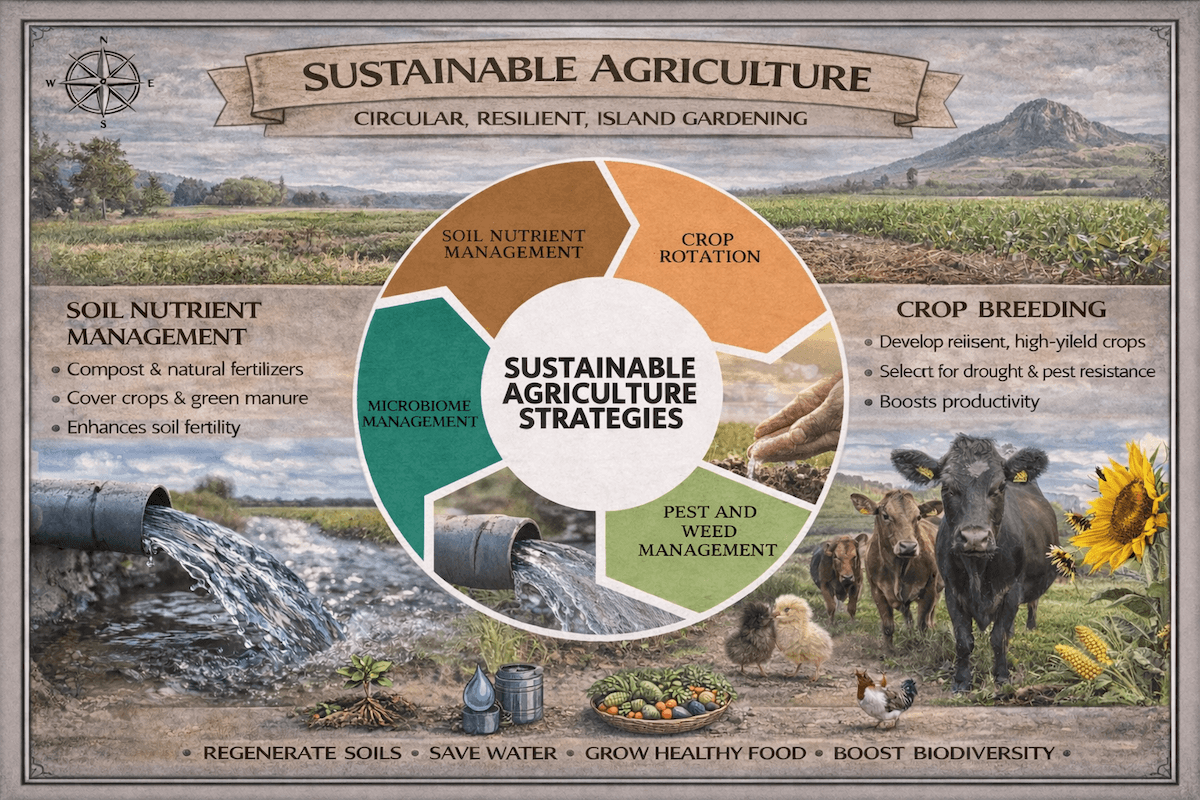
Conventional farming models often deplete natural resources faster than they can be renewed. Heavy plowing, synthetic fertilizers, and pesticides can degrade soil, pollute water, and increase greenhouse-gas emissions. As the global population climbs toward 10 billion, continuing “business as usual” threatens both food security and planetary health.
Sustainable agriculture offers a different path. By focusing on soil health, water conservation, and biodiversity, it seeks to grow food in ways that regenerate ecosystems rather than deplete them. Crop Circle Farms are designed as a practical, field-ready expression of this philosophy, especially suited to smallholder farmers in Africa, Latin America, Asia, island nations, and urban agriculture projects in cities.
By adopting systems like Crop Circle Farms, we can:
At the heart of Crop Circle Farms is a simple yet powerful idea: small, efficient farms can create a massive global impact. One well-designed smallholder farm can feed dozens of families; hundreds can feed a region; one million can shift the balance of the global food system toward resilience, equity, and regeneration.
The transition from conventional smallholder farming to a full Crop Circle system does not need to happen all at once. Many communities start with a pilot crop circle—one or two circular beds, each equipped with root tubes, drip irrigation, and a simple Crop Circle layout. As farmers see results in yield, water savings, and quality, they expand circle by circle, season by season.
Training can be delivered through farmer field schools, demonstration days, and partnership projects with schools and nonprofits. In time, each smallholder who masters the system becomes a trainer themselves, spreading knowledge through peer-to-peer learning. This grassroots scaling model keeps ownership and expertise in the hands of local people, where it belongs.
Crop Circle Farms designs resource-efficient agricultural systems tailored to site conditions, crops, water availability, production goals, and market needs. Services can include farm layout, irrigation planning, crop selection, production modeling, soil and fertility strategy, and integration of Crop Circle growing systems.
Contact Us to discuss a sustainable farm design for your property.
Through nonprofit and community partnerships, Crop Circle farming systems can support sustainable food production, smallholder agriculture, food security, education, and climate-resilience projects in communities around the world. Project scale and outcomes depend on crops, climate, infrastructure, water availability, management, and local conditions. Contact Growing To Give to explore smallholder farm clusters, school farm hubs, and community Crop Circle projects.
Answers to common questions about sustainable agriculture, Crop Circle Farms, water-smart irrigation, and soil-first design for smallholder, urban, and rooftop projects.
We start with soil biology, efficient water use, and circular nutrient inputs. Farm layouts are designed for climate resilience and local market fit—integrating cover crops, compost and compost tea, minimal or drill-don’t-till disturbance, and water-smart drip or low-pressure fertigation. We also build in biodiversity features such as pollinator strips, living windbreaks, and tree or shrub layers wherever space allows.
Our goal is to help clients use far less input per pound of food. With precise irrigation and fertigation, projects commonly target up to 90% water savings and up to 85% fertilizer reductions compared with conventional broadcast methods—while maintaining or increasing yields. This applies across smallholder farms, urban agriculture sites, and rooftop farms .
Yes. Soil health is a core design priority. Practices like minimal or drill-don’t-till disturbance, regular organic matter additions, living mulches, and microbe-friendly fertigation help rebuild soil structure. Over time this boosts cation exchange capacity (CEC), water-holding capacity, and mycorrhizal networks—leading to better resilience, nutrient density, and yield stability season after season.
Many projects can. We can baseline inputs and outputs, track irrigation volumes, biomass, and soil-building practices, and align with common ESG or sustainability frameworks. This documentation can support grant applications, institutional sustainability goals, impact reporting, and—where applicable—future carbon accounting or climate-focused funding programs.
Not necessarily. We design systems to match your goals—organic, regenerative, or hybrid. Certification can add value for certain buyers and export markets, but many clients start with practice-based improvements such as reduced tillage, cover cropping, water-smart irrigation, and trace-mineral fertility. Certification can be added later if it supports your sales channels or brand.
The first step is to share a bit about your site and goals. Send photos, approximate square footage or acreage, water quality, sun and wind exposure, and your crop or program goals via our contact page. We review your information and return with a phased sustainable agriculture plan that includes scope, budget ranges, and an implementation timeline for your smallholder, campus, rooftop, or community Crop Circle Farm.