Crop Circle Raised Gardens
Next Level Gardening
Crop Circle Raised Gardens are modular circular raised-bed systems designed to grow more food in less space while improving access, irrigation efficiency, and harvest workflow. They’re ideal for backyards, schools, rooftops, resorts, and island food security programs—anywhere you need high-yield raised beds with repeatable performance.
Key links: Production Hub • Crop Circles • Garden Yield Calculator • Plant Yield Calculator • Farm Yield Calculator.
| Feature | Standard Rectangular Beds | Crop Circle Raised Gardens |
|---|---|---|
| Geometry | Linear beds + aisles | Circular / spiral access |
| Irrigation | Hose/overhead common | Targeted 360° delivery |
| Soil profile | Variable native soil | Engineered media consistency |
| Harvest workflow | Long walks + reaching | Central access simplifies harvest |
| Scalability | Space-limited blocks | Modular units to expand over time |
ROI depends on crop choice, season length, and sales channel. The advantage of modular raised gardens is that you can pilot a small cluster, measure output, then replicate what works.
The system combines an engineered soil column, circular geometry, and targeted irrigation to maximize root activity and minimize waste. This makes it a strong fit for carrots, potatoes, greens, herbs, and mixed polyculture planting plans.
Hire Us: 👉 Hire Us To Design Your Raised Garden System
Install: 👉 Install Raised Gardens for Your School / Community
Partner: 👉 Partner / Sponsor
A crop circle raised garden is a circular raised-bed system designed for dense planting, efficient irrigation, and 360° access for fast harvest routines.
They can, depending on crop choice and management. The geometry can increase usable edge and simplify harvest routines, which supports higher productivity per square foot in many cases.
Yes. Raised systems can be installed on patios, rooftops, gravel, or compacted surfaces with proper load planning and drainage design.
Use Plant Yield to estimate per-plant output, then scale with Garden Yield and Farm Yield for larger installations.
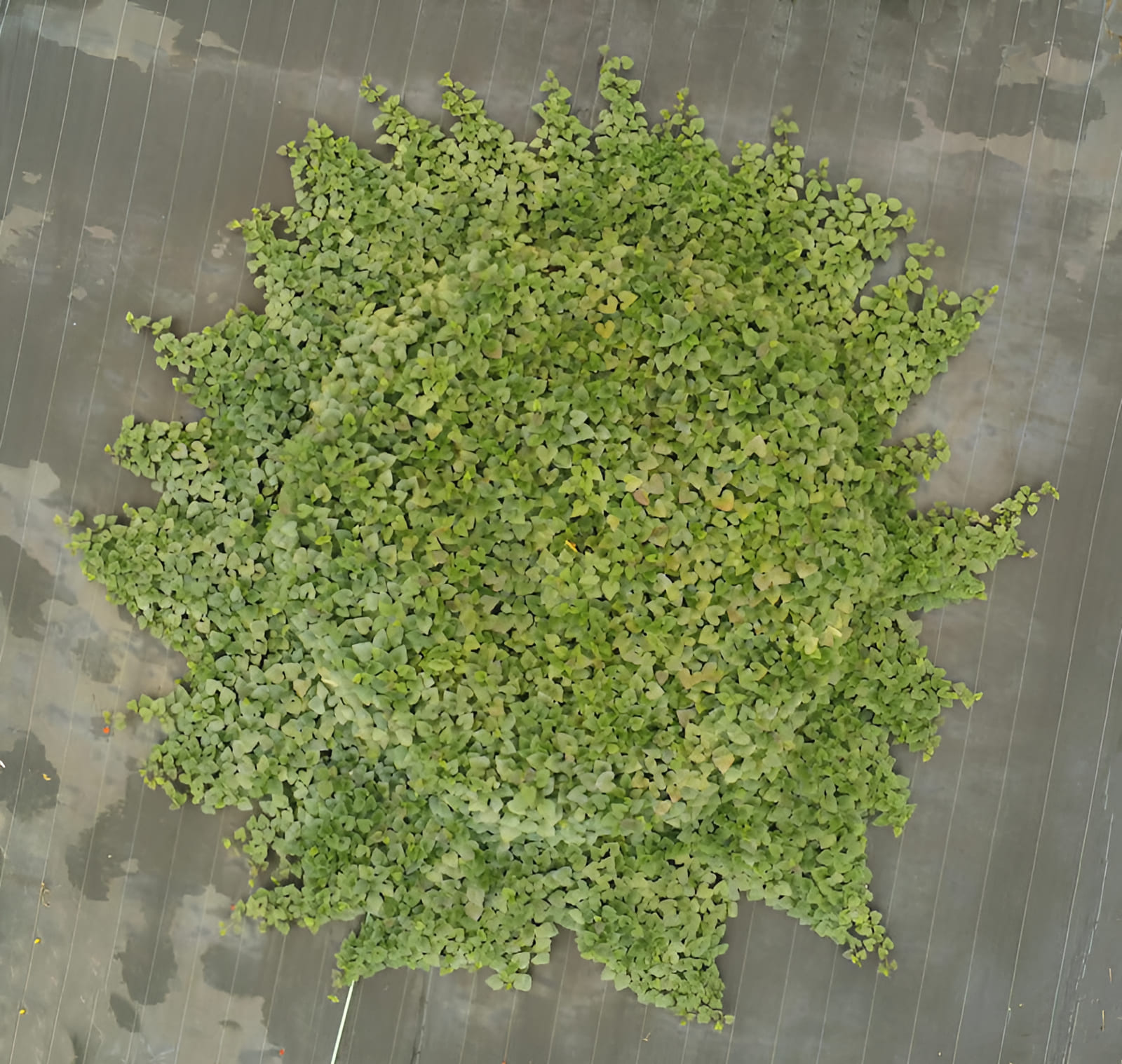
Crop Circle Raised Garden panels are first installed on a flat, prepared soil surface. In many installations, a weed-suppressing ground cover is laid beneath and around the circle to reduce maintenance. Once the 20-panel ring is assembled, the interior cavity is filled with a loose, granular loam enriched with aged plant and animal compost. This premium growth medium offers exceptional drainage, aeration, and nutrient availability—exactly what root potatoes need to produce consistent, market-grade tubers.
To further optimize yield, specific potato fertilizers are layered strategically through the root zone. This layering approach ensures that as stems grow downward, they encounter:
This “zoned nutrient” strategy creates a vertical profile that supports the entire life cycle of the potato plant, from green vine to mature tuber ready for storage.
When ground cover is used beneath the raised garden, a circle is cut roughly six inches inside the perimeter of the panels. This allows seed potatoes to send roots down into the native soil for added stability and moisture access while still benefiting from the enriched growth medium above.
Approximately 200 seed potatoes are placed evenly across the prepared circle. These are then covered with three distinct layers of growth medium corresponding to the nutrient zones described above. The cavity is filled to within about one inch of the garden’s upper edge to minimize soil spillage while maximizing rooting depth.
Within about ten days, roughly 500 potato plants emerge from the soil surface. As vines elongate and stems are buried, new tubers develop along the stem, ultimately producing an estimated 5,000 potatoes in a single Crop Circle Raised Garden. Early harvests can focus on tender “new potatoes,” while leaving plants in the ground longer allows skins to thicken for winter storage and long-distance distribution.
Sweet potatoes thrive in the same circular format. In this case, Crop Circle Raised Gardens are installed on a flat, level surface that is usually covered with ground cover to keep weeds under control. Unlike root potatoes, there is no need to cut through the ground cover, as sweet potatoes form a cluster of tubers just beneath the surface of the raised bed.
The cavity is first filled one-third of the way with loose soil, then topped up with a nutrient-rich growth medium blend containing phosphorus, potassium, and nitrogen. The fill stops about one inch below the top edge of the panels. Around 200 sweet potato slips are transplanted onto the surface of this blend, spaced approximately one foot apart.
A centrally mounted 360-degree Crop Circle Spray Nozzle ensures uniform watering. For best results, slips are hardened off outdoors in natural light and wind for several days before transplanting. In a matter of weeks, vines cover the soil and cascade over the sides, shading the growth medium and protecting it from the sun. After about four months, growers can expect a harvest of roughly 3,000 well-sized sweet potatoes.
Proper curing is essential for sweetness and storage. Freshly dug sweet potatoes are placed in a warm environment (65–85°F) for about a week, then moved to a cooler area (45–65°F) for an additional eight weeks. Once cured, they can be stored in a root cellar for months, making Crop Circle Raised Gardens a powerful tool for year-round food security.
Crop Circle Raised Garden panels are also ideal for growing carrots at scale. The panels are installed on a flat, level soil surface that is covered with ground cover to suppress weeds. Once the 20-panel circle is assembled, the internal cavity is filled with a carefully prepared growth medium.
The best growth medium for growing carrots is a loose sandy loam enriched with aged plant and animal compost. Soil pH is maintained between 5.8 and 6.5 to support strong germination and uniform root development. A properly balanced mix prevents common problems such as stunted, forked, or twisted carrots.
Before the growth medium is added, the integrated irrigator is installed. A vertical riser in the center of the circle connects to a horizontal pipe and external water source. The 360-degree Crop Circle Spray Nozzle mounted at the top of the riser delivers fine, even droplets across the entire surface of the raised garden, ensuring constant, gentle moisture—a key requirement for successful carrot germination and uniform root sizing.
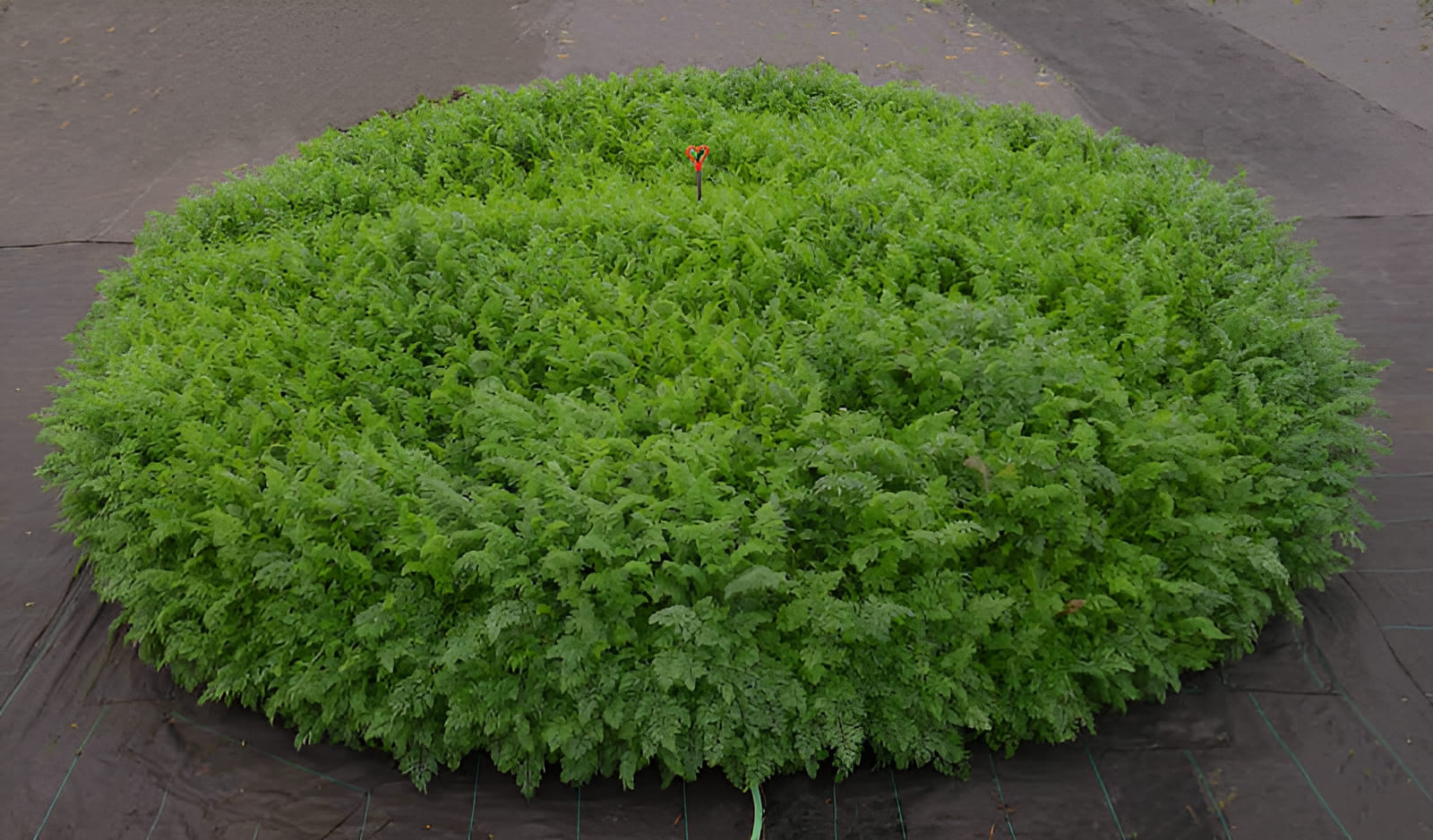
An elevated stretch plank acts as a comfortable gangway and working platform when broadcasting carrot seed. Using the Crop Circle Seed Dispenser, growers can spread seed evenly at the correct density, avoiding the traditional frustration of overseeding and tedious thinning.
After broadcasting, seeds are covered with a thin half-inch layer of growth medium to maintain moisture and protect them from birds and wind. The irrigator is then used to gently mist the surface several times a day until germination. The stretch plank doubles as a narrow walkway for hand-removing the few weeds that appear in the early stages. Once carrot tops expand and canopy the soil, weed pressure drops dramatically.
At harvest, the panels can be partially removed so the root zone loosens naturally. Carrots are pulled in bunches by hand, minimizing breakage and reducing soil compaction. In many growing zones, growers can achieve a second carrot crop in the same season. A single Crop Circle Raised Garden can produce 5,000 to 8,000 carrots every three months, making it one of the most efficient small-footprint carrot production systems available.
At the end of the growing season, the Crop Circle Raised Garden can be disassembled, cleaned, and stored in a dry location. With proper care, the modular panels and irrigation hardware can last up to 30 years, delivering exceptional value over thousands of harvests. The ground cover surrounding the garden typically remains in place for a decade or more before replacement is needed.
Depending on your program goals, the growth medium can be discarded, replaced, or recharged with fresh compost and amendments at the start of each new season. Many growers establish a second prepared area nearby so the 20-panel unit can be moved back and forth between seasons while the former site rests or is rebuilt. This rotation helps maintain soil vitality and simplifies recharging cycles for intensive year-over-year production.
When combined with the Garden Yield Calculator and Farm Yield Calculator, project managers can document total yields, water savings, and labor efficiency over multiple seasons, creating a powerful story for grants, sponsors, and community partners.
Partner with New Leaf Technologies, Growing To Give, and Crop Circle Farms to help combat hunger and expand the use of Crop Circle Raised Gardens across the country and around the world.
Ready to transform your land into a high-yield, sustainable farm? Let Crop Circle Farms design and build a custom, low-impact, and water-efficient farm tailored to your site and market. From yield modeling and farm layout to irrigation design and crop selection, we help you double your income and cut your costs in half. Contact Us to explore a Crop Circle Farm design for your property.
Help us expand our mission to revolutionize agriculture globally. We are seeking partners to implement Crop Circle Farms in food-insecure communities, island nations, and water-stressed regions. Together, we can build scalable food production systems that save water, reduce costs, and feed thousands of people year after year. Contact Growing To Give to support an initiative or program.
Have questions about Crop Circle Raised Gardens, circular raised beds, or how our water-smart high-yield systems work on rooftops, patios, and community sites? These frequently asked questions walk through design, installation, crops, yield expectations, and how Crop Circle Farms can support your project from concept to harvest.
A Crop Circle Raised Garden is a modular circular raised-bed system designed to grow more food in less space while using significantly less water and fertilizer than conventional beds. Instead of rectangles and aisles, the garden uses crop circle geometry to create concentric planting zones around a central irrigation riser. This layout shortens walk paths, reduces compaction, and keeps roots in a consistent, premium growing medium. Combined with water-smart irrigation and precise fertigation, a Crop Circle Raised Garden can outperform standard raised beds or in-ground rows, especially for carrots, potatoes, leafy greens, herbs, and compact fruiting crops.
Standard raised beds are usually built as long rectangles that require wide aisles and frequent hand watering. Crop Circle Raised Gardens use a circular footprint with optimized planting radius and walk rings, which:
When paired with the correct media blend and automation, this design can significantly increase yield per square foot and decrease daily labor compared to typical wood-framed raised beds.
Crop Circle Raised Gardens are built to grow food almost anywhere people live and work. Common installation sites include:
Because the system relies on a contained, engineered growing medium, you are not limited by poor native soil. This makes Crop Circle Raised Gardens a powerful tool for food security in dense cities, island communities, and drought-prone regions.
Crop Circle Raised Gardens are designed to excel with both root crops and top-growth crops. Popular choices include:
For intensive yield planning, many growers pair raised gardens with tools like the Plant Yield Calculator or Garden Yield Calculator to estimate harvests by crop and season.
Water is the limiting factor for many projects, especially in arid climates and island communities. Crop Circle Raised Gardens are designed as water-smart systems from the ground up:
In many installations, this approach can support up to 90% water savings compared to overhead sprinklers and traditional broadcast irrigation, while still producing strong yields.
The performance of a raised circular garden depends heavily on the quality of its growing medium. A typical build uses:
For intensive production of carrots and potatoes, you can recharge or replace the growth medium between seasons to keep yields high and roots straight, uniform, and market-ready.
Yes. The circular raised system is exceptionally well suited to root crops that need depth, loose soil, and consistent moisture. A properly built Crop Circle Raised Garden for carrots and potatoes offers:
In many climates, a single raised circular bed can produce thousands of carrots or several thousand potatoes per year, making it a powerful tool for small farms and community food projects.
Maintenance is designed to be light and predictable. Once the system is set up, most of the work involves:
High-density planting and ground cover quickly suppress most weeds, and because the soil structure stays loose and uncompacted, beds remain easy to replant year after year with minimal digging or tilling.
Absolutely. Crop Circle Raised Gardens are ideal for:
When combined with other Crop Circle Market Gardens and container systems, these raised beds become a powerful teaching tool for climate-smart agriculture and regenerative growing practices.
With proper care, the structural components of a Crop Circle Raised Garden can last 20–30 years. Panels are designed for seasonal assembly and disassembly, and the irrigation riser and nozzles can be winterized or stored between seasons. Ground cover often remains in place for a decade or more before replacement. The growing medium can be:
This long service life makes the system an excellent fit for long-term community projects, schools, and campus installations that need predictable performance and low annual costs.
Yes. Crop Circle Farms offers design, planning, and implementation support for raised-bed systems, market gardens, and integrated micro-farm layouts. Services can include:
To explore options, visit our contact page and share your site details, or connect through related project pages such as Crop Circle Market Gardens and our yield calculators for farms, gardens, and plants.