Drone Crop Monitoring
Field Intelligence for Precision Agriculture
Drone crop monitoring is transforming agriculture by giving farmers high-resolution, on-demand insight into crop health, field variability, irrigation performance, and nutrient efficiency. While satellite imagery provides large-scale monitoring, drones offer ultra-detailed, field-specific intelligence that can be deployed exactly when needed.
In modern precision agriculture, drones are not just flying cameras — they are data collection platforms capable of capturing multispectral imagery, thermal data, and 3D field models. This information helps growers detect problems early, reduce input waste, and make informed management decisions before visible stress reduces yield.
Drone crop monitoring involves using unmanned aerial vehicles (UAVs) equipped with specialized sensors to collect aerial imagery over farmland. These sensors may include:
Unlike satellites, drones can fly below cloud cover and capture imagery at centimeter-level resolution. This allows growers to identify subtle differences in plant vigor across small zones within a field.
A typical drone monitoring workflow includes:
1. Flight planning using GPS mapping software
2. Autonomous drone flight over pre-defined field boundaries
3. Image stitching into orthomosaic maps
4. Vegetation index analysis (NDVI, NDRE, EVI, etc.)
5. Prescription map creation for variable-rate applications
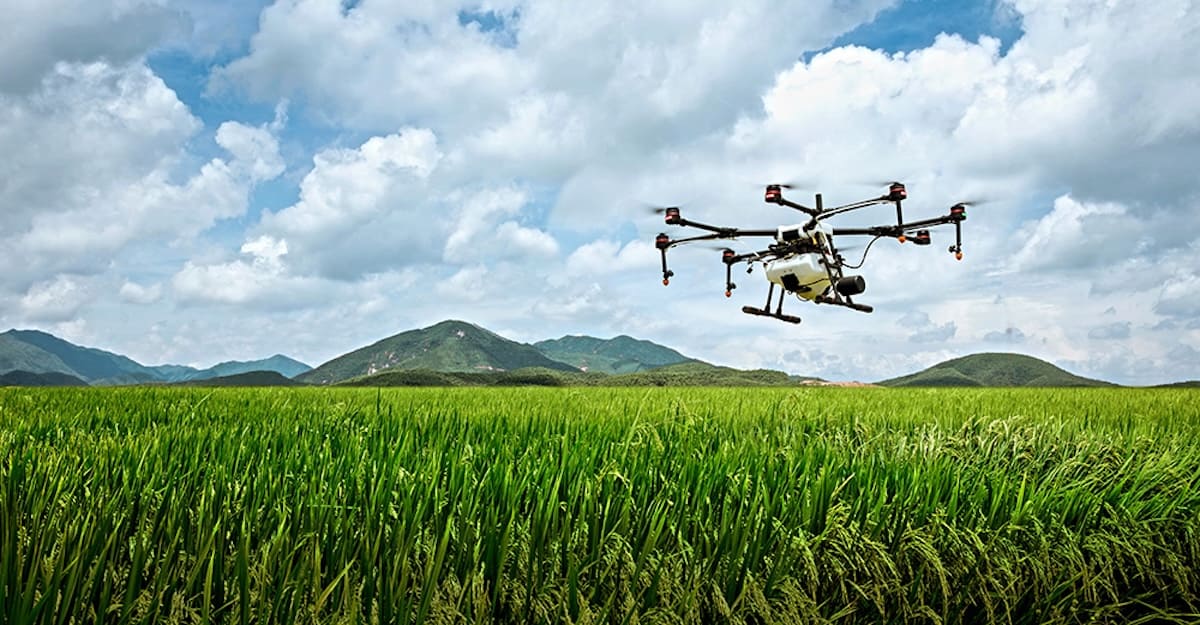
A Midwest corn farmer deploys a drone 30 days after planting. Multispectral imagery reveals zones with lower NDVI values (0.45–0.50) compared to healthier areas measuring 0.70.
The field appears uniformly green from ground level, but drone data identifies early nitrogen stress.
Instead of applying additional fertilizer across the entire field, the farmer creates a variable-rate prescription map and applies nitrogen only where needed.
Outcome:
Drone imagery allowed intervention before visible symptoms emerged.
In a vineyard, a grower notices uneven canopy development. A drone equipped with a thermal sensor is flown during midday irrigation.
Thermal imagery shows a warmer zone in one section of the vineyard, indicating reduced transpiration. Further inspection reveals a clogged drip line.
By identifying the issue quickly:
Thermal drone monitoring is especially powerful in orchards and specialty crops where irrigation uniformity directly impacts production.
Shortly after planting soybeans, a drone flight captures high-resolution RGB imagery. Software analyzes plant spacing and stand density across the field.
The imagery identifies several strips with poor emergence caused by planter calibration issues.
Instead of waiting until harvest to see yield losses, the farmer:
Drone monitoring provides immediate feedback on planting performance.
In wheat production, fungal diseases can spread rapidly. Drone imagery often detects early canopy stress before discoloration is visible from the ground.
Areas of declining vegetation index values signal potential disease pressure.
Targeted fungicide application in affected zones reduces:
Drone-guided intervention allows precise disease management rather than blanket spraying.
Drones capture imagery at centimeter-level detail, revealing variability that satellites may miss.
Flights can be scheduled immediately following storms, irrigation events, or fertilizer applications.
Unlike satellites, drones can operate below cloud cover.
Drone maps focus on individual fields rather than broad regional coverage.
While powerful, drone crop monitoring has constraints:
Drones work best as a complement to satellite monitoring, combining broad-scale trends with high-resolution field detail.
Drone data becomes even more valuable when integrated into broader smart agriculture systems, including:
By layering drone imagery with soil testing and weather data, growers can create management zones that maximize input efficiency and crop performance.
Drone technology also supports regenerative systems by:
High-resolution imagery helps measure biological outcomes in systems designed to build soil carbon and increase resilience.
The financial benefits of drone crop monitoring include:
Over time, data-driven decisions improve profitability while reducing environmental impact.
As sensor technology improves, drones are increasingly equipped with:
Integration with machine learning models will allow drones to automatically flag anomalies and recommend corrective actions.
The future of farming is not just about larger equipment or more inputs — it is about smarter decisions. Drone crop monitoring provides the close-up, real-time intelligence necessary to move from reactive farming to predictive management.
In a world of rising input costs and climate variability, drones offer farmers something invaluable: clarity from above — and confidence on the ground.