Bean Plants
Pinto, Bush, Kidney, Navy, and Lima Beans
Beans are edible seeds produced by legume plants in the family Fabaceae. These nutrient-dense crops are valued worldwide for their high protein content, complex carbohydrates, fiber, vitamins, and minerals. Beans grow in pods that hang from climbing or bush plants and have served as a foundational food source for human civilizations for thousands of years.
Beans really are “mana that hangs from plants”—high-protein pods that dangle at arm’s reach, ready to fill soups, stews, salads, and grain bowls. For thousands of years, people have relied on beans as a dependable source of plant protein, complex carbohydrates, and fiber. From the ancient “Three Sisters” plantings of the Americas (corn, beans, and squash) to modern permaculture and Crop Circle Gardens, beans remain one of the most important food crops on the planet.
Most dry beans belong to the species Phaseolus vulgaris and are grown for mature seeds that are dried and stored for year-round use. Others, like soybeans and garbanzo beans (chickpeas), are grown for fresh “edamame” or dried pulses. Whether you farm acres of dry beans or tuck a few bush beans into a backyard bed, you’re working with one of the most efficient crops for turning sunlight, water, and nitrogen into long-lasting food.
Beans also shine as a soil-building crop. When inoculated with the right rhizobia, legume roots fix atmospheric nitrogen and help improve fertility for the next crop. That makes beans a perfect companion in regenerative growing systems, spiral beds, and small urban farms where every square foot matters.
Legume plants such as beans form a natural partnership with soil bacteria called rhizobia. These bacteria live in small nodules on the plant’s roots and convert nitrogen from the air into a form plants can use. This process—known as nitrogen fixation—helps enrich soil fertility naturally and reduces the need for synthetic fertilizers in many regenerative farming systems.
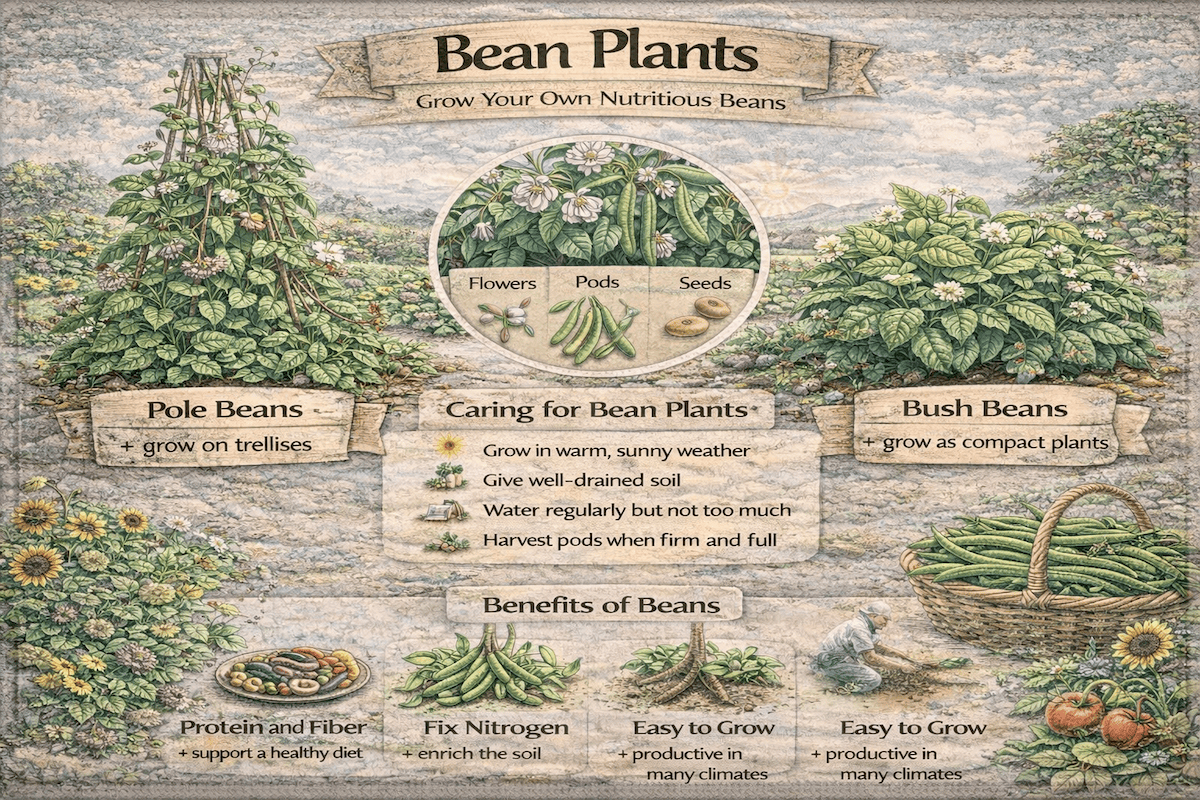
Feel free to share this bean plants infographic on your website or blog. Please include a link back to this page as the source.
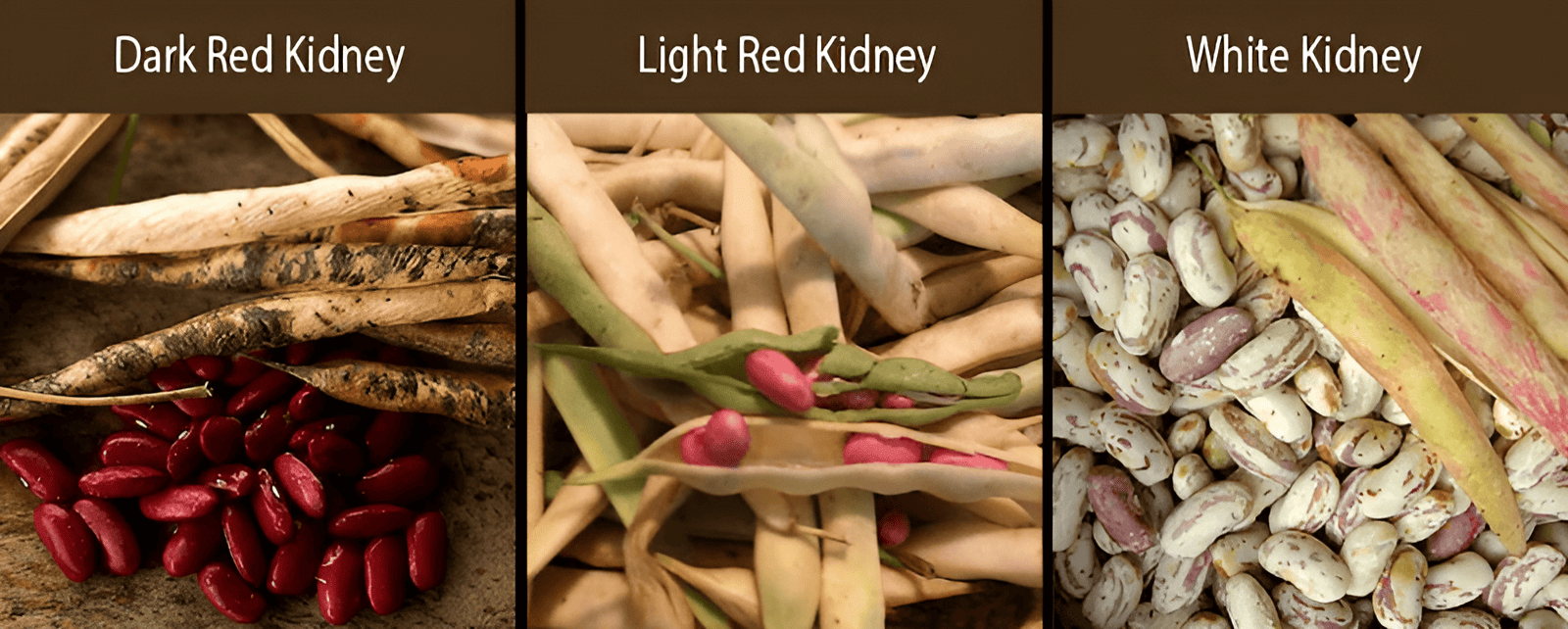
Kidney beans are classic soup and chili beans with a firm texture that holds up well in long cooking. They’re naturally rich in protein, fiber, and minerals, and they fit well into both small gardens and mechanized farm systems. Kidney beans are usually grown as dry beans: pods mature, dry down in the field, and are harvested for storage.
Dark Red Kidney: Dark red kidney beans are the standard for chili and hearty stews. Pods are plump, and the deep maroon seeds keep their shape after simmering. Plants typically grow 18–24 inches tall with a compact bush habit. In warm, well-drained soil (pH around 6.0–7.0) and temperatures between 70–80°F (21–27°C), dark red kidneys mature in about 90–100 days and yield 15–20 pods per plant. They’re a solid choice for both home gardens and small commercial plots that supply local restaurants and food co-ops.
Light Red Kidney: Light red kidneys offer a milder flavor and a slightly thinner skin, making them ideal for salads, minestrone, and mixed bean dishes. Growth habit is similar to dark red kidney, but many gardeners find the pods easier to shell. Light red kidney beans thrive in fertile, loosened soil that drains well yet holds moisture. Consistent irrigation during flowering and pod fill prevents blossom drop and maximizes yield.
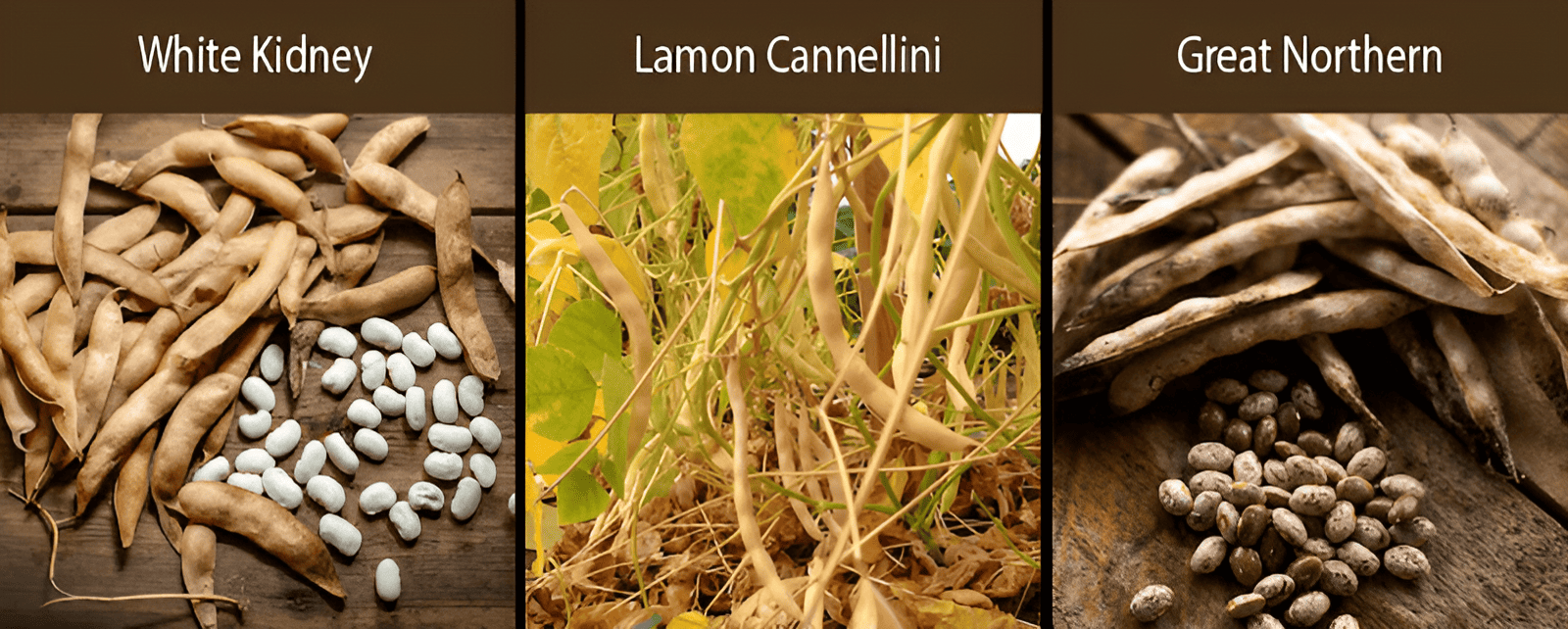
White Kidney (Cannellini): White Kidney is a variety of kidney bean also known as cannellini. It has a bushy growth habit, with plants reaching a height of about 18–24 inches and maturing in roughly 90–100 days. Each plant can produce 15–20 pods filled with creamy white seeds. Cannellini beans are a staple in Italian soups and casseroles and excel in small garden systems where gardeners want high yields in a small space. They prefer well-drained soil with a pH between 6.0 and 7.0 and warm, settled weather after the last spring frost.
On a production scale, planting about 30,000 kidney bean plants per acre under good conditions can yield roughly 2,500 pounds of dry beans per acre. Careful spacing, timely weeding, and irrigation management all influence how close you can get to that yield.
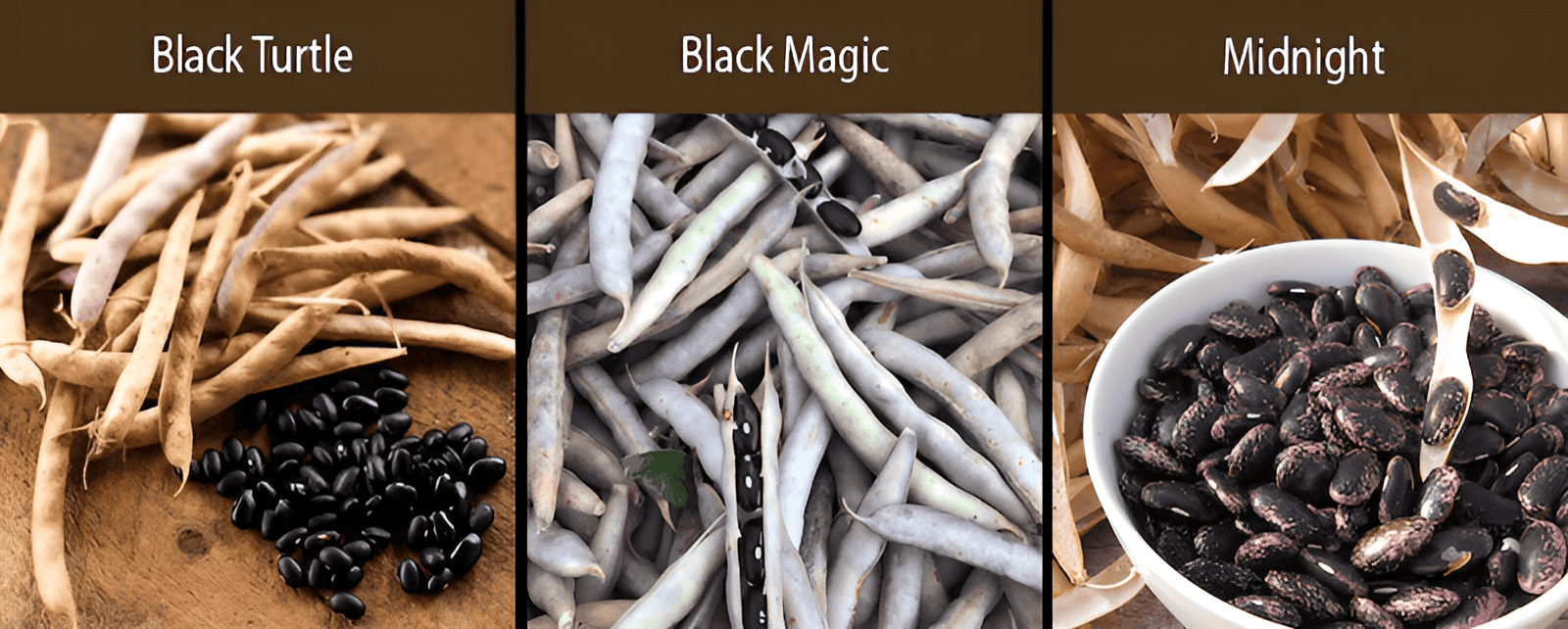
Black beans are a dry bean favorite in Latin American, Caribbean, and Southwestern cuisines. Their rich color, dense texture, and slightly sweet flavor make them perfect for rice and beans, burritos, soups, and veggie burgers. Like other dry beans, they store beautifully and are easy to grow in raised beds, Crop Circle Gardens, and small farms.
Black Turtle: Black Turtle is the most common variety of black bean. It has a bushy growth habit, with plants reaching about 18–24 inches in height. Black Turtle beans are ready to harvest in 90–100 days and typically produce 15–20 pods per plant. They prefer well-drained, loamy soil and daytime temperatures of 70–80°F (21–27°C). In gardens, Black Turtle is reliable and forgiving, making it a great first dry bean for new growers.
Midnight: Midnight is a sleeker, jet-black bean with a shiny seed coat and excellent eating quality. Plants grow in a compact bush form and mature in about 90–95 days. Midnight is valued for uniform pod set and easy threshing, which makes it popular with small-scale market growers who want beautiful beans in clear bags or bulk bins at the farmers market.
Black Magic: Black Magic is another high-performing variety known for yield and disease resistance. Bushy plants mature in 90–100 days, producing 15–20 pods per plant. Black beans grow well in deep, loamy soil near neutral pH (~7.0). Plant after the last frost once soil is warm and stable. With good management, sowing around 40,000 seeds per acre can yield up to 3,000 pounds of Black Magic beans per acre.
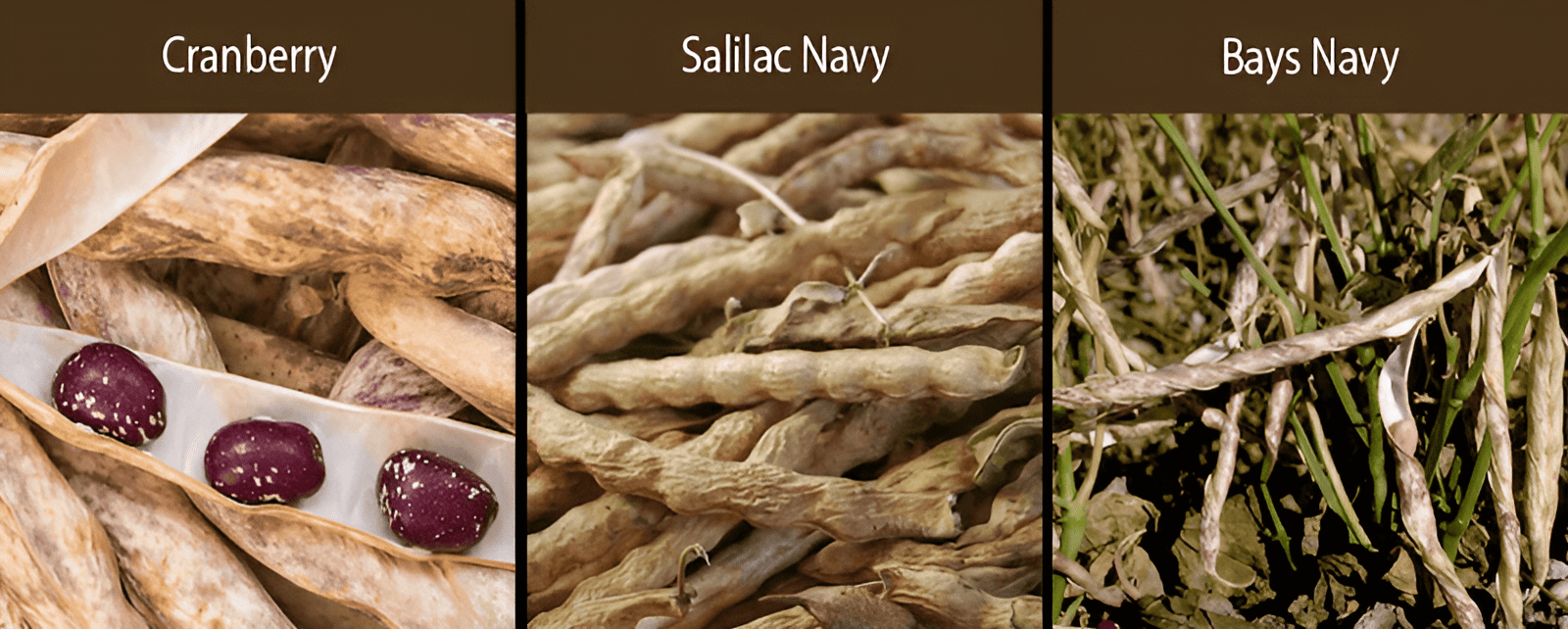
Also referred to as white beans, navy beans are a classic soup and baked-bean staple. Their mild flavor and creamy texture make them perfect for slow cooking, pressure canning, and hearty winter stews. Navy beans fit naturally into small-scale farms, homesteads, and garden plots where growers want a dependable storage crop.
Vermont Cranberry: Vermont Cranberry is a colorful heirloom often grouped with navy and cranberry-type beans. Pods hold beans speckled with red and cream. Bush plants reach 18–24 inches tall and are ready in about 85–95 days, producing 12–15 pods per plant. Vermont Cranberry is prized for its rich, nutty flavor and beautiful dried seeds.
Sanilac: Sanilac is a high-yielding, disease-resistant white navy bean widely used in commercial production. Plants reach 16–18 inches and mature in 85–95 days. With 15–20 pods per plant and a uniform dry-down, Sanilac is a top choice for mechanized harvest and for growers who sell bagged dry beans.
Bays: Bays is another productive white navy bean variety bred for reliable yields and consistent seed size. Bush plants reach 16–18 inches and produce 12–18 pods per plant in about 90 days. Like Sanilac, Bays performs well in well-fertilized soils with good drainage and is adaptable to many temperate bean-growing regions.
Navy beans respond best to compost-rich soil that blends aged animal manure and plant matter. Plant 1–2 weeks after the last spring frost when soil has warmed and danger of cold snaps is past. A planting density of 30,000–40,000 plants per acre can produce about 2,500 pounds of dry navy beans per acre under favorable conditions.
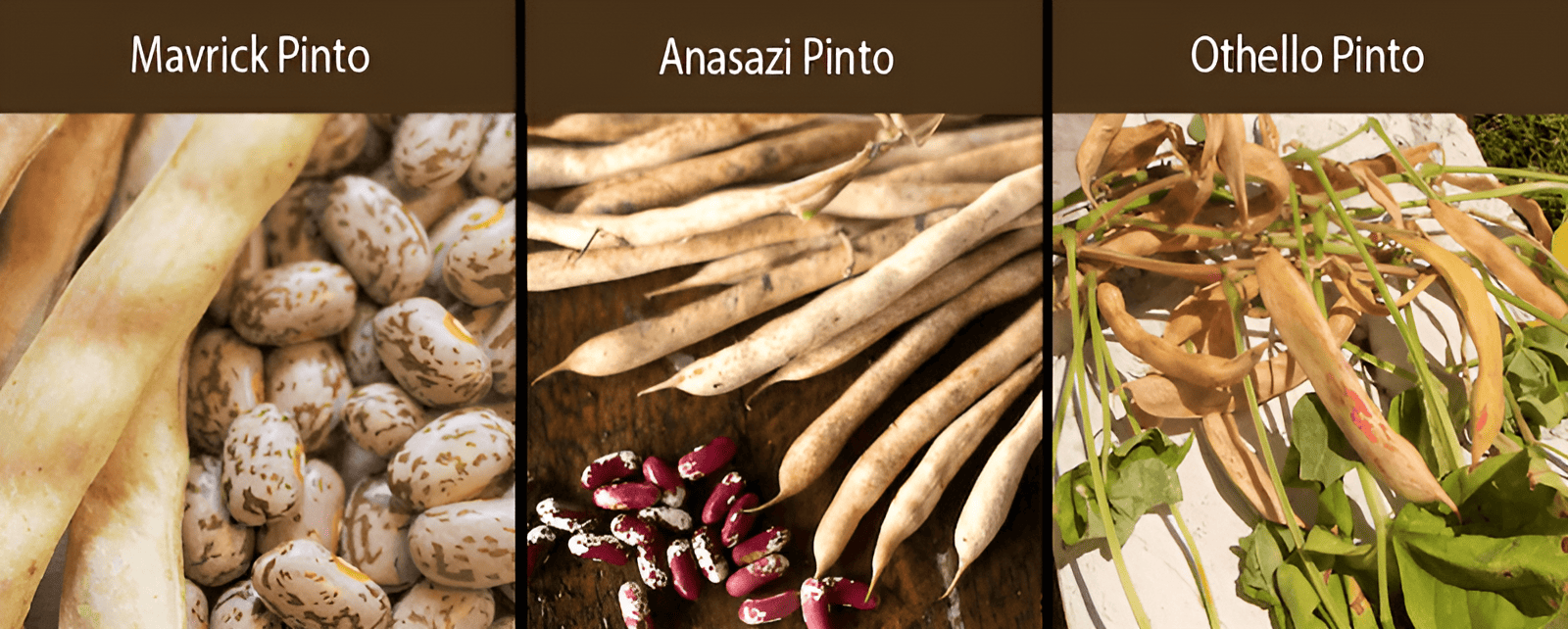
Pinto beans are classic “soup beans” widely used in Southwestern and Mexican recipes such as refried beans, charro beans, and chili. Their speckled seeds cook down creamy and richly flavored, making them a top choice for homesteaders and local food producers.
Maverick: Maverick is a modern pinto variety known for high yield and disease resistance. Bush plants grow 16–18 inches tall and mature in about 90–100 days. Each plant can produce 25–30 pods filled with speckled seeds. Maverick thrives in warm, well-drained soils and tolerates heat and light drought, making it suitable for arid regions and water-smart bean production systems.
Anasazi: Anasazi beans are a beautiful, speckled heirloom with deep cultural roots in the American Southwest. They cook faster than many pintos and have a sweet, mild flavor. Bush plants reach 16–18 inches tall and mature in roughly 90 days. Anasazi beans perform well in lean, well-drained soils and hot climates, making them ideal for desert gardens and elevated beds.
Othello: Othello is another popular pinto bean variety with high yield potential and good disease tolerance. Bush plants grow 16–18 inches tall and mature in 90–100 days. Othello responds especially well to clay soils with higher mineral content, producing full pods and robust plants where other varieties may struggle.
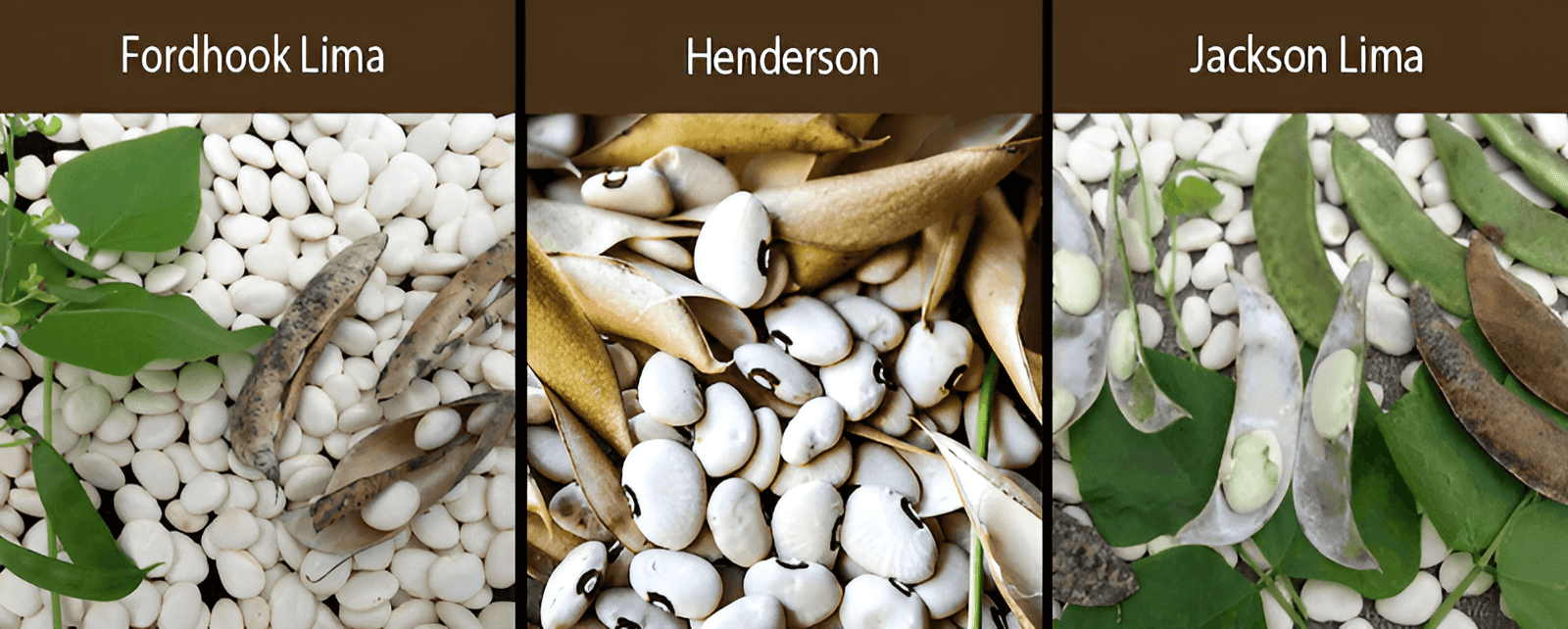
Lima beans are grown for their creamy texture and delicate flavor. They’re found in succotash, stews, soups, and salads and are fast becoming a favorite with home gardeners who want a gourmet bean for fresh and dry use.
Fordhook: Fordhook is a classic large-seeded lima bean with rich, buttery flavor. Bush plants reach 18–24 inches and produce heavy crops of big seeds ideal for freezing and canning. Fordhook handles cool nights better than many limas, making it suitable for more temperate gardens.
Henderson: Henderson is a small-seeded, early-maturing bush lima favored for short seasons. Plants reach about 18 inches tall and produce abundant pods in 65–75 days. Henderson is a good fit for gardeners who want reliable, fast-maturing limas that don’t require trellising.
Jackson Wonder: Jackson Wonder is a heritage variety that has been grown for generations. Bushy plants reach 18–24 inches and mature in about 80–90 days, producing 12–15 pods per plant. Seeds have a beautiful mottled pattern and outstanding flavor. As a low, bushy plant, Jackson Wonder is well-suited to windy sites and container gardens.
Lima beans prefer well-drained soil with a pH between 6.0 and 7.0 and temperatures from 60–85°F (16–29°C). Plant after the last spring frost when the soil is warm. A planting density of about 40,000 plants per acre can yield around 3,000 pounds of pods per acre in good conditions.
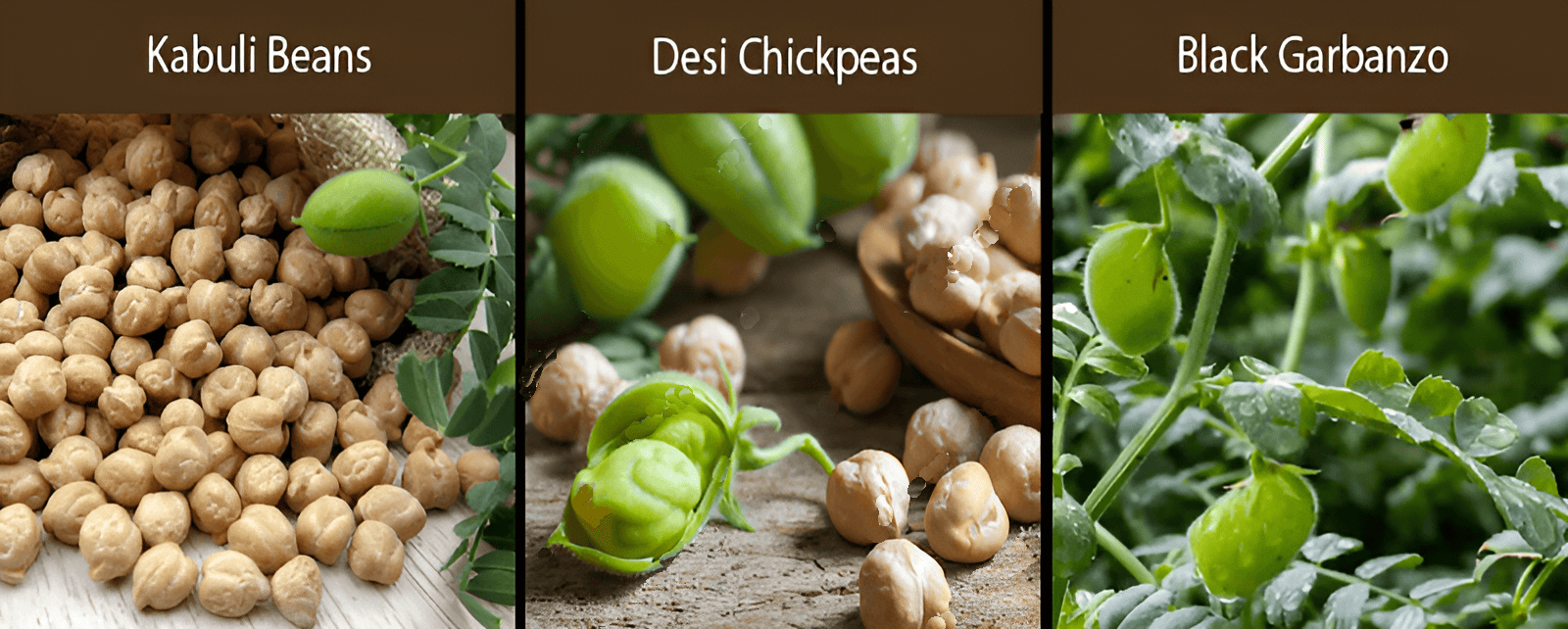
Garbanzo beans (chickpeas) bridge the gap between garden crop and global staple food. They’re used in hummus, falafel, curries, salads, and roasted snacks. Plants are tough and drought-tolerant, making chickpeas a strong choice for dryland farms and low-input gardens.
Kabuli: Kabuli is the most common variety of garbanzo bean and the type used for canned and dried chickpeas in grocery stores. Plants have a bushy growth habit, reaching 24–30 inches. Kabuli chickpeas mature in about 90–100 days and produce 25–30 pods per plant, typically with one or two large, cream-colored seeds per pod.
Desi: Desi chickpeas are smaller, darker, and more strongly flavored than Kabuli types. They’re widely used in South Asian cuisine. Plants are compact and highly drought-tolerant, making them ideal for marginal soils and low-input systems. Desi chickpeas mature in roughly 90–100 days as well and are valued for their high fiber and protein content.
Black: Black garbanzo beans are a striking specialty variety with a dark seed coat and slightly nutty flavor. Bush plants reach 18–24 inches, mature in about 90–100 days, and produce 20–25 pods per plant. Chickpeas perform best in compost-rich soil with a pH around 6.5 and temperatures between 60–85°F (16–29°C). Plant after the final spring frost and avoid over-watering once plants are established.
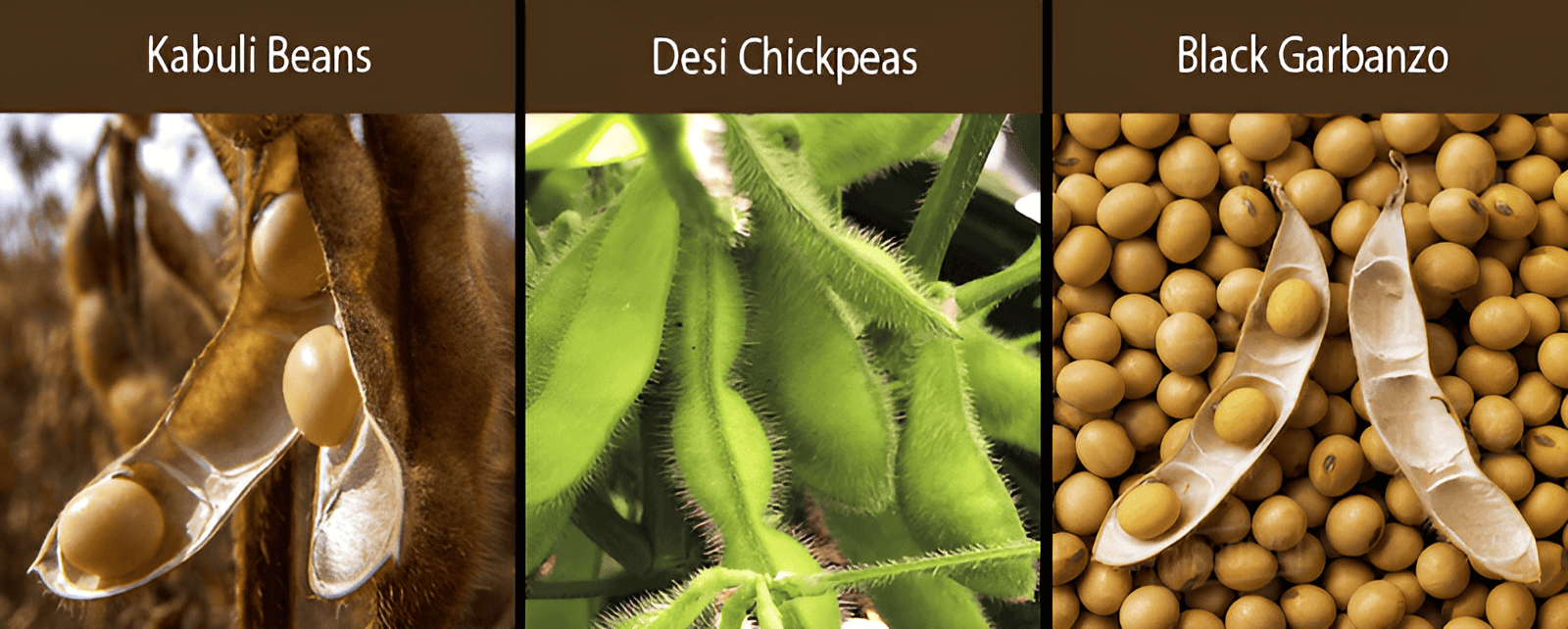
Soybeans are the foundation for tofu, tempeh, soy milk, miso, tamari, and countless other soy foods. They’re also a major livestock feed and a valuable rotation crop. In gardens and small farms, soybeans can be grown as dry beans, edamame (green pods), or dual-purpose crops.
Envy: Envy is a popular early soybean variety known for its high yield and disease resistance. Bush plants reach 24–30 inches and mature in 80–90 days, producing 50–60 pods per plant. Envy is good for both fresh edamame and dry use and performs best in warm soils and hot summer conditions.
Beeson: Beeson is prized for its high protein content and rich, nutty flavor. Plants reach 24–30 inches and mature in 85–95 days, producing 40–50 pods per plant. Beeson is well suited for dry beans, homemade tofu, and local processing projects.
Edamame: Edamame-type soybeans are harvested green, just as pods fill out. Bush plants reach 24–30 inches, with 30–40 pods per plant in 70–80 days. For the sweetest flavor, harvest when seeds are plump but still bright green. Soybeans prosper in moist, well-drained soil enriched with compost and minerals like gypsum and Epsom salts. They prefer temperatures between 60–85°F (16–29°C) and should be planted after the last frost.
Under ideal conditions, an acre of edamame soybean plants—up to 200,000 plants per acre in intensive systems—can produce well over a million pods, especially in water-efficient, high-density layouts like Crop Circle Gardens and tri-spiral farm designs.
White beans—including cannellini, Great Northern, and white kidney beans—are creamy, mild-flavored staples in Mediterranean, European, and North American cooking. They feature in soups, cassoulets, salads, and baked dishes, and they are easy to store and cook.
Lamon (Cannellini): Lamon is a traditional Italian cannellini bean prized for its creamy texture and delicate flavor. Bush plants reach 18–20 inches and mature in 80–90 days, producing 5–6 pods per plant. Lamon works beautifully in minestrone, ribollita, and rustic bean salads.
Great Northern: Great Northern is a common variety of white bean often used as a substitute for cannellini. Bush plants reach 18–20 inches and mature in 85–95 days, with 4–5 pods per plant. As the name suggests, Great Northern tolerates cooler climates and shorter summers and is well suited to northern gardens where nights are cool and days are warm.
White Kidney: White Kidney beans are similar to cannellini in flavor and texture, and are often used interchangeably in recipes. Bush bean plants reach 18–20 inches and mature in about 80–90 days, producing 5–6 pods per plant. White Kidney beans flourish in well-drained soil with a pH between 6.0 and 7.0 and temperatures from 60–85°F (16–29°C).
Planting around 30,000 white bean plants per acre can produce up to 200,000 pods per acre under favorable conditions, especially when beans are integrated into high-density spiral garden layouts.
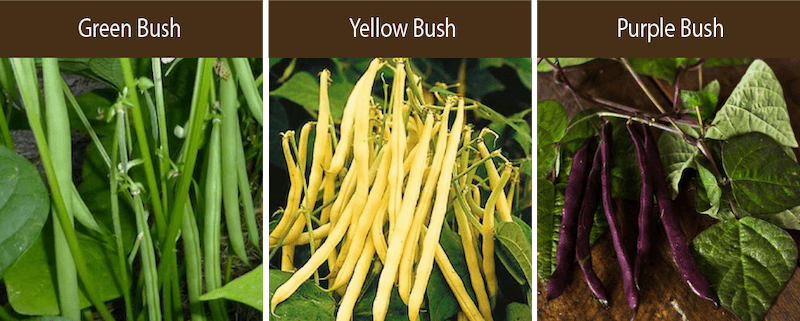
Bush beans are compact plants that rarely exceed 2 feet in height. They don’t require trellising, mature quickly, and are perfect for small gardens, raised beds, and container systems. Many growers stagger plantings every 2–3 weeks for a continuous harvest of tender pods.
Bush beans produce a concentrated flush of pods over 1–2 weeks, ideal for canning or freezing. They require less support and are easier to manage in small gardens, raised beds, and Crop Circle Garden modules. Pole beans, by contrast, climb trellises or poles 6–10 feet tall and produce over a longer season, often with higher yield per plant. Both can be integrated into yield-planning tools to help gardeners estimate harvest volumes.
Pole beans climb high and keep on producing, turning fences, teepees, and arches into living walls of food. They’re incredibly efficient for vertical small-space gardening and work beautifully in spiral and circular layouts where trellises can radiate from a central hub.
Blue Lake: Blue Lake pole beans are known for tender, meaty pods and classic green-bean flavor. Vines reach 6–8 feet and mature in about 60–70 days. With steady picking, they produce over many weeks. Blue Lake pole beans prefer deep, enriched, composted earth and consistent moisture.
Kentucky Wonder: Kentucky Wonder is a historic pole bean famous for productivity and robust flavor. Vines can reach 7–8 feet and keep bearing as long as pods are picked regularly. Pods are long and slightly flattened, making them ideal for fresh eating and canning.
Fortex: Fortex is a gourmet pole bean with extra-long, slender pods that remain tender even when large. Vines reach 8–10 feet and mature in about 60–70 days. Fortex is a favorite of chefs and market gardeners because of its exceptional eating quality.
Pole beans prefer a soil pH between 6.0 and 7.0 and daytime temperatures of 70–80°F (21–27°C). A planting density of roughly 15,000 pole bean plants per acre in a well-designed trellis system can yield around 4,000 pounds of beans per acre, especially when paired with drip irrigation and mulched walkways.
On most farms, beans are still grown in long, parallel rows and watered from above by rainfall or spray irrigation. While familiar, that approach can waste water, encourage disease, and limit yield per square foot. A new approach to growing beans is to plant them in spirals or circles, feeding each plant at the root using a cradled propagation system. Targeted irrigation and fertility save water and fertilizer while accelerating plant growth. In many trials, this method doubles flowering and pod set per plant.
Whether you grow a single Crop Circle Garden full of bush beans in your backyard or install spiral trellises on a small farm, beans are one of the easiest ways to turn sunlight, soil, and smart water design into abundant food.
Turn your 1 acre into a high-yield, profitable farm.
Crop Circle Farms specializes in designing and building fully engineered, low-impact farm systems that use 90% less water, 85% less fertilizer, and deliver two to three times the yield of traditional farming.
Whether you have a vacant lot, an empty field, a resort, school, island community, or small family farm, we’ll build it from the ground up for you. Our team handles everything from farm layout and installation to irrigation, root systems, training, and first planting.
Contact Us to explore a custom Crop Circle Farm design for your property.
Help us expand our mission to revolutionize agriculture globally. We are seeking partners to implement Crop Circle Farms to feed people in need. Together, we can build scalable food production systems that save water, reduce costs, and feed thousands of people. Contact Growing To Give
Bush beans are compact plants that usually stay under 2 feet tall and mature in a shorter window, giving you a quick, concentrated harvest. They’re ideal for containers, small beds, and gardeners who want to can or freeze beans all at once. Pole beans are vining plants that climb trellises, poles, or fences, producing over a longer season with higher yields per plant and easier, stand-up picking.
Bean plants form a symbiotic partnership with rhizobia bacteria that fix atmospheric nitrogen in nodules on their roots, so they usually don’t need much extra nitrogen. Too much N creates lush foliage but fewer flowers and pods. In new beds or cool soils, a light starter nitrogen application can help early growth, but your main focus should be on balanced phosphorus, potassium, calcium, magnesium, and micronutrients plus good organic matter.
In soils with little or no history of growing legumes, using a rhizobium inoculant specific to beans is a smart step. Dusting or mixing seeds with inoculant before planting improves nodulation, boosts biological nitrogen fixation, and can noticeably increase vigor and yield. In long-established legume beds, inoculation is often optional but still beneficial if plants look pale or underperforming.
For bush beans, space seeds about 2–4 inches apart in rows 18–24 inches apart, thinning to strong plants for airflow and easy picking. For pole beans, plant 6–8 inches apart along a sturdy trellis, cattle panel, or fence, or use 4–6 plants per teepee or A-frame. Install supports before vines begin to climb so you don’t disturb roots or break stems later.
Beans prefer evenly moist soil, especially during flowering and pod fill. Aim for about 1–1.5 inches of water per week from rain or irrigation, adjusting for heat and soil type. Drip irrigation or a soaker hose under mulch keeps foliage dry, reduces disease pressure, and uses water more efficiently than overhead sprinklers.
Common bean pests include aphids, Mexican bean beetles, flea beetles, and spider mites. Diseases often show up as rust, powdery or downy mildew, anthracnose, and bacterial spots or blights. Start with clean seed, rotate crops, provide good spacing and airflow, avoid overhead watering late in the day, and promptly remove infected leaves or spent plants to keep problems in check.
Harvest snap beans when pods are crisp, smooth, and seeds are still small—pods should “snap” cleanly when bent. For shelling beans, wait until pods are plump and seeds have filled out but are not yet fully dry. For dry beans, let pods dry down on the plant until papery, then pull plants, finish drying under cover if needed, and cure the shelled beans thoroughly before storage.
Yes. Most beans are largely self-pollinating, so varieties tend to stay true when grown in reasonable isolation. To save seed, leave pods on healthy, true-to-type plants until they are fully dry, then shell, clean, and store the seeds in a cool, dry, dark place. Separate different varieties by distance or by time to minimize cross-pollination, especially if you’re saving heirloom types.
In a Crop Circle Garden, ringed and spiral beds organize pole beans on shared trellises with clear harvest lanes, while bush beans fill in shorter-radius beds for easy access. Zoned drip irrigation and heavy mulching keep foliage dry, reduce weeds, and conserve water, while rotational planting along the spiral allows beans to build soil fertility for the crops that follow.