Market Gardens
Revolutionizing Small-Space Food Production
Crop Circle Market Gardens are modular spiral-based growing systems designed to produce more food in less space while reducing resource waste. They’re ideal for smallholder farms, school gardens, rooftops, resorts, and island food security projects—anywhere land, water, or budget is limited.
Key links: Production Hub • Crop Circles • Spiral vs Row Acre Yield Calculator • Garden Yield Calculator • Farm Yield Calculator.
This snapshot is designed for Google snippet extraction and for quick feasibility discussions with partners, grants, and investors.
| Feature | Traditional Row Beds | Crop Circle Market Gardens |
|---|---|---|
| Geometry | Linear rows | Spiral / circular |
| Yield per square foot | Baseline | Higher density potential (design-dependent) |
| Water delivery | Broadcast common | Targeted root-zone |
| Weed pressure | Higher | Lower potential with mulch/fabric |
| Scalability | Acreage intensive | Modular (add spirals) |
Market garden ROI depends on crop mix, pricing, season length, and labor strategy. Start with one spiral, document yields, and scale based on real outputs. For geometry comparisons, use the Spiral vs Row Acre Yield Calculator .
Each market garden module is designed around access, irrigation efficiency, and repeatable planting patterns. Spiral geometry can increase edge effect, improve labor flow, and support denser polycultures when managed correctly.
Hire Us: 👉 Hire Us To Design Your Market Garden
Invest: 👉 Invest in a Food Security Project
Partner: 👉 Partner / Sponsor
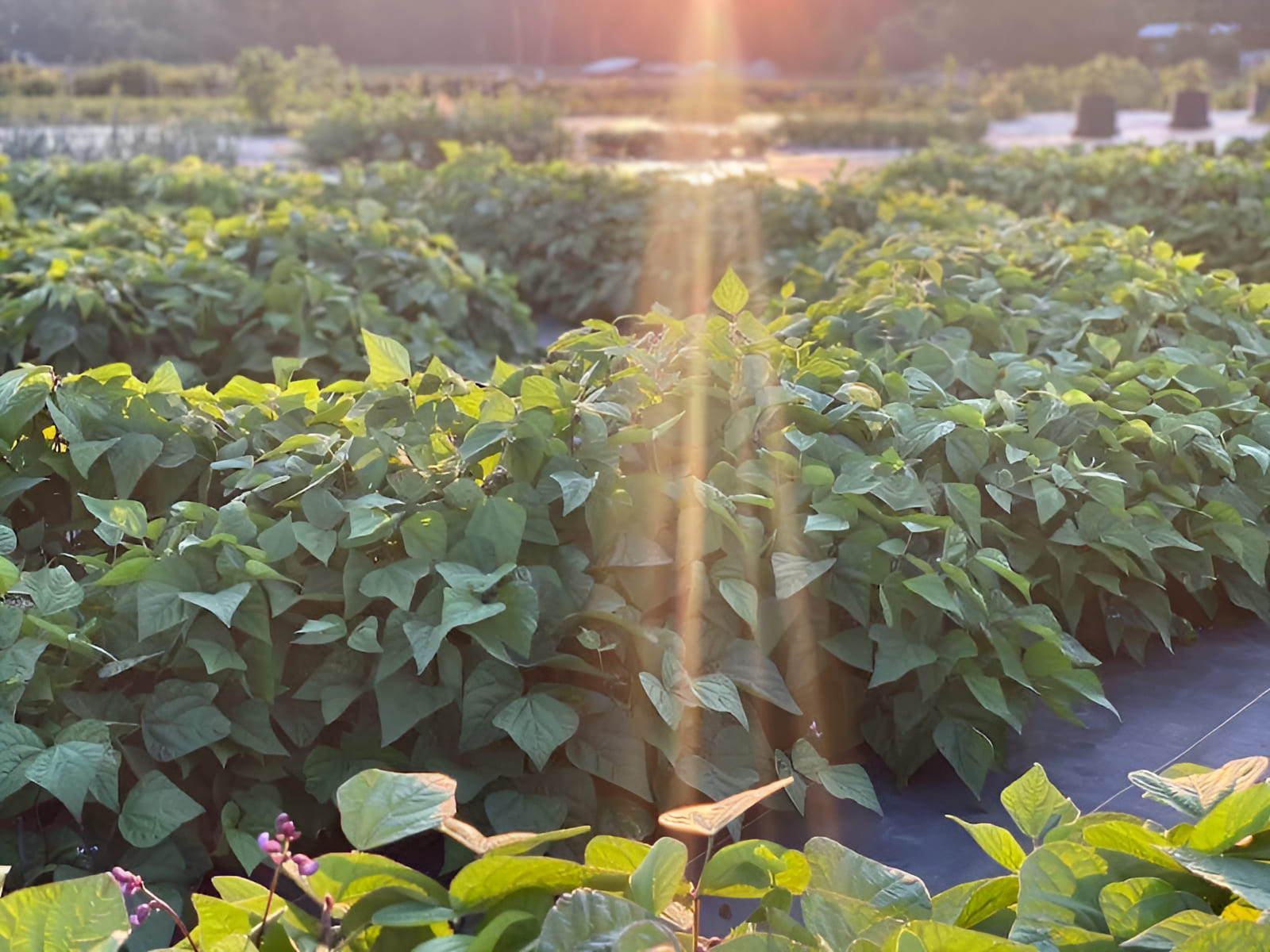
The innovative spiraled design of Crop Circle Market Gardens is engineered for small space agriculture. Instead of long, parallel rows, plants are arranged in concentric and Fibonacci spirals that increase usable edge, improve airflow, and concentrate root-zone management where it matters most. This geometry maximizes plant growth while minimizing essential resources such as water, fertilizer, land, and labor. It also makes it easier to manage intensive hand-harvested crops like greens, beans, peppers, and herbs.
A durable ground cover or mulch layer suppresses weeds, reduces evaporation from the soil surface, and protects delicate microbial life from temperature extremes. Under this protective cover, living roots and organic matter feed beneficial soil biology, improving soil structure and water-holding capacity over time. Proprietary irrigators, installed through the ground cover at each planting opening, deliver water and water-soluble nutrients directly to the root zone, unaffected by wind drift or surface runoff. At the start of each season, these irrigators can be removed, cleaned, recharged with nutrients, and quickly reinstalled.
Once the system is built, irrigation and fertigation are automated using inexpensive timers and pressure-compensating drip lines. Growers can apply very small doses of water and nutrients frequently – exactly what plants prefer – which is the opposite of the irregular flood irrigation that leads to waste and nutrient leaching. Because each spiral can be dedicated to a specific crop, Crop Circle Market Gardens are typically mono-cropped for maximum yield efficiency and simplified harvest. However, they can be configured as multi-crop spirals where diversity is the goal.
Mono-cropping within a spiral does not mean monoculture across an entire farm. Instead, each spiral is focused on a single crop – such as bush beans, bell peppers, or kale – while neighboring spirals host different species or varieties. This approach allows growers to:
Within a single spiral, growers can plant multiple color or flavor varieties of the same crop – for example, green, yellow, orange, and red bell peppers – to build visual appeal and market diversity while still benefiting from the operational efficiency of a mono-cropped layout.
Bush Beans – A Crop Circle Market Garden with 200 eight-inch, alternately spaced openings arranged in 80-inch spiral loops can grow approximately 2,000 bush bean plants. With an average yield of 15 pods per plant and three harvests per season, the spiral can produce about 600 pounds or 42,000 pods . At a retail price of $5 per pound, total revenue approaches $3,000 from a footprint that can fit comfortably on a small urban lot. Because Crop Circle Market Gardens promote faster early growth, growers can often achieve two full planting cycles per year in warm climates, doubling revenue while maintaining water and fertilizer savings.
Bell Peppers – A Crop Circle Market Garden with 300 five-inch, alternately spaced openings in 40-inch spiral loops supports 300 pepper plants. With an average yield of 20 bell peppers per plant, this configuration can produce approximately 6,000 peppers or 3,000 pounds of fruit. At a retail price of $3 per pound (typical for colored peppers in many markets), a single spiral can generate roughly $9,000 in seasonal revenue. When combined with water-smart fertigation and reduced labor for weeding, net profit per square foot can significantly outperform conventional row systems.
Swiss Chard – A market garden spiral with 300 six-inch openings in 40-inch loops can support 900 Swiss chard plants (three plants per opening). At a conservative yield of 30 leaves per plant over the season, the garden would produce roughly 27,000 leaves, equal to about 900 pounds of chard. Retailing at $3 per pound, this spiral offers approximately $2,700 in revenue, while also providing cut-and-come-again harvests ideal for weekly CSA boxes, school cafeterias, or community food programs.
Kale – A market garden spiral with 400 six-inch openings in 36-inch loops can grow around 800 kale plants (two per opening). With an average of 30 marketable leaves per plant, growers can harvest about 24,000 leaves – approximately 900 pounds. At a retail price of $5 per pound, a single kale spiral can generate around $4,500 per season. When paired with a garden yield calculator and a farm yield calculator , growers can scale these numbers to multiple spirals or an entire micro-farm.
These examples are illustrative, but they demonstrate how small space agriculture can be transformed by Crop Circle Market Gardens. By combining precise plant spacing, targeted irrigation, and season-long nutrient management, small plots become high-output, high-efficiency production units suitable for urban markets, island communities, and village farmers alike.
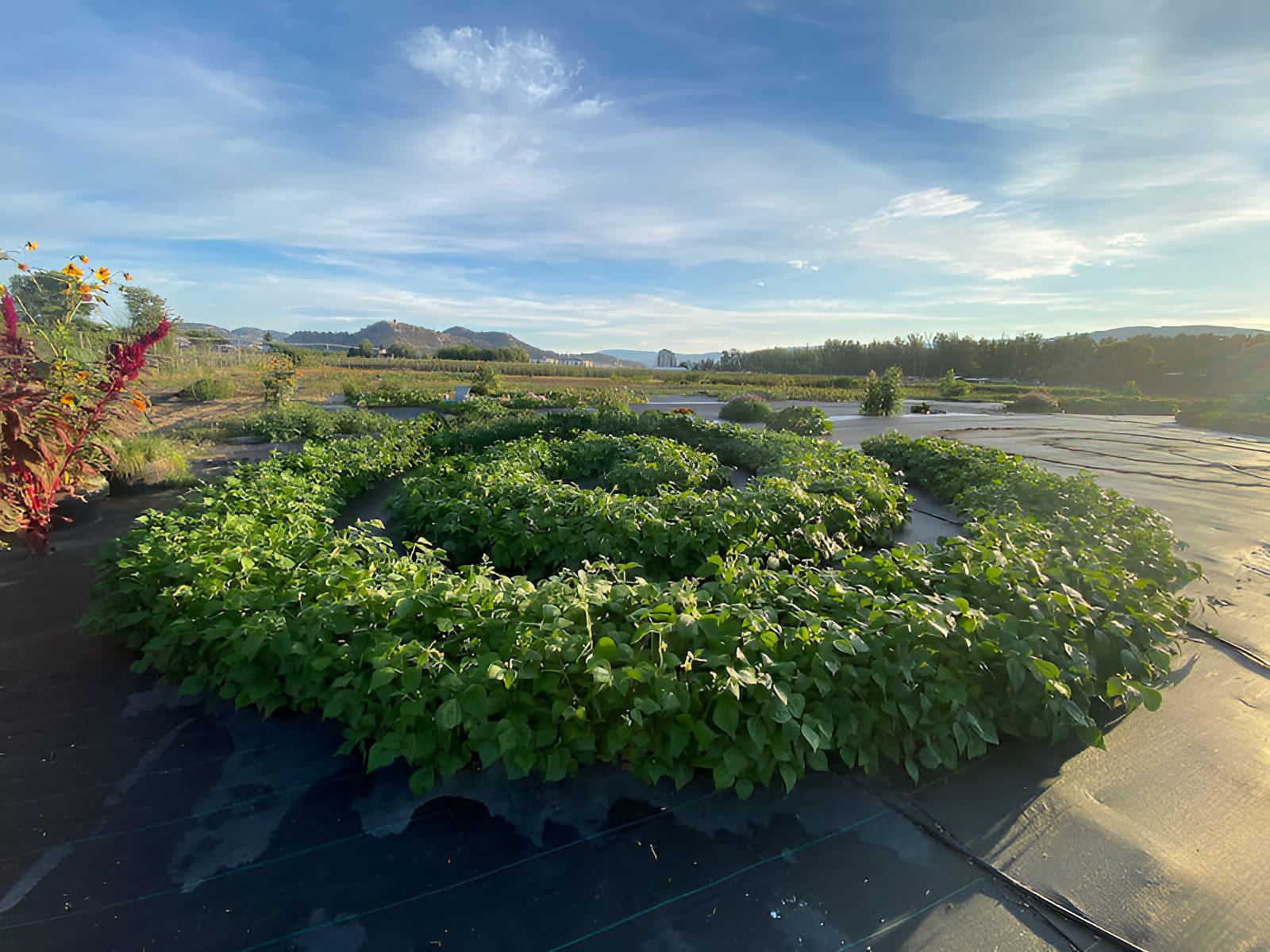
In many settings, especially community gardens, school gardens, and urban agriculture projects, diversity is just as important as volume. Multi-cropped Crop Circle Market Gardens use a Fibonacci spiral pattern that widens as it moves outward. This allows compact crops such as herbs and leafy greens to occupy the tighter inner loops while spreading crops like cucumbers, squash, and melons benefit from the larger outer arcs. The result is a visually striking planting design that also functions as a highly efficient, diversified market garden.
Up to 30 different plant types can be grown in a single multi-cropped spiral. Growers might plant early salad greens, radishes, and baby carrots toward the center for quick harvests, then follow with peppers, eggplant, and tomatoes in the mid-zone, and place cucumbers, pumpkins, and watermelons toward the outside. Throughout the spiral, herbs and flowers—such as basil, chives, cilantro, dill, echinacea, fennel, lavender, mint, oregano, parsley, rosemary, sage, thyme, marigolds, zinnias, cosmos, and calendula—build habitat for pollinators and beneficial insects.
This multi-layered design:
Multi-cropped spirals are particularly well-suited to public-facing spaces—schools, demonstration farms, tourism sites, and Feed An Island-style projects—where beauty, education, and production all matter.
Traditional tillage can destroy soil structure and burn off organic matter, especially on small plots that are tilled repeatedly. Crop Circle Market Gardens rely on a “Drill Don’t Till” approach. At the start of each planting season, soil is loosened and refreshed only in the planting openings, not across the entire surface. A small auger attached to a cordless drill quickly removes soil to a depth of about eight inches in each opening. These mini “nutrient columns” are then refilled with a custom blend of fertilizer, aged plant material, and animal compost tailored to the next crop.
For direct-seeded crops, the opening is filled to near the top with the nutrient mix, seeds are spaced evenly, and then covered with a thin layer of screened compost. A light watering settles the mix and initiates germination. Using a breathable germination cloth over newly seeded spirals:
Because only the planting columns are disturbed, the surrounding soil ecosystem remains intact, and root channels from previous crops help guide new roots deeper into the soil profile. Over time, this no-till micro-zone approach builds resilient, carbon-rich soil that holds more water and nutrients – exactly what small plot and island farmers need in a changing climate.
To learn more about how these methods translate into measurable production numbers, you can pair this page with the Plant Yield Calculator , Garden Yield Calculator , and Farm Yield Calculator for scenario planning.
Join our partners at Growing To Give and New Leaf Technologies to combat hunger and promote sustainability with Crop Circle Market Gardens across neighborhoods, cities, islands, and rural communities.
Ready to transform your land into a high-yield, sustainable farm? Let Crop Circle Farms design and build a custom, low-impact, and water-efficient farm tailored to your site and market. From yield modeling and farm layout to irrigation design and crop selection, we help you double your income and cut your costs in half. Contact Us to explore a Crop Circle Farm design for your property.
Help us expand our mission to revolutionize agriculture globally. We are seeking partners to implement Crop Circle Farms in food-insecure communities, island nations, and water-stressed regions. Together, we can build scalable food production systems that save water, reduce costs, and feed thousands of people year after year. Contact Growing To Give to support an initiative or program.
Answers to common questions about how Crop Circle Market Gardens® work, where they can be installed, and how they support high-yield, water-smart, small space agriculture.
A Crop Circle Market Garden is a modular, high-yield micro-farm that uses circular and spiral bed geometry instead of long, straight rows. Plants are arranged in Archimedean and Fibonacci spirals so that each opening has its own nutrient-charged soil column, drip emitter, and planting position.
These circular layouts dramatically improve plant density, access, and resource efficiency. Irrigation and fertigation are delivered directly to the root zone, while a permeable ground cover suppresses weeds, reduces evaporation, and protects underground soil life. The result is a compact market garden that can:
Unlike many “one-off” gardens, Crop Circle Market Gardens are designed as repeatable units that can be installed on campuses, rooftops, small farm plots, and island communities, then replicated as demand grows.
Crop Circle Market Gardens are engineered as water-smart micro-farms. Instead of spraying or flooding entire plots, water and nutrients are delivered only where roots can actually use them. In many climates and soil types, projects can realistically target:
Savings come from several design features:
As you begin tracking yields and input volumes, you can connect a Farm Yield Calculator or Garden Yield Calculator to quantify water savings, fertilizer use per pound of food, and overall return on investment.
Crop Circle Market Gardens are designed for small space agriculture and can be installed in many locations where traditional farming is difficult or impossible. Typical sites include:
During the design process, Crop Circle Farms evaluates structure, wind exposure, drainage, sun pattern, access, and water availability. From there, the team recommends the right mix of spiral beds, planter sizes, irrigation components, and crop plans for your environment.
Crop Circle Market Gardens excel with crops that respond well to high-density planting and targeted fertigation. Top performers typically include:
Each market garden can be mono-cropped (for example, all peppers, all beans, or all greens) for maximum throughput, or designed as a multi-crop spiral with up to 30 different crops arranged from the center outwards. The crop plan is tailored to:
Yield assumptions for each crop can be connected to the Plant Yield Calculator and Farm Yield Calculator so decision-makers can see projected pounds of produce, harvest windows, and revenue or impact potential before installation.
Yes. Crop Circle Market Gardens are delivered with a full operating playbook, not just hardware. Depending on the scope of your project, support can include:
For education projects, Crop Circle Farms can coordinate with partners like Growing To Give to integrate lesson ideas, project-based learning modules, and data dashboards that connect the garden to STEM, climate science, and entrepreneurship.
Absolutely. Crop Circle Market Gardens were designed from the ground up to serve smallholder farmers, urban communities, and islands where land and water are limited but the need for reliable food is high. A compact cluster of market gardens can:
When paired with yield calculators and simple impact dashboards, project leads can track pounds of food produced, water saved, and meals supported over time—powerful metrics for grants, sponsors, and government partners.
Getting started is straightforward. To request a preliminary concept and budget range:
With this information, the team can respond with scope options, budget ranges, and timeline scenarios, and then work with you to refine a design that meets your food, education, and impact goals.