Farm Fencing
Agricultural Fencing
As you venture into the world of farming, you quickly realize the importance of agricultural fencing. A good farm fence is not just about marking property lines or “keeping animals in.” It is a critical management tool for sustainable agriculture—shaping how you graze livestock, protect soil and water, and safeguard your crops.
Effective farm fencing is your first line of defense against predators, a deterrent for wildlife and pests, and a way to ensure that your animals are safely contained in the right paddock at the right time. Good fences support cover crops, protect young trees and hedgerows, and keep machinery and people out of sensitive areas.
Agricultural fencing can take many forms, each with specific advantages and limitations. The appropriate system depends on livestock species and behavior, farm layout, terrain, soil conditions, climate, wildlife pressure, management goals, maintenance requirements, and budget.
Well-designed fencing can support livestock management, controlled grazing, crop protection, animal welfare, and protection of sensitive areas. Its effectiveness depends on appropriate design, installation, management, and maintenance rather than the fence material alone.
Understanding agricultural fencing is therefore central to sustainable farm management. The right fence system improves animal welfare, reduces labor, protects crops and tree plantings, and helps you manage grazing in a way that regenerates soil instead of degrading it. This guide looks at why farm fencing matters, the main types of agricultural fences, how to choose the right system, and how to design fencing that works with the environment instead of against it.
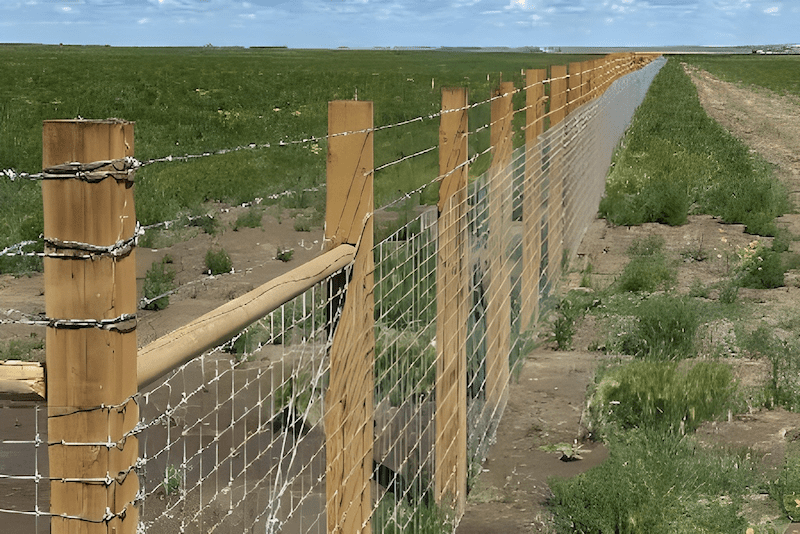
Agricultural fencing is an important component of farm infrastructure. A well-planned fence system can improve livestock control, simplify grazing management, protect crops, restrict access to sensitive areas, and reduce time spent recovering escaped animals or repairing avoidable damage.
Well-planned agricultural fencing helps you make better use of every acre. Perimeter fences secure the property line, while interior cross-fencing lets you subdivide pastures into paddocks for controlled grazing and soil-building. Fencing around waterways, riparian zones and shelterbelts prevents erosion and protects water quality, which is crucial in a warming, more volatile climate.
In short, fences are not just a cost—they are infrastructure. They shape how animals move, how plants recover, how manure is distributed, and how much labor you need to spend chasing livestock or repairing damage. Thoughtful agricultural fencing is one of the most powerful tools you have to create a farm that is productive, humane, and environmentally responsible.
There is no one-size-fits-all solution. The best farm fence for your operation depends on species, stocking density, topography, and management style. Below are some of the most common types of agricultural fencing and how they are typically used.
Barbed Wire Fencing: Barbed wire fencing is a traditional and widely-used type of livestock fencing for cattle and range operations. It is made from twisted strands of wire with sharp barbs at regular intervals. Barbed wire is relatively inexpensive per foot and effective at discouraging cattle from leaning or pushing on the fence. However, barbed wire can cause injury to animals and wildlife if they become entangled, and it is not recommended for horses or high-value animals that are prone to panic or running.
Woven Wire Fencing: Woven wire (or field fencing) is made by weaving horizontal line wires together with vertical stay wires to form a grid. It creates a strong, resilient fence that is excellent for keeping sheep, goats, pigs and mixed livestock within designated areas. The smaller openings near the bottom help prevent lambs and piglets from slipping through. Topped with a smooth or barbed wire, woven fencing can also deter predators and keep animals from climbing.
High-Tensile Wire Fencing: High-tensile wire fences use smooth, high-strength steel wire installed under tension. They are durable, low-maintenance and cost-effective over the long term, especially for large acreage. High-tensile systems can be electrified or non-electrified and are well-suited to rotational grazing, hillside paddocks and long perimeter runs. With proper bracing and quality end posts, high-tensile fences can last for decades with minimal upkeep.
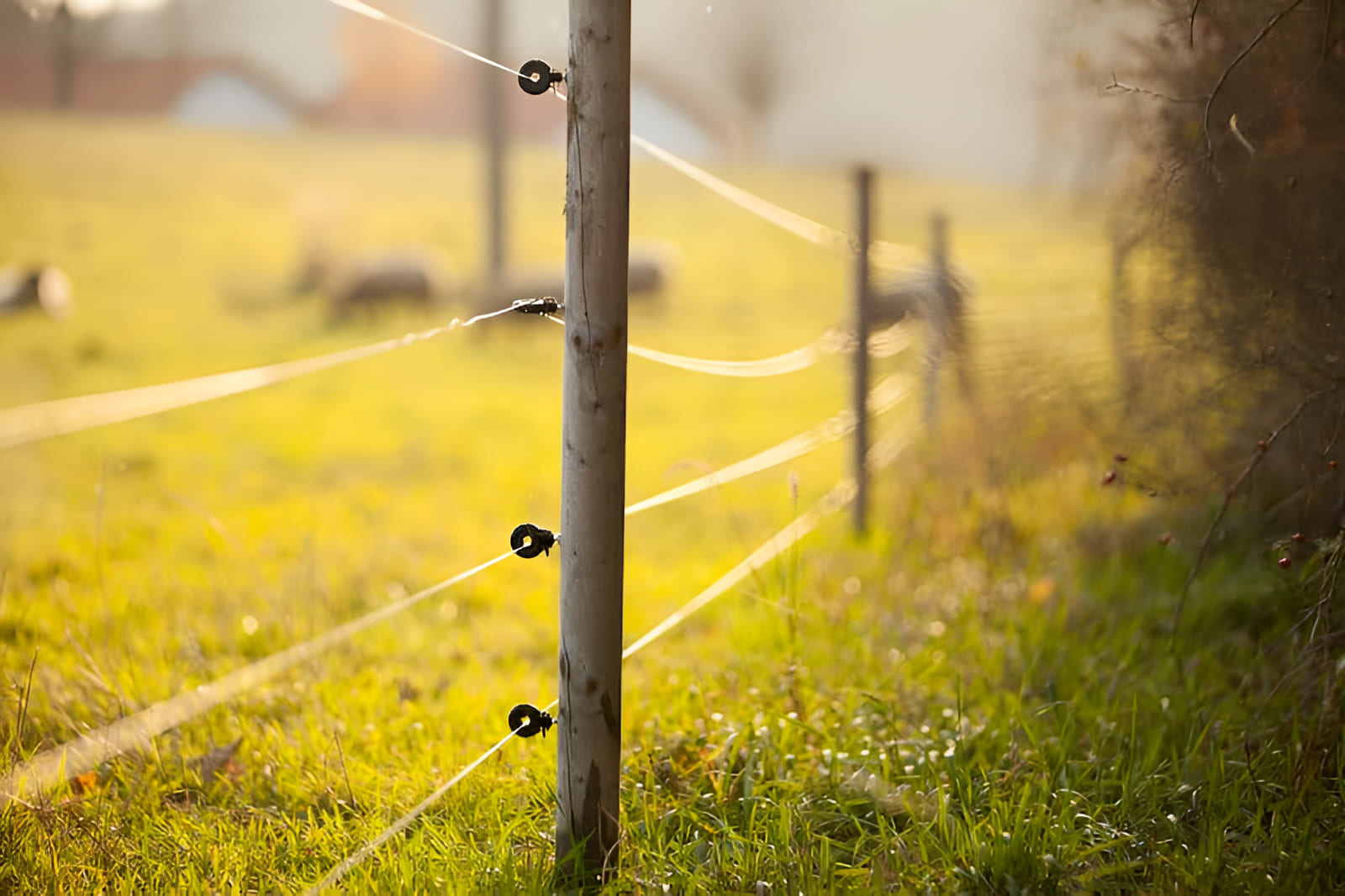
Electric Fencing: Electric fencing is a psychological barrier that uses a brief, safe electric pulse to train animals to respect the boundary. When properly grounded and maintained, electric fencing is one of the most versatile tools in livestock management. It can protect permanent paddocks, create temporary grazing cells, and reinforce existing woven or barbed fences. Because it uses fewer physical materials, electric fencing can be a lower-carbon, lower-cost option if managed correctly.
Mesh Wire Fencing: Mesh wire fencing uses closely spaced steel wires arranged in a grid pattern. With smaller openings than standard field fence, mesh is ideal for keeping out rabbits, raccoons and other small pests and for containing poultry, dogs or young livestock. Heavier-gauge mesh is often used around gardens, orchards and high-value crop plots where wildlife pressure is intense.
Board Fencing: Board fencing (also called plank or post-and-board) is a traditional wood fence used around horse paddocks, farmsteads and driveways where appearance matters. Properly built board fences are highly visible to animals, reducing collision risk. However, they require regular maintenance and are more vulnerable to rot in wet climates.
Horse Fencing: Horses require safe, highly visible fencing. Smooth board, vinyl rail and specially designed horse-safe wire (with no sharp barbs) are common. Many horse owners add a top sight line such as a white tape or board so horses can easily see the boundary. Electric offset wires are often used to keep horses from chewing or leaning on rails.
Deer Fencing: Deer fencing is designed to keep deer out of orchards, market gardens and tree plantations. Because deer can jump very high, these fences are typically 8–10 feet tall. Tight mesh spacing at the bottom helps protect young trees and crops from fawns as well as adults. In high-pressure areas, a combination of tall woven wire and electric outriggers may be used.
| Fence Type | Best For | Lifespan | Cost Level |
|---|---|---|---|
| Barbed Wire | Cattle, large acreage | 15–25 years | Low |
| Woven Wire | Sheep, goats, mixed livestock | 20–30 years | Medium |
| High-Tensile | Rotational grazing | 25+ years | Low–Medium |
| Electric | Flexible paddock systems | 10–20 years | Low |
| Deer Fence | Orchards, tree plantations | 20+ years | High |
Post and Rail Fencing: Post and rail fencing is a classic style that uses vertical posts with two to four horizontal rails. It is often installed around homesteads, driveways, agro-tourism sites and front-of-farm “show areas” where heritage aesthetics are valued. When combined with electric or mesh, it can also be functional for livestock containment.
Cattle Panels and Hog Panels: Panels made from heavy-gauge welded wire are popular for corrals, handling facilities and temporary pens. Cattle panels and hog panels can be quickly moved or reconfigured, making them ideal for sorting animals, creating quarantine zones, or building small paddocks within a larger field. Panels are also used around vegetable gardens and feed storage to keep livestock out.
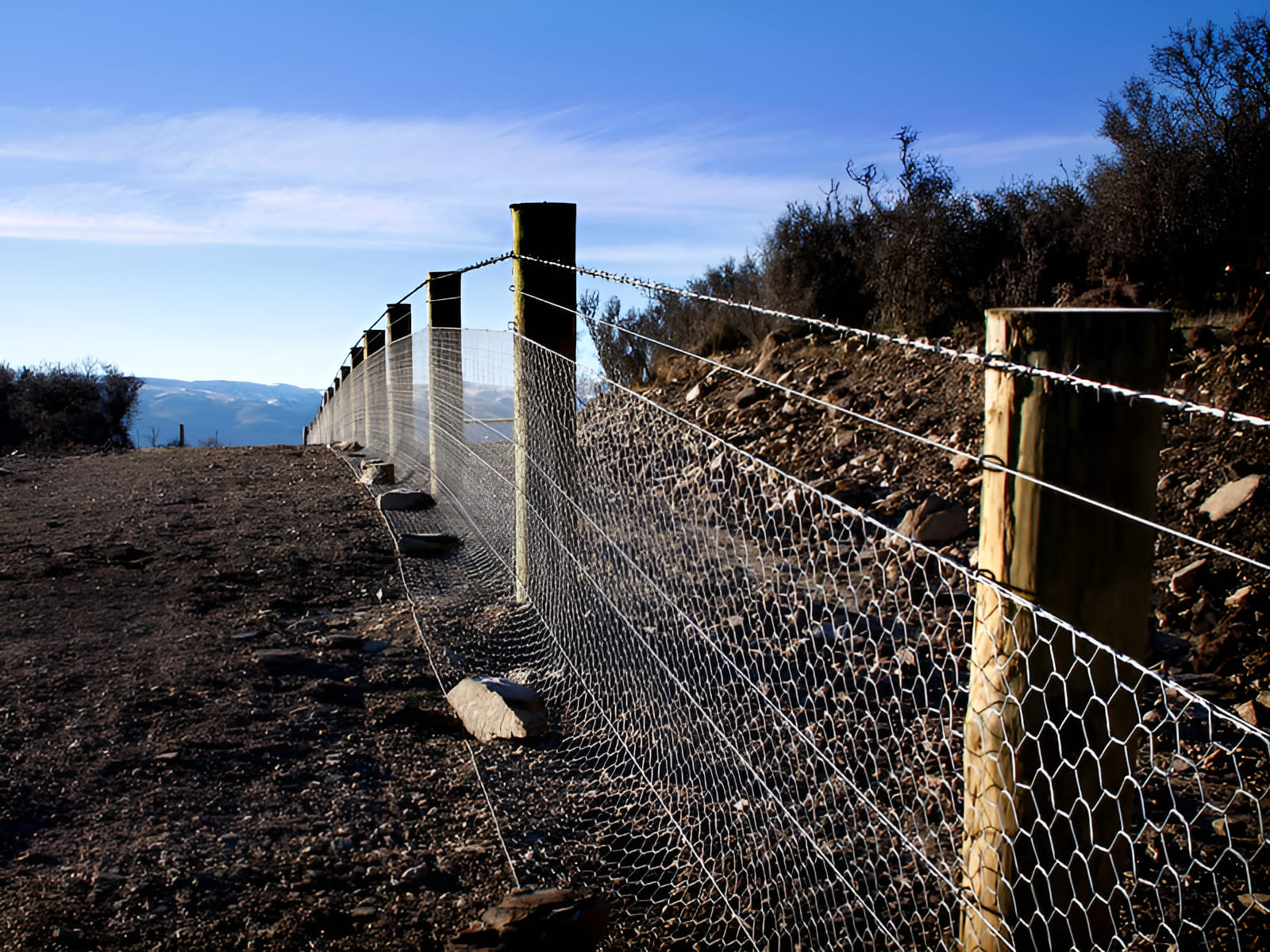
Poultry Netting (Chicken Wire): Poultry netting, commonly called chicken wire, uses thin, flexible wire woven into a hexagonal mesh. It is suitable for keeping poultry inside small runs and protecting garden beds from chickens and ducks. Because it is relatively light and easy to cut, chicken wire is best combined with sturdier posts and, where predators are present, an additional layer of heavier mesh or electric fencing.
Rabbit Fencing: Rabbit fencing is a type of mesh wire fence designed to keep rabbits and other burrowing animals out of fields, orchards and gardens. It usually has small openings near the base and is installed with the bottom edge buried or bent outward underground to prevent digging. In vegetable production and tree nurseries, an effective rabbit fence can mean the difference between success and total crop loss.
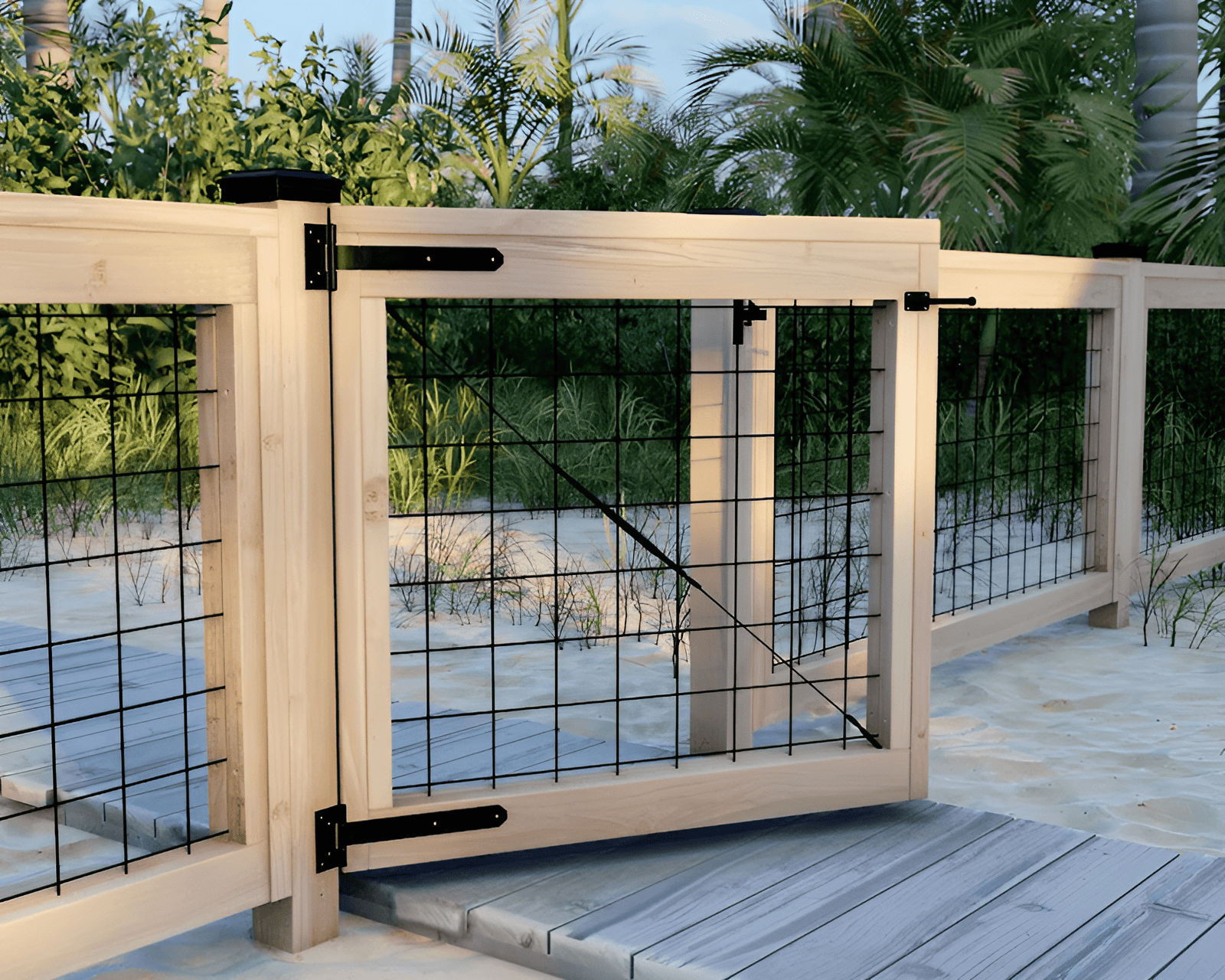
Vinyl Fencing: Vinyl fencing is a modern type of plastic farm fencing that is increasingly popular in agricultural and equestrian settings. It is durable, easy to clean, and resistant to rot and insect damage. While the initial cost is higher than simple wire, vinyl can offer lower long-term maintenance in humid or coastal climates.
Temporary or Movable Fencing: Temporary or portable fencing—such as step-in posts with polywire or electric netting—is a flexible solution where permanent fence lines are not yet established. These systems are widely used for rotational and strip grazing, letting you adjust paddock sizes on the fly based on forage growth and herd size.
Chain Link Fencing: Chain link fencing, made from galvanized or coated steel wire woven in a diamond pattern, is sturdy and secure. Although more commonly seen around houses, kennels and equipment yards, it is sometimes used in agriculture for high-security zones, such as chemical storage, feed sheds, or valuable orchard blocks.
Biomass Fencing (Living Fences): A regenerative alternative to preservative-treated fence posts is to plant a living fence—rows of hardy trees or shrubs that form a natural barrier. This biomass fencing is environmentally sound, can cost less over time, requires minimal maintenance once established, creates a windbreak, provides habitat, and may generate revenue from timber, fruit or fodder. In many climate-smart designs, living fences are paired with single or double high-tensile electric wires.
Choosing the right fence is about more than picking a material off the shelf. To design a fence system that supports sustainable, low-labor farming, consider:
For long runs or complex layouts, tools like the online fence post calculator at Tree Plantation can help you estimate post spacing, corner braces and material quantities before you start building.
Installing and maintaining agricultural fencing properly is a cornerstone of sustainable farm management. A well-built fence reduces stress for you and your animals—and prevents endless repair work.
Key steps in fence installation include:
Ongoing maintenance is just as important. Regularly walk your fence lines to:
A thoughtful fence design paired with a simple maintenance routine can keep your agricultural fencing working smoothly for many years, protecting both your investment and your peace of mind.
While farm fencing is vital, it can also affect local wildlife and ecosystem connectivity. Poorly chosen fences may block wildlife migration routes, fragment habitat, or injure animals that try to jump or crawl through.
To reduce impacts, many farmers are adopting wildlife-friendly fencing practices, such as:
By aligning agricultural fencing with your broader sustainability and biodiversity goals, you can protect livestock and crops while still allowing wildlife to move, feed and reproduce across the landscape.
The cost of agricultural fencing varies widely based on materials, terrain, fence height and local labor rates. Basic wire fences may cost only a few dollars per linear foot in materials, while board, vinyl or tall predator-proof fences can be significantly more.
In addition to materials, factor in:
While the upfront cost can feel high, a well-designed and well-built fence is a long-term asset. It protects animals, crops, and infrastructure and supports sustainable grazing systems that improve soil health and pasture productivity over time.
Ultimately, the most important test of any agricultural fence is whether it keeps your livestock safe, secure and calm. Fencing that is too flimsy, too sharp, or poorly visible can lead to injuries, escapes and stress for both animals and people.
Match fence design to species and behavior: horses need visibility and smooth surfaces; sheep and goats need tight mesh and sometimes electric; cattle can be managed very effectively with well-built barbed or high-tensile electric. Regardless of the type, proper installation, regular inspections and timely repairs are what ultimately keep animals out of danger.
Agricultural fencing is more than just marking boundaries—it is a management system that shapes how your entire farm functions. Whether you choose barbed wire, woven wire, high-tensile, electric, living fences or a combination, good fencing helps you manage your land more sustainably and successfully for years to come.
Fence-post spacing depends on fence type, wire tension, terrain, livestock pressure, post strength, and manufacturer specifications. Woven and barbed-wire fences commonly use closer line-post spacing than high-tensile systems, which can use wider spacing when supported by properly designed braces, stays, or battens.
Reduce spacing at curves, steep slopes, wet ground, changes in elevation, gates, and other high-stress locations. Final spacing should follow the requirements of the specific fencing system and local site conditions.
Fence-post depth depends on post type, post diameter, soil conditions, frost movement, fence height, wire tension, and whether the post is serving as a line post, gate post, corner, or brace assembly.
Corner, end, and gate posts generally require stronger foundations because they carry substantially greater loads than ordinary line posts. In loose, wet, rocky, or frost-prone soils, additional depth, larger posts, driven posts, anchors, or other site-specific construction methods may be necessary.
Before digging, obtain required underground-utility locates and follow local fencing, setback, and right-of-way requirements.
Goats frequently push, rub, climb, and investigate weak points in fencing. Tight woven wire designed for goats or small livestock is a common permanent option, particularly when the openings are sized so animals cannot easily put their heads through the fence.
An electric offset wire on the livestock side can discourage rubbing and climbing. Strong corners, braces, gates, and regular inspections are especially important with goats. Horned animals may require additional consideration when selecting mesh size and fence design.
Start by matching the fence to the behavior and pressure of your animals. Cattle are usually well-contained with high-tensile smooth wire, often electrified, or traditional barbed wire on strong corners and braces. Sheep and goats need tight woven wire with small openings so they can’t poke heads through, ideally with a hot offset wire to discourage climbing and rubbing.
Horses require visibility and safety first: wide rails, boards, vinyl, or electric tape with smooth wire below works far better than barbed wire. For poultry, gardens, and orchards, fine mesh or poultry netting keeps birds in and predators out; adding a low electric strand can help deter foxes, raccoons, and stray dogs. For deer exclusion around high-value crops, use tall woven wire or multi-strand high-tensile/electric designs that deer can’t jump or crawl through.
Fence height depends on species, local regulations, and terrain. Common working ranges are: cattle 48–54 in (1.2–1.4 m); sheep and goats 42–48 in (1.1–1.2 m) with tight mesh; horses 54–60 in (1.4–1.5 m) with a clearly visible top rail or tape; deer exclusion 7–8 ft (2.1–2.4 m) or offset high-tensile/electric designs; and poultry and garden fencing 4–6 ft (1.2–1.8 m) plus a buried or flared base.
In snow-prone regions you may need extra height to account for drift and compaction that animals can stand on. Always confirm local bylaws or road-right-of-way rules before finalizing fence height.
Post spacing balances strength, cost, and terrain. For woven or barbed wire fences, 8–12 ft (2.4–3.6 m) is typical. High-tensile smooth wire systems can extend much farther, often 20–50 ft (6–15 m) between line posts when strong braces and appropriate droppers, battens, or stays are used.
Tighten spacing at curves, slopes, creek crossings, gates, and corners. Closer posts in these areas can reduce sagging and improve structural support.
Corner, end, and gate assemblies carry greater loads than ordinary line posts, so these locations should receive the strongest posts and bracing in the fence system. Treated wood, galvanized steel, composite materials, and other suitable posts can provide long service when correctly selected and installed.
H-braces, diagonal braces, anchors, or other assemblies may be used depending on fence type, wire tension, soil conditions, and system design. Heavier galvanized or zinc-aluminum wire coatings generally provide greater corrosion resistance, and incompatible metal combinations should be avoided where galvanic corrosion could shorten component life.
Properly installed electric fencing can be a safe and effective livestock-management tool. It works primarily as a psychological barrier: animals learn to avoid a fence after receiving a brief pulse from a purpose-built low-impedance energizer. Animals should be introduced to electric fencing in a secure area so they learn to respect the charged wire before relying on it as a primary boundary.
Choose an energizer according to the total length of electrified wire, expected vegetation load, soil conditions, and the species being contained. Follow the energizer manufacturer's instructions for grounding rather than assuming that every installation requires the same number of ground rods. Larger systems commonly use several properly spaced ground rods, while dry or poorly conductive soils may require additional grounding or an alternate hot-and-ground-wire design.
Use approved fencing energizers, quality insulators, properly rated lead-out cable, and suitable fence testers. Keep vegetation from excessively loading the energized wires and inspect voltage regularly. Never use improvised or homemade energizers, and keep the energizer grounding system separated from utility electrical grounds and other buried metal systems as specified by the manufacturer.
Where electric fencing borders roads, public paths, or other areas accessible to people, follow applicable local requirements for warning signs, setbacks, and installation. Gates and crossings should also be designed so people, livestock, equipment, water lines, and other conductive materials do not accidentally contact energized components.
Perimeter fencing defines the outer boundary of a property or grazing block and generally requires stronger, longer-lived construction because it contains the entire herd or flock and may border roads or neighboring property. Cross-fencing divides the interior of the farm into paddocks, alleys, and protected cropping areas.
Cross-fences can often be lighter and more flexible, using temporary reels, step-in posts, or polywire to support rotational or strip grazing. A secure perimeter combined with adaptable cross-fencing allows paddocks to be adjusted as grazing and crop-management needs change.
Gates are choke points for both animals and equipment, so plan them for good drainage, visibility, and turning radius. Place main gates on high, firm ground where practical to reduce mud and ice problems. Wide gates and appropriate swing or latch arrangements can make it easier to move machinery and groups of animals.
Livestock lanes can connect pastures to water, handling facilities, barns, or milking areas. Gravel, geotextile fabric, or well-managed vegetative cover may help lanes withstand repeated hoof and equipment traffic in wet conditions.
Fencing can unintentionally fragment wildlife habitat or injure animals when poorly located or designed. Wildlife-friendly designs vary by species and region. Where compatible with livestock containment, they may use a smooth bottom wire positioned high enough for wildlife to pass underneath, a lower and more visible top wire that animals can safely cross, smooth rather than barbed wire in high-use crossing areas, and fence markers where bird collisions are a concern.
Migration routes, predator pressure, livestock species, and local wildlife-management requirements should all be considered. In some locations, seasonal openings, let-down sections, or designated wildlife crossings may be more appropriate than maintaining an uninterrupted permanent barrier.
Fence cost varies substantially with fence type, terrain, post spacing, soil conditions, wire type and coating, number of corners and braces, gates, energizers, equipment access, regional labor rates, and current material prices.
When budgeting, account for the complete system rather than wire and line posts alone, including corner assemblies, braces, gates, hardware, insulators, grounding, equipment, labor, vegetation clearing, and future maintenance.
Plastic and composite posts can be useful where rot, termites, moisture, or other conditions limit the life of conventional wood posts. Performance varies by product, post design, UV resistance, structural strength, installation method, and intended fence type.
Some products contain recycled material and can work well as line posts with high-tensile wire or electric systems. Corner, end, and gate assemblies still need to be designed for the loads they carry, and a hybrid system using different materials for structural and line posts may provide an effective balance of strength, cost, and durability.
In rotational and Crop Circle Farms layouts, fencing can form part of a broader grazing and cropping system. A strong permanent perimeter secures the overall block, while inner arcs, spokes, or other temporary cross-fences can create smaller paddocks through which animals rotate. This can help control grazing pressure and provide forage plants with recovery periods.
Cross-fences can also keep livestock out of cover crops or sensitive conservation areas during critical periods. Central water points, alleys, and appropriately located gates can reduce livestock-movement labor and simplify paddock management.
Inspect fence lines regularly for loose or broken wires, leaning posts, damaged braces, worn gates and latches, cracked insulators, corrosion, and vegetation touching electric strands. Recheck vulnerable locations after major storms, high winds, flooding, or heavy snow.
Keeping basic repair materials such as staples, clips, wire joiners, posts, insulators, and an electric-fence voltage tester available can make prompt maintenance easier. Actual fence lifespan depends on materials, installation, climate, livestock pressure, corrosion, soil conditions, and ongoing maintenance.