Agricultural IoT
Agriculture is Entering a New Phase of Intelligence
Agriculture is entering a new phase of intelligence. Beyond GPS guidance and isolated sensors, farms are now becoming fully connected ecosystems through Agricultural IoT—the Internet of Things applied to food production.
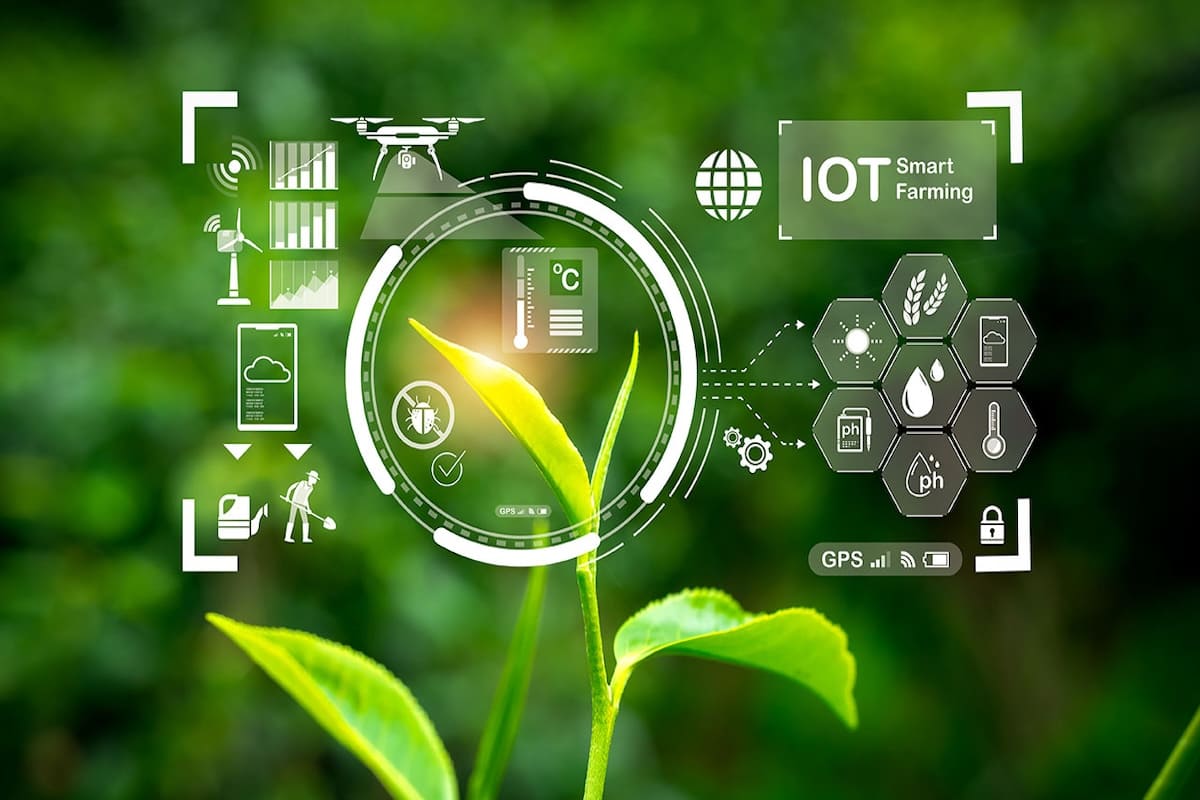
Agricultural IoT refers to networks of interconnected sensors, devices, machinery, and software platforms that collect, transmit, and analyze real-time farm data. These systems create a continuous flow of information between the soil, crops, livestock, climate, irrigation infrastructure, and farm management software.
Instead of reacting to problems after they occur, connected farms anticipate conditions before they become costly. Agricultural IoT transforms farming from periodic observation to continuous awareness.
At its core, Agricultural IoT links physical farm assets to digital intelligence systems.
Typical components include:
Each device gathers data and communicates through cellular, satellite, LoRaWAN, or Wi-Fi networks. That data flows into centralized platforms where analytics tools generate insights and automated actions.
The result is a farm that behaves less like a static field and more like a living, monitored system.
Traditional farming relied on visual inspection and seasonal experience. While expertise remains essential, modern conditions demand greater precision:
IoT systems provide real-time data to address these pressures efficiently. Instead of irrigating based on calendar schedules, farmers irrigate based on measured soil moisture. Instead of applying fertilizer uniformly, inputs are adjusted according to sensor-detected deficiencies.
Connected systems reduce guesswork and increase accountability.
In drought-prone areas such as California’s Central Valley, smart irrigation IoT networks are transforming water management.
Soil moisture probes installed at multiple depths send continuous readings to a cloud platform. These sensors measure volumetric water content and indicate when root zones approach stress thresholds.
Irrigation controllers automatically adjust water delivery based on:
Instead of overwatering as insurance against drought, farmers apply water precisely when and where it is needed.
Outcomes include:
In water-constrained regions, Agricultural IoT becomes a resilience tool.
Agricultural IoT is not limited to crops. In dairy and beef operations, wearable sensors monitor animal health and behavior in real time.
Smart ear tags or collar devices track:
Algorithms detect deviations that may indicate illness, stress, or reproductive readiness.
Instead of waiting for visible symptoms, farmers receive early alerts when a cow shows signs of metabolic disorder or heat stress. This reduces veterinary costs and improves overall herd productivity.
Precision livestock farming enhances both animal welfare and operational efficiency.
Controlled-environment agriculture has rapidly adopted IoT technologies.
In modern greenhouses, interconnected systems regulate:
Sensors feed data into automation software that adjusts ventilation, irrigation, and lighting in real time.
If humidity rises beyond optimal thresholds, ventilation systems activate. If nutrient concentrations drift, fertigation systems recalibrate.
This constant feedback loop creates stable growth conditions that maximize plant performance while reducing waste.
Agricultural IoT makes indoor farming highly responsive and resource-efficient.
The true power of Agricultural IoT lies in integration.
Individually, sensors provide useful data. But when multiple data streams combine, farms gain contextual intelligence.
For example:
This integration supports long-term strategic planning, not just daily management.
The farm becomes a data-driven ecosystem.
Adding measurable outcomes improves perceived authority and helps Google understand real-world value. Use these ranges as a quick “at-a-glance” performance signal for connected farm systems.
Note: Outcomes vary by crop, climate, infrastructure, and management practices. Present ranges as typical performance improvements observed with well-designed sensor + automation deployments.
Precision monitoring leads to measurable environmental gains.
Agricultural IoT supports:
By measuring inputs and outputs continuously, farms reduce excess application and unintended environmental impact.
IoT systems align economic efficiency with ecological stewardship.
Despite its benefits, Agricultural IoT requires thoughtful implementation.
Challenges include:
Successful implementation depends on interoperability and clear return on investment.
When systems are designed cohesively rather than piecemeal, adoption becomes more sustainable.
Agricultural IoT is evolving toward predictive and autonomous systems.
Emerging trends include:
As devices become more affordable and networks more reliable, IoT adoption will accelerate across farms of all sizes.
The connected farm is no longer experimental—it is becoming foundational.
Agricultural IoT represents the connected nervous system of modern agriculture. By linking sensors, machines, climate data, and analytics platforms, farms gain continuous awareness and adaptive control.
From smart irrigation in drought zones to livestock health monitoring and automated greenhouses, IoT systems improve efficiency, reduce waste, and support environmental responsibility.
In a world demanding more food with fewer resources, connected intelligence is not optional—it is strategic.