Ferilizer Runoff
Fertilizers are Killing the World’s Coral Reefs
Coral reefs, Earth’s vibrant marine nurseries teeming with fish, invertebrates and countless other life forms, are declining at an alarming rate. While climate change and ocean warming are widely known threats, one of the most powerful but often overlooked drivers of reef collapse is agricultural runoff. The chemical constituents of modern synthetic fertilizers, including phosphorus, nitrogen and potassium, are designed to turbocharge plant growth on land—but when they escape into rivers, estuaries and coastal waters, they also turbocharge algae and harmful microorganisms that smother coral reefs.
In conventional, high-input farming systems, these nutrients are applied in large quantities to fields, orchards and lawns. Only a fraction is actually taken up by crops. The rest can leach down through the soil profile or wash off the surface during heavy rains and irrigation events. Once these excess nutrients enter creeks and drainage ditches, they are carried downstream, eventually discharging into bays, lagoons and coral reef ecosystems—sometimes hundreds of miles from the farms where they originated.
Coral reefs evolved in some of the clearest, most nutrient-poor waters on Earth. They are finely tuned to low-nutrient conditions where corals and their symbiotic algae (zooxanthellae) share a tight recycling loop. When large volumes of fertilizer runoff suddenly enter these systems, the entire balance tips. Algae and plankton bloom explosively, water clarity drops, oxygen levels crash, and corals, which depend on light and oxygen, begin to weaken, bleach and die.
Understanding how fertilizer runoff fuels these changes is the first step. The second—and most important—is redesigning agriculture so that nutrients stay where they belong: in the root zone of crops, not in rivers and reefs. That is where water-smart, closed-loop farming systems, like those developed by Crop Circle Farms, can make a measurable difference.
Agricultural runoff begins on land, often far inland from the sea. When synthetic fertilizers and manures are applied to fields without precise rates, timing and placement, rainfall and irrigation can dissolve soluble nutrients and physically erode soil particles rich in phosphorus and nitrogen. These nutrient-loaded waters then move:
Along the way, towns and cities can add their own pollution—untreated sewage, stormwater runoff and industrial discharges—but in many reef regions, “non-point source pollution” from agriculture remains the dominant driver of nutrient enrichment. The result is a coastal ocean that increasingly behaves like a fertilized pond, not a clear, oligotrophic reef.
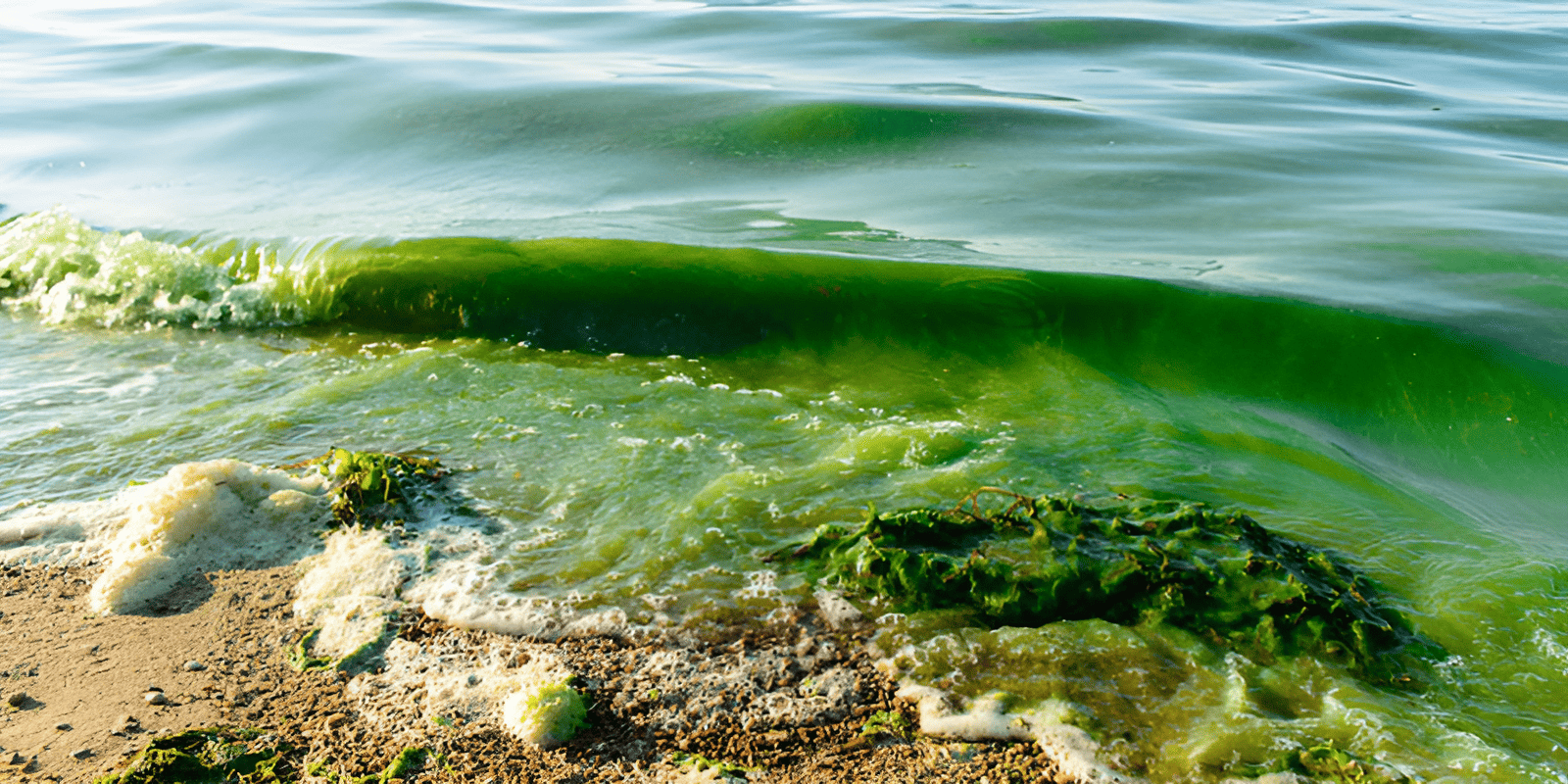
Once these fertilizer nutrients reach the ocean, they become catalysts for explosive algae growth, resulting in phenomena known as red, green and brown tides. These tides are massive algal blooms fostered by excess nitrogen and phosphorus, often in combination with warm, stagnant water. After the bloom peaks and the algae die, bacteria decompose the biomass, consuming dissolved oxygen in the process. This leads to areas so oxygen-poor that most marine life cannot survive—these are the infamous aquatic dead zones.
Red tides, caused by certain dinoflagellate algae, can produce potent toxins harmful to fish, marine mammals and humans. They trigger large fish kills, contaminate shellfish and force beach and fishery closures. Green tides, typically fueled by filamentous or macroalgae, can spread over coral reefs in suffocating mats that block sunlight and physically smother corals. Brown tides, driven by yet another group of algae, decrease water transparency, making it difficult for coral symbionts to photosynthesize.
These massive algal blooms damage coral reefs in multiple ways:
Coral reefs, which depend on clear, oxygenated water and a careful nutrient balance, are among the first casualties when coastal waters flip into a state of chronic eutrophication. Agricultural runoff is the spark that lights this destructive chain reaction.
The Global Coral Reef Monitoring Network reports that more than half of all global coral reefs have already been lost or severely degraded. Iconic reefs in the Caribbean, Australia’s Great Barrier Reef, Southeast Asia and the islands of the South Pacific have all suffered ongoing decline. Climate change—especially marine heat waves that trigger coral bleaching—is a major driver, but local stressors like nutrient pollution from agriculture determine whether stressed reefs can recover or collapse.
In many coastal regions, the same rivers that carry the economic lifeblood of agricultural exports also carry a continuous stream of nutrients and sediments toward nearshore reefs. Poorly managed fertilizers, bare fallow fields, intensive livestock operations without nutrient capture, and the loss of wetlands and mangroves all accelerate this process. Once on the reef, nutrient pollution interacts with:
It is this combination of global and local stress—warming oceans layered on top of chronic agricultural runoff—that pushes coral reef ecosystems past their tipping points. The good news is that local water quality is something we can change quickly through better agricultural practices and sustainable agriculture technologies.
If agricultural runoff can help kill coral reefs, then regenerative, water-smart agriculture can help save them. Many of the same practices that improve soil health and farm profitability also keep nutrients out of rivers and oceans:
These approaches are the backbone of sustainable farming systems that feed people while protecting coastal ecosystems and the reefs beyond. Crop Circle Farms goes a step further by designing closed-loop nutrient systems that practically eliminate fertilizer runoff at the source.
Key to the preservation and restoration of global coral reefs is preventing fertilizer runoff before it ever reaches the ocean. An innovative approach developed by Crop Circle Farms, known as cavitated agriculture, focuses on retaining nutrients directly at the root zone of each plant throughout its growth cycle. By using cavitation and micro-bubble technology to deliver dissolved nutrients and oxygen in a highly targeted way, this method significantly reduces nutrient waste and escape.
In Crop Circle systems, plants require up to 90% less applied fertilizer compared to conventional broadcast methods. Instead of saturating entire fields with nitrogen and phosphorus, nutrients are delivered in low volumes right where roots can absorb them, often in combination with raised garden rings and highly efficient drip irrigation. Less fertilizer applied means less risk of leaching and runoff—and less fuel for algae blooms that threaten coral reefs.
Equally important is the shift toward locally available, organic fertilizers sourced from composted plant material, manure and on-farm residues. By integrating composting into farm design, Crop Circle Farms turns would-be waste into a stable, slow-release nutrient source that feeds soil biology rather than flushing into waterways. This biological buffering further reduces the chance that nutrients will reach rivers and coastal zones in harmful concentrations.
When combined with water-efficient layouts like spiral farms and crop circles, cavitated agriculture becomes a powerful tool for coral reef conservation. Every kilogram of fertilizer kept on the farm and in the root zone is a kilogram that never feeds an algal bloom on a distant reef. In this way, reef-safe agriculture is not a slogan; it is a set of practical design choices farmers can implement today.
Ultimately, protecting coral reefs requires action on both land and sea. Governments can strengthen watershed protections and coastal zoning; communities can upgrade wastewater treatment; and farmers can adopt low-runoff, high-efficiency systems that cut nutrient losses by 80–90% or more. By choosing regenerative, water-smart farming systems, we create a future where agriculture and coral reefs no longer stand in opposition, but thrive together.
Turn your 1 acre into a high-yield, profitable farm.
Crop Circle Farms specializes in designing and building fully engineered, low-impact farm systems that use 90% less water, 85% less fertilizer, and deliver two to three times the yield of traditional farming.
Whether you have a vacant lot, an empty field, a resort, school, island community, or small family farm, we’ll build it from the ground up for you. Our team handles everything from farm layout and installation to irrigation, root systems, training, and first planting.
Contact Us to explore a custom Crop Circle Farm design for your property.
Help us expand our mission to revolutionize agriculture globally. We are seeking partners to implement Crop Circle Farms to feed people in need. Together, we can build scalable food production systems that save water, reduce costs, and feed thousands of people. Contact Growing To Give
Answers to common questions about how nitrogen and phosphorus runoff from farms, lawns, and cities fuels algal blooms, dead zones and coral reef decline—and practical ways to keep nutrients in the root zone and out of the sea.
Synthetic fertilizers and poorly managed manures are rich in nitrogen (N) and phosphorus (P). When more N and P are applied than crops can use—or when nutrients are applied at the wrong time or place—rain and irrigation wash the excess into ditches, streams, rivers and eventually coasts and coral reef lagoons.
Once in the water, these nutrients over-fertilize algae and plankton. Dense blooms form (including red, green and brown tides). When the bloom collapses, bacteria decompose the dead algae and consume dissolved oxygen. If oxygen levels fall too low, fish, shellfish, corals and other marine life either flee or die. These oxygen-starved areas are known as hypoxic dead zones.
Coral reefs are especially vulnerable because they evolved in clear, nutrient-poor waters. Nutrient pollution flips these systems toward algae-dominated, murky conditions where corals struggle to survive.
Both nitrogen and phosphorus drive water pollution, but their relative importance differs by ecosystem:
For growers, that means designing nutrient plans that keep all major nutrients — nitrogen, phosphorus and potassium — in the field and in the root zone, not in runoff.
The most effective strategies combine precision nutrition with soil-health and water-management practices. High-impact tools include:
Systems like Crop Circle Farms go further by combining sustainable agriculture principles with closed-loop, low-runoff layouts that keep fertilizers tightly coupled to crop roots.
Coral reefs thrive in clear, low-nutrient waters. Agricultural runoff disrupts this balance in several ways:
When combined with ocean warming and acidification, nutrient pollution can push already stressed coral reefs past a tipping point. Cutting agricultural runoff is one of the fastest local levers for reef recovery.
Farms are not the only sources of nutrient runoff—lawns, streets and stormwater systems also play a role. Practical steps include:
When farms, cities and homeowners work together on nutrient reduction, downstream estuaries and coral reef systems see improvements much faster than when each sector acts alone.
Nutrient pollution is usually grouped into two categories:
Regulations have often focused first on point sources, which are easier to measure and control. Today, nonpoint agricultural and urban runoff is the dominant driver in many watersheds that feed coastal dead zones and coral reef lagoons, making on-farm and landscape solutions essential.
Yes. While source reduction is the top priority, a suite of ecological “interceptors” can capture and transform nutrients before they hit coastal waters:
These nature-based solutions complement improved agricultural practices and urban stormwater controls to restore entire watersheds—from ridge top to reef.
Regenerative and organic systems often include practices that reduce runoff—such as cover crops, diverse rotations, composting and reduced tillage—but no system is “automatic.” Nutrient losses can still occur if rates and timing are off or if soils are left bare.
What consistently helps are systems that:
Whether conventional or organic, farms that follow these principles typically deliver less nutrient runoff and better long-term resilience for rivers and reefs.
Crop Circle Farms layouts are designed from the ground up to keep water and nutrients where they belong—around plant roots. Key features include:
By combining precise fertigation with water-smart geometry, Crop Circle systems are intentionally designed as reef-safe agriculture for coastal watersheds and island nations.
Agricultural nutrient runoff occurs when water moving across or through farmland carries nitrogen, phosphorus, sediment, manure, pesticides, or other materials away from the field. These materials can enter streams, rivers, lakes, groundwater, and eventually coastal waters when they are not retained within the soil and root zone.
Nitrogen and phosphorus are essential plant nutrients, but excessive amounts entering waterways can stimulate rapid algae and phytoplankton growth. When environmental conditions are favorable, this nutrient enrichment can contribute to large algal blooms that alter water quality, light penetration, and aquatic ecosystems.
A dead zone is an area of water where dissolved oxygen becomes too low to support many aquatic organisms. Large algal blooms can contribute to oxygen depletion when algae die and microorganisms consume oxygen while decomposing the organic material. Low-oxygen conditions are commonly described as hypoxia.
Elevated nutrient concentrations can change the balance of coastal ecosystems by encouraging algal growth and altering water quality. Excessive algae can compete with corals for space and light, while sediment and reduced water clarity can further stress reef organisms. Coral reef health is also influenced by temperature, ocean chemistry, disease, storms, fishing pressure, and other local and global factors.
No. Crops can absorb a substantial portion of properly managed nutrients, and soils can temporarily retain some nutrients as well. Losses depend on fertilizer rate and timing, soil type, crop uptake, rainfall, irrigation, drainage, slope, erosion, and management practices. The goal of nutrient management is to keep as much fertilizer as practical within the crop production system.
Precision nutrient management can better match fertilizer applications with crop requirements by adjusting the source, rate, timing, and placement of nutrients. Soil testing, plant monitoring, targeted applications, fertigation, and improved irrigation scheduling can reduce unnecessary nutrient applications and lower the risk of losses from the field.
Cover crops can protect exposed soil, reduce erosion, capture some residual nutrients, and improve soil structure between cash crops. Vegetated buffer strips can slow surface runoff, trap sediment, and intercept some nutrients before they enter nearby streams, drainage channels, lakes, or coastal waters.
Wetlands can slow water movement, trap sediment, support plant nutrient uptake, and create conditions in which some forms of nitrogen can be transformed or removed by microorganisms. Their effectiveness varies with wetland design, water flow, nutrient load, vegetation, climate, and local hydrology.
Yes. Applying water more closely to crop demand can reduce excessive runoff and deep drainage that may carry nutrients away from plant roots. Drip irrigation, soil-moisture monitoring, appropriate irrigation timing, and maintaining good soil structure can all help improve water and nutrient-use efficiency.
Useful practices can include soil testing, appropriate fertilizer rates, split nutrient applications, precision placement, cover crops, vegetated buffers, erosion control, compost management, improved irrigation, reduced soil disturbance where appropriate, constructed wetlands, and maintaining vegetation near waterways. The best combination depends on the crop, soil, climate, watershed, and farm management system.