Growing Potatoes
One Potato, Two Potato, Three: Choosing Varieties & Seed
Potatoes are one of the world’s most important staple crops, valued for their calorie density, versatility, and ability to store for long periods. While traditionally grown in long mechanized rows, potatoes can also be produced at very high yields in raised, water-efficient systems when soil structure, fertility, and moisture are carefully managed.
Successful potato production depends on certified seed, proper planting depth, consistent hilling, and even moisture during tuber initiation and bulking. Soil compaction, uneven watering, and excess nitrogen are common causes of low yields and poor storage quality.
This guide covers potato varieties, seed preparation, planting and spacing, hilling techniques, irrigation, harvest timing, curing, and long-term storage for both traditional beds and Crop Circle raised potato growers.
Mechanized agriculture, especially large-scale row-crop potato farming, comes with a long list of environmental costs. While machinery and pivot irrigation made it possible to farm huge acreages with relatively few people, they also set the stage for soil degradation, water waste, and rising input costs.
To reduce these impacts, many growers are experimenting with sustainable agriculture practices such as crop rotation, cover cropping, reduced tillage, and integrated pest management. However, the basic model remains the same: large, rural fields supplying cities that have little to no room for tractor-based potato production.
For urban and suburban farmers, that model simply doesn’t fit. City lots, rooftops, school grounds, and community gardens are too small for conventional machinery. As a result, most cities remain dependent on imported potatoes, even while local food security and climate resilience become more urgent topics.
To make urban potato farming realistic, you need a system that grows thousands of pounds of potatoes in a very small footprint—without tractors, pivots, or wasteful overhead watering. That is exactly what the Crop Circle Farm potato grower is designed to do.
This circular, raised rechargeable potato growing system—developed by Crop Circle Farms ®—can produce up to 3,000 pounds of potatoes in about 20 feet of space. “Rechargeable” means the system can be emptied, refreshed, and refilled season after season with improved soil and compost, rather than relying on the same compacted, tired ground.
The panels are shipped flat, then assembled on site in an hour or less. At season’s end, those same panels can be disassembled, stacked, and stored out of the weather, ready to be reassembled in a new location or recharged with fresh growing medium the following year.
Inside the circular wall, growers add a custom blend of loose, loamy soil, aged animal manure, and plant-based compost. This deep, friable growing medium allows potato tubers to expand in all directions, producing higher yields than shallow beds or hardpan-prone garden rows. Specific organic or mineral fertilizers can be layered strategically to match the stages of potato growth—more nitrogen near the top to push foliage, and more potassium deeper to support tuber set, storage life, and overall plant health.
Because the system is modular and free-standing, multiple potato growers can be installed across a neighborhood: on rooftops, in alleyways, on community garden plots, in church parking lots, or at school grounds. Strategically locating several units helps address food deserts and food security issues in under-served neighborhoods by putting calorie-dense staple crops within walking distance of families.
Combined with other urban vegetable crops , rechargeable raised potato growers become a cornerstone of a localized food system that uses less water, recycles nutrients, and keeps more food dollars in the community.
Potato yields vary by variety, spacing, seed piece size, and irrigation consistency. Use these tools to estimate harvest totals and compare spacing scenarios.
Estimate yield per plant or hill—then compare density and variety assumptions.
Plan row/bed spacing and estimate total harvest across your potato patch.
Model field-scale output and compare yield assumptions across acres.
Tip: Even moisture during tuber initiation improves sizing and reduces hollow heart.
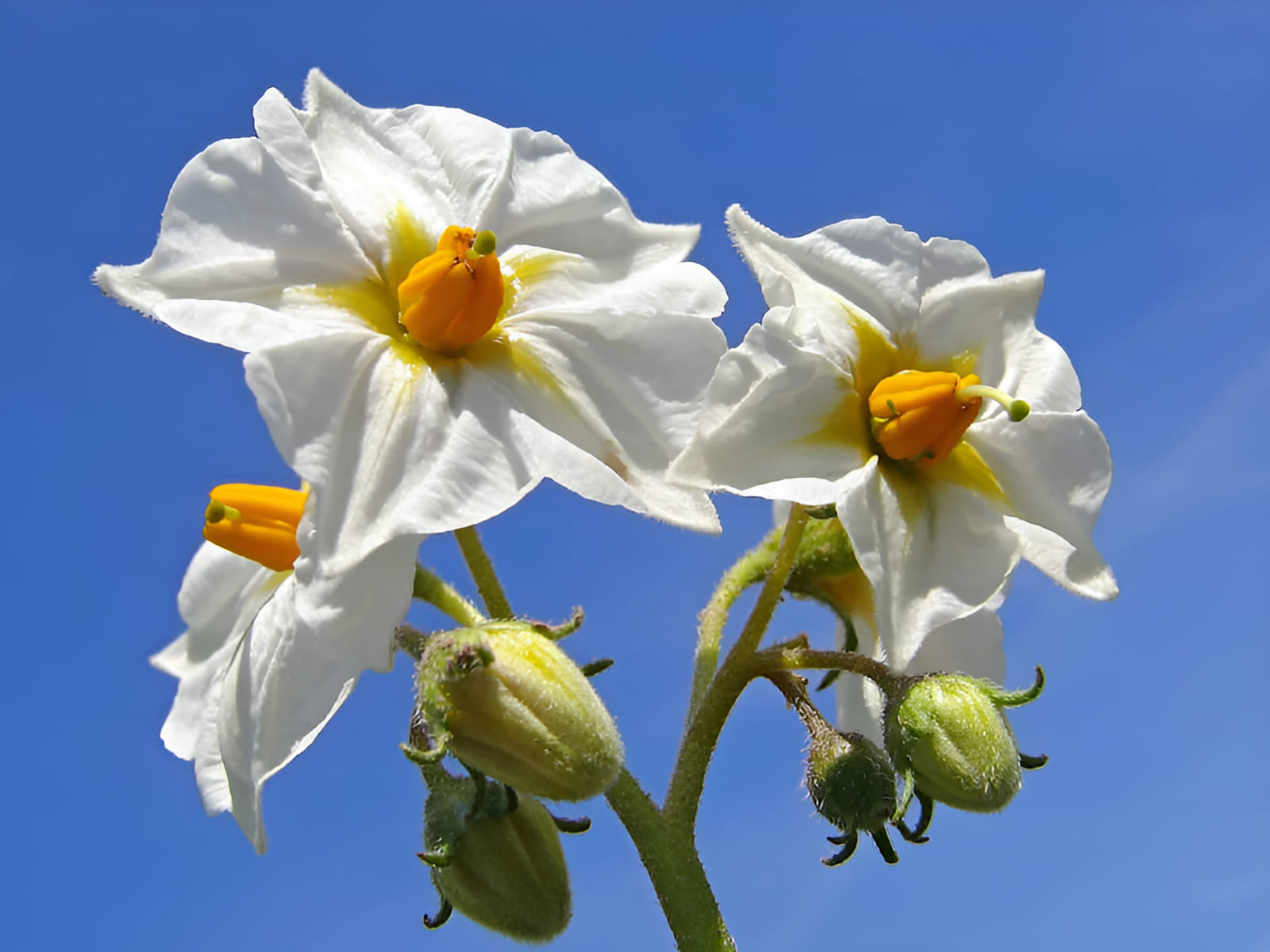
The Crop Circle Farm Potato Grower is not just another raised bed. It is a purpose-built, circular system engineered to grow high-yield potatoes with precise control over soil, water, and nutrients. These advantages make it ideal for small farms, backyard gardeners, community groups, and nonprofits focused on sustainable food production.
Taken together, these advantages allow growers to produce market-scale yields on tiny footprints, which aligns perfectly with Crop Circle Farms’ broader mission of growing more food with less water, less land, and fewer inputs.
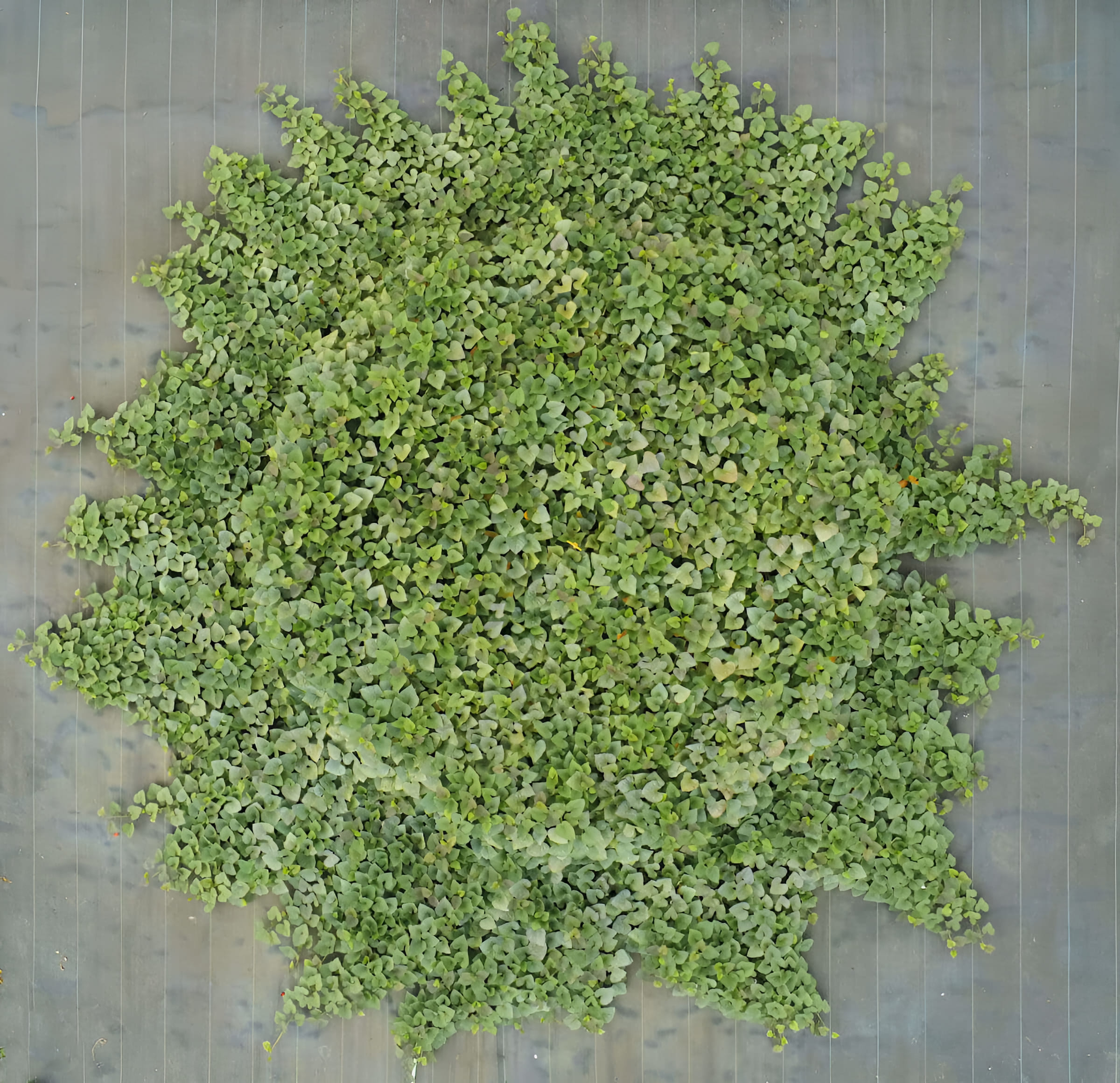
One of the strengths of a rechargeable raised potato system is that it can grow an impressive diversity of potato types, from classic baking potatoes to gourmet fingerlings and nutrient-rich sweet potatoes. Both seed potatoes and sweet potato slips perform well in the Crop Circle Farm Potato Grower.
Root-type potatoes commonly seen in supermarkets include russet potatoes (the standard baking potato), red “new” potatoes, waxy white or yellow potatoes, and specialty fingerlings. In a high-yield raised grower, you can mix varieties for a continuous harvest window or dedicate each grower to one type for easier sorting and marketing.
Root-type potatoes are started with seed potatoes, which are usually last year’s storage tubers grown specifically for planting. Certified seed potatoes are handled differently from eating potatoes—they are not treated with sprout inhibitors and are selected for disease resistance, vigor, and yield.
Certified seed potatoes are inspected and approved by agricultural authorities to be disease-free and true-to-type. Using certified seed greatly reduces the risk of introducing late blight, viruses, and other problems into your system. Whenever possible, choose seed that has been adapted or trialed for your specific region and climate.
Before planting in a Crop Circle Farm potato grower, large seed potatoes can be cut into smaller pieces, each with at least one strong “eye” or sprout. Allow the cut surfaces to dry and callus for a day or two, which helps prevent rotting in the moist soil.
The Crop Circle Farm Potato Grower assembles into a circular structure of approximately 15 interlocking panels, forming a deep, broad cylinder. When filled, it can accommodate about 200 seed potatoes laid out evenly across the base.
The system is layered as follows:
A subterranean soaker hose is spiraled up through these layers, ensuring even, deep watering without wetting foliage. As seed potatoes sprout, each eye pushes a stem upward toward the soil surface. Within a week or two, green shoots break through the top, and the root zone begins to fill with new tubers along the buried stems. Flowering is often a visual indicator that new potatoes are forming beneath the surface.
Growers can choose between harvesting early for tender “new” potatoes or leaving the crop to mature longer, allowing skins to thicken and curing to improve storage life. In a food-security context, the ability to keep potatoes in the ground longer—while still protected inside the grower—acts as a living root cellar for the neighborhood.
Choose varieties known for strong yields and good storage, such as Yukon Gold, Kennebec, or Russet types. Plant seed pieces with the sprouts facing up, and keep soil evenly moist but never waterlogged. In very hot climates, a light shade cloth over the top of the grower can help regulate soil temperatures and prevent heat stress.
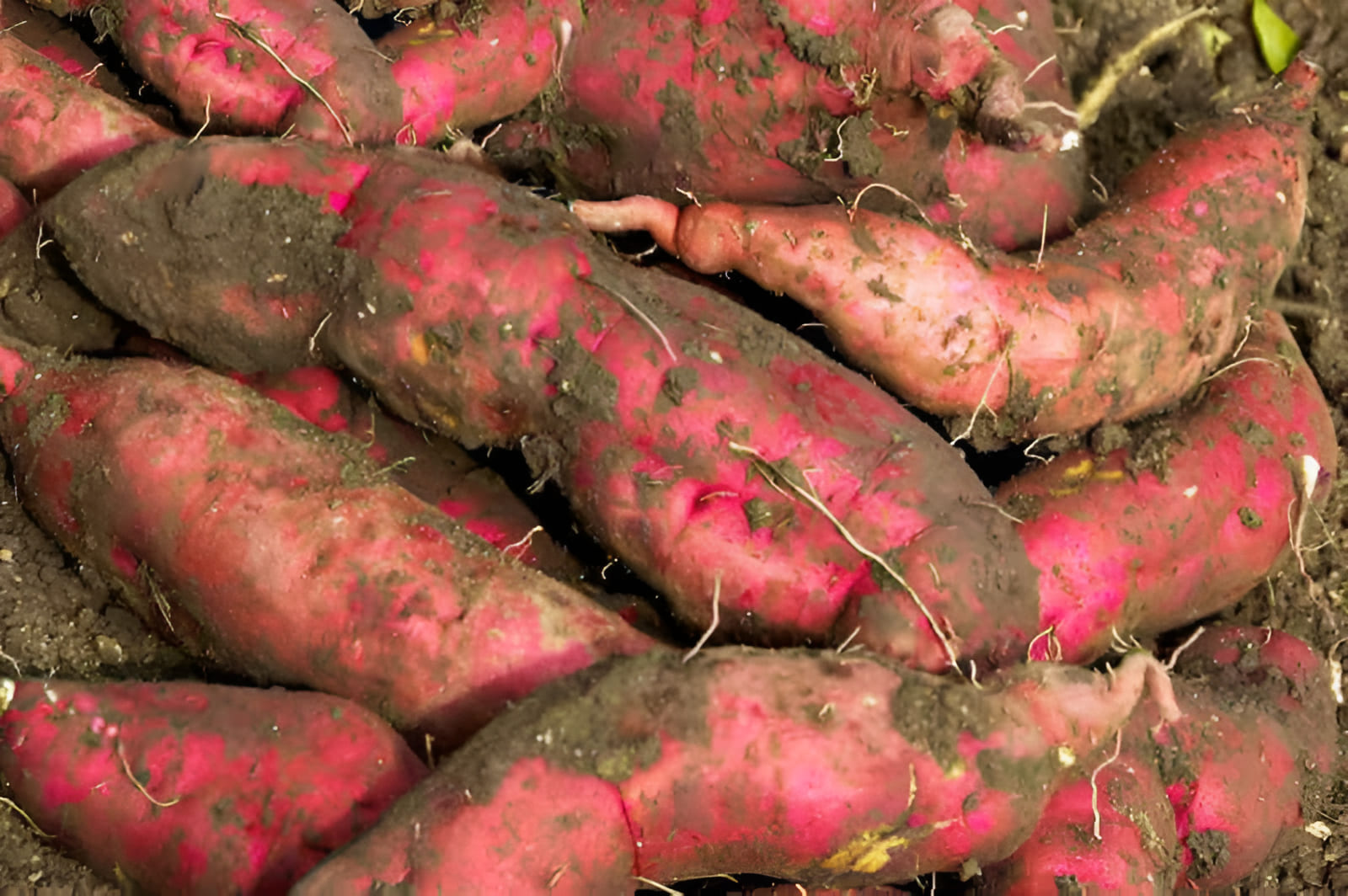
Sweet potatoes are a warm-season crop that thrive in long, hot summers. They typically require at least 8 hours of full sun per day and warm soil temperatures in the 70–85°F range. Nutritionally, they are rich in vitamin A, vitamin C, and dietary fiber, making them an excellent staple crop for community food-security projects.
For sweet potatoes, the Crop Circle Potato Grower is filled halfway with enriched soil and then topped off with a blend of aged compost containing balanced levels of phosphorus, potassium, and nitrogen. Around 200 sweet potato slips can be transplanted across the top surface, spaced about a foot apart.
Because sweet potato slips are delicate, it is important to harden them off before transplanting into full sun. Once established, vines quickly spread across the top of the grower, then drape elegantly down the sides and over the surrounding ground. If the grower is set on top of a permeable ground cover, the vines can sprawl across a clean, weed-free surface, making harvest much easier.
By the end of the season, the grower is full of market-sized sweet potatoes, often approaching 2,000 pounds per unit under ideal conditions. After harvest, the modular panels are disassembled, cleaned if needed, and stored for winter. In spring, the system is “recharged”: reassembled, refilled with refreshed soil and compost, and planted again with either seed potatoes or sweet potato slips.
In many climates, it is possible to grow two crops of seed potatoes in one season and one crop of sweet potatoes. This kind of intensive, multi-crop rotation within a compact footprint is exactly what rechargeable raised potato growers were designed for—helping urban farmers, schools, and nonprofits grow more staple food in less space.
Turn your 1-acre property into a high-yield, profitable farm.
Crop Circle Farms specializes in designing and building fully engineered, low-impact farm systems that use 90% less water, 85% less fertilizer, and deliver two to three times the yield of traditional farming.
Whether you have a vacant lot, an empty field, a resort, school, island community, or small family farm, we’ll build it from the ground up for you. Our team handles everything from farm layout and installation to irrigation, root systems, training, and first planting.
Contact Us to explore a custom Crop Circle Farm design for your property.
Help us expand our mission to revolutionize agriculture globally. We are seeking partners to implement Crop Circle Farms to feed people in need. Together, we can build scalable food production systems that save water, reduce costs, and feed thousands of people. Contact Growing To Give
Answers to common questions about certified seed potatoes, cutting and curing seed pieces, hilling, watering, pest management, and long-term potato storage.
Use certified seed potatoes to avoid latent diseases and sprout inhibitors. Grocery potatoes may carry diseases and are often treated to prevent sprouting, which reduces vigor and yield.
Cut tubers into 1–2 oz chunks with 1–2 eyes each. Let the cut surfaces dry and suberize for 1–3 days in a cool, airy place out of direct sun before planting to reduce rot.
Plant 2–4 weeks before your last expected frost when soil temps reach about 45–50°F. In hot-summer regions, use early spring or fall plantings to avoid peak heat during tuber initiation and bulking.
Plant seed pieces 3–4 inches deep, spaced 10–12 inches apart in-row, with 30–36 inches between rows. Go shallower in heavy clay soils and slightly deeper in light, sandy soils. Cover with loose, friable soil.
Hilling keeps developing tubers covered, prevents greening, and suppresses weeds. Hill when vines reach 6–8 inches tall and again as they grow, building 6–8 inches of loose soil or mulch around stems to protect tubers from light.
Maintain consistent moisture—about 1–1.5 inches of water per week, especially at tuber initiation and bulking. Use balanced fertility with modest nitrogen so you don’t get excess vine growth at the expense of tubers. Aim for soil pH around 5.2–6.0 to reduce common scab.
Keep tubers covered with soil or organic mulch so they aren’t exposed to light, which causes greening and bitterness. To reduce scab, maintain slightly acidic soil (pH near 5.2–5.5) and steady moisture while tubers are setting.
Watch for Colorado potato beetle, aphids, flea beetles, and wireworms. Hand-pick CPB, rotate crops, and use row cover early in the season. To reduce late blight and other foliar diseases, improve airflow, avoid overhead watering late in the day, prune dense foliage, and remove cull piles and volunteer plants.
For “new” potatoes, harvest 2–3 weeks after flowering when skins are still thin and delicate. For storage potatoes, let vines die back naturally, then wait 1–2 weeks for skins to set before digging carefully with a fork.
Cure tubers in the dark at 50–60°F with high humidity for 10–14 days to heal minor skin damage. Then store at 38–42°F in the dark with 85–95% relative humidity. Keep potatoes away from apples and light to prevent sprouting and greening.
Yes—use 10–20+ gallon containers or grow bags with a well-drained mix. Start with 4–6 inches of media, plant seed pieces, then add layers (hill) as vines grow. Keep the containers evenly moist and shade them from intense afternoon sun in hot climates.
It’s possible to save your own seed tubers, but disease risk accumulates over seasons. Many growers refresh annually with certified seed potatoes to maintain vigor and reduce viral and bacterial problems in the patch.