Growing Carrots
Soil, Spacing, Watering & Harvest
Carrots are a cool-season root crop prized for their sweetness, crunch, and storage life. While they are grown commercially at large scale, carrots also perform exceptionally well in raised beds, containers, and high-density garden systems when soil structure, moisture, and spacing are carefully managed.
Successful carrot production depends on loose, stone-free soil, consistent surface moisture during germination, and balanced fertility throughout root sizing. Small differences in bed preparation, thinning, and irrigation timing directly influence root shape, flavor, and market quality.
How long do carrots take to grow? Most varieties mature in 60–80 days, with baby carrots ready sooner depending on your harvest size goals.
How deep should carrot seeds be planted? Sow seeds 1/8–1/4 inch deep in a fine, moist seedbed.
What spacing produces the best carrots? Thin to about 1 inch for bunching carrots, or 1.5–2 inches for full-size storage roots.
What causes poor germination? Carrot seed must not dry out—keep the top layer consistently moist for 7–21 days.
This guide covers carrot varieties, soil preparation, sowing depth, thinning strategies, irrigation methods, pest prevention, harvest timing, and yield considerations for home gardens, urban farms, and Crop Circle Raised Garden systems.
Carrots are a cool-season root crop and are almost always direct seeded. On large farms, the seed rate and row spacing are designed around tractors, harvesters, and irrigators rather than the needs of small-space gardeners. A conventional field might be seeded at 8 ounces of seed per cultivated row-acre foot; a full acre of carrots could require thousands of dollars in seed, with rows spaced 3 feet apart to accommodate equipment.
To grow long, straight, sweet carrots at scale, commercial growers must deeply prepare the soil. Fields are plowed to at least 16 inches, then harrowed, leveled, and cleared of rocks and debris. The goal is a loose, friable, well-drained bed that allows carrot roots to grow straight down without crooks, forks, or bends. Any compaction layer or rock can twist or fork the root, reducing market quality.
Carrot roots develop their optimal color and sweetness when daytime air temperatures are between 60º and 70ºF. While carrots are available in grocery stores year-round, peak flavor, crunch, and nutrition usually come from local summer and fall harvests. Out of season, most store carrots are shipped from cooled warehouses, where they are stored for months at a time.
As a rule, supermarket carrots are mechanically grown and agriculturally machined from seed to harvest. Although efficient, these systems often rely on overhead irrigation, heavy tillage, and high levels of synthetic fertilizers and chemicals. This can contribute to water waste, soil degradation, and nutrient runoff into rivers and oceans.
By contrast, small-scale market gardens, urban farms, and backyard growers are increasingly looking for ways to grow carrots more sustainably—using less water, fewer inputs, and smarter designs. That is where Crop Circle Raised Gardens and purpose-built Carrot Growers excel.
Continue planning your garden or farm with practical guides for tomatoes, potatoes, beans, and herbs.
Learn about soil, planting, irrigation, pruning, nutrition, pests, and tomato harvests.
Explore potato varieties, planting depth, soil, watering, hilling, harvesting, and storage.
Compare bush and pole beans and learn about spacing, fertility, irrigation, trellising, and harvest.
Grow productive culinary herbs with practical guidance on planting, soil, water, pruning, and harvesting.
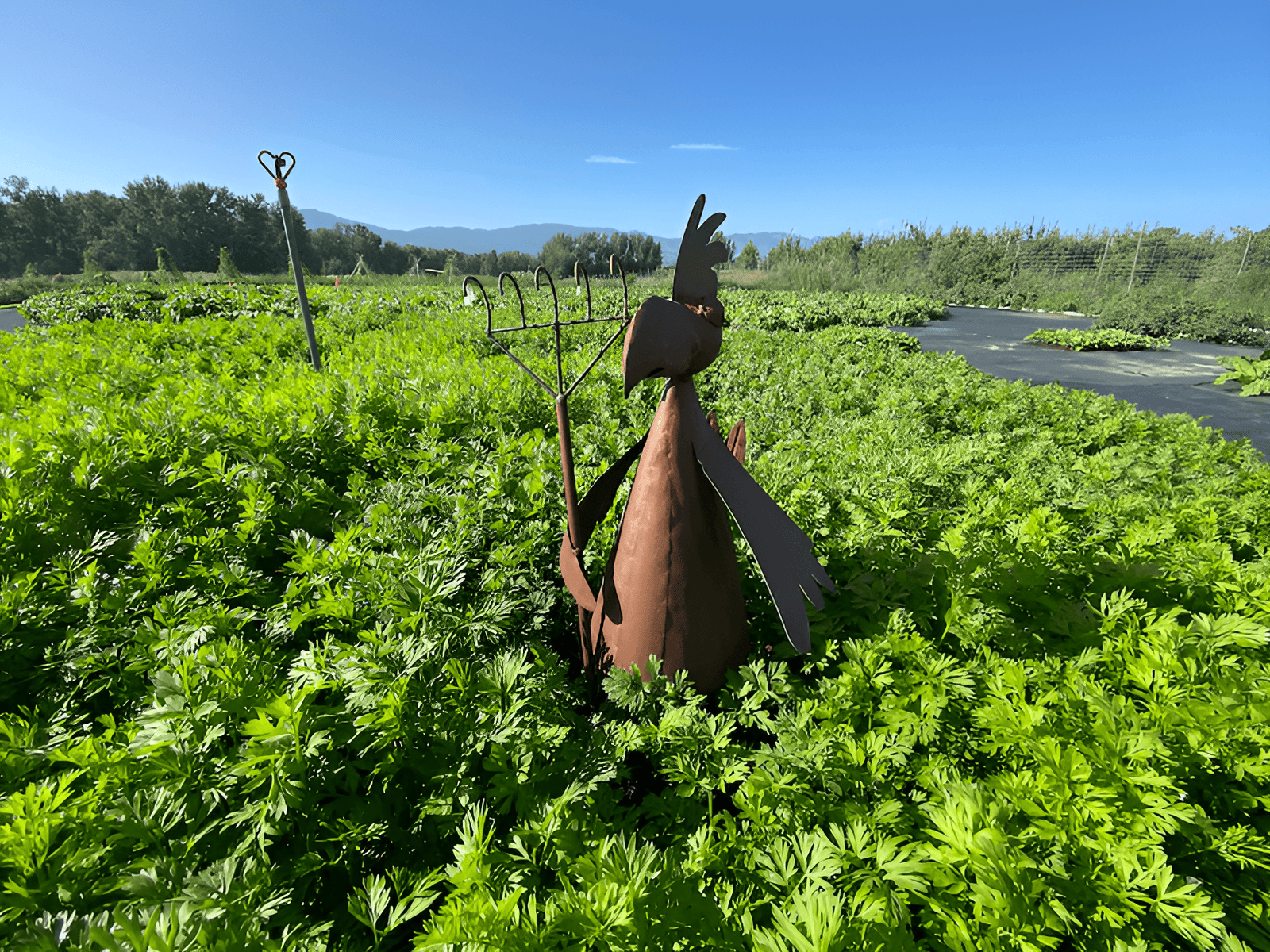
Traditional field-scale carrot production simply doesn’t pencil out on small urban farm plots, community gardens, and backyard beds where land is measured in feet, not acres. Close-quarter environments require a different approach—one that boosts yield per square foot, reduces labor, and makes harvesting easier.
Crop Circle Farms® has developed a circular, raised Carrot Grower system designed specifically for small spaces and challenging sites. These elevated, modular systems allow growers to cultivate long, straight carrots in places that were previously considered unsuitable for root crops, including:
Crop Circle Farms Carrot Growers are large, panelized circular containers filled with a carefully mixed, nutrient-rich growth medium. The best soil for growing carrots is loose, stone-free, and slightly acidic, with a pH around 6.5. A balanced fertilizer such as 8-12-16 (N-P-K) provides the right blend of nitrogen, phosphate, and potassium for strong, well-colored roots. Too much nitrogen encourages hairy roots and excessive tops, while too much phosphate can cause pale color and reduced sweetness.
The Carrot Grower uses just 20 linear feet of circular space to grow thousands of long, uniform carrots. Because the beds are elevated, planting, weeding, and harvesting happen at a comfortable working height, reducing strain on knees and backs. A below-canopy curled soaker hose and central spray nozzle provide precise water delivery. In growing zones with a six-month season, growers can often achieve two full carrot crops per year—one in early summer and one in late fall.
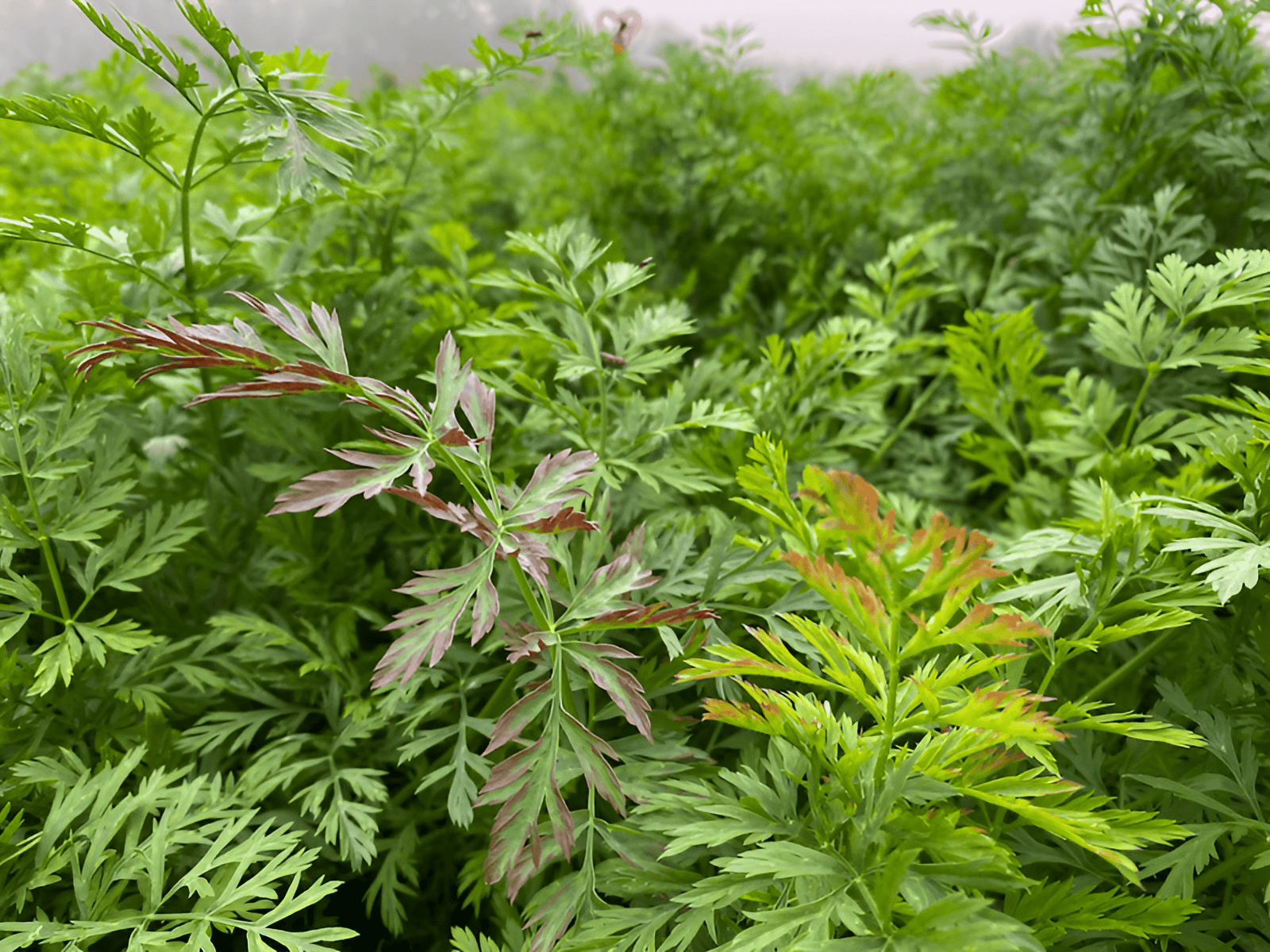
There are many carrot varieties to choose from, each with its own flavor, texture, shape, and color. Selecting the right carrot type for your Crop Circle Raised Garden or Carrot Grower can boost yields and market appeal.
The best carrot variety for your garden will depend on your climate, soil depth, market demand, and taste. Many growers plant a mix of Nantes or Imperator for bulk yields plus specialty colors for added value and visual appeal.
When sowing carrots, seed density and spacing are crucial. If seeds are too far apart, you waste valuable growing space; if they’re too close, carrots compete for resources, leading to stunted, twisted roots.
To improve planting consistency, a Crop Circle Seed Dispenser can be used to distribute carrot seed at approximately 2 inches on center. Uniform spacing reduces the amount of thinning required while giving developing roots adequate room to size up. A moveable ramp system can provide access across the grower for seeding, weeding, thinning, and maintenance.
Once seeds are sown and spaced, cover them with approximately 1/8–1/4 inch of fine compost or growth medium. The central elevated spray nozzle can then water the bed gently, maintaining consistent surface moisture without washing seeds away. A timer can automate frequent, light watering during germination.
Because the Crop Circle Carrot Grower is about 20 inches deep, it comfortably supports long root types like Imperator, while still growing shorter varieties like Nantes, Chantenay, and specialty colors with ease. Growers can experiment with blocks or rings of different varieties for both yield and visual interest.
Carrots in a Crop Circle Carrot Grower are harvested by hand, often in full, leafy bunches. As harvest time approaches, panels can be partially disassembled to give access to the inner portions of the circle. Carrots are pulled in bunches, shaken free of soil, trimmed, and rinsed.
In climates with a sufficiently long growing season, a second carrot crop may be possible in the same year. Yield from a 15-foot Carrot Grower depends on usable planting area, final plant spacing, variety, germination rate, and growing conditions. After harvest, the growing medium can be tested and amended as needed before another crop is sown.
At the end of the growing season, the Carrot Grower is disassembled, cleaned, and stored for winter. The soil can either be re-used after recharging with compost and minerals or replaced outright if disease or compaction has become an issue. In spring, the panels are quickly reassembled, refilled, and planted again, creating a repeatable, high-yield carrot system.
Optional add-ons include a simple hoop or framed enclosure to create a mini-greenhouse in early spring. A lightweight germination cloth can be laid over the soil after sowing to speed up germination by up to two weeks, protect seeds from birds, and help retain surface moisture. In favorable climates, these tools can make a third carrot harvest per year possible.
Turn your 1 acre into a high-yield, profitable farm.
Crop Circle Farms specializes in designing and building fully engineered, low-impact farm systems that use 90% less water, 85% less fertilizer, and deliver two to three times the yield of traditional farming.
Whether you have a vacant lot, an empty field, a resort, school, island community, or small family farm, we’ll build it from the ground up for you. Our team handles everything from farm layout and installation to irrigation, root systems, training, and first planting.
Contact Us to explore a custom Crop Circle Farm design for your property.
Help us expand our mission to revolutionize agriculture globally. We are seeking partners to implement Crop Circle Farms to feed people in need. Together, we can build scalable food production systems that save water, reduce costs, and feed thousands of people. Contact Growing To Give
Carrots grow best in deep, loose, stone-free soil with excellent drainage. Sandy loam enriched with mature compost is ideal because it allows roots to grow straight without encountering rocks, hard clods, or compacted layers that can cause forking and twisting. A soil pH of approximately 6.0 to 7.0 works well for most carrot varieties.
For in-ground beds, loosen the soil at least 12–16 inches deep and remove stones, sticks, and compacted clods. Raised beds and Crop Circle Carrot Growers make it easier to create a custom growing medium using quality topsoil, compost, and washed sand. Avoid incorporating fresh manure immediately before planting because excessive nitrogen can encourage leafy growth and misshapen roots.
Carrot seed is very small and should generally be planted only 1/8 to 1/4 inch deep in a fine, moist seedbed. Planting too deeply can make emergence difficult, while seed planted too close to the surface can dry out before germinating.
After germination, thin the seedlings according to the size of carrot you want to produce:
In high-density raised beds or Crop Circle Carrot Growers, carrots can be arranged more efficiently across the growing surface while still providing sufficient root space.
The most important factor in carrot germination is maintaining consistent moisture near the soil surface. Carrot seed may take 7–21 days to germinate, and allowing the seedbed to dry during that period can significantly reduce emergence.
In circular raised gardens, an evenly distributed irrigation pattern can help maintain consistent moisture across the entire seedbed.
Carrots require consistent, moderate moisture throughout the growing season. Large swings between very dry and very wet soil can contribute to cracked roots, poor texture, and inconsistent growth.
Drip irrigation and other targeted watering systems can deliver water directly to the root zone while reducing evaporation and unnecessary wetting of foliage.
One of the most reliable ways to reduce carrot rust fly damage is to prevent adult flies from reaching the crop. Cover newly planted beds with fine insect netting or floating row cover and secure the edges so insects cannot enter underneath.
Thin carrots when seedlings are approximately 1–2 inches tall and have begun developing true leaves. Overcrowded carrots compete for light, moisture, nutrients, and root space, preventing them from developing full-size roots.
Rather than pulling unwanted seedlings and disturbing neighboring roots, use small scissors to snip excess seedlings at soil level. Water lightly afterward to settle the growing medium around the remaining plants.
Most carrot varieties mature in approximately 60–80 days, although timing varies by cultivar, temperature, planting date, and desired root size.
Signs that carrots may be ready to harvest include:
Loosen the surrounding soil before pulling carrots, particularly in heavier soils, to reduce the chance of breaking the roots.
Remove the green tops soon after harvest because the foliage continues drawing moisture from the roots. Brush away excess soil and store healthy, undamaged carrots under cool, humid conditions.
Under appropriate storage conditions, many carrot varieties can remain usable for 3–6 months.
Long carrots can struggle in compacted, rocky, shallow, or heavy clay soils. Shorter, broader varieties are often better choices where deep loose soil cannot be provided.
Longer Imperator-type carrots are best grown in deep, loose, stone-free beds, tall containers, or engineered raised growing systems where soil depth and texture can be controlled.
Yes. Carrots are well suited to succession planting. Sow smaller plantings approximately every 2–3 weeks during suitable weather rather than planting the entire crop at once. This spreads maturity dates and provides a steadier harvest.
In hot climates, later plantings may benefit from shade cloth, mulch, or other methods that keep the seedbed cooler and consistently moist during germination.
Yes. Carrots are particularly well suited to Crop Circle Raised Gardens because raised systems allow growers to control several of the most important factors in carrot production: soil depth, texture, drainage, spacing, and irrigation.
Well-designed circular growing systems can produce large numbers of market-quality carrots from a relatively small footprint.
Carrots generally perform best with moderate, balanced fertility. Excessive nitrogen can encourage vigorous leaf growth while reducing root quality and contributing to hairy or misshapen carrots.
A practical fertility program can include:
Fertilizer rates should be adjusted according to soil conditions, crop requirements, irrigation water, and nutrient testing rather than relying on a single fertilizer rate for every site.
Carrots can be grown successfully with crops that use different portions of the growing space and do not excessively shade or compete with their roots.
Common companion choices include onions, leeks, radishes, lettuce, and other leafy greens. Fast-growing shallow-rooted crops can be planted between or around carrots and harvested early, leaving additional space as the carrot roots mature.
Avoid planting carrots too close to aggressive, large-rooted crops that compete heavily for moisture, nutrients, or underground growing space.
Scaling carrot production starts with consistent soil preparation, irrigation, plant spacing, variety selection, and a harvest plan. Raised systems and high-density growing designs can be particularly useful where land is limited or where growers need greater control over soil quality.
Crop Circle Farms designs Crop Circle Market Gardens , raised growing systems, and high-density production systems for schools, community projects, urban farms, and commercial growers.
Contact Crop Circle Farms to discuss site conditions, carrot varieties, irrigation, projected production, and a scalable growing-system design.