Farm Chemicals
Harmful Agricultural Chemicals
Fertilizers, pesticides, herbicides, fungicides, fumigants and other agricultural chemicals can play important roles in modern food production. When they are selected, stored and applied correctly, these products can help growers manage crop nutrition, weeds, insects and plant diseases.
Problems arise when agricultural chemicals are overapplied, misused, poorly stored, allowed to drift or runoff, or used without appropriate worker and environmental safeguards. The resulting risks can include nutrient pollution, pesticide exposure, harm to non-target organisms, contaminated water and unnecessary production costs.
The objective is therefore not simply to label every agricultural chemical as inherently harmful. A more useful approach is to understand hazard, exposure, dose, timing and management so that growers can use agricultural inputs only when they are justified and can reduce avoidable risks to workers, crops, soil, water and surrounding ecosystems.
The term harmful farm chemicals can include agricultural products capable of causing health or environmental damage when exposure exceeds safe levels or when a product is used incorrectly. The level of risk varies greatly between products, formulations, application methods and environmental conditions.
Agricultural chemicals generally fall into several broad categories:
| Chemical Category | Primary Purpose | Potential Risk When Mismanaged |
|---|---|---|
| Fertilizers | Supply nitrogen, phosphorus, potassium and other plant nutrients | Nutrient runoff, leaching, groundwater contamination and excessive nutrient loading |
| Herbicides | Control unwanted vegetation and weeds | Worker exposure, spray drift and injury to non-target plants |
| Insecticides | Manage damaging insect populations | Exposure risks and effects on beneficial or non-target insects |
| Fungicides | Manage fungal crop diseases | Worker exposure, residues and effects on non-target organisms depending on product |
| Fumigants | Control pests in soil, structures or stored products | Potential inhalation and off-site exposure requiring particularly careful controls |
| Sanitizers and disinfectants | Reduce microorganisms on equipment and surfaces | Skin, eye or respiratory exposure if products are handled incorrectly |
A chemical may be hazardous without presenting the same level of risk in every situation. Risk depends on both the inherent hazard of a substance and the amount of exposure that occurs.
For example, a concentrated agricultural product may require substantial protection while it is being mixed or loaded, even though exposure after a properly performed application may be much lower. This is why agricultural chemical safety depends on following the product label, using appropriate equipment and understanding how people and the environment could be exposed.
Farm workers, applicators and other people can be exposed to agricultural chemicals in several different ways. The actual risk depends on the chemical involved, concentration, duration of exposure and route of entry into the body.
| Exposure Route | Example | Risk-Reduction Approach |
|---|---|---|
| Skin contact | Mixing, loading, spills or contact with treated surfaces | Label-required gloves, clothing, hygiene and decontamination |
| Eye exposure | Splashes, dust or spray | Appropriate eye protection and accessible clean water |
| Inhalation | Vapors, aerosols, dust or pesticide drift | Ventilation, application controls and label-required respiratory protection |
| Ingestion | Contaminated hands, food, beverages or improperly stored chemicals | Handwashing, sanitation and strict separation of chemicals from food and drink |
Crops require nutrients such as nitrogen, phosphorus and potassium. Both commercial fertilizers and organic nutrient sources can provide those nutrients, and both can contribute to pollution when nutrients are supplied in excess of crop needs or are poorly timed or placed.
Nitrogen and phosphorus that are not taken up by crops may move from agricultural land through runoff, erosion or leaching. Once those nutrients enter waterways, excessive concentrations can stimulate algal growth and contribute to agricultural runoff and nutrient pollution.
Some nitrogen fertilizers can also acidify soil over time, particularly under certain soil conditions and repeated application regimes. The effect is not universal and should be evaluated through soil testing rather than assuming that fertilizer use automatically makes soil acidic or infertile.
A better nutrient-management strategy is to match applications to crop requirements, soil-test results, expected yield, weather conditions and the timing of plant uptake. Appropriate placement and application timing can improve nutrient-use efficiency while reducing losses to surrounding soil and water.
Pesticides are designed to affect particular pests, but some products can also affect organisms that were not the intended target. The degree of risk varies with the active ingredient, formulation, application method, timing and exposure.
Beneficial insects, including some pollinators, may be exposed when pesticide applications overlap with flowering periods or active foraging. Aquatic organisms may be exposed when products move into water through runoff, drainage or inappropriate disposal. Herbicide drift can also injure susceptible vegetation outside the intended treatment area.
Reducing these risks begins with choosing the appropriate product for the specific problem, applying only when justified, observing weather conditions, protecting sensitive areas and following all label restrictions.
Integrated pest management (IPM) is a science-based approach that combines biological, cultural, physical and chemical tools to keep pest damage at acceptable levels while reducing unnecessary economic, health and environmental risks.
An IPM program normally begins with prevention and monitoring rather than automatically treating every insect, weed or symptom. Growers identify the organism, evaluate the level of damage and select a management response appropriate to the actual problem.
| IPM Strategy | Examples |
|---|---|
| Prevention | Crop rotation, resistant varieties, sanitation and appropriate planting dates |
| Monitoring | Field scouting, traps, identification and record keeping |
| Cultural controls | Irrigation management, crop spacing, planting density and removal of pest habitat |
| Physical controls | Barriers, cultivation, mulches, traps and mechanical weed removal |
| Biological controls | Conservation of beneficial organisms and appropriate biological control agents |
| Chemical controls | Targeted pesticide use when monitoring and management objectives justify treatment |
IPM does not necessarily mean eliminating pesticides. Instead, it places chemical controls within a broader decision-making process designed to avoid unnecessary applications and use the most appropriate combination of management tools.
Personal protective equipment, or PPE, is an important part of agricultural chemical safety. Required PPE varies by product and task and may include chemical-resistant gloves, protective clothing, footwear, eye protection, aprons or respiratory protection.
The pesticide label identifies the PPE required for a particular product. PPE should be inspected before use, maintained in good condition, cleaned or disposed of as appropriate and stored away from pesticide-contaminated areas.
Workers should also have access to required training, application information, decontamination supplies and emergency procedures where applicable. Restricted-entry intervals must be observed when required so workers do not enter treated areas before the period specified by the pesticide label and applicable regulations has passed.
Agricultural chemicals should be stored in their original labeled containers unless an applicable regulation and product instructions specifically permit another arrangement. Storage areas should be secure, appropriately ventilated where required and separated from food, feed, seed and drinking water.
Containers should be inspected periodically for corrosion, leaks or damage. Incompatible products should be separated where required, and storage areas should be protected from unauthorized access, flooding and other conditions that could release chemicals into the environment.
Never transfer agricultural chemicals into beverage bottles, food containers or unlabeled containers. Doing so creates a serious risk of accidental poisoning and makes correct identification during an emergency much more difficult.
Farms that store or handle agricultural chemicals should have procedures for responding to spills before an emergency occurs. The appropriate response depends on the chemical, quantity released and location of the spill.
Workers should know where emergency contact information, product labels and safety information are located. Suitable containment and cleanup materials should be available for the chemicals normally handled on the property.
A spill that threatens a well, stream, drainage system or other sensitive area may require notification to emergency responders or environmental authorities. Product labels and applicable federal, state, tribal and local requirements should guide containment, cleanup and disposal.
Better crop planning, monitoring and input management can help growers identify problems earlier and avoid unnecessary treatments. Use these Crop Circle Farms tools to compare planting density and model production under different farm-management scenarios.
Estimate production per plant and compare crop-planning assumptions.
Model potential whole-farm production using acreage and yield assumptions.
Tip: Appropriate crop spacing, irrigation, soil management and field monitoring can help reduce conditions that favor some pests and plant diseases.
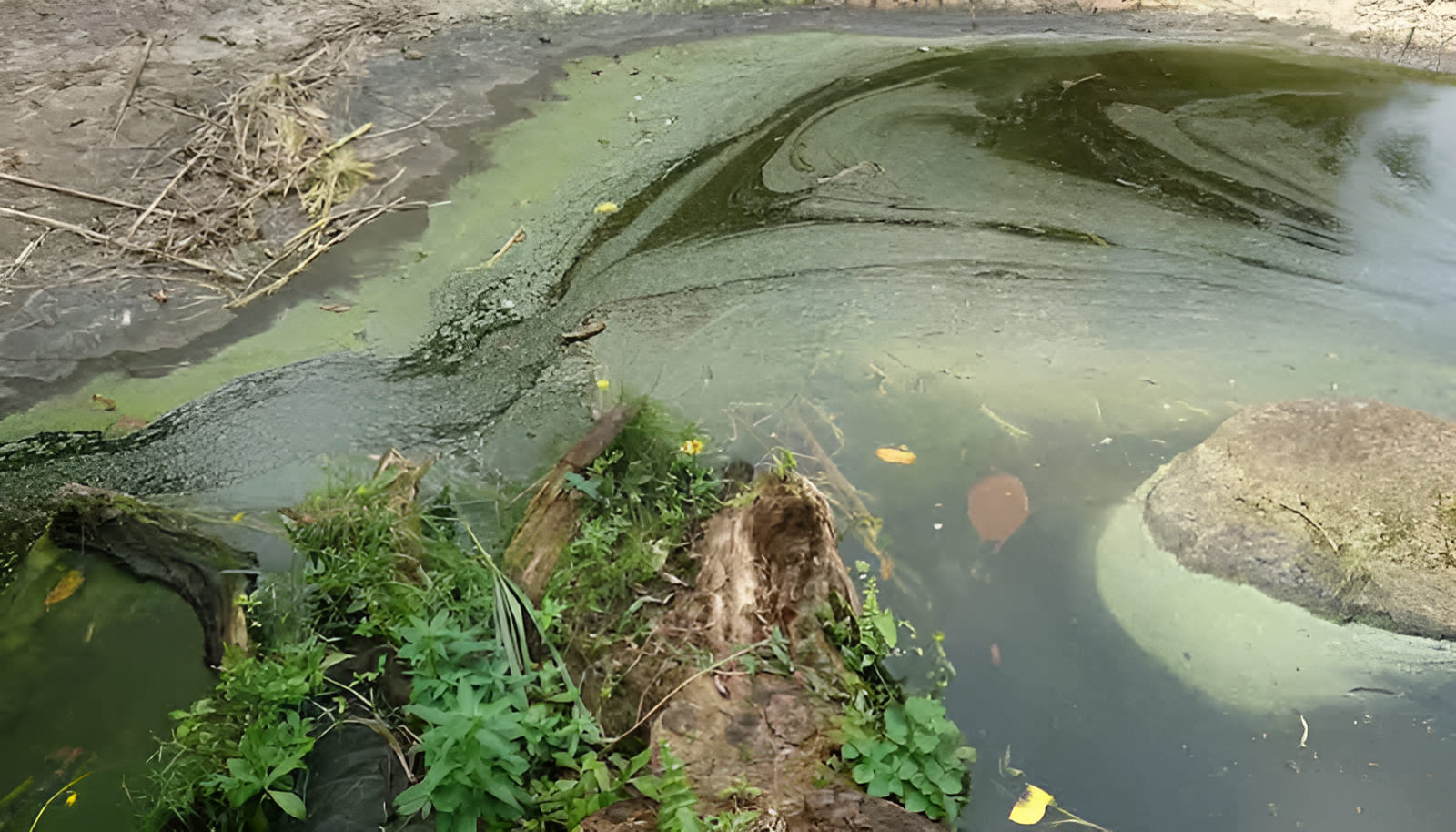
Water pollution is one of the most important environmental concerns associated with poorly managed agricultural inputs. Nutrients and pesticides can leave fields through runoff, erosion, drainage, leaching or inappropriate disposal.
The amount that reaches surface water or groundwater depends on many factors, including soil type, slope, rainfall, irrigation, drainage, application timing, chemical properties and the presence of protective practices such as vegetated buffers.
Excess nitrogen and phosphorus entering rivers, lakes, estuaries and coastal waters can stimulate excessive algae and plant growth, a process known as eutrophication.
When large amounts of algae die, microorganisms decompose the organic material and consume dissolved oxygen. If oxygen concentrations become too low to support much of the aquatic life in the area, the resulting condition is known as hypoxia. Severely oxygen-depleted areas are commonly called dead zones.
Agricultural nutrient losses are one contributor to this problem in watersheds where fertilizer and manure-derived nitrogen and phosphorus move downstream. Other nutrient sources can include wastewater, stormwater and atmospheric deposition, so the relative contribution of agriculture varies by watershed.
Nutrient and pesticide losses can often be reduced through a combination of improved application practices and landscape management. Depending on the farm and region, strategies may include soil testing, nutrient budgeting, split fertilizer applications, precision placement, vegetated buffers, cover crops, erosion control and improved irrigation management.
The goal is to keep nutrients and crop-protection products where they are intended to work rather than allowing them to leave the production area.
Agricultural chemicals do not affect every soil in the same way. Outcomes depend on the product, rate, frequency of use, soil chemistry, climate, crop rotation, organic matter management and many other factors.
Excessive or poorly balanced nutrient applications can alter soil chemistry, while some pesticide practices may affect non-target soil organisms. At the same time, fertilizers can correct nutrient deficiencies and pesticides can protect crops from serious damage when they are appropriately selected and used.
Soil testing, crop rotation, residue management, compost where appropriate, soil-building practices and living roots can be integrated with responsible fertilizer and pesticide programs rather than treated as mutually exclusive approaches.
Modern precision farming technologies can help growers identify differences across a field and apply inputs more selectively. Depending on the crop and system, tools may include soil mapping, variable-rate application, GPS guidance, crop sensors, weather monitoring and targeted irrigation.
Precision does not automatically guarantee lower chemical use, but better information can help growers match applications more closely to crop requirements and avoid unnecessary treatment of areas that do not need the same level of input.
Agricultural chemical requirements differ according to the product, crop, location, application method and type of agricultural operation. Pesticide users should always read and follow the current product label before mixing, loading, applying, storing or disposing of a product.
Farms with employees may also be subject to pesticide worker-protection requirements, training obligations, restricted-entry intervals, PPE provisions, recordkeeping or other federal and state requirements. Certain restricted-use pesticides may only be applied by appropriately certified applicators or persons working under permitted supervision.
Growers should consult the pesticide label and the appropriate federal, state, tribal or local regulator when determining requirements for a particular operation.
Responsible chemical management begins before a product is purchased. Growers can evaluate whether treatment is needed, identify the problem correctly, consider non-chemical options and compare appropriate products before making an application.
A practical program combines soil testing, nutrient planning, crop monitoring, integrated pest management, correct calibration, weather awareness, safe storage, worker protection and accurate records. These practices can help reduce unnecessary chemical use while preserving access to agricultural inputs when they are genuinely needed.
The long-term objective is not simply to replace one input with another. It is to build a production system that uses nutrients, water, biological processes and crop-protection tools as efficiently and responsibly as possible.
Crop Circle Farms designs intensive growing systems that integrate irrigation, planting density, soil management and crop planning to improve resource efficiency. Water use, fertilizer requirements and production will vary by crop, climate, soil conditions, management and the conventional system used for comparison.
Whether you are planning a garden, commercial growing area, resort farm, school project or community food-production site, we can help develop a system suited to the available land, water resources and production goals.
Contact Crop Circle Farms to discuss a custom farm design.
Growing To Give works with partners to expand community-scale food production and demonstrate resource-efficient growing systems. Projects can combine local food production, education and practical approaches to water and input management.
Farm chemicals can include fertilizers, herbicides, insecticides, fungicides, fumigants, sanitizers and other agricultural products. These products are not equally hazardous, and risk depends on the chemical, concentration, dose, exposure route and how it is used. Problems are more likely when chemicals are overapplied, misused, poorly stored or allowed to move away from the intended treatment area.
Hazard describes the ability of a substance to cause harm, while risk considers both the hazard and the likelihood or amount of exposure. A hazardous agricultural product may present very different levels of risk depending on how it is mixed, applied, stored and handled and whether required protective measures are followed.
Agricultural chemical exposure can occur through the skin, eyes, inhalation or accidental ingestion. Mixing and loading concentrated products, application, equipment cleaning, spills and contact with treated areas can all create opportunities for exposure. The appropriate precautions depend on the product label and the work being performed.
Fertilizers provide nutrients that crops need, but nutrients applied beyond crop requirements can be lost through runoff, erosion or leaching. Excess nitrogen and phosphorus entering waterways can contribute to nutrient pollution and algal growth. Some fertilizer programs can also influence soil chemistry over time, which is why soil testing and appropriate nutrient management are important.
Excess nitrogen and phosphorus can stimulate large amounts of algae and aquatic plant growth. When that organic material dies and decomposes, microorganisms consume dissolved oxygen. If oxygen levels become extremely low, aquatic organisms may be unable to survive in the affected area. These oxygen-depleted areas are commonly called dead zones.
Some pesticides can affect organisms other than the intended pest. Risk varies according to the active ingredient, formulation, application method, timing and level of exposure. Pollinators, beneficial insects, aquatic organisms and nearby vegetation can be affected under some circumstances, which makes targeted application and label compliance important.
Integrated pest management, or IPM, combines prevention, monitoring and multiple control methods to manage pests while reducing unnecessary economic, health and environmental risks. IPM can include crop rotation, resistant varieties, sanitation, biological controls, physical controls and targeted pesticide use when treatment is justified.
Required personal protective equipment depends on the specific product and task. It may include chemical-resistant gloves, protective clothing, footwear, eye protection, aprons or respiratory protection. Pesticide users should follow the PPE requirements stated on the current product label and maintain protective equipment in good condition.
Agricultural chemicals should generally remain in their original labeled containers and be kept in a secure storage area appropriate for the products being stored. They should be separated from food, animal feed and drinking water and protected from unauthorized access, leaks, flooding and other conditions that could cause accidental exposure or environmental release.
Farms can combine soil testing, nutrient planning, crop monitoring, integrated pest management, crop rotation, cover crops, appropriate irrigation, accurate equipment calibration and precision farming technologies. These practices can help growers make more targeted decisions about when and where fertilizers or pesticides are needed rather than applying inputs automatically.