Cellular Agriculture
Addressing Global Food Challenges
Key links: Sustainable Agriculture • Circular Agriculture • Urban Agriculture • Rooftop Agriculture • Climate Stress Resilience Calculator • Food Security Calculator.
Cellular agriculture uses cell culture, fermentation, biotechnology, and food engineering to produce certain animal-derived foods and ingredients with less reliance on conventional livestock production. Two of its best-known approaches are cultivated meat and precision fermentation.
Cellular agriculture applies cell culture, fermentation, biotechnology, and food engineering to produce certain animal-derived foods and ingredients using controlled manufacturing systems rather than relying exclusively on conventional livestock.
Two of its best-known approaches are cultivated meat, in which animal cells are grown to produce edible material, and precision fermentation, in which microorganisms are used to manufacture specific proteins or other ingredients. The first widely publicized cultivated-beef hamburger was demonstrated in 2013, and the field has since progressed through research, pilot production, regulatory review, and limited commercial introduction.
Cellular agriculture could reduce land requirements and livestock-related methane for some products, but its overall environmental performance depends on factors including energy source, facility efficiency, growth-media production, scale, and downstream processing. It is therefore better viewed as one possible component of a diversified future food system rather than a universal replacement for conventional agriculture.
| Factor | Industrial Livestock | Cellular Agriculture |
|---|---|---|
| Land use | High (grazing + feed) | Lower potential (facility-based) |
| Livestock methane | Significant for ruminant production | Avoids enteric methane from raising ruminants; total climate impact still depends on energy and production inputs |
| Energy dependence | Lower facility energy | Higher sensitivity to power mix |
| Animals required for production | Animals raised and slaughtered | Far fewer animals may be required; depends on cell sourcing and production process |
| Scalability | Land + feed constrained | Bioreactor + media constrained |
For resilience planning, pair next-gen protein with sustainable agriculture and circular agriculture systems.
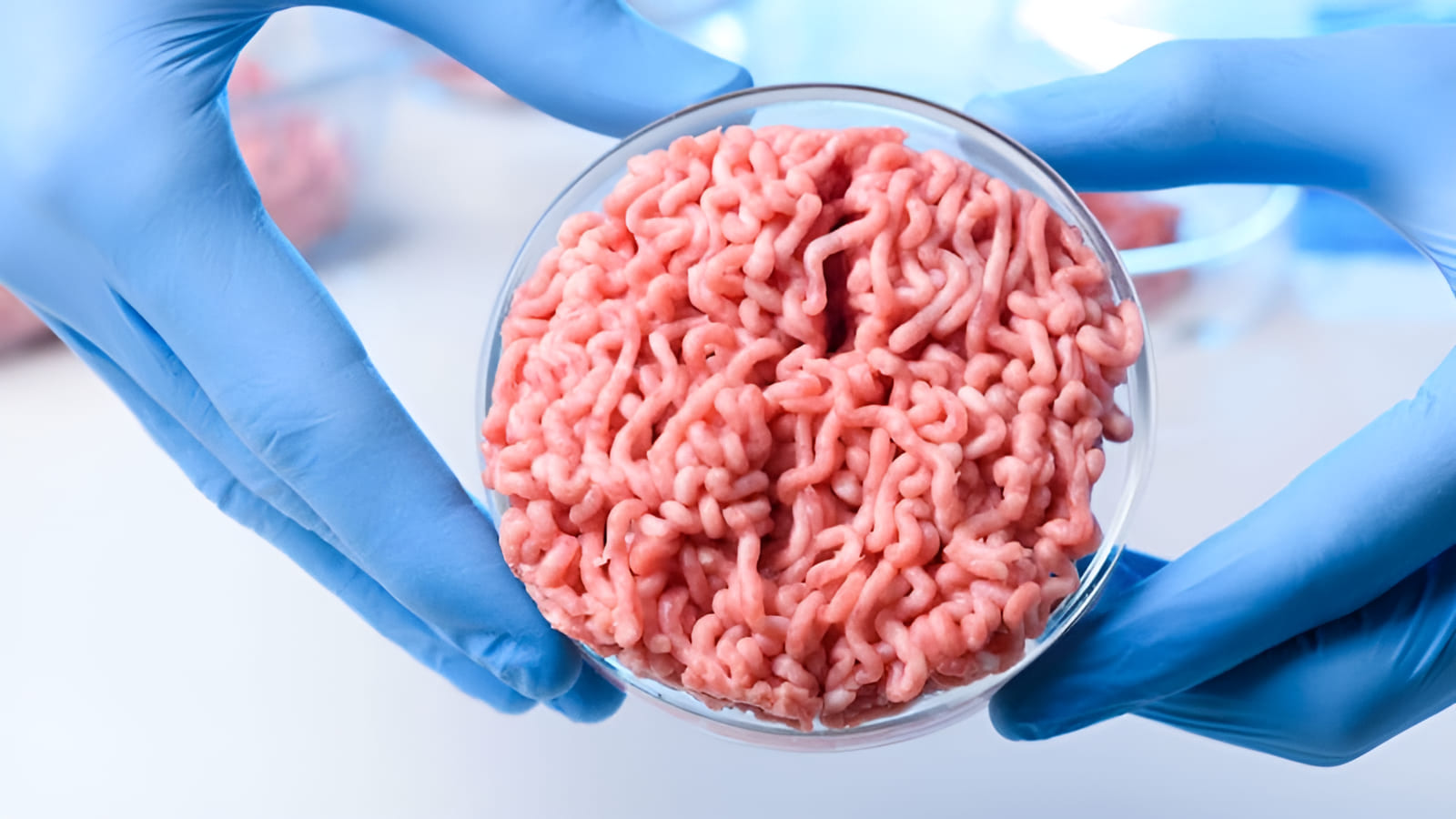
Cultivated meat begins with animal cells selected for their ability to grow and, where required, differentiate into cell types such as muscle or fat. The cells are maintained in controlled culture conditions and supplied with nutrients, growth signals, oxygen, and other inputs needed for cell proliferation.
Different developers use different cell types, cell lines, growth media, scaffolds, bioreactor designs, and production methods. Genetic engineering can be used in some biotechnology processes, but it is not a universal requirement for cultivated-meat production.
Stable and well-characterized cell lines are important because commercial production requires cells that can grow consistently while maintaining desired characteristics. Depending on the product, cells may be expanded and then differentiated into muscle, fat, connective-tissue, or other relevant cell types.
Tissue-engineering approaches can help organize cells into more structured products. Scaffolds, extrusion, layering, aggregation, and other food-engineering techniques are being explored to reproduce properties such as thickness, texture, fat distribution, and mouthfeel.
Bioreactors provide controlled conditions for growing cells at increasing scale. Important variables include temperature, pH, dissolved oxygen, nutrient availability, mixing, shear stress, contamination control, and cell density.
Scaling from laboratory systems to commercial food production remains one of the industry's major engineering and economic challenges. Larger reactors must maintain suitable conditions throughout the culture while controlling media costs, contamination risk, energy use, and processing time.
After cultivation, cells or tissues are harvested and may undergo additional food processing, formulation, structuring, cooking, or packaging depending on the final product.
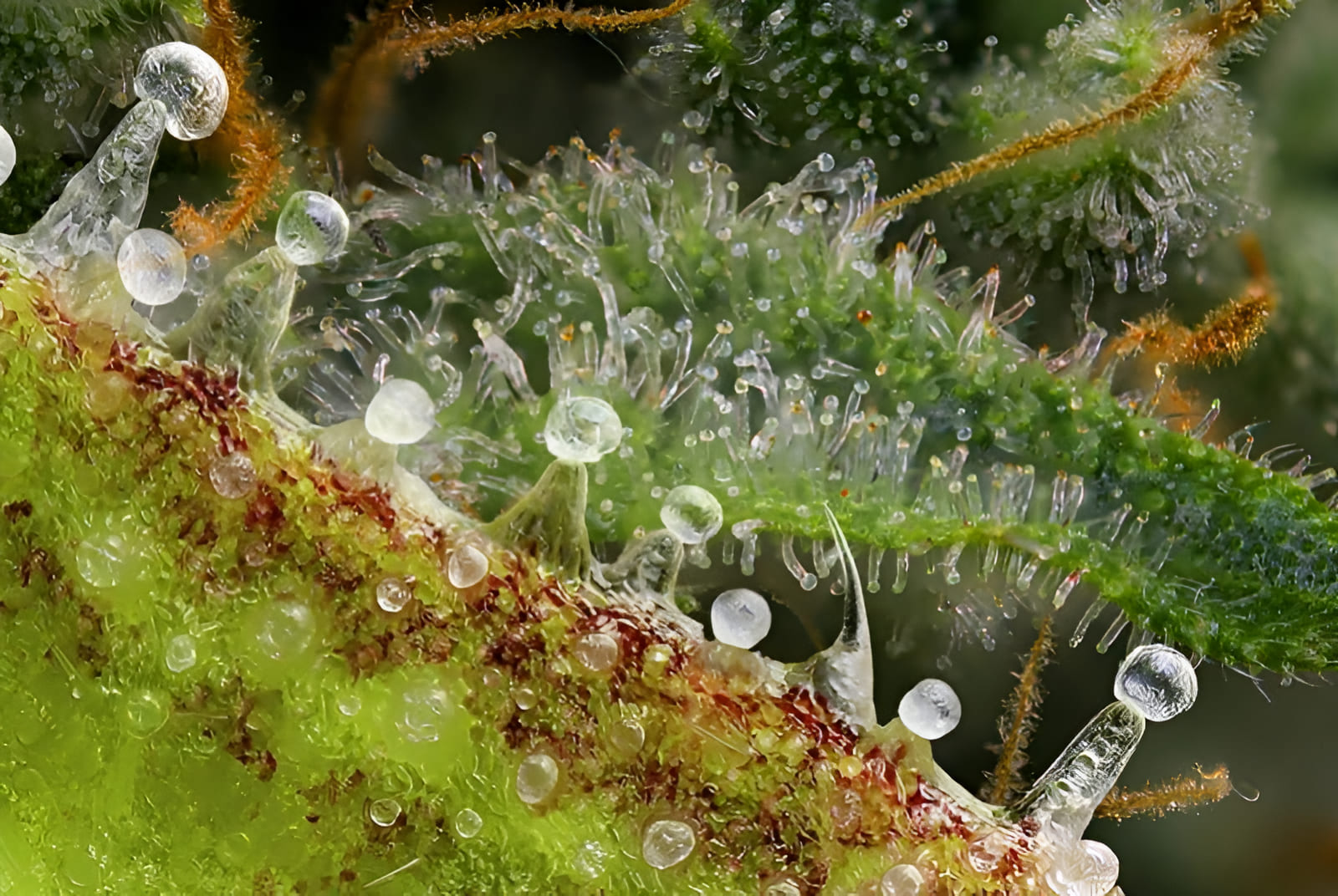
Precision fermentation uses microorganisms such as yeast, bacteria, or fungi as production platforms for specific food ingredients. Selected or engineered microorganisms can be cultivated in fermentation systems and directed to produce proteins, enzymes, fats, flavors, or other compounds that are then recovered and processed for food applications.
Protein expression refers specifically to the process by which cells produce proteins from genetic instructions. In precision fermentation, microorganisms can be engineered to express particular proteins, including proteins that are functionally similar to those traditionally obtained from milk, eggs, or other animal-derived foods.
Other forms of metabolic engineering can be used to influence production of compounds such as fats or fatty acids. These processes are distinct from protein expression, so characteristics such as omega-3 fatty-acid production should be described as metabolic or pathway engineering rather than simply increased protein expression.
Cell differentiation is the process by which less-specialized cells develop into more specialized cell types. In cultivated-meat production, precursor cells can be guided toward muscle, fat, or other relevant cell types depending on the desired product.
Different cultivated-meat processes use different cell types and production strategies, so stem cells are not the only possible starting material. Cell-line selection, proliferation, differentiation, and culture conditions all influence how the final product develops.
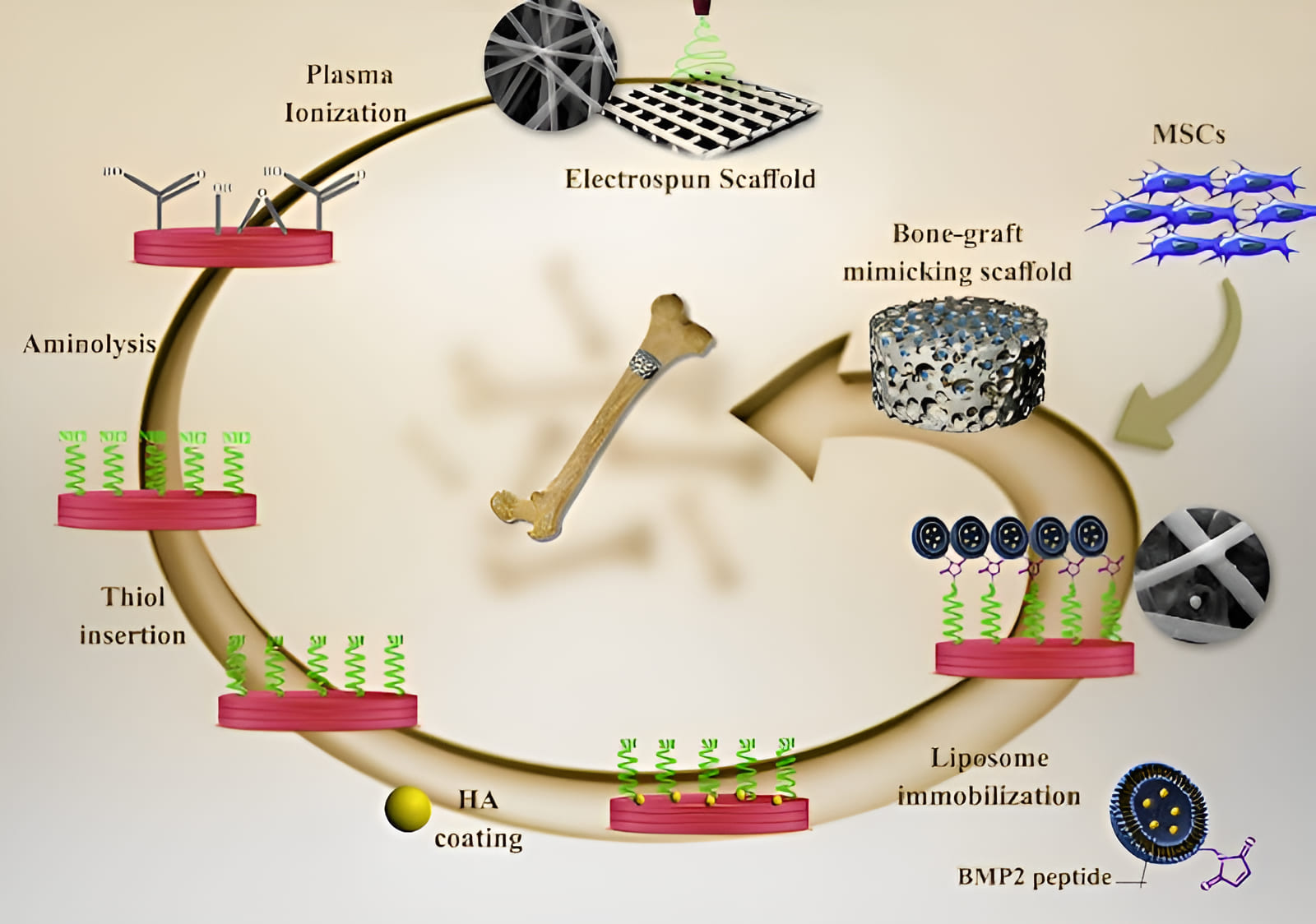
Scaffolds can provide physical support that helps cells attach, grow, and organize into more complex structures. Researchers are exploring edible, biodegradable, and food-compatible scaffold materials for products that require greater thickness, structure, or texture.
Decellularized biological materials have also been investigated as potential scaffolds. In this approach, cells are removed from a biological tissue while portions of the extracellular matrix are retained. Whether these materials are suitable for food production depends on sourcing, processing, safety, scalability, composition, and regulatory requirements.
Bioprocess engineering combines cell biology, fermentation technology, process control, food science, and manufacturing engineering to improve yield, consistency, safety, scalability, and production economics.
Important considerations include nutrient delivery, oxygen transfer, temperature, pH, mixing, contamination control, cell density, harvesting, and downstream processing. These factors become increasingly important as production moves from laboratory-scale systems to larger bioreactors.
Edible and biodegradable scaffolds are an active area of research in cultivated food. Depending on the material and product design, a scaffold may remain as part of the finished food or be broken down during processing or digestion.
Scaffold materials must be evaluated for food safety, texture, cell attachment, manufacturing performance, cost, and regulatory suitability. Their purpose is to help create structure and support cell growth rather than simply to make cultivated products appear less processed.
Cellular agriculture could contribute to future food systems by producing certain animal-derived foods and ingredients with less dependence on conventional livestock production. Potential benefits include reduced land requirements, different animal-welfare outcomes, and greater control over some aspects of food production.
Environmental performance is not automatically better in every category. Cultivated-meat facilities can require substantial energy, and greenhouse-gas impacts depend heavily on electricity sources, process efficiency, growth-media production, facility design, and production scale.
Cellular agriculture may substantially reduce the number of animals required for some food products and can avoid the conventional raising and slaughter of animals for cultivated meat. However, animal cells may still be obtained from donor animals, and some production inputs can have animal-derived origins depending on the process.
Cellular agriculture could also diversify food-production capacity, but food-security benefits will depend on reliable energy, nutrients, equipment, sterile processing, supply chains, regulatory oversight, manufacturing capacity, and economically viable production.
Cellular agriculture draws on techniques from several scientific and food-technology fields. Regenerative medicine and tissue engineering, for example, have contributed knowledge about cell culture, scaffolds, cell differentiation, and the organization of cells into more complex tissues.
Food science and molecular gastronomy can also contribute techniques for controlling texture, structure, flavor, fat distribution, and other sensory characteristics. These approaches may be useful when cultivated cells are formulated or structured into finished food products.
The objectives of these fields are different—regenerative medicine is primarily concerned with medical tissues and therapies, while cellular agriculture is focused on food and material production—but advances in cell culture, biomaterials, bioprocessing, and tissue engineering can sometimes inform both areas.
One potential advantage of cellular agriculture is the ability to control many production conditions within a manufacturing environment. Researchers and developers are exploring ways to reduce land requirements, improve process efficiency, limit certain livestock- associated emissions, and use energy and nutrients more efficiently.
The actual environmental footprint depends on the finished product and production system. Energy source, facility design, growth media, bioreactor efficiency, downstream processing, transportation, and scale can all affect lifecycle impacts.
Controlled production may also allow developers to influence the nutritional composition of some products through cell-line selection, growth conditions, formulation, and downstream processing. Potential areas of research include fat composition, protein content, micronutrients, and other nutritional characteristics.
These possibilities do not mean that cultivated or fermentation-derived foods are automatically healthier than conventionally produced foods. Nutritional quality should be evaluated for each finished product based on its actual composition.
Cellular agriculture extends beyond cultivated meat. Precision fermentation can use microorganisms to produce specific proteins, fats, enzymes, flavors, and other food ingredients, including ingredients designed to perform functions similar to components traditionally obtained from milk, eggs, or other animal products.
Related biotechnology platforms are also being explored for non-food products such as materials, specialty chemicals, and other biologically produced compounds. These applications share some manufacturing technologies with cellular agriculture but may operate under different regulatory and commercial frameworks.
The long-term role of cellular agriculture will depend on production cost, consumer acceptance, regulation, manufacturing capacity, energy requirements, product quality, supply-chain reliability, and the ability to compete with established food-production systems.
Rather than viewing cellular agriculture as a universal replacement for conventional farming, it may be more useful to consider it as one potential component of a diversified food system that can include conventional agriculture, regenerative farming, plant-based proteins, fermentation, and other production technologies.
Ready to transform your land into a high-yield, sustainable farm? Let Crop Circle Farms design and build a custom, low-impact, and water-efficient farm tailored to your site and market. From yield modeling and farm layout to irrigation design and crop selection, we help you double your income and cut your costs in half. Contact Us to explore a Crop Circle Farm design for your property.
Help us expand our mission to revolutionize agriculture globally. We are seeking partners to implement Crop Circle Farms in food-insecure communities, island nations, and water-stressed regions. Together, we can build scalable food production systems that save water, reduce costs, and feed thousands of people year after year. Contact Growing To Give to support an initiative or program.
Cellular agriculture uses cell culture, fermentation, biotechnology, and food-processing techniques to produce certain foods and ingredients without relying entirely on conventional livestock production.
Two of the best-known approaches are cultivated meat, which grows animal cells to produce edible material, and precision fermentation, which uses microorganisms to produce specific proteins, fats, enzymes, flavors, or other ingredients.
Cultivated meat is produced by growing animal cells under controlled conditions and then harvesting and processing those cells into a food product. Depending on the product, muscle, fat, connective-tissue, or other cell types may be used.
Precision fermentation uses microorganisms such as yeast, bacteria, or fungi as production platforms. Selected or engineered microbes can produce specific food ingredients that are recovered and processed after fermentation.
Production generally begins with a suitable animal cell line. Cells are supplied with nutrients and growth conditions that allow them to multiply, often inside increasingly larger controlled culture systems or bioreactors.
Depending on the final product, cells may then be differentiated into specialized cell types such as muscle or fat and combined with scaffolds, food ingredients, or other structuring methods. The cultivated material is then harvested and may undergo additional processing, formulation, cooking, or packaging.
Bioreactors provide controlled environments for growing cells or microorganisms. Important variables can include temperature, pH, dissolved oxygen, nutrient availability, mixing, contamination control, and cell density.
Bioreactor design is one of the major factors affecting production capacity, consistency, energy use, and cost. Maintaining appropriate conditions becomes increasingly challenging as a process moves from laboratory scale to commercial manufacturing.
Major challenges include the cost and sourcing of growth media and other inputs, bioreactor capacity, contamination control, cell-line performance, oxygen and nutrient delivery, harvesting, downstream processing, energy use, equipment cost, and manufacturing efficiency.
Commercial viability also depends on regulatory approval, consumer acceptance, product quality, supply-chain reliability, facility utilization, and the ability to compete with established food-production systems.
Cellular agriculture has the potential to reduce land requirements and avoid some livestock-associated impacts, including enteric methane from raising ruminants. However, environmental performance is not automatically better in every category.
Cultivated-meat and fermentation facilities can require substantial energy. Their overall environmental footprint depends on electricity sources, growth media and feedstocks, facility design, process efficiency, water use, downstream processing, transportation, and production scale.
Cultivated meat can substantially reduce the number of animals required to produce meat because large quantities of cells can potentially be grown from relatively small initial samples.
It does not necessarily mean that no animals are involved at any stage. Animal cells may originate from donor animals, and some production inputs can have animal-derived origins depending on the particular process. Developers are also working on animal-free or reduced-animal-input production systems.
Controlled production may allow developers to influence some characteristics of a finished food through cell-line selection, culture conditions, fermentation, formulation, and downstream processing.
Researchers are investigating characteristics such as fat composition, protein content, micronutrients, and other nutritional properties. However, cultivated or fermentation-derived foods are not automatically healthier than conventional foods. Nutritional quality should be evaluated for each finished product based on its actual composition.
Scaffolds provide physical support that can help cells attach, grow, and organize into more structured tissues. They may be especially useful when developers are trying to create thicker products or reproduce characteristics such as texture, structure, and fat distribution.
Researchers are exploring edible, biodegradable, and other food-compatible scaffold materials. Suitable materials must be evaluated for food safety, texture, cell attachment, processing performance, scalability, cost, and regulatory requirements.
Cellular agriculture is better viewed as one potential component of a diversified food system rather than a universal replacement for conventional agriculture.
Future food production may combine conventional farming, regenerative agriculture, plant-based proteins, precision fermentation, cultivated foods, controlled-environment agriculture, and other production methods. The role of each system will depend on economics, resource availability, consumer demand, regulation, environmental performance, and regional food needs.