Farm & Garden Weeds
Dandelion, Quackgrass, and Lamb’s Quarters
Farm and garden weeds are an inevitable part of working the land. Whether you manage a large commercial field or a small backyard vegetable garden, unwanted plants can quickly invade bare soil and compete with crops for water, light, and nutrients. Left unchecked, aggressive weeds reduce yields, harbor insects and diseases, interfere with harvest, and make a field or yard look neglected.
Effective weed control is not about eliminating every wild plant, but about managing weed pressure so your crops, lawns, and ornamentals can thrive. The most resilient systems combine multiple approaches: cultural practices (mulch, crop rotation, dense planting), mechanical control (hoeing, mowing, hand-pulling), and, only when necessary, carefully chosen herbicides applied according to label directions and local regulations. This integrated approach is often called Integrated Weed Management (IWM).
Below are some of the most common farm and garden weeds—from dandelions in the lawn to pigweed in vegetable beds—along with practical tips for organic and conventional control. By learning to identify the weeds on your property and understanding how they spread, you can choose the safest and most effective weed treatment options for your situation.
Dandelions (Taraxacum officinale) are one of the most recognizable lawn and garden weeds. Their bright yellow flowers and puffball seed heads are familiar to gardeners worldwide. Although dandelion leaves and roots are edible and have a long history in herbal medicine, the plant’s deep taproot and prolific wind-borne seeds allow it to quickly colonize thin lawns, bare soil, and garden edges.
For natural dandelion control, the most effective method is to dig plants out by hand, making sure to remove the entire taproot. Any root piece left in the soil can re-sprout. Use a dandelion fork or narrow weeding tool to loosen soil and pry the root out intact. Over time, improving lawn health with overseeding, proper mowing height, and balanced fertilization will reduce the open spaces where dandelions establish.
In situations where manual weeding is not practical, selective broadleaf herbicides may be appropriate for lawns, while carefully targeted spot treatments with non-selective products such as glyphosate may be used as a last resort in areas where desirable plants can be protected. Always follow label directions, apply on calm days to avoid drift onto desirable plants, and consider spot-spraying individual rosettes rather than broadcast treating an entire lawn. Combining cultural practices with targeted treatments gives the best long-term control.
Birdweed (often referring to Polygonum aviculare, also called knotgrass) and related Amaranthus species are broadleaf annual weeds that thrive in disturbed soils and compacted areas. In fields and vegetable gardens, these weeds germinate in flushes throughout the growing season, quickly forming dense mats or tall stands that shade out young crops and steal moisture from the topsoil.
For organic birdweed control, shallow cultivation and timely hoeing are critical. Seedlings are easiest to kill at the “white thread” stage, when they are just emerging. Repeated surface cultivation, combined with a thick layer of organic mulch around crop rows, prevents light from reaching weed seeds and drastically reduces new germination. Hand-pulling is effective in smaller beds, but plants should be removed before they flower and set seed.
In larger agricultural fields, pre-emergent herbicides and well-timed post-emergent products may be used to suppress birdweed infestations. As always, follow the label, rotate herbicide modes of action to reduce resistance, and integrate chemical tools with crop rotation, cover crops, and good residue management for long-term success.
Chickweed (Stellaria media) is a low-growing, succulent annual with tiny white, star-like flowers. It thrives in cool, moist conditions and is commonly found in vegetable beds, greenhouses, and shaded garden corners. Because chickweed forms dense, spreading mats, it can quickly smother small seedlings and create a moist microclimate that favors slugs and diseases.
For natural chickweed control, hand-pulling or hoeing is effective as long as the soil is not overly wet. It is important to remove plants before they set seed; chickweed produces many small seeds that can persist in the soil seed bank for years. A two- to three-inch layer of straw, shredded leaves, or other organic mulch around crops will greatly reduce chickweed germination by blocking light.
In larger systems, shallow cultivation, stale seedbed techniques, and careful irrigation management help keep chickweed in check. Because chickweed can also act as a host for pests and diseases, keeping beds weed-free between plantings is a key part of good farm and garden hygiene.
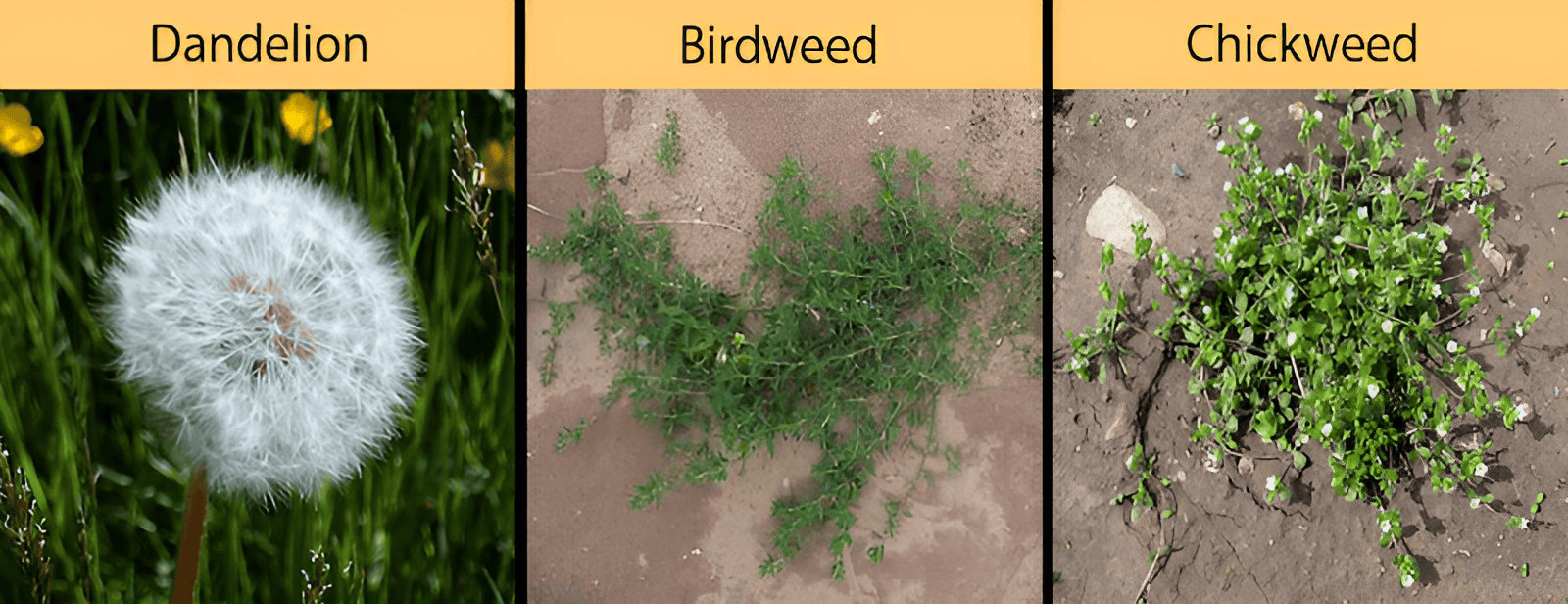
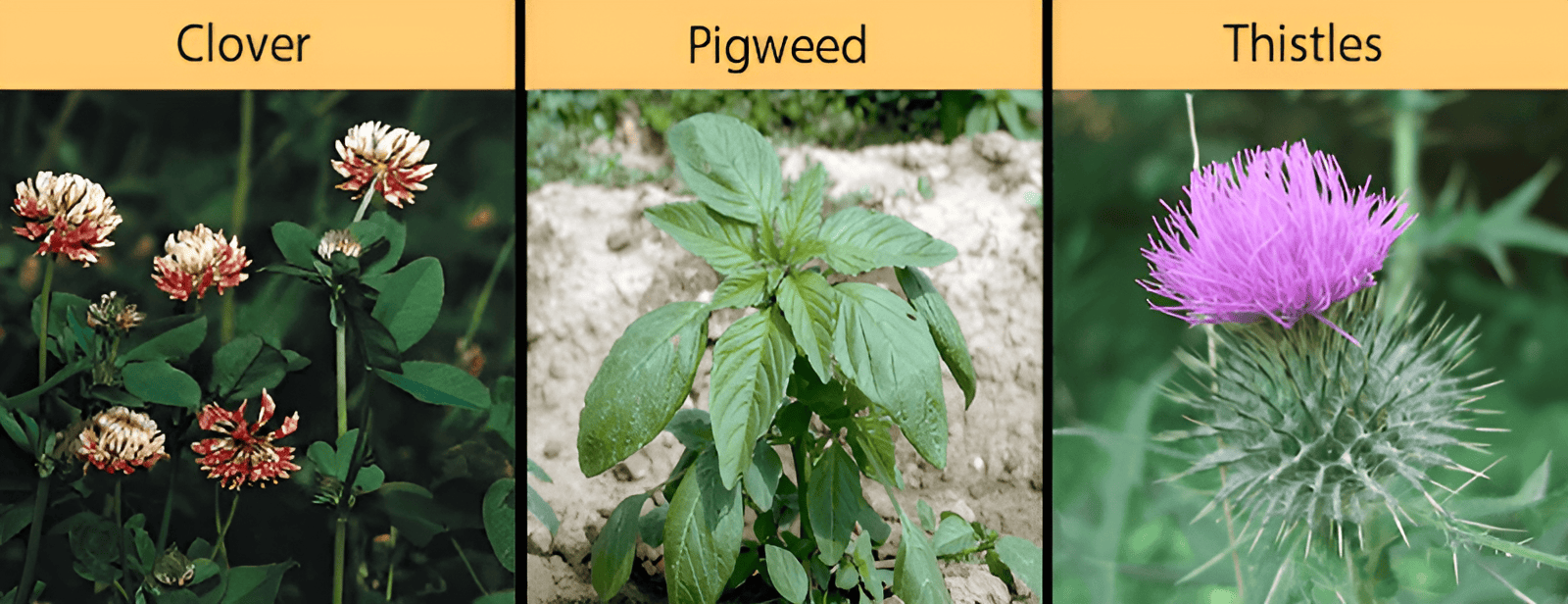
Clover (Trifolium spp.) is a perennial that many farmers appreciate in pastures for its nitrogen-fixing ability, but it can be an unwanted guest in lawns and ornamental beds. Its low, spreading growth habit, trifoliate leaves, and white or pink flowers allow it to outcompete turf grasses in thin or compacted areas.
From a soil health perspective, clover improves fertility by capturing atmospheric nitrogen and feeding it back into the system. In lawns, however, homeowners may prefer a more uniform grass appearance. Raising the mowing height, overseeding bare patches, avoiding excessive nitrogen fertilizer, and maintaining proper soil pH can all shift the balance toward desirable turf and away from clover.
When manual removal isn’t enough, selective broadleaf herbicides containing active ingredients such as triclopyr or dicamba may be used to reduce clover infestations without harming most turf grasses. As with all herbicides, follow label guidelines and local regulations, and consider spot treatments rather than broadcast spraying where possible.
Pigweed (Amaranthus spp.), including redroot pigweed and Palmer amaranth, is a notorious weed in vegetables, row crops, and disturbed ground. These fast-growing annuals can reach several feet tall, with thick stems and long, seed-packed flower spikes. Pigweed competes fiercely for water and nutrients and can dramatically reduce yields if not controlled.
For organic pigweed control, early and frequent cultivation is critical. Pigweed seedlings are weak when tiny and can be easily uprooted with a sharp hoe. Once plants are established, they become much harder to manage, and their large seed production replenishes the weed seed bank for years. Mulching between rows, cover cropping in the off-season, and reducing bare soil all help limit pigweed germination.
In larger farm systems, a combination of crop rotation, narrow row spacing, and pre- or post-emergent herbicides may be used to manage pigweed. Because some pigweed species have developed resistance to common herbicides, integrating cultural and mechanical strategies is essential for long-term pigweed control.
Thistles (Cirsium spp.) are spiny perennials or biennials common in pastures, hayfields, and along fence lines. Their sharp leaves and prickly stems make grazing and field work difficult, and their deep roots and windborne seed make control challenging once they are established.
Natural thistle control focuses on stressing the root system and preventing seed production. Repeated mowing or cutting thistles at the bud stage weakens the plant over time. Digging individual plants—including as much root as possible— is practical in small areas. Maintaining dense, competitive forage in pastures reduces open niches where thistles can establish.
Where thistles have already spread widely, carefully targeted herbicides containing active ingredients such as 2,4-D or picloram may be used as part of an integrated plan. The best results come when chemical treatments are combined with improved grazing management, overseeding, and timely mowing to rebuild a strong, thistle-resistant pasture.
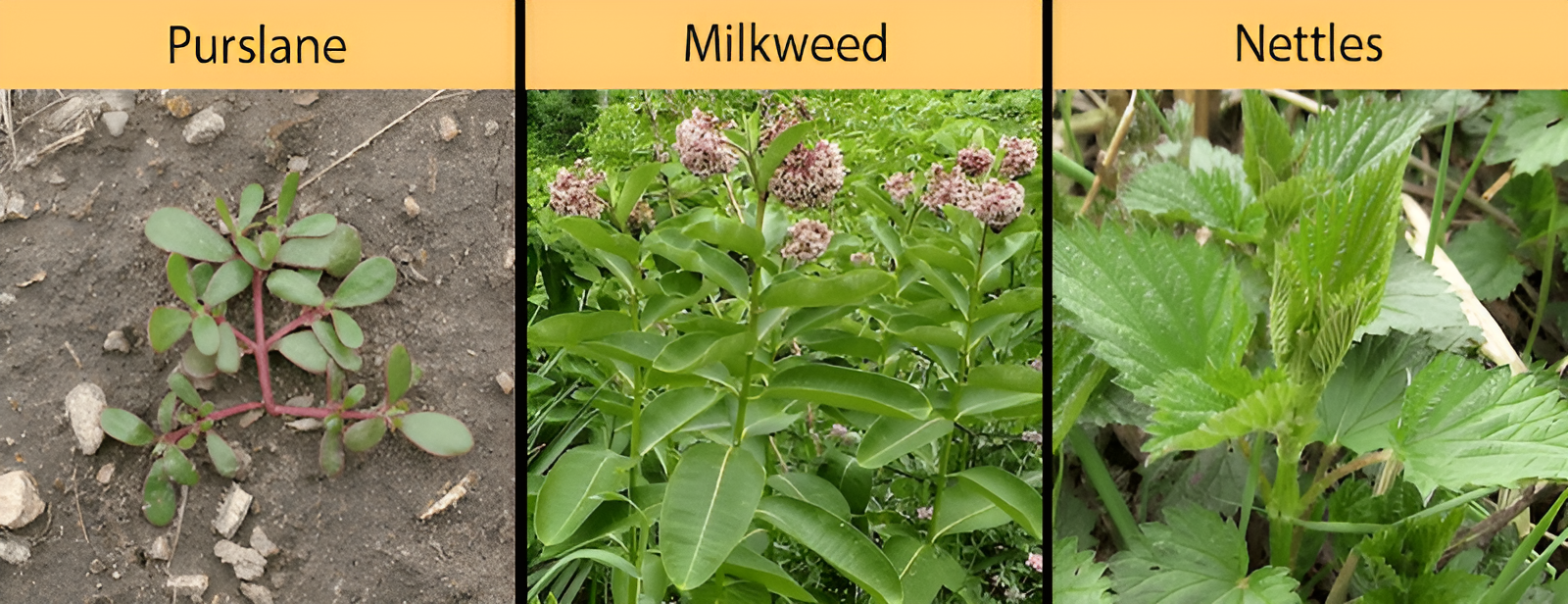
Purslane (Portulaca oleracea) is a low-growing succulent annual with fleshy red stems and small yellow flowers. It loves heat and disturbed soil and is often found in vegetable beds, pathways, and the edges of fields. Interestingly, purslane is edible and contains omega-3 fatty acids, but in production fields it is usually treated as a weed.
Because purslane can root from stem pieces and continue to grow after cultivation, hand-pulling is often the most reliable control method in garden beds. Pull plants when the soil is moist, remove as much of the root system as possible, and avoid leaving pulled plants on moist soil where they can re-root. A thick layer of organic mulch (straw, wood chips, or shredded leaves) will significantly reduce new purslane seedlings.
Milkweed (Asclepias spp.) is a familiar plant in fields and pastures and plays an important ecological role as a host for monarch butterfly caterpillars and other pollinators. However, dense stands of milkweed can compete with crops and reduce forage quality in grazing systems.
For milkweed control in production fields, regular cultivation of seedlings and spot removal of isolated plants can be effective. In perennial pastures, strategically timed mowing and targeted herbicides may be necessary to prevent expansion. Because of milkweed’s ecological value, many land managers choose to leave patches in non-crop areas or along field margins while controlling plants within active production zones.
Nettles (Urtica spp.) are well-known for their stinging hairs and serrated leaves, which can cause skin irritation on contact. They flourish in moist, nutrient-rich soils—often near compost piles, along streams, or at the edge of fields. Despite their sting, nettles are a valuable source of wildlife food and can even be harvested (with proper protection and preparation) as a nutrient-dense vegetable or tea.
For gardeners and farmers who prefer to keep paths and work areas sting-free, natural nettle control starts with wearing gloves and long sleeves when hand-pulling or cutting plants. Repeated cutting before flowering will gradually weaken the root system. Some people experiment with boiling water or vinegar on small patches, but these non-selective treatments may harm surrounding desirable plants and should be used with caution.
Improving drainage, avoiding over-fertilization with nitrogen-rich manures, and maintaining dense, competitive vegetation in borders are all part of a long-term strategy to reduce persistent nettle patches.
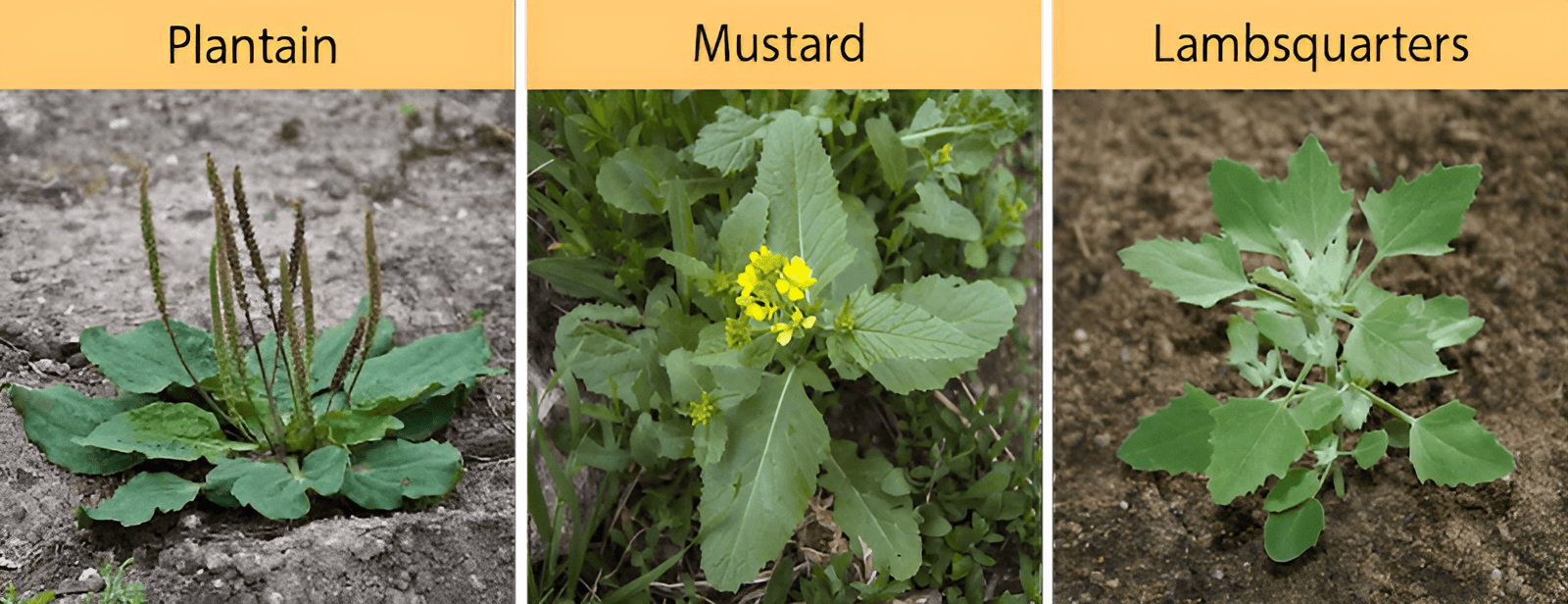
Plantain (Plantago spp.) is a broadleaf perennial weed common in compacted lawns, driveways, and field entrances. Its broad leaves hug the ground, while tall seed spikes rise above, producing thousands of tiny seeds that spread on shoes, tires, and equipment.
For natural plantain control, focus on relieving compaction and improving turf density. Aerating compacted areas, overseeding thin lawns, and maintaining a higher mowing height will favor grasses over plantain. Hand-pulling individual plants, especially when the soil is moist, is effective in small areas. In larger lawns, selective broadleaf herbicides containing 2,4-D or dicamba may be used according to label directions.
Wild mustard (Brassica spp.) is a fast-growing annual weed with bright yellow flowers and a distinctive pungent aroma. It commonly invades grain fields, pastures, and disturbed ground, where it competes for moisture, light, and nutrients and can contaminate harvested seed.
Natural control of wild mustard includes timely cultivation, mowing before seed set, and using competitive crops or cover crops to shade the soil. Because mustard seeds remain viable in the soil for years, preventing flowering and seed production is critical to reducing the seed bank. In broad-acre agriculture, herbicides such as those containing glyphosate or imazapic are sometimes used, always following label restrictions and integrating with other management tactics.
Lambsquarters (Chenopodium album) is a common broadleaf annual with gray-green, mealy leaves and small clusters of greenish flowers. It thrives in nutrient-rich soils and is frequently seen in vegetable gardens, row crops, and around manure piles. Mature lambsquarters plants can produce tens of thousands of seeds, making early control especially important.
For natural lambsquarters control, shallow cultivation when plants are small is highly effective. Hand-pulling is easy when the soil is moist, but plants should be removed before they shed seed. Mulching between rows and avoiding large areas of bare soil will also suppress new seedlings. In conventional systems, herbicides containing glyphosate or sulfentrazone may be used as part of an integrated strategy that includes rotation and cultivation.
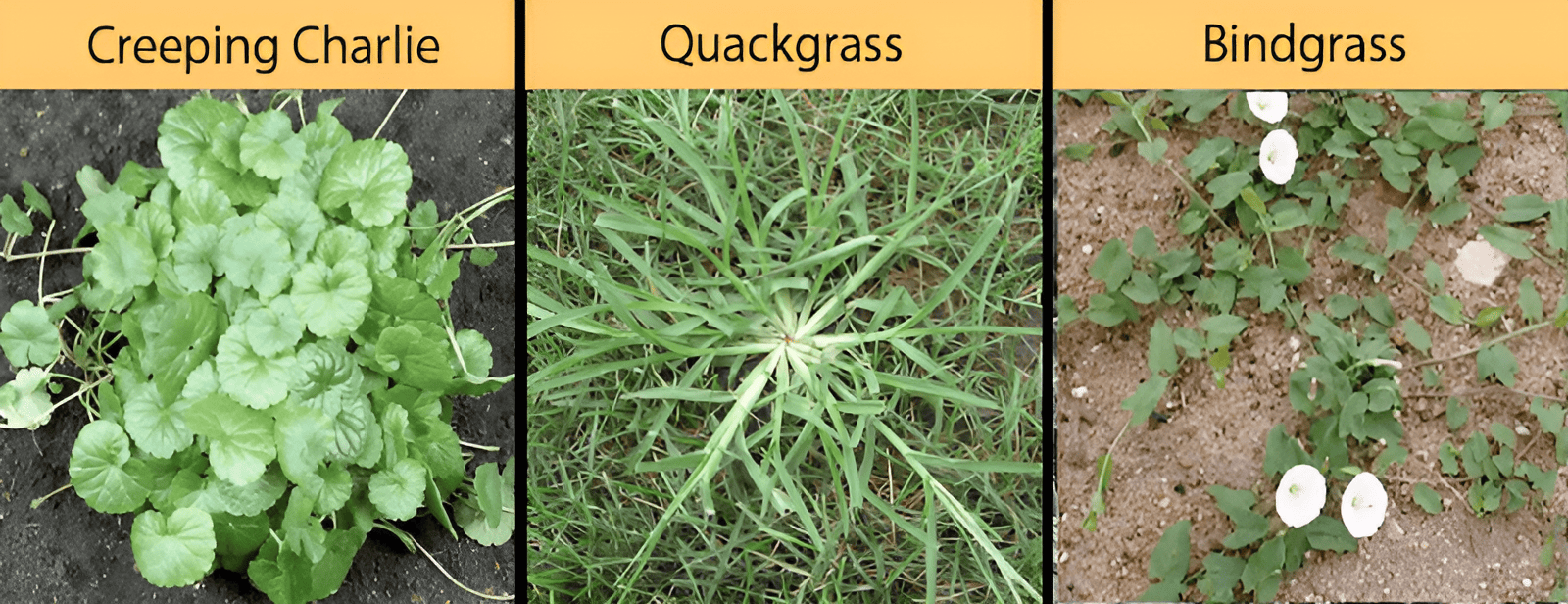
Creeping charlie (Glechoma hederacea), also called ground ivy, is a low-growing perennial with scalloped leaves and small purple flowers. It spreads aggressively by creeping stems (stolons) that root at the nodes, forming dense carpets in lawns, under trees, and in shaded borders. Once established, it can be difficult to remove completely.
Natural control starts with improving growing conditions. Creeping charlie loves shade, moisture, and thin turf. Opening up canopy to let in more light, overseeding with shade-tolerant grasses, and avoiding overwatering will make the lawn less hospitable. Hand-pulling or gently prying up mats of creeping charlie with a weeder can work in small patches, but root fragments left behind may re-grow.
In persistent infestations, selective broadleaf herbicides with active ingredients such as triclopyr or dicamba are often used, following all label directions and timing applications when the weed is actively growing. Combining cultural, mechanical, and chemical methods usually gives the best long-term control of creeping charlie in lawns.
Quackgrass (Elymus repens) is a tough, cool-season perennial grass with creeping rhizomes that can quickly invade lawns, gardens, and field margins. Its underground stems break easily and each fragment can form a new plant, making cultivation alone a challenge.
For natural quackgrass control, the goal is to exhaust the plant’s underground energy reserves. Repeated shallow cultivation to bring rhizomes to the surface, followed by removal or drying, can gradually weaken stands in vegetable beds. Smothering infested areas with heavy mulch or opaque tarps (occultation) over time can also reduce rhizome vigor.
In some cases, careful spot treatment with systemic herbicides containing glyphosate may be the most practical option before establishing a new lawn or perennial planting. As always, herbicides should be applied with care to avoid contact with desirable plants, and combined with good soil preparation and competitive planting afterward.
Bindweed (Convolvulus arvensis), sometimes called bindgrass, is a deep-rooted, twining perennial with white or pink funnel-shaped flowers. It wraps around crop plants, fences, and trellises, stealing light and making harvest difficult. Its extensive root system can extend several feet into the soil and regenerate from small fragments, making it one of the most challenging farm and garden weeds to eliminate.
For organic growers, bindweed control is a long-term project. Repeatedly cutting vines at the soil surface, preventing flowering and photosynthesis, gradually weakens the root system. Thick mulches, solarization (using clear plastic in hot weather), and careful hand-digging of isolated crowns may be used in combination, but complete eradication can take years.
In conventional systems, spot treatments with systemic herbicides that move into the roots may be used, always following label directions and avoiding drift onto valuable crops. Because bindweed often appears around fences, field edges, and neglected corners, cleaning up those areas and planting competitive cover crops can help prevent re-infestation.
Farm and garden weeds can be a frustrating challenge, but they also reveal a lot about soil health, management history, and microclimates on your land. By correctly identifying the weeds present and choosing a mix of cultural, mechanical, and, when necessary, chemical treatments, you can significantly reduce weed pressure and keep your crops, turf, and ornamentals healthy and productive.
Turn your 1 acre into a high-yield, profitable farm.
Crop Circle Farms specializes in designing and building fully engineered, low-impact farm systems that use 90% less water, 85% less fertilizer, and deliver two to three times the yield of traditional farming.
Whether you have a vacant lot, an empty field, a resort, school, island community, or small family farm, we’ll build it from the ground up for you. Our team handles everything from farm layout and installation to irrigation, root systems, training, and first planting.
Contact Us to explore a custom Crop Circle Farm design for your property.
Help us expand our mission to revolutionize agriculture globally. We are seeking partners to implement Crop Circle Farms to feed people in need. Together, we can build scalable food production systems that save water, reduce costs, and feed thousands of people. Contact Growing To Give
Answers to common questions about identifying farm and garden weeds, understanding why they thrive, and managing them with prevention-first strategies, better soil health, mulches, cultivation timing, cover crops, and safe, label-directed herbicide use when needed.
Begin by looking at three key things: growth type, life cycle, and leaf/flower characteristics. Ask yourself:
Take clear photos of seedlings, mature plants, and seed heads throughout the season. Use those images alongside regional weed ID guides and extension resources. Once you know whether you’re dealing with dandelion, chickweed, pigweed, clover, thistles, purslane, milkweed, nettles, plantain, wild mustard, lambsquarters, creeping charlie, quackgrass, or bindweed, you can choose targeted control methods instead of guessing.
The most effective long-term strategy is prevention-first weed management, not last-minute rescue. Focus on:
Herbicides, where allowed and used according to the label, can be one tool—but the foundation of integrated weed management is healthy soil, dense crops, good timing, and consistent cultural practices.
The weed seedbank is the reserve of viable weed seeds sitting in your soil, waiting for the right conditions to germinate. Some species, like lambsquarters and pigweed, can produce tens of thousands of seeds per plant, and many of those seeds can persist for years.
Every time you let weeds go to seed, you “deposit” more into the seedbank. Every time you prevent flowering and seed set, you slowly “withdraw” from that bank. Long-term weed control is really about reducing the seedbank over several seasons through:
A stale seedbed is a simple but powerful technique:
This removes the earliest wave of competition. When you later plant vegetables or transplants into that bed, they get a head start over the next flush of weeds, making later weeding far easier and faster.
The ideal time to cultivate is when weeds are at the white-thread stage—just after they germinate and before you even see true leaves. At this point, the roots are tiny and easy to sever. A quick pass with a sharp hoe or shallow cultivation tool uproots them with minimal effort.
Keep your cultivation shallow (1–2 cm) so you don’t drag more seeds up from deeper layers. Frequent, light passes are more effective and less disruptive than occasional deep tillage, which tends to bring up new weed seeds and damage soil structure.
Mulches are one of the most effective tools for natural weed control. Organic mulches such as straw, wood chips, shredded leaves, or compost:
In higher-traffic production systems, woven landscape fabric or biodegradable paper mulches can be used in combination with raised beds and drip irrigation. Keeping aisles and bed edges mulched is especially important to prevent dandelion, chickweed, and purslane from colonizing bare, disturbed soil.
Yes. Cover crops are living mulches that compete directly with weeds for space, light, water, and nutrients. Fast-growing species like rye, oats, buckwheat, and sorghum-sudangrass form a dense canopy over the soil, making it difficult for weed seedlings to establish.
When terminated and left on the surface, cover crop residues act like a mulch, further suppressing germination. In crop rotations, using vigorous covers between cash crops dramatically reduces pigweed, lambsquarters, wild mustard, and other annual weeds that rely on bare ground and full sun.
Perennial weeds with deep roots or rhizomes—such as quackgrass, bindweed, creeping charlie, plantain, and thistles—require persistence. One heavy tillage pass usually makes them worse by chopping roots into new plants.
Instead, focus on exhausting the root reserves:
In some systems, carefully targeted herbicide use may be part of a long-term plan—but it should be combined with cultural and mechanical methods, not used alone.
Many gardens and small farms maintain excellent weed control using prevention, mulches, cultivation, and hand-weeding alone. Herbicides are one possible tool in integrated weed management, but they are not always necessary and should be viewed as a last resort, not the first step.
Where herbicides are chosen, safety and legality come first:
Herbicides work best when they support a broader prevention-focused strategy.
Different weeds respond best to different tactics:
Matching your strategy to the specific weed biology is more effective than applying the same tactic to every species.
Weeds like clover, plantain, dandelion, and creeping charlie often signal stressed or compacted turf. Improving lawn health makes it harder for these weeds to gain a foothold. Key steps include:
A dense, deep-rooted lawn naturally crowds out many common lawn weeds without frequent chemical intervention.
Crop Circle Farms designs use permanent beds and paths arranged in rings or spirals, which makes weed control more efficient:
When combined with cover crops, mulches, and good timing, these layouts dramatically cut the time and energy spent on day-to-day weeding.
Simple, repeatable metrics help you track progress. A few useful ones:
As your prevention-first strategy takes hold, you should see fewer weeds, less time spent weeding, and cleaner beds early in the season—clear signs that your integrated weed management is working.
If you’d like a turnkey approach, Crop Circle Farms can help you design and build a custom, low-weed, water-efficient farm or garden layout. Our systems combine permanent beds, mulched or fabric-covered paths, drip irrigation, cover crops, and high-density planting to dramatically reduce weed pressure while increasing yield per square foot.
To explore a design tailored to your land and climate, visit our contact page: Contact Crop Circle Farms .