What Is Carbon-Smart Farming?
Why Carbon Matters in Modern Agriculture
Carbon-smart farming is the practical side of climate-smart agriculture: it’s the set of decisions that reduce on-farm greenhouse gas emissions while increasing carbon stored in soils, biomass, and perennial systems—without sacrificing yield, profitability, or resilience. Think of it as farming with a “carbon budget” in mind: every field pass, fertilizer pound, grazing move, compost pile, hedgerow, and irrigation setting either adds avoidable emissions or builds long-lived carbon assets. The good news is that carbon-smart farming is not one single method. It’s a menu of strategies—some ancient, some high-tech—that work best when stacked together and measured over time.
A carbon-smart plan starts with a baseline. You want to understand where carbon is being lost (soil disturbance, bare ground, over-fertilization, methane from manure lagoons, energy use) and where it can be gained (cover crops, reduced tillage, compost, tree plantings, managed grazing, riparian buffers). For many farms, the largest immediate wins are improving nitrogen efficiency (less nitrous oxide), cutting fuel passes, and protecting living roots year-round. For a long-term “carbon bank,” perennial systems—especially trees and agroforestry—do the heavy lifting because they store carbon above ground and can improve soil carbon below ground.
Carbon-smart farming also works at multiple scales, from a backyard plot to a full commercial operation. For growers thinking in land-area terms, it helps to translate practices into a one-acre model: what changes in costs, inputs, yields, and carbon impact when you optimize a single acre as a repeatable unit? That’s why it’s useful to reference your farm-one-acre content in the implementation section—because it frames carbon-smart changes as replicable “modules” (soil module, water module, fertility module, perennials module) rather than a vague sustainability goal.
The core principle is simple: keep carbon cycling through biology instead of leaking out as emissions. In healthy systems, sunlight becomes plant sugars, sugars become roots, roots feed microbes, and microbes build stable soil aggregates that hold carbon for years to decades. Carbon-smart farming protects that cycle: it reduces oxidation (too much tillage), reduces chemical imbalances that suppress biology, and increases diverse plant inputs (multiple species, multiple rooting depths, multiple seasons). Over time, soil organic matter increases, water infiltration improves, and crops handle heat and drought better—meaning carbon-smart becomes risk-smart too.
That connection—carbon plus resilience—matters because climate volatility is now a business variable, not a distant threat. Carbon-smart farming is strongest when paired with planning tools that anticipate stress: heat spikes, late frosts, smoke events, rainfall extremes, and shifting pest pressure. When you mention risk planning, embed a link to your climate-risk-forecasting page and position it as the “decision layer” that helps growers time planting windows, irrigation strategies, and protective actions (mulch, shade cloth, crop selection) in advance.
Carbon-smart systems usually combine several of these:
Those are the biophysical building blocks. The next step is to make them operational, measurable, and economically sensible.
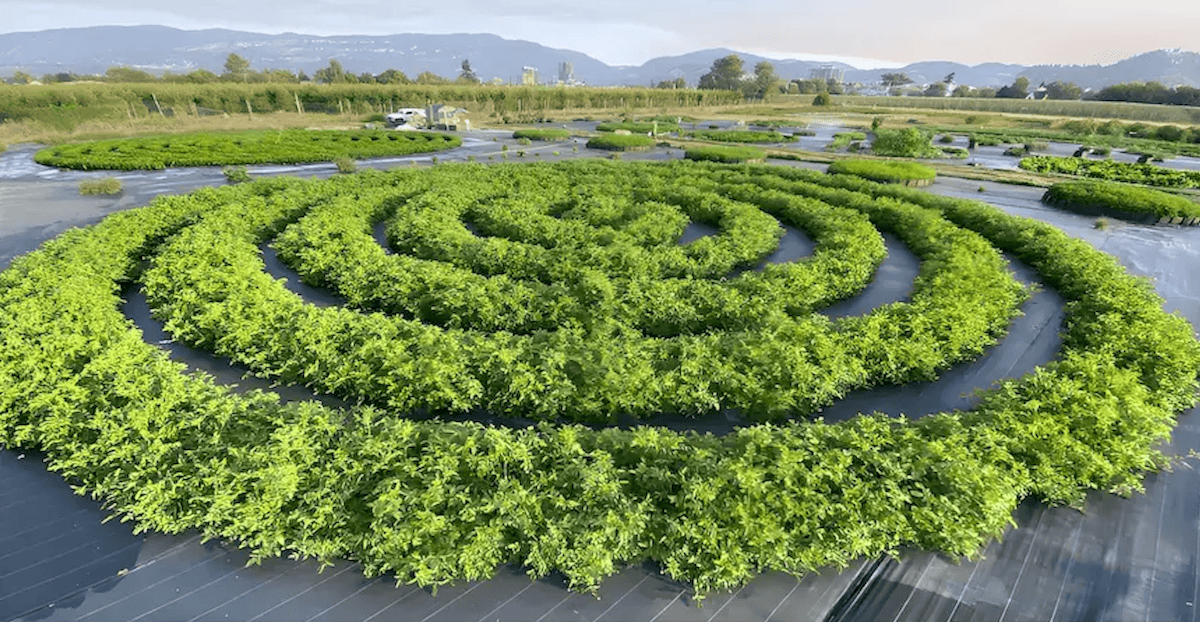
Modern carbon-smart farming increasingly runs on measurement and automation. Sensors, satellite imagery, variable-rate application, and decision-support software can reduce wasted fertilizer, water, and diesel—cutting emissions while improving yields. Visit our smart-agriculture-technologies-hub that connects to precision irrigation, nutrient mapping, soil moisture networks, remote sensing, and farm dashboards.
A simple example: variable-rate nitrogen. Instead of blanketing a whole field, you apply N based on crop need and soil condition. The result is fewer “hotspots” where excess nitrogen turns into nitrous oxide (a potent greenhouse gas) and fewer dollars lost to leaching. Similarly, irrigation automation can prevent overwatering that creates anaerobic soil zones (which encourage methane and reduce root oxygen). Carbon-smart is often less about adding a new input and more about stopping preventable losses.
Fertility is where carbon-smart decisions pay off quickly. Synthetic nitrogen can be necessary, but carbon-smart farming treats it as a precision tool, not the default foundation. Better options include legume cover crops, compost, compost teas (used responsibly), and mineral balancing that supports microbial function.
Biochar deserves special attention because it’s one of the few amendments that can be both a soil-improvement tool and a long-lived carbon store. When produced correctly (clean feedstock, appropriate temperature, low contamination) and “charged” with nutrients (compost, urine, liquid fertilizers) before application, biochar can improve water holding, nutrient retention, and microbial habitat. Carbon-smart farms often use biochar strategically—nursery mixes, transplant holes, compost blends, or degraded zones that need structure—rather than spreading it everywhere at once.
Not all carbon-smart practices are digital. Many farms find that biodynamics—when practiced as a whole-farm ecology approach—helps tighten nutrient loops, raise soil organic matter, and encourage diverse rotations and habitat. Whether a reader adopts the full biodynamic biodynamic framework or simply borrows the best operational habits (on-farm compost quality, timing and observation, hedgerows, integration of livestock), it fits carbon-smart goals because it emphasizes biological function and closed-loop thinking.
Carbon-smart farming doesn’t stop at crops. Protein systems can be redesigned to reduce nutrient losses and local environmental impacts. Land-based recirculating aquaculture systems (RAS) are a useful example: they can dramatically reduce water use compared to flow-through systems, limit escapes, and allow tight control of waste streams—turning nutrients into compost inputs or fertigation resources when regulations and safety allow.
Carbon-smart aquaculture is not automatically carbon-neutral—energy use can be significant—so the smart approach is to pair RAS with efficiency measures (heat recovery, efficient pumps, oxygen optimization) and, where possible, renewable energy. The win is that nutrients become manageable and measurable instead of dispersing into waterways.
Here’s a practical “stack” that works on many farms:
The key is to treat carbon-smart farming like continuous improvement: start with the lowest-cost, highest-confidence changes, then scale what performs.
Carbon-smart farming improves fastest when you measure outcomes. That doesn’t have to mean complicated modeling on day one—start with soil organic matter tests, infiltration tests, bulk density (if you can), simple yield tracking, and input logs. Then graduate to more detailed tracking as your system stabilizes. For farms working with investors, grants, or credits, measurement becomes essential.
Ultimately, carbon-smart farming is a shift from “inputs-first” to “cycles-first.” You still care about yield—but you pursue it by strengthening the biological engine, tightening nutrient loops, and using technology to reduce waste. When done well, the farm becomes more resilient, more efficient, and more valuable as a long-term asset—because it is literally building fertility and stability into the land.
In California’s Central Valley, orchard systems are increasingly adopting carbon-smart practices to address water scarcity, soil degradation, and regulatory pressure on nitrogen management. Almond and walnut growers, for example, are integrating cover crops between tree rows, reducing synthetic nitrogen through precision fertigation, applying composted manure, and incorporating chipped orchard prunings back into the soil rather than burning them.
These practices help reduce nitrous oxide emissions, improve soil organic matter, and increase water infiltration—critical in a region facing chronic drought cycles. By maintaining living roots in alleyways and minimizing soil disturbance, orchard managers are improving microbial activity and soil structure while stabilizing yields during heat stress events. Some growers are also trialing biochar blends in transplant zones and degraded areas to improve water retention and long-term carbon storage.
The result is a system that not only reduces emissions but builds long-term soil capital. In perennial systems like orchards, above-ground woody biomass also serves as a carbon reservoir, reinforcing the idea that carbon-smart farming in tree-based agriculture can be both climate-aligned and economically strategic.
Across the U.S. Midwest, many corn and soybean operations are transitioning from conventional full tillage to reduced-till or continuous no-till systems as part of a carbon-smart strategy. By eliminating multiple tillage passes, farmers reduce diesel use and limit soil carbon oxidation, helping preserve soil organic matter.
When no-till is combined with cover crops—such as cereal rye, clover, or multi-species blends—the system keeps living roots in the soil for more months of the year. This supports microbial activity, improves aggregation, and enhances water infiltration. Over time, farms report better resilience during heavy rain events and drought periods, with soils that hold moisture longer and resist erosion more effectively.
Many Midwest operations are also improving nitrogen efficiency through split applications, variable-rate technology, and soil testing. This reduces excess nitrogen that could otherwise convert into nitrous oxide emissions. When stacked together—no-till, cover crops, smarter nitrogen, and improved residue management—these practices create a carbon-smart system that cuts emissions, stabilizes yields, and lowers input waste without sacrificing productivity.
Potential reduction in nitrous oxide (N₂O) emissions through optimized nitrogen management, including split applications, variable-rate technology, improved timing, and legume integration.
Typical soil organic matter (SOM) increase over a 5-year period when stacking cover crops, reduced tillage, compost integration, and diversified rotations.
Estimated carbon sequestration potential in well-designed agroforestry and silvopasture systems, combining above-ground woody biomass with below-ground soil carbon gains.
Results vary by soil type, climate, baseline conditions, and management intensity. Carbon-smart farming works best when multiple practices are stacked and tracked over time.
Carbon-smart farming is a set of practical decisions that reduce on-farm greenhouse gas emissions while increasing carbon stored in soils, biomass, and perennial systems. It focuses on living roots, reduced soil disturbance, smarter nitrogen management, better residue and manure handling, and strategic use of tools like compost, biochar, and precision technology to cut waste and build long-term soil resilience.
It can be. Many farms see profitability improvements from lower fuel use, fewer field passes, reduced fertilizer losses, improved water efficiency, and more stable yields under heat or drought. Carbon markets and incentives may add revenue in some regions, but the most reliable financial benefit usually comes from operational savings and long-term soil productivity gains.
Soil carbon storage varies widely based on soil type, climate, baseline soil organic matter, management history, and the practices used (cover crops, reduced tillage, compost, perennials). Some soils can build carbon for years, while others approach a saturation point sooner. The best approach is to measure soil organic matter over time and track management changes so progress is verified on your specific land.
Yes—when it’s produced correctly and used appropriately. Biochar is a carbon-rich material made by heating biomass with limited oxygen (pyrolysis), which converts part of the biomass into more durable forms of carbon that can persist in soils for long periods. Results depend on feedstock quality, production conditions, contamination risk, and how biochar is “charged” (mixed with nutrients/compost) before application.
They overlap, but they aren’t identical. Regenerative farming is broader—focused on restoring soil function, biodiversity, and ecosystem health. Carbon-smart farming is a more targeted lens that prioritizes reducing greenhouse gas emissions and increasing stored carbon. Many regenerative practices are carbon-smart, and many carbon-smart systems are regenerative when they also improve soil biology, water cycles, and habitat.