Biodynamic Farming Explained
Farm-as-Organism • Compost Vitality • Preparations • Planting Rhythms • Biodiversity
Biodynamic farming is a holistic agricultural system that treats the farm as a living organism. It emphasizes fertility generated within the farm, compost, soil health, biodiversity, crop and livestock integration where appropriate, and careful observation. Biodynamic agriculture also includes specific preparations and traditions surrounding the timing of agricultural work.
Many soil-building practices associated with biodynamics—such as composting, crop diversity, habitat creation, soil cover, and nutrient cycling—are also used in organic, regenerative, and agroecological farming. Certified biodynamic systems add specific standards and preparation requirements beyond these widely used agricultural practices.
Biodynamic farming is a whole-systems method that asks: How do we increase fertility and resilience from within the farm? It emphasizes closed-loop nutrient cycling (as much as feasible), compost quality, diverse plant communities, and a long-term view of soil structure. Many biodynamic growers also plan key tasks (transplanting, pruning, compost turning, sprays) around natural rhythms to improve consistency and observation.
| Principle | What you actually do | Outcome you can track |
|---|---|---|
| Closed-loop fertility | Compost on-site, return residues, minimize nutrient “leakage” | Lower purchased inputs, steadier soil organic matter over time |
| Compost vitality | Prioritize mature compost, protect moisture/temperature, avoid anaerobic piles | Better soil tilth, improved water infiltration, stronger root growth |
| Biodiversity + habitat | Insectary flowers, hedgerows, cover crops, rotation diversity | Lower pest spikes, more pollinator activity, fewer “boom/bust” seasons |
| Observation + rhythm | Keep notes, repeat key tasks consistently, compare plots | Faster learning loops, more predictable results |
| Soil structure protection | Mulch, living roots, reduced disturbance, prevent compaction | Better drainage, less erosion, fewer nutrient losses |
Biodynamic preparations are typically used in very small amounts as part of the overall system. Two commonly referenced field sprays are:
| Preparation | Common name | How it’s used (high level) | Best practice |
|---|---|---|---|
| BD 500 | Horn manure | Applied as a soil spray in diluted form | Trial it in a small test area and track soil feel, root vigor, and early growth |
| BD 501 | Horn silica | Applied as a fine foliar mist in diluted form | Use conservatively; compare plant posture, leaf health, and disease pressure |
Biodynamics places major emphasis on compost quality because compost is the bridge between residues and stable soil organic matter. If you only improve one thing, improve compost: keep it aerated, moist (not wet), and protected from extremes.
Want measurement-driven soil strategy? Explore soil health monitoring technology and carbon-smart farming.
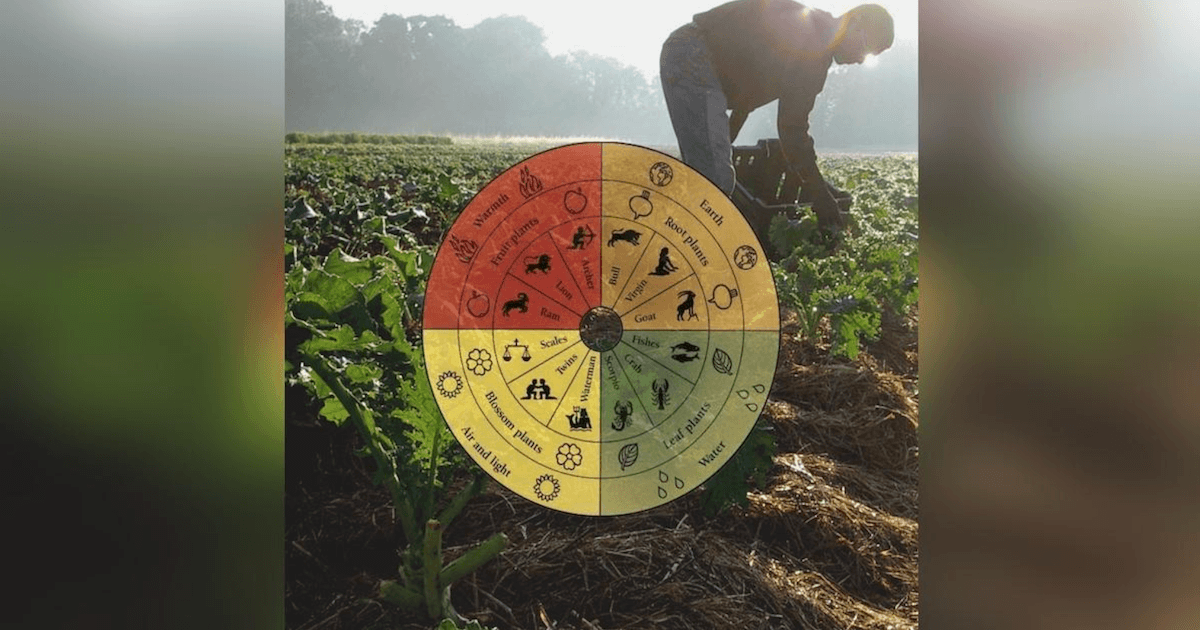
Biodynamic calendars traditionally organize planting and other field activities around lunar, astronomical, seasonal, and crop-type rhythms, often grouping crops as root, leaf, flower, or fruit plants.
Plants clearly respond to daily and seasonal light cycles, and researchers continue to study possible responses to moonlight and lunar rhythms. However, evidence that specific biodynamic calendar dates consistently improve crop performance under field conditions remains limited. Growers who use these calendars can treat them as testable management hypotheses by comparing timed plantings with control plots and recording germination, growth, yield, and crop quality.
| If you’re new… | Try this | Track this |
|---|---|---|
| Transplanting | Pick one consistent window each week | Transplant shock, rebound speed, early growth |
| Foliar sprays | Use the same day/time, same dilution, same coverage | Leaf color, disease incidence, plant posture |
| Pruning/trellising | Batch similar crops on the same day | Airflow, fruit set, ease of harvest |
This beginner plan starts with measurable soil, compost, biodiversity, and management practices. If your goal is certified biodynamic production, follow the applicable biodynamic certification standard and its preparation and management requirements.
| Focus | Organic | Regenerative | Biodynamic |
|---|---|---|---|
| Inputs | Uses substances permitted under organic standards; synthetic inputs are generally prohibited unless specifically allowed. | Practices vary because regenerative agriculture has no single universal production standard. Many systems seek to reduce dependence on external inputs. | Builds on organic-style input restrictions and adds biodynamic-specific management and preparation requirements where formally certified. |
| Soil building | Crop rotations, cover crops, compost, manure, cultivation practices, and permitted amendments. | Often emphasizes living roots, soil cover, diverse rotations, reduced disturbance, and livestock integration where appropriate. | Emphasizes compost, internal fertility cycles, biodiversity, soil stewardship, and biodynamic preparations. |
| System design | Production is managed according to defined organic standards and certification requirements. | Often focuses on improving soil, water, biodiversity, resilience, and farm-system function, but definitions and certification programs vary. | Treats the farm as an interconnected organism with an emphasis on internal nutrient cycles and long-term ecological balance. |
| Distinctive features | Organic production is formally regulated and certified in many countries. | There is currently no single globally accepted definition or certification standard. | Uses specific biodynamic preparations and includes traditional planting and astronomical rhythms; Demeter is the best-known biodynamic certification system. |
Crop Circle layouts make it easy to operationalize biodynamic fundamentals: quick access for observation, easy rotation planning, and consistent zones for compost additions and irrigation scheduling. If you’re mixing crop types (root, leaf, flower, fruit), Crop Circle arcs can keep those groupings organized without becoming rigid rows.
Track outcomes as you improve soil and compost—compare yields per plant, per bed, or per square foot, and spot what’s actually working.
Open Plant Yield Calculator →Turn your 1 acre into a high-yield, profitable farm.
Crop Circle Farms designs and builds fully engineered, low-impact farm systems that use 90% less water, 85% less fertilizer, and deliver two to three times the yield of traditional farming.
Whether you have a vacant lot, an empty field, a resort, school, island community, or small family farm, we’ll build it from the ground up for you.
Contact Us to explore a custom Crop Circle Farm design for your property.
Help expand our mission to implement proven farm and garden models to feed people in need. Contact Growing To Give .
Biodynamic farming is a whole-farm agricultural system that treats the farm as an interconnected living organism. It emphasizes compost, soil health, biodiversity, nutrient cycling, careful observation, and reducing dependence on outside inputs where practical.
Biodynamic agriculture also includes distinctive practices such as biodynamic preparations and traditional planting calendars. Many of its soil-building and biodiversity practices overlap with organic, regenerative, and agroecological farming.
No. Biodynamic and organic farming share many practices, including composting, crop rotation, soil stewardship, biodiversity, and restrictions on many synthetic inputs.
Biodynamic farming differs by additionally emphasizing the farm as a largely self-supporting ecological system and by incorporating specific biodynamic preparations and traditional planting rhythms. Certified biodynamic production must also meet the requirements of the applicable biodynamic certification standard.
BD 500, commonly called horn manure, and BD 501, commonly called horn silica, are two of the best-known biodynamic field preparations. They are prepared according to traditional biodynamic methods, diluted in water, and applied in very small quantities.
Biodynamic practitioners traditionally associate BD 500 with soil and root processes and BD 501 with plant and light-related processes. These claims should be distinguished from the more broadly established benefits of practices such as composting, crop diversity, soil cover, balanced fertility, and good water management.
Livestock can play an important role in biodynamic farming by helping cycle nutrients, supplying manure for compost, and supporting the goal of creating a more integrated farm system.
However, a small garden or diversified growing operation can still apply many biodynamic principles without keeping livestock. Composting, crop diversity, habitat creation, soil protection, nutrient cycling, and careful observation can all be incorporated at garden scale.
Start with the fundamentals: improve compost quality, keep soil covered, maintain living roots when practical, diversify plantings, rotate crop families, manage irrigation carefully, and create habitat for beneficial insects.
Once those practices are working consistently, you can explore biodynamic preparations or planting calendars if they fit your goals. Treat optional calendar or preparation trials as experiments by comparing similar planting areas and recording germination, plant health, yield, pest pressure, and crop quality.
Next steps: Explore regenerative agriculture, composting, circular agriculture, and soil health monitoring for related approaches to soil health, biodiversity, nutrient cycling, and farm resilience.