Circular Agricultural Systems
Move beyond linear “take–make–waste” models
Circular agricultural systems represent a transformative approach to farming that moves beyond linear “take–make–waste” models and instead designs production around regeneration, reuse, and continuous nutrient cycling. In a circular system, outputs from one process become inputs for another. Water is reused, organic waste becomes fertilizer, energy is recovered, and soil health improves over time rather than declines.
At its core, a circular agricultural system is a regenerative food production model that integrates crops, livestock, water management, nutrient recovery, energy systems, and waste streams into a closed-loop ecosystem. The goal is to minimize external inputs, reduce environmental impact, and maximize long-term productivity while building soil, conserving water, and strengthening food security.
Below are ten real-world examples—explained in paragraph form—illustrating how circular agricultural systems function across different scales and climates.
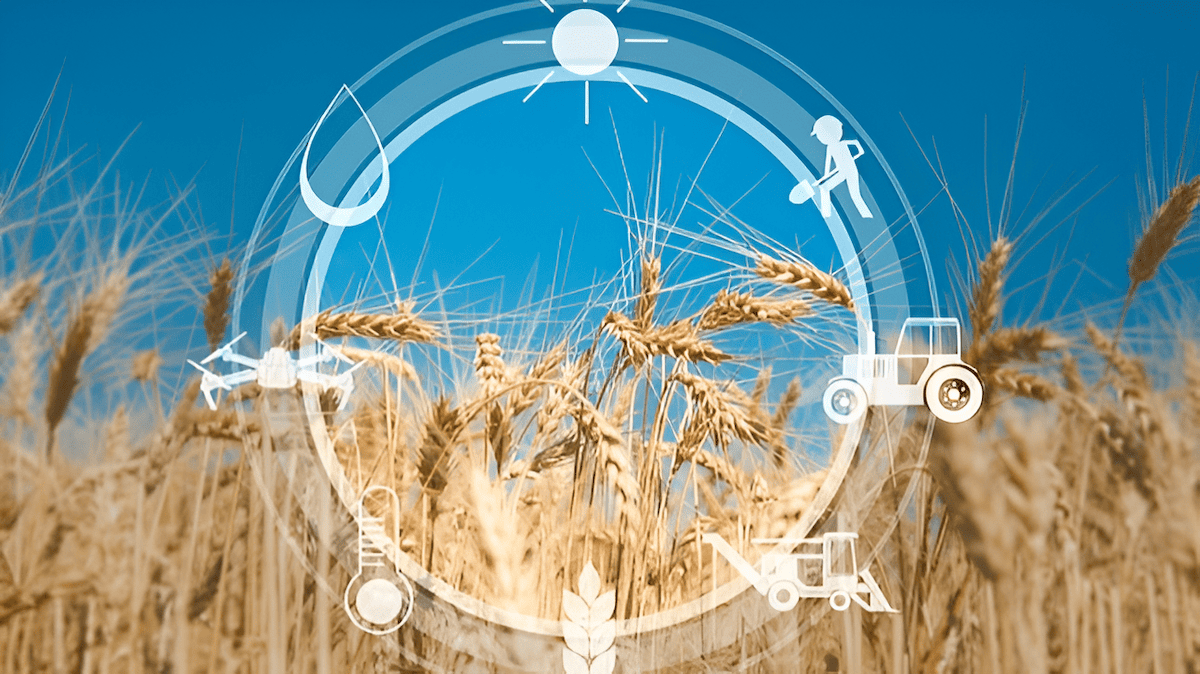
In an integrated crop–livestock system, animals and crops operate symbiotically. Livestock graze cover crops or crop residues after harvest, returning nutrients to the soil through manure. In turn, those nutrients enhance soil fertility for the next planting cycle. Instead of relying solely on synthetic fertilizers, farms use biologically recycled nutrients, improving soil structure, carbon retention, and microbial activity. This circular exchange reduces feed waste, lowers fertilizer costs, and strengthens ecological resilience.
Organic waste—such as crop residues, food scraps, and manure—can be composted and reintroduced into fields as stable organic matter. Composting transforms waste into a nutrient-rich soil amendment that enhances water retention and microbial life. Rather than sending biomass to landfills or allowing it to emit methane, circular farms capture its value. The system reduces reliance on chemical inputs while steadily building soil carbon over time.
Aquaponics integrates fish production with hydroponic plant cultivation. Fish produce nutrient-rich waste in water tanks, which is biologically filtered and circulated to plant beds. Plants absorb the dissolved nutrients, naturally cleaning the water before it returns to the fish tanks. This creates a nearly closed-loop system where water is continuously recycled and nutrients flow efficiently between organisms. Aquaponics dramatically reduces water use compared to conventional soil farming while producing both protein and vegetables within the same footprint.
Rotational planting prevents nutrient depletion and pest buildup while maintaining soil vitality. Legumes, for example, fix atmospheric nitrogen and replenish soil for subsequent crops. Cover crops protect soil between growing seasons, preventing erosion and improving organic matter levels. By designing planting schedules around ecological function rather than single-crop efficiency, farms maintain long-term productivity and reduce the need for synthetic fertilizers and pesticides.
Circular systems prioritize water reuse. Drip irrigation minimizes evaporation, while rainwater harvesting systems collect rooftop runoff for later use. Some farms integrate constructed wetlands or biofiltration systems that cleanse and recycle irrigation water. In drought-prone regions, circular water management can reduce consumption by more than half compared to conventional flood irrigation systems, ensuring resilience in water-scarce environments.
Agroforestry blends trees with crops and livestock, creating multi-layered ecosystems that mimic natural forests. Trees provide shade, wind protection, and organic matter through leaf drop. Deep-rooted perennials capture nutrients beyond the reach of shallow-rooted annual crops. The result is improved soil structure, carbon sequestration, and biodiversity. Instead of separating forestry and agriculture, circular design integrates them into a single regenerative system.
Livestock manure and organic residues can be processed in anaerobic digesters to produce biogas. This renewable energy can power farm operations, reducing dependence on fossil fuels. The byproduct of digestion, called digestate, remains nutrient-rich and can be returned to fields as fertilizer. Energy production and nutrient cycling thus operate together, creating a circular loop between waste management and farm productivity.
In cities, circular agriculture often integrates rooftop farming, composting programs, and local food distribution. Food waste from restaurants may be composted and returned to rooftop gardens, which then supply produce back to those same establishments. The system reduces transportation emissions and keeps nutrients cycling within the community rather than exporting waste elsewhere. Urban circular farming strengthens food sovereignty while reducing environmental impact.
Indoor vertical farms and greenhouses increasingly incorporate circular principles. Water is recaptured and filtered, excess plant material is composted or digested, and LED lighting systems are optimized for energy efficiency. Some facilities capture carbon dioxide from nearby industrial sources to enhance plant growth, turning emissions into productive inputs. These systems demonstrate how advanced technology can align with circular design principles.
On a community scale, circular agriculture can connect households, schools, farms, and food banks. Community compost programs return nutrients to local farms and community farms and gardens. Surplus harvests are redistributed to reduce food waste. Educational programs teach regenerative practices, reinforcing ecological literacy. The circular system becomes not only a production model but a social infrastructure that supports resilience and equity.
Traditional agricultural systems often depend on heavy external inputs—synthetic fertilizers, fossil fuels, long-distance transport, and intensive water use. Over time, this linear approach depletes soil, strains water supplies, and generates waste streams that pollute ecosystems. Circular agricultural systems reverse that trajectory.
By designing farms as interconnected ecosystems, circular models reduce waste, conserve resources, enhance biodiversity, and improve long-term yields. Soil becomes richer rather than poorer. Water cycles more efficiently. Nutrients remain within the system. Farmers gain resilience against price volatility and climate shocks.
Circular agriculture is not a single technology or method—it is a design philosophy. It asks how every output can become an input, how waste can become value, and how productivity can align with ecological regeneration.
As climate pressures intensify and global food demand rises, circular agricultural systems offer a pathway toward sustainable abundance—where farming restores landscapes, strengthens communities, and feeds populations without exhausting the planet’s natural capital.