Chicken Manure Compost Systems
Composting for maximum plant growth
Chicken manure is one of the most powerful natural soil amendments available to farmers and gardeners. Rich in nitrogen and other nutrients, it can dramatically improve plant growth when properly composted. However, raw or improperly managed chicken manure can also damage plants, contaminate water, and create environmental risks. Understanding how chicken manure compost systems work is essential for using this resource safely and effectively.
Chicken manure is not just feces. It is a mixture of:
Unlike mammals, chickens do not urinate separately. Their nitrogen-rich uric acid is excreted along with solid waste, which makes poultry manure especially high in nitrogen compared to other livestock manures.
Because bedding and management systems vary widely, no two chicken manure sources are identical.
No. Chicken manure differs based on:
Layer manure often contains higher calcium due to feed supplementation for eggshell production.
Feed composition significantly influences nutrient levels. High-protein feeds increase nitrogen content.
Deep-litter systems produce manure already partially composted. Cage systems produce manure with little bedding material.
Manure stored dry differs chemically and biologically from manure stored wet.
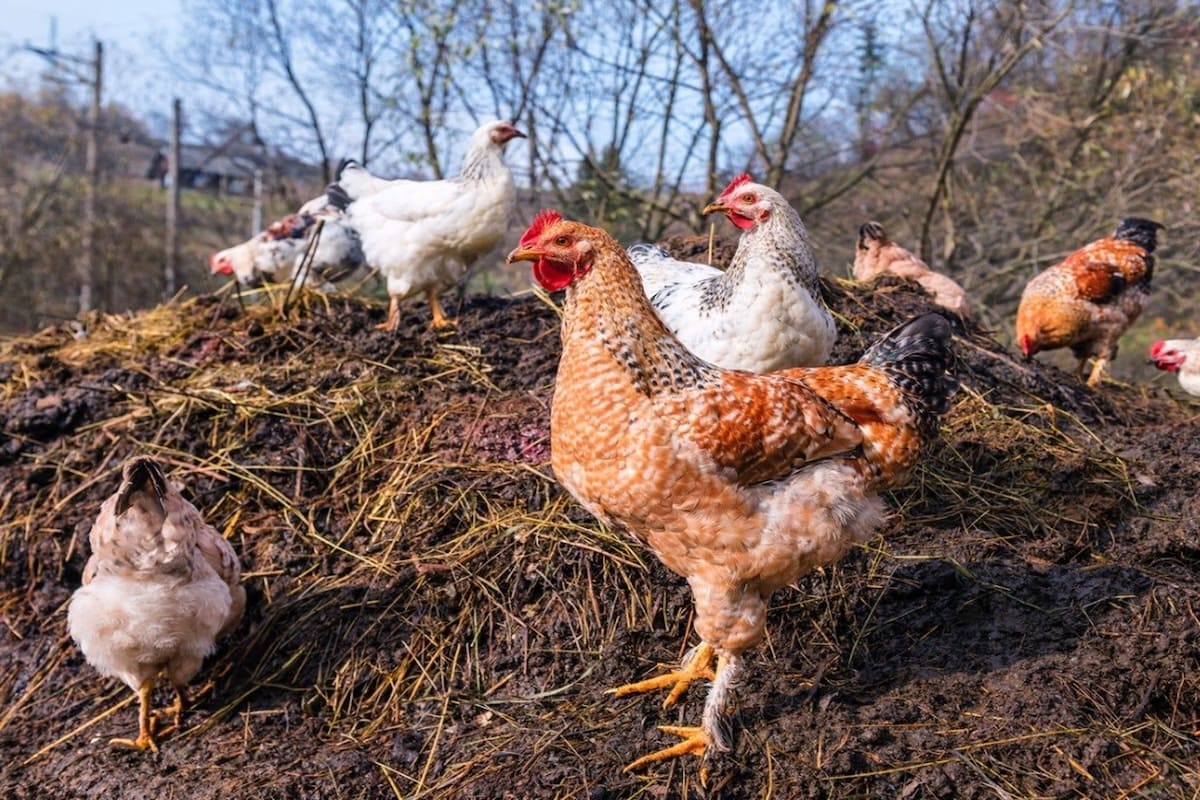
Fresh manure applied directly to soil can cause nitrogen burn and root damage.
Aging alone does not guarantee safety — proper composting is still recommended.
Pelleted chicken manure is typically more controlled but may lack the biological diversity of composted manure.
Typical nutrient profile (approximate):
Compared to cow manure, chicken manure has significantly higher nitrogen and phosphorus concentrations.
When composted correctly, chicken manure can:
Provides slow-release nitrogen and phosphorus essential for vegetative growth and root development.
Enhances soil structure, aeration, and water retention.
Supports beneficial bacteria and fungi critical to nutrient cycling.
Properly composted poultry manure often improves productivity in vegetables, grains, and fruit crops.
Contributes to long-term soil carbon accumulation when integrated into regenerative systems.
Chicken manure is powerful — and potentially dangerous if mismanaged.
High phosphorus content can cause eutrophication in lakes and rivers. Algal blooms reduce oxygen and kill aquatic life..
Excess nitrate can leach into subterranean water tables, posing risks to drinking water.
Improperly composted manure can introduce harmful bacteria into soil and crops.
Repeated over-application can increase soil salinity..
Fresh manure releases ammonia gas, contributing to air pollution and nutrient loss..
Proper compost systems mitigate these risks.
Compared to:
Similar nutrient profile but slightly less concentrated.
Lower nitrogen, wetter consistency, often less bedding.
Lower nutrient density, often from grazing systems.
Chicken manure is typically more nutrient-dense than other poultry manures, especially in phosphorus.
Compared to mammalian manure:
This potency makes composting even more critical.
To unlock its benefits safely, follow these steps:
Fresh manure is high in nitrogen. Add carbon sources like:
Ideal carbon-to-nitrogen (C:N) ratio: ~25–30:1.
Minimum 3 feet x 3 feet x 3 feet for sufficient heat generation.
Moist like a wrung-out sponge — not soaking wet.
Turn pile every 5–10 days to:
Aim for:
130–150°F (55–65°C)
Maintain for several days to kill pathogens and weed seeds.
After active composting (4–8 weeks), allow curing for 1–3 months.
Finished compost should:
For edible crops:
Properly composted chicken manure supports:
In regenerative systems, composted chicken manure can be integrated into crop rotations, agroforestry systems, compost teas, and soil-building programs.
Chicken manure is one of agriculture’s most nutrient-dense organic resources. But like all powerful inputs, it must be managed carefully.
Fresh manure can burn plants, contaminate water, and release harmful pathogens. Composting transforms this “hot” waste into a stable, biologically active soil amendment that enhances fertility, supports plant growth, and contributes to long-term soil regeneration.
The key difference between harmful manure and powerful compost is management.
Handled properly, chicken manure compost systems convert waste into one of the most valuable soil-building tools available — helping crops reach their full potential while protecting water, ecosystems, and human health.