Drone Spraying Systems
Precision Application for Modern Agriculture
Drone spraying systems are transforming how farmers apply fertilizers, crop protection products, biologicals, and micronutrients. By combining GPS guidance, variable-rate technology, real-time mapping, and autonomous flight control, agricultural drones deliver inputs with remarkable precision—reducing waste, minimizing environmental impact, and improving crop performance.
Unlike traditional boom sprayers that rely on ground contact and uniform coverage, drone spraying systems operate from above. This aerial advantage allows farmers to target specific zones, avoid soil compaction, access difficult terrain, and respond quickly to emerging crop stress.
As labor shortages increase and input costs rise, drone spraying systems are becoming a practical solution for precision agriculture at scale.
Modern agricultural spray drones typically include:
Before spraying begins, a field map is uploaded into mission-planning software. The system defines spray boundaries, flight altitude, speed, droplet size, and application rate. Some operations integrate NDVI or multispectral imagery to create prescription maps, enabling variable-rate spraying only where needed.
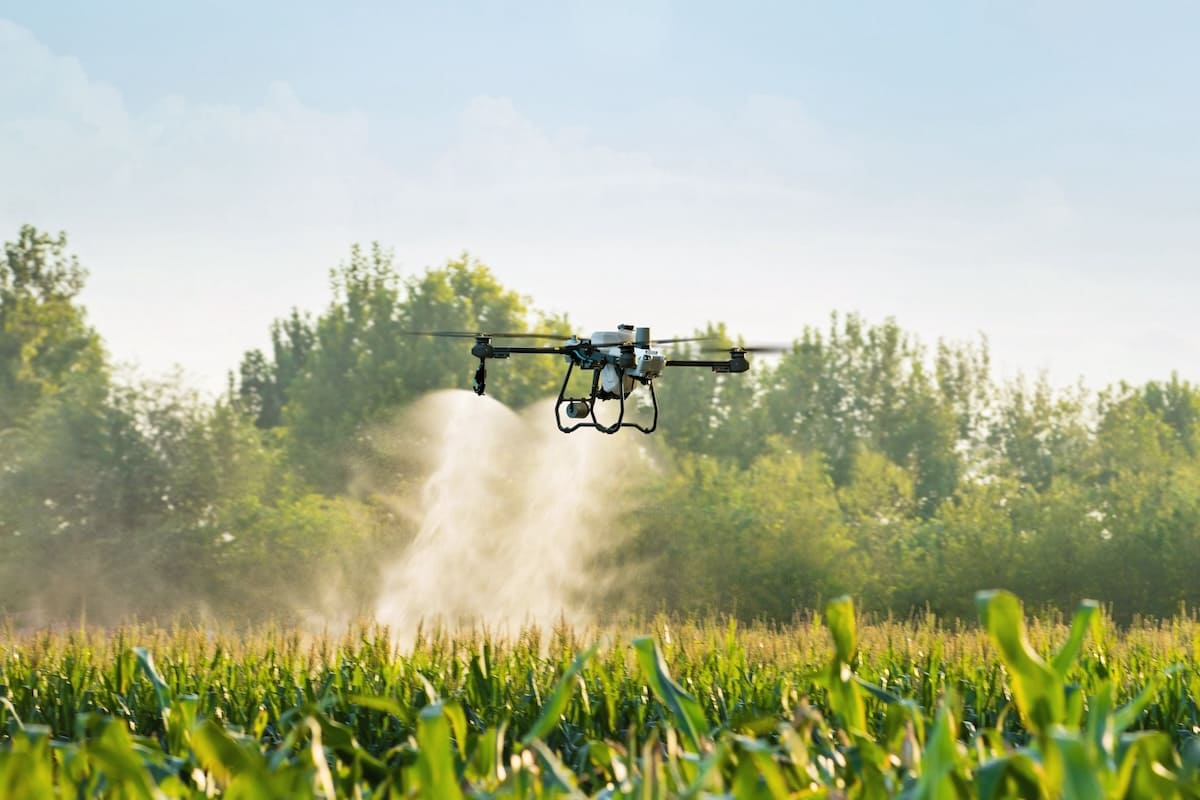
The drone flies pre-programmed routes at low altitude—often 6–12 feet above the crop canopy—using downward airflow from rotors to push droplets into the canopy for improved coverage.
This approach reduces drift and enhances deposition compared to traditional aerial spraying from planes or helicopters.
Drone spraying systems deliver several measurable advantages:
In high-value crops or fragmented fields, drones often outperform conventional equipment in efficiency and adaptability.
Below are five real-world crop examples where drone spraying systems are reshaping farm management.
Blueberries are high-value crops that require careful management of fungal diseases and micronutrient balance. Fields often feature uneven terrain, tight row spacing, and delicate fruit that can be damaged by heavy equipment.
Drone spraying systems allow growers to:
Because blueberries have dense canopy structures, rotor downdraft improves droplet penetration into inner foliage where fungal pressure often begins. Drones also reduce the need for tractor passes during wet conditions, protecting root zones and minimizing soil disturbance.
For berry producers, precise aerial application helps maintain fruit quality while reducing input waste.
Pepper crops, especially in warm climates, are vulnerable to aphids, thrips, and fungal infections. Rapid treatment is essential to prevent yield losses and cosmetic damage.
Drone spraying systems enable:
Because pepper plants grow in tight rows, traditional ground sprayers can cause mechanical damage or soil compaction. Drones eliminate ground contact, preserving plant structure and improving operational speed.
Additionally, drones are highly effective in fragmented fields where maneuvering large equipment is inefficient. Spot treatments reduce chemical usage while maintaining crop protection standards.
In large corn operations, drone spraying systems are often deployed for spot treatments rather than blanket applications.
Using aerial imagery and NDVI analysis, farmers can identify:
Instead of spraying an entire 100-acre field, drones treat only affected areas. This targeted approach can reduce chemical usage by 20–40% depending on field variability.
Drones are particularly valuable during later growth stages when tall corn plants make ground equipment impractical.
Tomatoes, whether field-grown or specialty varieties, demand consistent disease and nutrient management. Fungal diseases such as early blight and late blight can spread rapidly under humid conditions.
Drone spraying systems allow tomato growers to:
Because tomato plants are sensitive to mechanical damage, eliminating tractor passes protects fruit and reduces compaction around root zones. Drone downdraft also improves canopy penetration in dense tomato foliage.
For high-value tomato operations, rapid deployment and precision targeting protect yield while improving efficiency.
Fruit orchards require careful chemical management due to environmental regulations and consumer expectations.
Drone spraying systems can:
Unlike conventional air-blast sprayers, drones avoid excessive overspray and reduce operator exposure. In citrus, apples, and almonds, drone systems are increasingly used for early-season pest management and targeted treatments.
Tree-level application improves efficiency while preserving beneficial insects in non-target areas.
Drone spraying systems align precision agriculture with sustainability goals.
Although drone systems require upfront investment, many operations recover costs through input savings and improved yield protection.
Drone spraying systems are not without challenges:
Farmers must also consider training, licensing, and maintenance. However, as battery technology improves and regulations evolve, adoption is accelerating worldwide.
The next phase of drone spraying will integrate:
Combined with sensor data and predictive analytics, drone spraying systems will move from reactive treatments to proactive crop management.
Instead of spraying entire fields as insurance, farms will apply exactly what is needed—when and where it is needed.
Drone spraying systems represent the convergence of robotics, precision agriculture, and sustainability. From blueberries and peppers to corn, tomatoes, and orchards, these systems are redefining how modern farms protect and nourish crops in an increasingly resource-constrained world.
Agricultural drone spraying systems combine RTK precision, low-volume application, and canopy-targeted airflow to deliver measurable efficiency gains across crops.
Note: Actual results vary based on drone model, crop type, weather conditions, spray calibration, and regulatory parameters.
Coverage depends on drone payload, battery swapping speed, terrain, and spray rate. Many operations plan for 10–40 acres per hour per drone under efficient workflows, with higher throughput possible using multi-drone fleets.
Yes—drone spraying is legal in the U.S. when operators follow aviation rules and applicable pesticide regulations. Commercial agricultural drone pilots typically need FAA compliance (often Part 107) and must also follow state and federal pesticide-use requirements for the products being applied.
They can. Because drones operate close to the crop canopy and can be calibrated for droplet size, flight speed, and flow rate, they often improve placement and reduce off-target drift compared with higher-altitude aerial spraying. Drift risk still increases with wind, improper calibration, or poor timing.
Drone spraying is especially useful for high-value crops and fields where ground equipment is slow, damaging, or impractical. Common use cases include blueberries, peppers, tomatoes, orchards, and tall or late-stage crops like corn where tractor access is limited.
They can be cost-effective when they reduce labor, prevent yield loss through fast response, and cut input waste through targeted application. ROI improves in fragmented fields, wet or delicate soils, and high-value crops where timing and precision materially affect yield and quality.