Pepper Plants
Sweet, Hot, Ornamental
Peppers are among the most widely grown and commercially valuable vegetable crops in the world. They are prized for their diversity of flavor, color, size, and heat—ranging from sweet, crisp bell peppers to intensely spicy hot peppers used in fresh markets, sauces, dried spice powders, and processed foods.
Of the hundreds of pepper varieties cultivated worldwide, bell peppers, jalapeños, habaneros, serranos, and cayenne peppers are among the most widely grown. Each type brings its own culinary value, from raw snacking and fresh salads to roasting, stuffing, drying, pickling, and hot sauce production. This wide range of uses makes peppers one of the most versatile crops in home gardens, market farms, and commercial agriculture.
For growers, peppers can be a profitable high-value crop. Premium prices are often paid for specialty colors, heirloom varieties, extra-hot peppers, and greenhouse-grown fruit with strong visual quality. Peppers are produced in open fields, protected tunnels, and greenhouses, and depending on scale and variety, they may be harvested by hand or with mechanical assistance.
At the same time, peppers require attentive management. They are sensitive to temperature swings, uneven watering, nutrient imbalances, pest pressure, and disease. Successful pepper production depends on warm soil, good air flow, balanced fertility, and consistent moisture. Growing peppers in a Crop Circle Garden or on a Crop Circle Farm can help improve spacing, irrigation efficiency, and resilience in challenging conditions.
Peppers are technically fruits, not vegetables, because they develop from a flower and contain seeds. Their heat comes from a natural compound called capsaicin, which is concentrated mostly in the white inner membranes rather than in the seeds themselves.
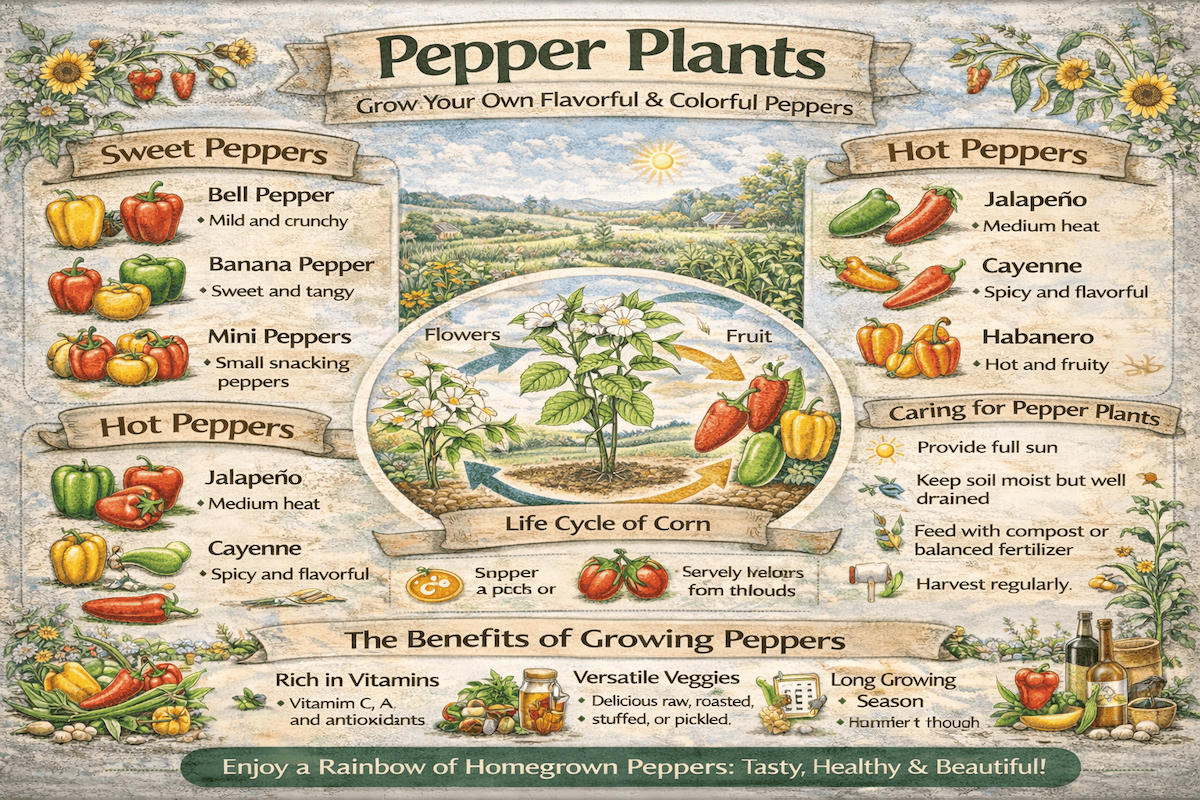
Feel free to share this pepper plants infographic on your website or blog. Please include a link back to this page as the source.
Pepper yields vary by variety, spacing, and heat management. Use these tools to estimate production and choose a layout that balances airflow, fruit size, and total harvest.
Estimate yield per pepper plant—then compare spacing scenarios.
Plan rows/beds and estimate total harvest across your layout.
Model whole-farm output, efficiency, and scenario-based yield assumptions.
Tip: Wider spacing improves airflow and reduces foliar disease risk during hot, humid periods.
Pepper seeds need warm conditions for reliable germination. A growing-medium temperature near 85°F is close to optimal, although peppers can germinate across a broader warm-temperature range. Once seedlings emerge, provide strong light and avoid keeping the growing medium excessively wet.
Transplant peppers outdoors only after frost danger has passed and both the soil and air have warmed. Soil temperatures around 60°F or warmer and nighttime air temperatures above roughly 50–55°F help reduce cold stress and support establishment.
Most peppers perform well with at least 6–8 hours of direct sunlight. In extremely hot climates, protection from intense late-afternoon sun can help reduce sunscald and heat stress. Maintain even soil moisture, but adjust irrigation to weather, soil type, rooting depth, container size, and plant growth rather than following a fixed watering schedule.
Provide enough spacing for airflow and support heavily loaded plants with stakes or cages when necessary. Pepper pruning and topping are optional management practices rather than universal requirements. Removing damaged or diseased growth is useful, while aggressive early topping can delay production and may not benefit every variety or growing season.
Harvest peppers according to the variety and intended use. Many peppers can be harvested while green or immature, or allowed to remain on the plant until they develop their mature color and flavor.
Bell peppers are among the most recognizable vegetable crops in the world. Known for their bright colors, crisp texture, and mild sweetness, bell peppers appear in a wide range of dishes—from salads and stir-fries to roasted vegetables and stuffed pepper recipes. These plants belong to the species Capsicum annuum, and their vibrant colors represent different stages of ripeness or distinct cultivated varieties.
Bell pepper plants are compact, productive garden plants that thrive in warm temperatures, full sunlight, and fertile, well-drained soil. Under favorable conditions, a healthy plant can produce multiple harvests throughout the growing season.
Green Bell Pepper Plants: Green bell peppers are the most widely grown variety and are harvested before the fruit fully ripens. This early harvest stage gives them a crisp texture and a slightly bitter, fresh flavor. Plants are medium-sized and bushy, often producing 20–30 peppers per plant in ideal conditions. Green bell peppers grow best in deep, loamy soil with full sun and warm nighttime temperatures above 65–70°F. Their firm walls make them especially popular for stuffing and roasting.
Red Bell Pepper Plants: Many red bell pepper cultivars begin green and develop their red color as the fruit reaches full maturity. Other bell pepper cultivars mature to yellow, orange, brown, purple, or other colors. As red-ripening cultivars mature, their flavor generally becomes sweeter than at the green stage. These peppers are rich in vitamin C and antioxidants, making them popular in salads, sandwiches, roasted dishes, and sauces. Plants commonly grow about 18–24 inches tall, although plant size and fruit production (between 5 and 15 peppers/plant) vary by cultivar and growing conditions. In warm climates, plants may benefit from staking as fruit develops.
Yellow Bell Pepper Plants: Yellow bell peppers offer a bright color and a slightly sweet, mildly tangy flavor. Their crisp yet tender flesh makes them excellent for salads, stir-fries, and roasted vegetable dishes. Plants generally reach about 18–20 inches tall and produce 5–10 peppers per plant. They perform best in rich soil with consistent moisture and 8–9 hours of sunlight daily.
Orange Bell Pepper Plants: Orange bell peppers provide a balanced flavor that falls between yellow and red varieties—sweet, juicy, and slightly tangy. Their bright color makes them popular in fresh dishes, soups, and vegetable medleys. Plants are compact, typically reaching 16–20 inches in height and producing 5–10 peppers per plant. They grow best in compost-enriched soil with full sun and steady watering.
Purple Bell Pepper Plants: Purple bell peppers add dramatic color to gardens and dishes. Their flavor is mild and slightly earthy, often similar to green bell peppers. Plants grow in the same compact form as other bell peppers and can produce 5–10 peppers per plant. They thrive in well-drained soil, warm conditions, and at least 8–10 hours of sunlight daily.
White Bell Pepper Plants: White bell peppers are less common but valued for their pale color and mild, slightly sweet flavor. They are frequently used in decorative dishes or specialty culinary presentations. Plants typically produce 5–10 peppers per plant, though some varieties such as California White may yield more. They prefer deep, fertile soil and warm nighttime temperatures above 65–70°F.
Chocolate Bell Pepper Plants: Chocolate bell peppers are a unique heirloom variety that ripens to a deep brown color. Their flavor is rich and sweet with a slightly smoky note. Plants are smaller than many other bell pepper varieties—often about 12–18 inches tall—and typically produce around 8–12 peppers per plant. They prefer nutrient-rich soil and stable warm temperatures during flowering and fruit set.
| Pepper Type | Heat Level (Scoville Units) | Flavor Profile | Common Uses |
|---|---|---|---|
| Bell Pepper | 0 SHU | Sweet, crisp, mild | Salads, stuffing, roasting |
| Jalapeño | 2,500 – 8,000 SHU | Fresh, grassy heat | Salsa, nachos, pickling |
| Habanero | 100,000 – 350,000 SHU | Fruity, citrus-like heat | Hot sauces, marinades |
| Ghost Pepper (Bhut Jolokia) | 800,000 – 1,000,000+ SHU | Extremely hot, smoky | Extreme hot sauces, chili powders |
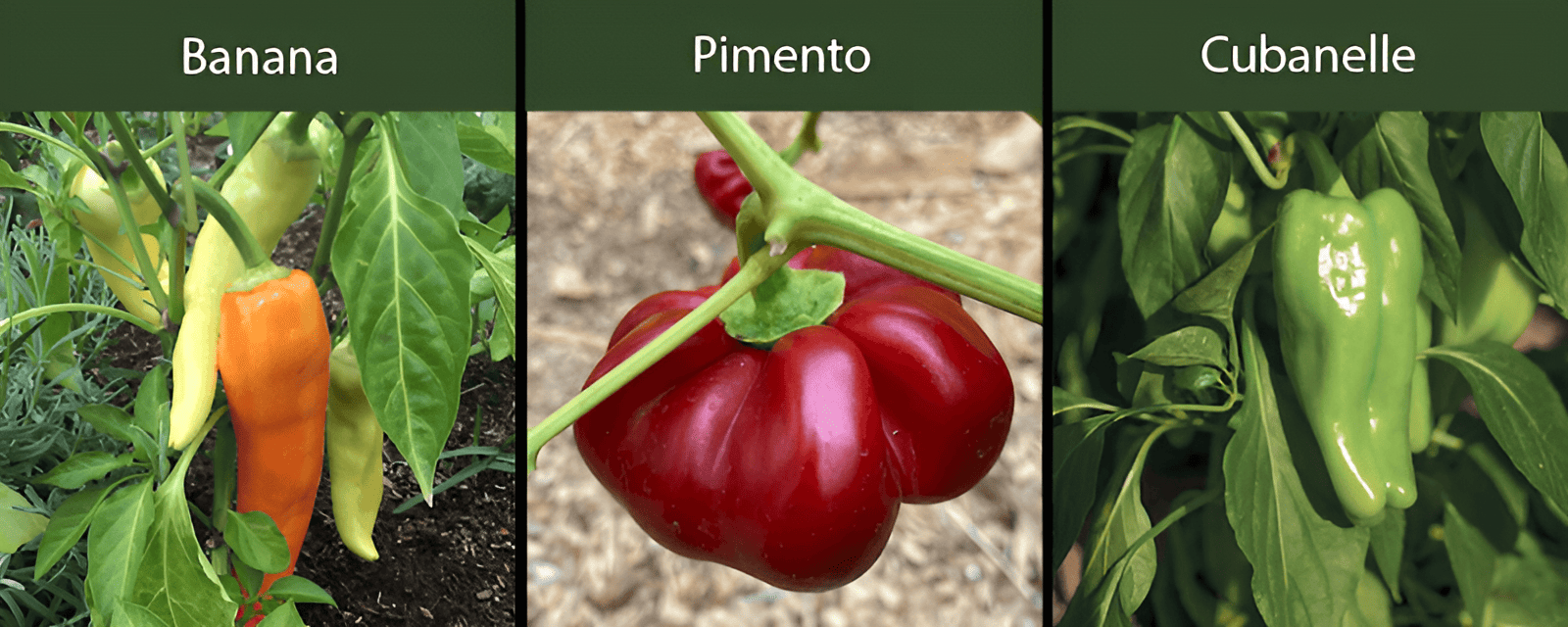
Not all peppers are fiery hot. Many varieties are prized for their mild sweetness, bright color, and versatility in the kitchen. Sweet peppers such as banana, cubanelle, marconi, pimento, and Jimmy Nardello are widely grown by home gardeners and commercial farmers because they produce abundant harvests and adapt well to warm climates. These peppers typically thrive in fertile, well-drained soil, consistent moisture, and 8–10 hours of full sunlight per day.
Banana Pepper Plants: Banana peppers are mild, tangy sweet peppers recognized for their long, curved shape and pale yellow color that resembles a banana. They are commonly harvested when yellow but can mature to orange or red. Plants grow 24–30 inches tall and can produce 15–25 peppers per plant. Banana peppers prefer warm soils and thrive in temperatures above 75–80°F. Their crisp texture makes them popular for pickling, salads, sandwiches, and pizza toppings.
Cubanelle Pepper Plants: Cubanelle peppers—sometimes called Italian frying peppers—are mild, sweet peppers with a slightly smoky flavor. They have a long, tapered shape and thin skin that softens quickly when cooked. Originating in the Caribbean, particularly Cuba, they are widely grown today in Mediterranean and North American gardens. Plants are compact and productive, yielding 10–20 peppers per plant. Cubanelle peppers are commonly used in dishes such as sausage and peppers, stir-fries, and roasted vegetable medleys.
Marconi Pepper Plants: Marconi peppers are classic Italian sweet peppers known for their long, curved shape and rich, sweet flavor. These peppers are excellent for roasting, grilling, and stuffing because their walls soften and develop sweetness when cooked. Plants typically reach 2–3 feet tall and can produce 15–20 peppers per plant in warm growing conditions. They thrive in fertile, well-drained soil and full sun.
Pimento Pepper Plants: Pimento peppers are small, heart-shaped sweet peppers with thick walls and a mild, slightly tangy flavor. Originally associated with Spanish cuisine, they are now widely cultivated around the world. Pimentos are most famous as the ingredient in pimento cheese and as the stuffing inside green olives. Plants are compact and bushy, producing 10–15 peppers per plant. They grow best in warm conditions with well-drained soil and consistent sunlight.
Jimmy Nardello Pepper Plants: Jimmy Nardello peppers are heirloom Italian frying peppers prized for their sweet, fruity flavor and thin, wrinkled skin. They are typically harvested when bright red and are excellent for roasting, sautéing, or eating fresh. Plants grow about 18–24 inches tall and can produce 15–20 peppers per plant during a long growing season. They perform best in loamy soil, full sun, and warm nighttime temperatures above 70°F.
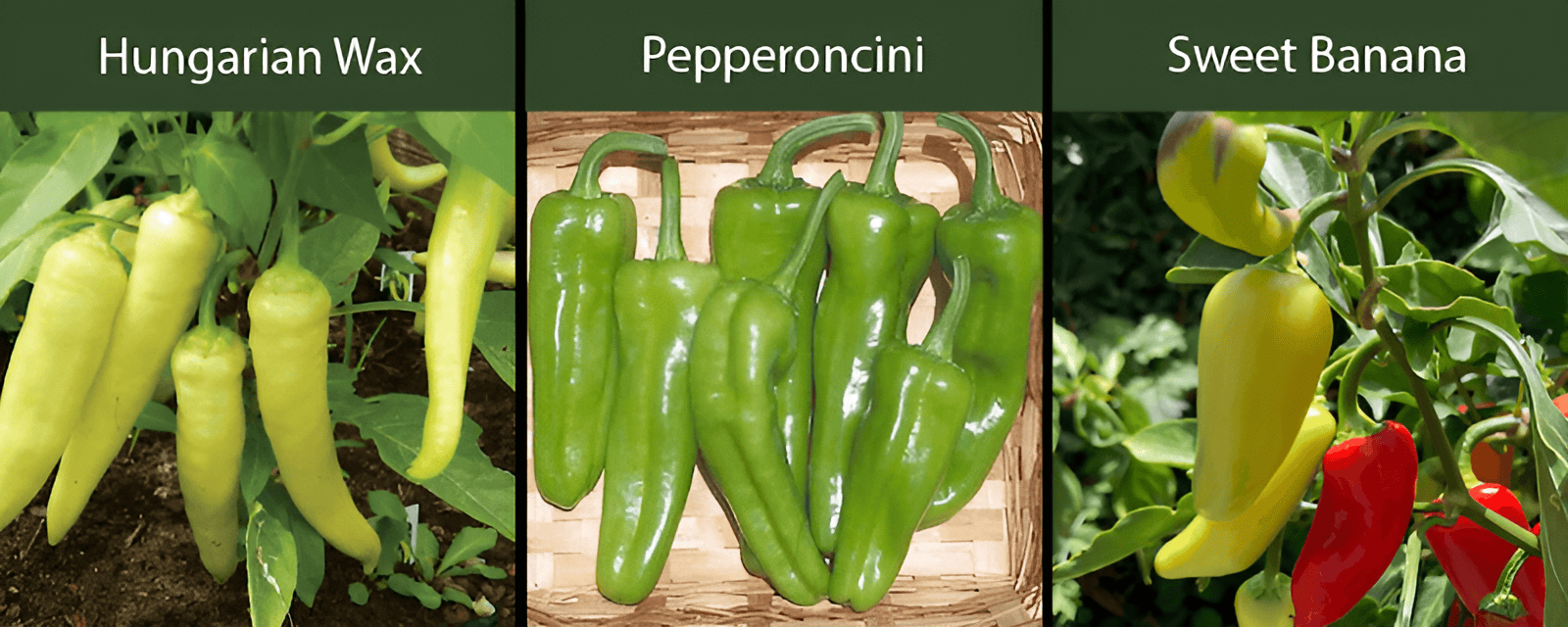
Many pepper varieties sit comfortably between sweet bell peppers and fiery chili peppers. These “sweet-heat” peppers deliver mild spice with bright, tangy flavor, making them popular in pickling, salads, sandwiches, and Mediterranean cuisine. Among the most widely grown varieties are Hungarian wax peppers, sweet banana peppers, and pepperoncini peppers. These productive plants thrive in warm climates, fertile soil, and 8–10 hours of full sunlight per day.
Hungarian Wax Pepper Plants: Hungarian wax peppers resemble banana peppers but typically carry more heat, ranging from mild to moderately spicy. Their thin skins and tapered shape make them excellent for pickling, roasting, and stuffing. Fruits begin pale yellow and ripen to orange or red if left on the plant longer. Plants grow upright and vigorous, often producing 20–30 peppers per plant. They perform best in deep, nutrient-rich soil and warm conditions above 75°F. Because of their popularity in pickling, Hungarian wax peppers are often called the classic pickling pepper.
Sweet Banana Pepper Plants: Sweet banana peppers are mild, tangy peppers known for their elongated, curved shape and bright yellow color. Their crisp texture and gentle sweetness make them a favorite topping for pizzas, sandwiches, and salads. Plants typically grow 2–3 feet tall and can produce 25–35 peppers per plant during a long growing season. Sweet banana peppers grow best in well-drained soil and consistent moisture. Water deeply as needed based on soil moisture, rainfall, temperature, and plant development rather than following a fixed weekly schedule.
Pepperoncini Pepper Plants: Pepperoncini peppers are mildly spicy, tangy peppers widely used in Mediterranean and Italian cuisine. Their slender shape and thin skin make them ideal for pickling, and they are often served whole with salads, sandwiches, and antipasto dishes. Plants can grow over 3 feet tall and are highly productive, yielding 30–50 peppers per plant in favorable conditions. Pepperoncini peppers thrive in well-drained soil, full sun, and warm nighttime temperatures between 70–85°F.
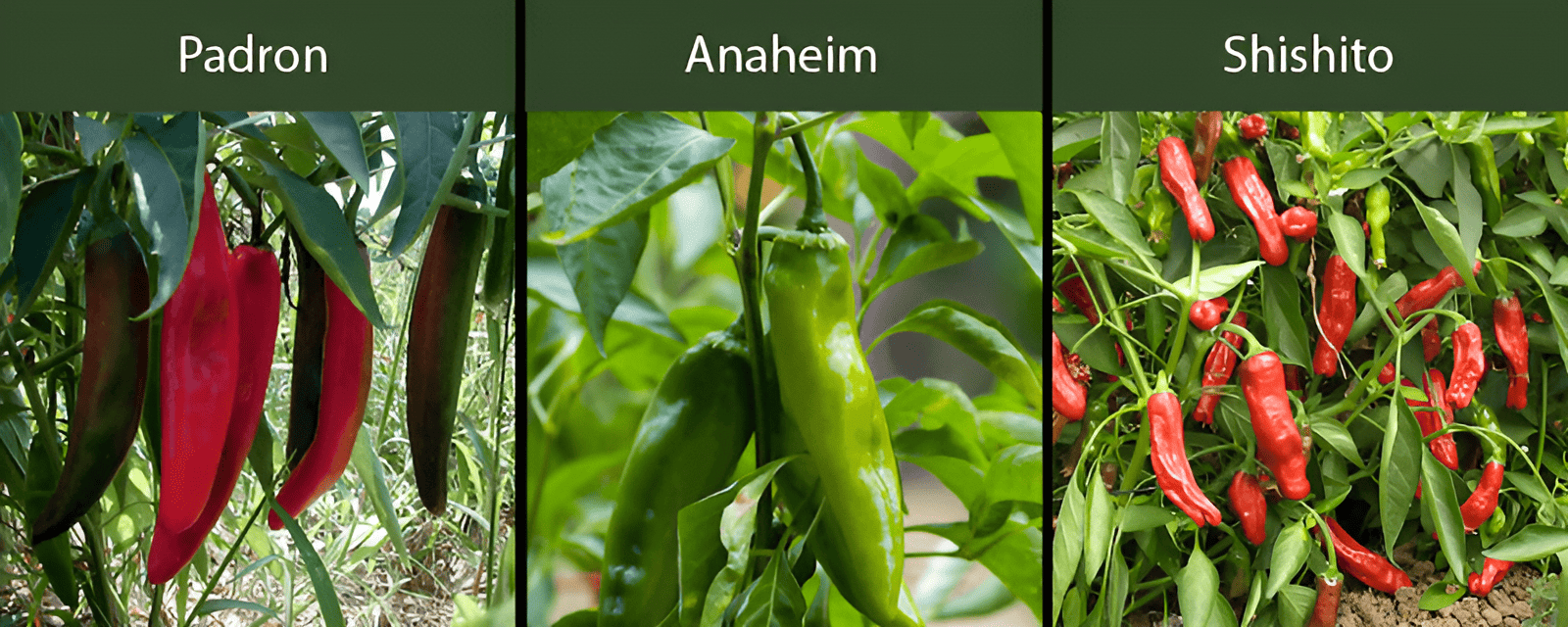
Frying peppers are a popular group of thin-skinned peppers prized for their mild flavor, quick cooking time, and versatility in global cuisine. These peppers are commonly sautéed or blistered in hot oil, which enhances their natural sweetness while creating a lightly charred flavor. Among the most widely grown frying peppers are Padrón, Shishito, Anaheim, and Italian frying peppers. These varieties thrive in warm climates, fertile soil, and 8–10 hours of full sunlight per day.
Padrón Pepper Plants: Padrón peppers are small, thin-skinned peppers originating from the Galicia region of Spain. They are famous for their unpredictable heat—most peppers are mild, but occasionally one can be surprisingly spicy. Plants are compact and bushy, similar in structure to eggplant, and can produce 30–50 peppers per plant in favorable growing conditions. Padrón peppers grow best in well-drained, mineral-rich soil and warm, sunny climates. Traditionally they are prepared as a Spanish tapas dish, lightly fried in olive oil and finished with coarse sea salt.
Shishito Pepper Plants: Shishito peppers are slender, wrinkled peppers that are usually mild but occasionally carry a small burst of heat. Originally cultivated in Japan, they are now widely grown in North America, particularly in California. Plants are compact and highly productive, yielding 30–50 peppers per plant. Shishito peppers thrive in fertile, well-drained soil and warm temperatures with at least 7–8 hours of sunlight daily. They are most often served blistered in a hot skillet with oil and salt as a simple appetizer.
Anaheim Pepper Plants: Anaheim peppers are long, tapered peppers with mild heat and a slightly sweet flavor. They are widely used in Southwestern and Mexican cuisine and are commonly roasted or stuffed. The variety traces its cultivation roots to New Mexico and California. Plants typically grow about 24–30 inches tall and produce 20–30 peppers per plant. Anaheim peppers grow best in sandy or loamy soil with consistent moisture and full sun. They are often used in dishes such as enchiladas, chile rellenos, and fresh salsas.
Italian Frying Pepper Plants: Italian frying peppers—sometimes called Italian sweet peppers—are long, thin peppers with a mild, slightly fruity flavor. These peppers are widely used in Mediterranean cooking and are commonly sautéed with olive oil, garlic, and herbs. Plants grow 2–3 feet tall and can yield 30–40 peppers per plant in a productive season. They perform best in rich, organic soil with consistent watering and 8–10 hours of sunlight per day.
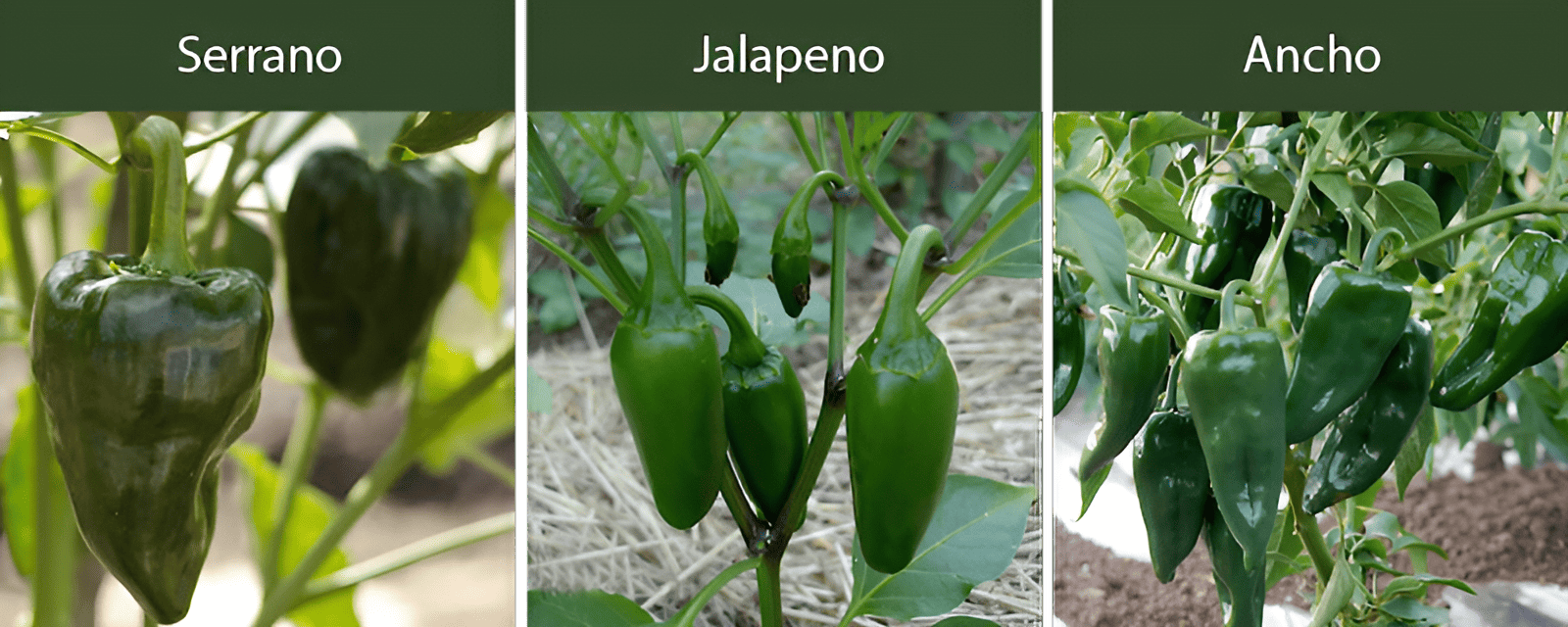
Mexican cuisine is famous for its vibrant flavors and layered heat, much of which comes from a diverse range of chili peppers. Among the most widely grown and used peppers are jalapeño, serrano, guajillo, and ancho peppers. These varieties vary in heat level, flavor profile, and culinary application, but they all thrive in warm climates with fertile, well-drained soil and 8–10 hours of full sunlight per day.
Jalapeño Pepper Plants: Jalapeño peppers are among the most recognizable chili peppers in the world. They offer a moderate level of heat with a slightly smoky, fresh flavor. The peppers have thick walls and a crisp texture, making them ideal for salsas, pickling, stuffing, and grilling. Originating in Mexico, jalapeños are now widely cultivated in the United States, especially in California and Texas. Plants typically grow to about 24–30 inches tall and are highly productive, often yielding 30–50 peppers per plant. Jalapeños grow best in well-drained soil with consistent warmth and daytime temperatures above 75°F.
Serrano Pepper Plants: Serrano peppers are hotter than jalapeños and deliver a bright, slightly grassy flavor that adds fresh heat to many Mexican dishes. They are commonly used in salsas, hot sauces, and traditional recipes such as pico de gallo. Serrano plants grow into compact bushy shrubs that produce 20–30 peppers per plant. The peppers have thin skins and a firm texture, making them excellent for fresh use. Serranos prefer sandy or loamy soil and thrive in warm conditions with at least 8–9 hours of sunlight per day.
Guajillo Pepper Plants: Guajillo peppers are moderately spicy chilies known for their deep, slightly sweet flavor with subtle smoky notes. When dried, they are one of the most commonly used peppers in traditional Mexican sauces, including mole and adobo. Guajillo pepper plants are compact and productive, typically yielding 15–25 peppers per plant. They grow best in sandy or well-drained soils and require warm temperatures and consistent sunlight throughout the growing season.
Ancho Pepper Plants: Ancho peppers are the dried form of poblano peppers and are prized for their mild heat and rich, slightly sweet flavor. These peppers are widely used in Mexican cooking to create sauces, marinades, and traditional dishes such as mole. Poblano plants grow as small, bushy plants producing 12–20 peppers per plant. They thrive in warm climates with sandy or loamy soil and require 8–10 hours of sunlight daily to develop strong fruit production.
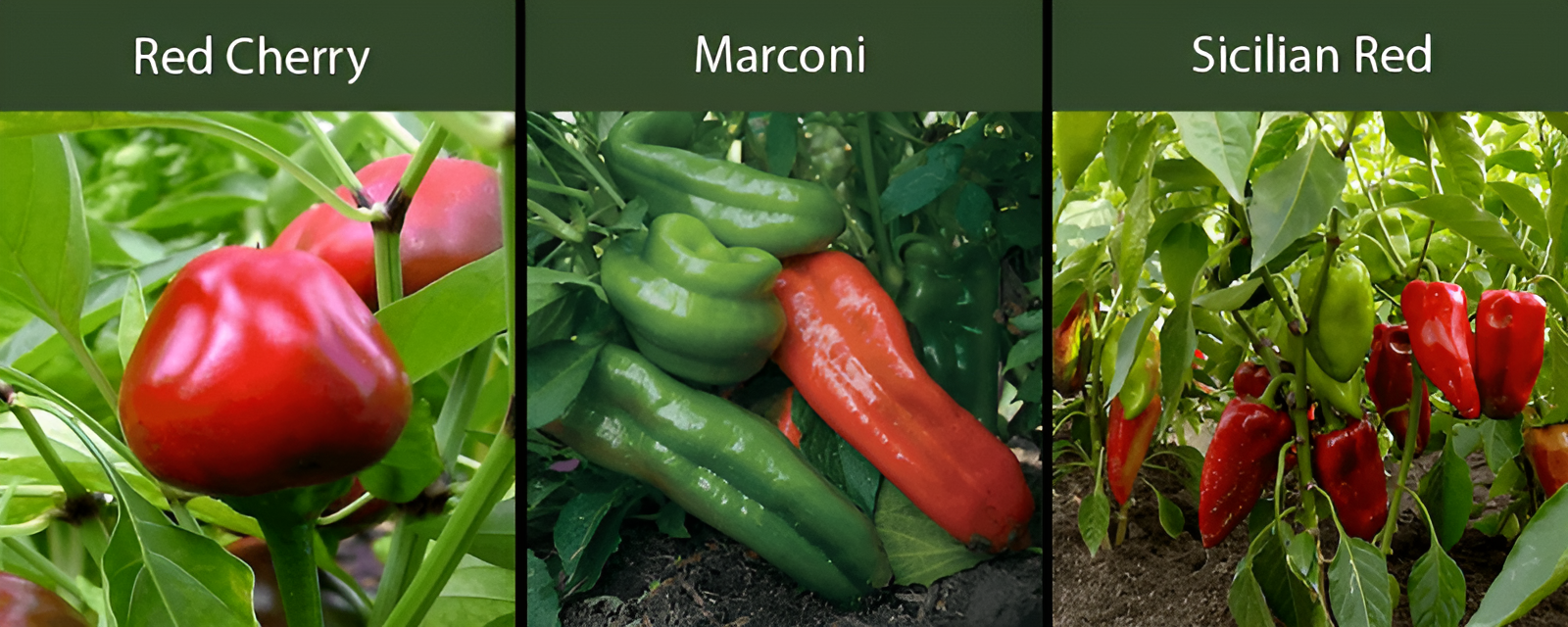
Italian cuisine features a wide range of flavorful sweet and mildly spicy peppers. Among the most widely grown varieties are Sicilian peppers, Marconi peppers, and Italian red cherry peppers. These peppers are valued for their sweetness, aroma, and versatility in Mediterranean cooking. Like most pepper plants, they thrive in warm climates with fertile, well-drained soil and 8–10 hours of full sunlight per day.
Sicilian Pepper Plants: Sicilian peppers are long, tapered sweet peppers commonly used in traditional Mediterranean dishes. They resemble Italian frying peppers and develop a pleasant sweetness when roasted or grilled. Plants typically grow 24–30 inches tall and can produce 20–30 peppers per plant during a productive season. They perform best in well-drained soil rich in organic matter and warm growing conditions. Sicilian peppers are frequently used in dishes such as pasta alla norma, grilled vegetable platters, and antipasto.
Marconi Pepper Plants: Marconi peppers are classic Italian sweet peppers known for their long, slender shape and rich flavor. These peppers ripen from green to deep red and become especially sweet when roasted. Plants are vigorous and productive, often yielding 20–30 peppers per plant. Marconi peppers grow best in fertile soil with consistent moisture and full sun. Their thin skins and tender flesh make them ideal for roasting, grilling, stuffing, and Mediterranean sauces.
Italian Red Cherry Pepper Plants: Italian red cherry peppers are small, round peppers about the size of a cherry. They deliver mild heat with a slightly sweet, tangy flavor. Plants are compact and bushy yet extremely productive, capable of producing 40–60 peppers per plant in ideal conditions. These peppers thrive in warm temperatures and well-drained soil with abundant sunlight. Italian red cherry peppers are most commonly used for pickling, stuffing with cheese or herbs, and antipasto platters.
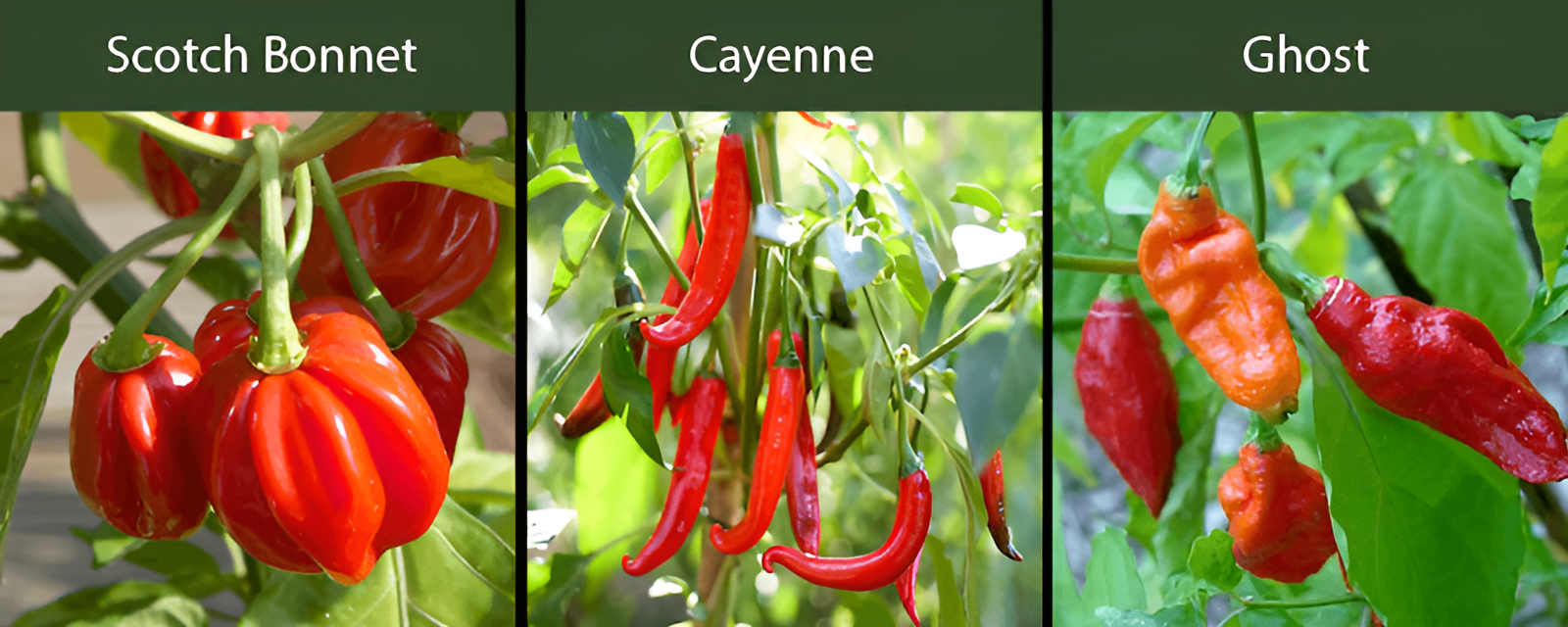
Hot peppers are prized around the world for their intense heat, complex flavors, and culinary versatility. From moderately hot cayenne peppers to extremely spicy ghost peppers, these chili varieties bring depth and heat to sauces, marinades, and traditional dishes across many cultures. Most hot pepper plants belong to the species Capsicum chinense or Capsicum annuum and thrive in warm climates with fertile, well-drained soil and 8–10 hours of full sunlight per day.
Habanero Pepper Plants: Habanero peppers are among the most famous hot peppers in the world, known for their intense heat combined with a fruity, tropical flavor. These lantern-shaped peppers originated in the Caribbean and Central America and are now cultivated globally. Plants grow into large, bushy shrubs and can produce 40–50 peppers per plant in warm conditions. Habaneros prefer well-drained, nutrient-rich soil and thrive in temperatures above 75°F. They are widely used to make hot sauces, spicy salsas, and Caribbean marinades.
Ghost Pepper Plants (Bhut Jolokia): Ghost peppers are famous for their extreme heat and smoky, slightly sweet flavor. Originally cultivated in Northeast India, they were once recognized as one of the hottest peppers in the world, reaching over 1,000,000 Scoville Heat Units. Plants are moderately compact and typically produce 15–25 peppers per plant. Ghost peppers grow best in warm, humid climates with rich soil and consistent sunlight. They are commonly used in extremely hot sauces and chili powders.
Scotch Bonnet Pepper Plants: Closely related to the habanero, Scotch bonnet peppers are a staple in Caribbean cuisine. These peppers have a distinctive bonnet-like shape and deliver intense heat with a slightly sweet, fruity flavor. Plants are compact but productive, yielding 20–30 peppers per plant. Scotch bonnet peppers thrive in warm climates with well-drained soil and strong sunlight. They are commonly used in jerk marinades, pepper sauces, and Caribbean stews.
Thai Bird’s Eye Pepper Plants: Thai bird’s eye peppers are small but extremely hot chilies widely used throughout Southeast Asia. These peppers are slender and bright red when mature, with a sharp heat and slightly citrusy flavor. Plants are compact and highly productive, producing 40–60 peppers per plant. They grow best in warm climates with well-drained soil and full sun. Thai bird’s eye peppers are frequently used in Thai curries, stir-fries, and chili sauces.
Cayenne Pepper Plants: Cayenne peppers are long, slender peppers known for their moderate to high heat and vibrant red color when mature. They are commonly dried and ground into cayenne pepper powder, a staple spice used in cuisines worldwide. Plants are productive and can yield 40–60 peppers per plant in favorable conditions. Cayenne peppers thrive in warm climates with sandy or loamy soil and consistent sunlight throughout the growing season.
Peppers are one of the most diverse and economically valuable vegetable crops grown worldwide. From sweet bell peppers to intensely hot varieties like habaneros and ghost peppers, pepper plants offer a remarkable range of flavors, colors, and heat levels. With proper soil, fertility, and consistent sunlight, peppers can be highly productive plants harvested throughout the summer and early fall.
Because peppers are sensitive to pests, diseases, and temperature fluctuations, careful cultivation practices are important for achieving strong yields. Growing peppers in a Crop Circle Garden or on a Crop Circle Farm can help improve soil health, water efficiency, and plant resilience, providing a productive environment for growing high-value pepper crops.
Turn your 1 acre into a high-yield, profitable farm.
Crop Circle Farms specializes in designing and building fully engineered, low-impact farm systems that use 90% less water, 85% less fertilizer, and deliver two to three times the yield of traditional farming.
Whether you have a vacant lot, an empty field, a resort, school, island community, or small family farm, we’ll build it from the ground up for you. Our team handles everything from farm layout and installation to irrigation, root systems, training, and first planting.
Contact Us to explore a custom Crop Circle Farm design for your property.
Help us expand our mission to revolutionize agriculture globally. We are seeking partners to implement Crop Circle Farms to feed people in need. Together, we can build scalable food production systems that save water, reduce costs, and feed thousands of people. Contact Growing To Give
Pepper seeds germinate best in warm growing media. Temperatures around 80–85°F (27–29°C) generally support fast, reliable germination, although seeds can germinate across a somewhat wider warm-temperature range.
Keep the seed-starting mix consistently moist but not waterlogged. Some hot pepper varieties, particularly slow-growing Capsicum chinense types such as habaneros, may take longer to germinate than many sweet pepper varieties.
Transplant peppers after the danger of frost has passed and outdoor conditions have warmed. Soil temperatures around 60°F (16°C) or warmer support better establishment, and consistently cool nights can slow growth.
Harden seedlings gradually before transplanting by exposing them to outdoor conditions over several days. Avoid planting peppers into cold, saturated soil, which can increase transplant stress and root problems.
Most pepper plants perform well with at least 6–8 hours of direct sunlight per day. Adequate light supports flowering, fruit development, and healthy plant growth.
In extremely hot climates, intense afternoon sun can contribute to heat stress or sunscald on exposed fruit. Light afternoon shade, healthy foliage, mulch, and appropriate irrigation can help protect plants during periods of extreme heat.
Pepper spacing depends on cultivar, mature plant size, growing system, climate, and airflow requirements. Larger bell and frying pepper plants generally require more room than compact hot pepper varieties.
Avoid overcrowding because restricted airflow can increase humidity around foliage and make disease management more difficult. Stakes, cages, or other light supports can help heavily loaded plants and brittle branches carry developing fruit.
Pepper plants perform best with relatively even soil moisture, but there is no single watering schedule that works in every garden or farm. Irrigation frequency depends on soil type, temperature, rainfall, rooting depth, container size, plant growth, and production system.
Water deeply enough to moisten the active root zone and allow the soil surface to begin drying between irrigations rather than keeping roots continually saturated. Drip irrigation can help deliver water directly to the root zone while keeping foliage relatively dry.
Pepper heat comes from compounds called capsaicinoids, including capsaicin. They are concentrated primarily in tissues associated with the placenta, the pale internal tissue where the seeds attach.
The seeds themselves do not produce most of the heat, although capsaicinoids can coat their surfaces. Pepper pungency is commonly described using Scoville Heat Units (SHU), and actual heat can vary with genetics and growing conditions.
Commonly grown peppers include bell peppers, jalapeños, serranos, banana peppers, cayenne peppers, poblanos, habaneros, pepperoncini, and many sweet and mildly spicy frying peppers.
Peppers belong to several Capsicum species and include thousands of cultivars differing in plant size, fruit shape, color, maturity, flavor, and heat. The best variety depends on climate, market, culinary use, and growing system.
Yes. Peppers can be grown in backyard gardens, containers, raised beds, Crop Circle Gardens, high tunnels, greenhouses, and field-scale farms.
Successful production depends on providing suitable temperatures, adequate light, appropriate spacing, balanced fertility, consistent moisture, and management of pests and diseases. Protected growing systems can also extend production seasons in some climates.
Many peppers can be harvested while immature and green or allowed to remain on the plant until they develop their mature color. Depending on the cultivar, mature fruit may become red, yellow, orange, purple, brown, or another color.
Harvest peppers when they reach the desired size, color, flavor, and intended use. Cutting or carefully twisting fruit from the plant can help avoid breaking brittle branches, particularly on heavily loaded plants.
Peppers can be a high-value crop, particularly specialty peppers, premium-colored bell peppers, locally marketed varieties, and crops produced for specific fresh, culinary, processing, or specialty markets.
Profitability is not guaranteed. Actual returns depend on yield, market price, labor, production costs, variety, growing system, pest and disease losses, post-harvest handling, and access to reliable buyers.
Next steps: Explore how to grow peppers, the Scoville heat index, crop-smart irrigation, and Crop Circle Gardens for more guidance on pepper production, heat levels, irrigation, and garden design.