Buffer Strips
Biological Corridors, Green Bridges, and Riparian Zones
A buffer strip is an area of permanent vegetation established between agricultural or developed land and a sensitive area such as a stream, river, drainage ditch, wetland, pond, or field boundary. Riparian buffers, grass filter strips, field borders, and other vegetated buffers can all serve related conservation functions.
Buffer strips help reduce soil erosion by slowing surface runoff and allowing sediment to settle before it reaches waterways. Depending on their design, vegetation, soil, and location, they can also intercept some nutrients and agricultural contaminants carried in runoff.
Diverse buffers can provide habitat and movement corridors for wildlife, pollinators, beneficial insects, and other organisms. This can be particularly useful in developed landscapes and large monoculture farming systems where natural habitat may be fragmented.
Perennial vegetation can also contribute to soil carbon storage, while trees and shrubs established beside waterways may provide shade and help stabilize streambanks. Explore our tree carbon calculator for additional information about estimating carbon stored in trees.
Overall, buffer strips are practical land-management tools that can support soil conservation, water quality, habitat, and the long-term resilience of agricultural and riparian landscapes.
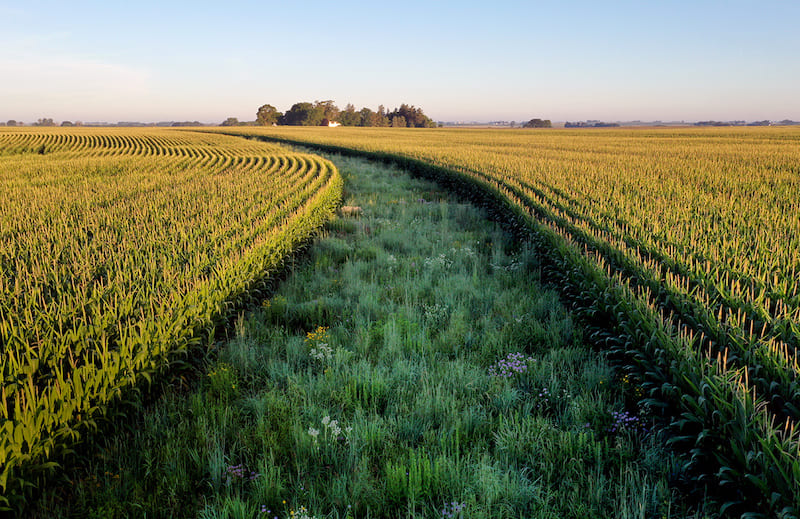
Begin by identifying areas where permanent vegetation could intercept runoff or protect sensitive land. Common locations include streambanks, drainage areas, wetlands, field edges, slopes, and riparian zones . Consider slope, soil, existing vegetation, drainage patterns, erosion, adjacent land use, and the principal sources of runoff.
There is no universal buffer width. The appropriate width depends on the buffer's purpose, field slope, soil, runoff volume, vegetation, waterway characteristics, and applicable conservation or regulatory requirements. Wider buffers may be appropriate where runoff volumes are greater or where especially sensitive waterways and habitats require additional protection.
Design the buffer around the functions it needs to perform. A grass or grass-forb zone can help intercept sediment and shallow runoff, while shrubs and trees can add deeper root systems, streambank stabilization, shade, and wildlife habitat in appropriate riparian locations.
Choose species suited to the site's climate, soil, moisture conditions, and management requirements. Locally appropriate native perennial grasses, flowering plants, shrubs, and trees can provide strong root systems and diverse habitat while reducing the risk that the buffer itself becomes a source of invasive vegetation. Deep-rooted species can also improve soil structure and water movement; see our guide to plants that regenerate soil for additional examples.
Control invasive plants and competing vegetation before establishment. Prepare only as much soil as necessary for the selected seeding or planting method, taking care not to create additional erosion on exposed or sloping ground. Where conditions permit, minimizing soil disturbance using principles associated with no-till agriculture can help preserve soil structure and reduce erosion during establishment.
Seed or plant at a season appropriate for the selected species and local climate. Protect new vegetation from excessive traffic, grazing, erosion, and competition while roots become established. Temporary mulch or other erosion-control measures may be useful on vulnerable sites.
Inspect the buffer periodically for bare areas, invasive plants, sediment accumulation, erosion, damaged vegetation, and concentrated runoff channels. Reseed or replant damaged areas and adjust management when water is bypassing the vegetation rather than moving through it.
Vegetated buffer strips reduce erosion primarily by slowing surface runoff before it reaches a stream, ditch, wetland, or other sensitive area. As water velocity decreases, its ability to detach and transport soil particles also declines.
Plant roots help stabilize soil and reinforce the upper soil profile. Perennial grasses, shrubs, and trees can develop extensive root systems that help hold soil in place while above-ground vegetation intercepts moving water. Learn more about how tree roots stabilize soil .
Buffer effectiveness depends on slope, soil, vegetation density, width, runoff volume, and whether water moves through the buffer as shallow flow rather than concentrating into channels.
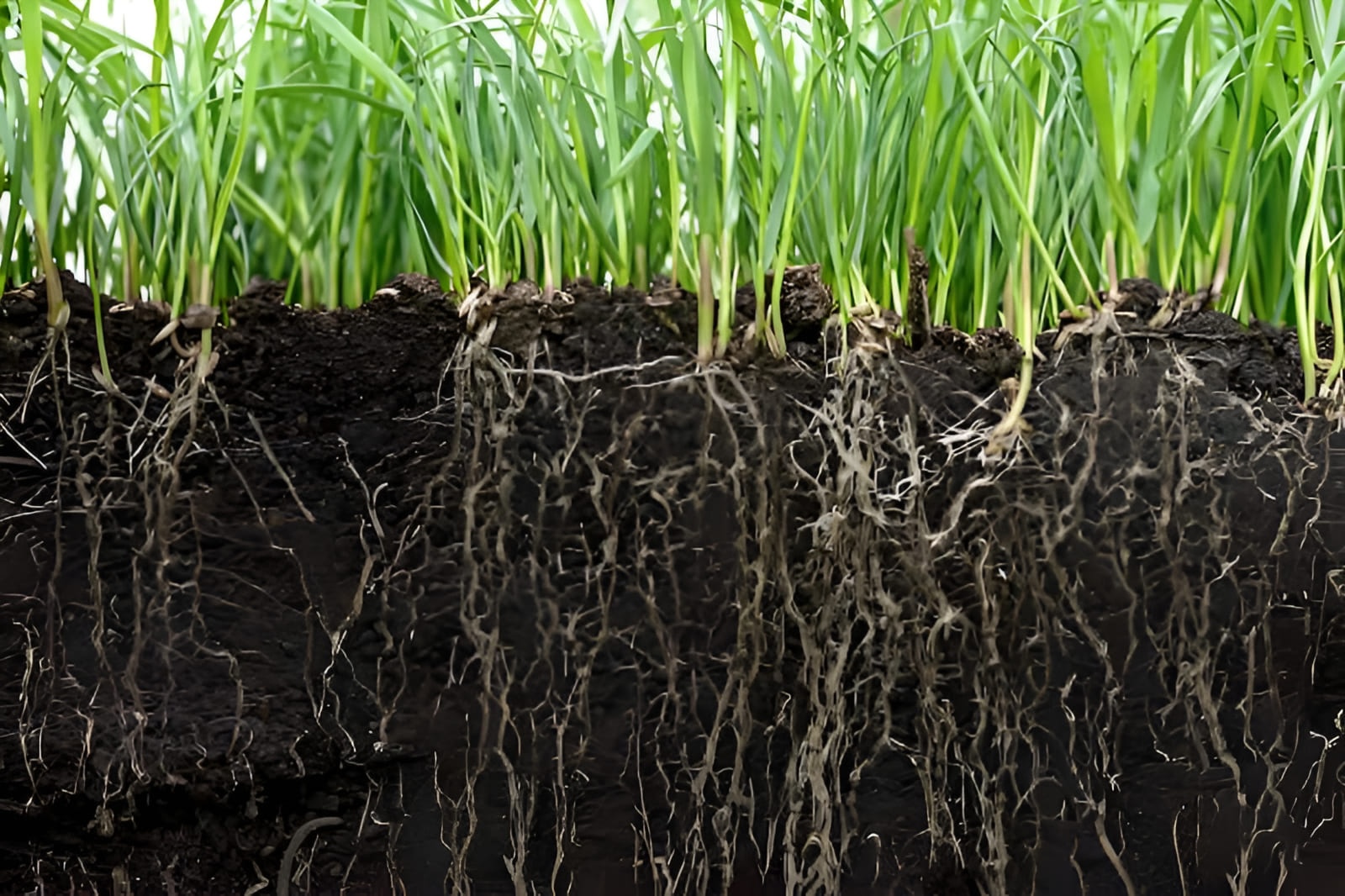
Buffer strips can help intercept sediment, nutrients, and some agricultural contaminants carried in surface runoff before that water reaches streams, rivers, drainage channels, or other sensitive areas.
As runoff enters dense vegetation, stems and surface residue slow the movement of water. This reduction in velocity allows some suspended soil particles and sediment-bound nutrients to settle within the buffer rather than continuing directly into a waterway.
Vegetation and soil microorganisms can also take up, retain, or transform some dissolved nutrients. Effectiveness varies with buffer width, vegetation density, soil, slope, runoff volume, drainage pathways, and the contaminants involved. Buffer strips are therefore most effective when combined with good nutrient, irrigation, and erosion-management practices across the rest of the farm. The Nutrient Efficiency Calculator can help model fertilizer use, nutrient uptake, and potential nutrient losses under different growing and management scenarios.
Riparian areas form the transition between terrestrial and aquatic environments. Maintaining diverse vegetation in these areas can provide feeding, nesting, shelter, and movement habitat for birds, pollinators, beneficial insects, small mammals, amphibians, and other organisms.
Buffer strips can also improve landscape connectivity by linking otherwise separated habitat areas. These biological corridors can allow wildlife to move through agricultural and developed landscapes while increasing the amount and diversity of available habitat.
The ecological value of a riparian buffer depends on its width, plant diversity, surrounding land use, connectivity, management, and the condition of the adjacent waterway.
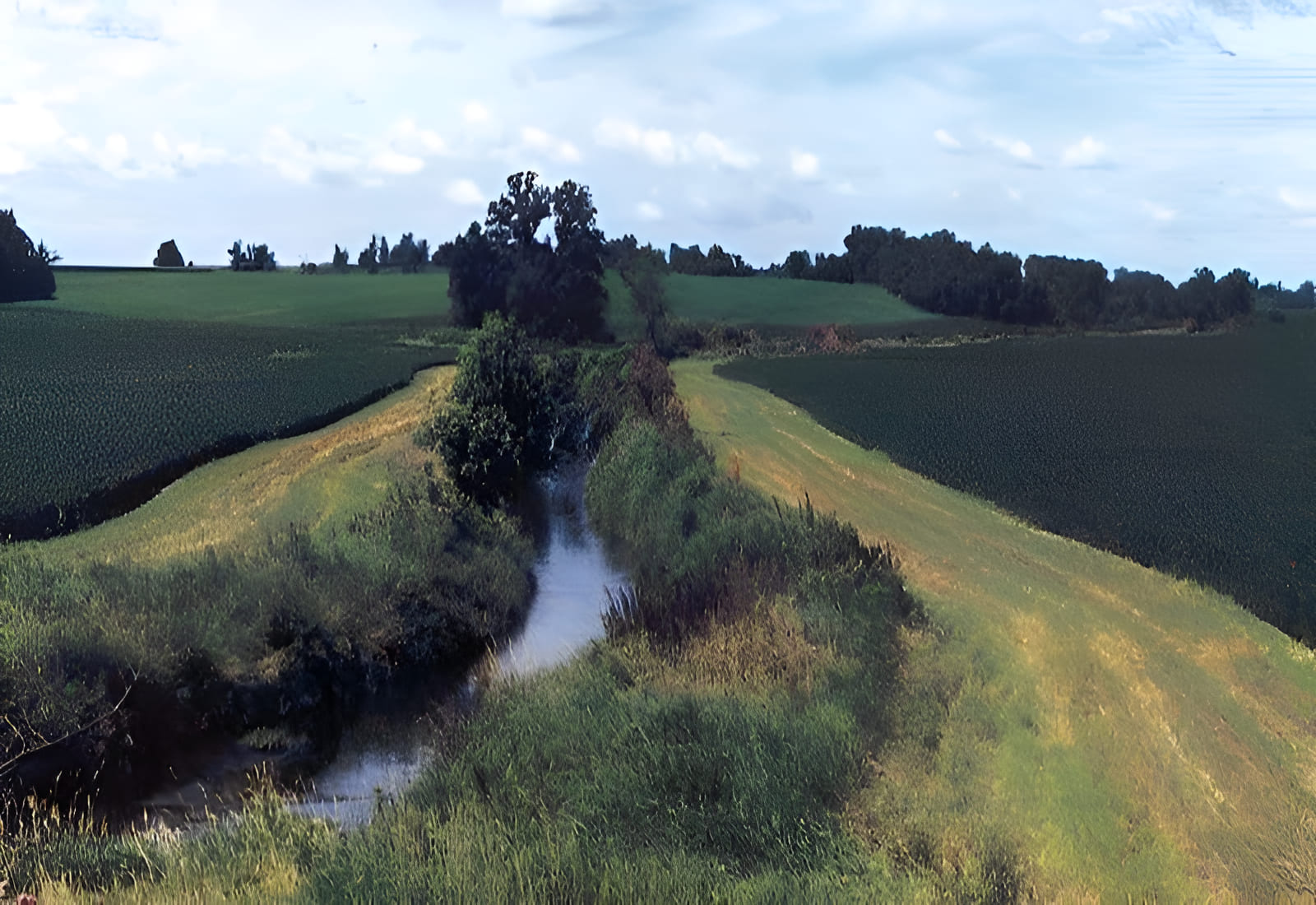
Buffer strips can contribute to carbon storage because perennial vegetation captures atmospheric carbon dioxide through photosynthesis and stores some of that carbon in plant biomass and soil organic matter. The amount retained varies considerably with plant species, soil conditions, climate, management, buffer age, and disturbance. These practices can also support broader climate-smart agriculture strategies.
Woody riparian buffers containing shrubs and trees can store carbon in above-ground biomass as they mature, while perennial grasses and other deep-rooted plants can contribute organic material below ground. These benefits complement the primary functions of many agricultural buffers: reducing erosion, slowing runoff, protecting waterways, and providing habitat.
Buffer strips should therefore be viewed as one component of a broader land-management and conservation strategy rather than as a stand-alone solution for offsetting greenhouse-gas emissions.
Trees, shrubs, and other tall vegetation established along streams can provide shade that limits direct solar heating of the water. This can be particularly valuable in smaller streams where riparian vegetation influences the amount of sunlight reaching the channel.
Water temperature affects dissolved oxygen, aquatic habitat, and the biological processes of fish, insects, and other organisms. The cooling benefit provided by a riparian buffer depends on factors such as stream width, vegetation height and density, channel orientation, climate, and surrounding land use.
Buffer strips can perform several functions within the same landscape. They can help slow runoff, capture sediment, stabilize soil, intercept some nutrients and agricultural contaminants, provide wildlife habitat, and improve connectivity between fragmented natural areas.
When incorporated into a broader conservation agriculture plan, buffer strips can complement practices such as cover cropping, careful nutrient management, erosion control, improved irrigation, and protection of riparian areas.
A buffer strip is an area of permanent vegetation established between agricultural land and a sensitive area such as a stream, drainage ditch, wetland, road, or field boundary. Grasses, flowering plants, shrubs, trees, or combinations of these plants can slow runoff, trap sediment, protect soil, and create habitat for wildlife.
Dense vegetation slows water as it moves across the soil surface. Slower runoff has less energy to carry soil particles away from the field, while plant stems and surface residue help capture sediment before it reaches a stream or drainage channel. Plant roots also help stabilize the soil and improve its resistance to erosion.
Buffer strips can reduce the movement of sediment-bound nutrients and some agricultural chemicals by slowing runoff and allowing suspended material to settle. Vegetation and soil microorganisms may also take up or transform some nutrients. Their effectiveness varies with slope, soil, vegetation, runoff volume, drainage patterns, and how the surrounding land is managed.
A filter strip is generally a vegetated area designed primarily to intercept runoff from agricultural land. A riparian buffer is established alongside a stream, river, wetland, or other water body and may include grasses, shrubs, and trees. Riparian buffers can provide additional benefits such as streambank stabilization, shade, wildlife habitat, and improved aquatic conditions.
There is no single width that is appropriate for every property. Buffer width should reflect the purpose of the strip, field slope, soil type, runoff volume, adjacent land use, vegetation, waterway characteristics, and local conservation requirements. Areas receiving concentrated runoff or protecting especially sensitive waterways may require wider or more complex buffers than relatively level sites with limited runoff.
Plant selection depends on climate, soil, moisture, buffer purpose, and maintenance requirements. Deep-rooted perennial grasses can provide dense ground cover and erosion control, while native flowering plants can support pollinators and beneficial insects. Shrubs and trees are often incorporated into riparian buffers where long-term bank stabilization, shade, and wildlife habitat are important goals.
Yes. Diverse buffer strips can provide food, shelter, nesting areas, and movement corridors for pollinators, birds, beneficial insects, small mammals, and other wildlife. Using a mixture of locally appropriate native grasses, flowering plants, shrubs, and trees can increase habitat value while still providing erosion and runoff protection.
Yes. Buffer strips should be inspected periodically for erosion, sediment buildup, bare soil, invasive plants, damaged vegetation, and channels where runoff is bypassing the buffer. Maintenance may include mowing at appropriate times, reseeding damaged areas, controlling invasive species, removing excessive sediment, and repairing concentrated-flow pathways.
Yes. Buffer vegetation can be established along drainage ditches, field borders, roads, wetlands, ponds, and other areas where runoff leaves cultivated land. The design should direct shallow runoff through the vegetation rather than allowing water to form channels that pass around or through the buffer without adequate filtration.
Buffer strips work best as one part of a broader soil and water management strategy. Combining permanent vegetation with practices such as cover cropping, reduced soil disturbance, careful nutrient management, efficient irrigation, crop rotation, and erosion control can reduce runoff while improving soil health, biodiversity, and the resilience of the surrounding agricultural landscape.
Crop Circle Farms can help evaluate farm layout, crop selection, irrigation, soil-management practices, production goals, and site conditions for a more efficient growing system.
Contact Us to discuss a Crop Circle Farm design for your property.
Growing To Give works with partners interested in practical food production, water efficiency, soil health, and agricultural resilience in communities where locally grown food can make a meaningful difference.
Learn More about supporting an initiative or program.