Edible Landscape
Growing Edible Landscapes in Cities
You may be familiar with traditional landscaping—designing your outdoor space with the goal of creating a visually appealing living plant environment. But have you heard of edible landscaping? This innovative trend in home horticulture merges aesthetics with utility, helping you create a beautiful garden that also grows food. Edible landscaping incorporates the growing of fruits, vegetables, herbs, and flowers into your garden design to create a space that is not only aesthetically pleasing but one that can feed your family as well.
Instead of dedicating one area to “ornamental plants” and another to a vegetable plot, edible landscape design blends food-producing plants directly into your front yard, backyard, or small urban courtyard. Fruit trees can replace shade trees, berry shrubs can stand in for foundation shrubs, and colorful lettuces, kale, and herbs can edge walkways or fill container gardens. The result is a landscape that looks like a traditional garden but quietly functions as a productive, small-scale farm.
Edible landscaping is especially powerful in small spaces where every square foot counts. By layering edible ground covers, shrubs, vines, and trees, you maximize yield, attract beneficial insects, and create a resilient garden that is more than just “decorative.” Whether you garden on a balcony, a compact city lot, or a larger suburban yard, edible landscaping offers a practical way to improve food security at home.
Food inflation has prompted renewed interest in urban agriculture, particularly in towns and cities where the price of trucked-in produce has increased exponentially due to higher fertilizer and fuel costs. Space suitable for growing crops can be both expensive and rare despite the interest and need for people to grow food right where they live. In response, many municipalities are opening more land for urban agriculture, supporting rooftop gardens, school gardens, and neighborhood food projects.
Community gardens are expanding rapidly in towns and cities across America, particularly in neighborhoods with limited access to fresh produce. Some of these neighborhoods are known as “food deserts”, areas that do not have a supermarket within a reasonable driving distance. Community-based edible gardens help fill that gap, giving residents access to healthy fruits and vegetables while also building stronger social ties.
The irregular land shapes of many community growing spaces are not suitable for a conventional rowed garden, which is forcing people to adopt less common horticultural techniques to grow food. One of the most popular is edible landscaping, which can be adapted to awkward corners, sloped sites, and small courtyards. By using techniques such as raised beds, vertical gardening, and food forests, urban growers can turn underused spaces into productive, beautiful, and climate-resilient edible landscapes that improve local food security.
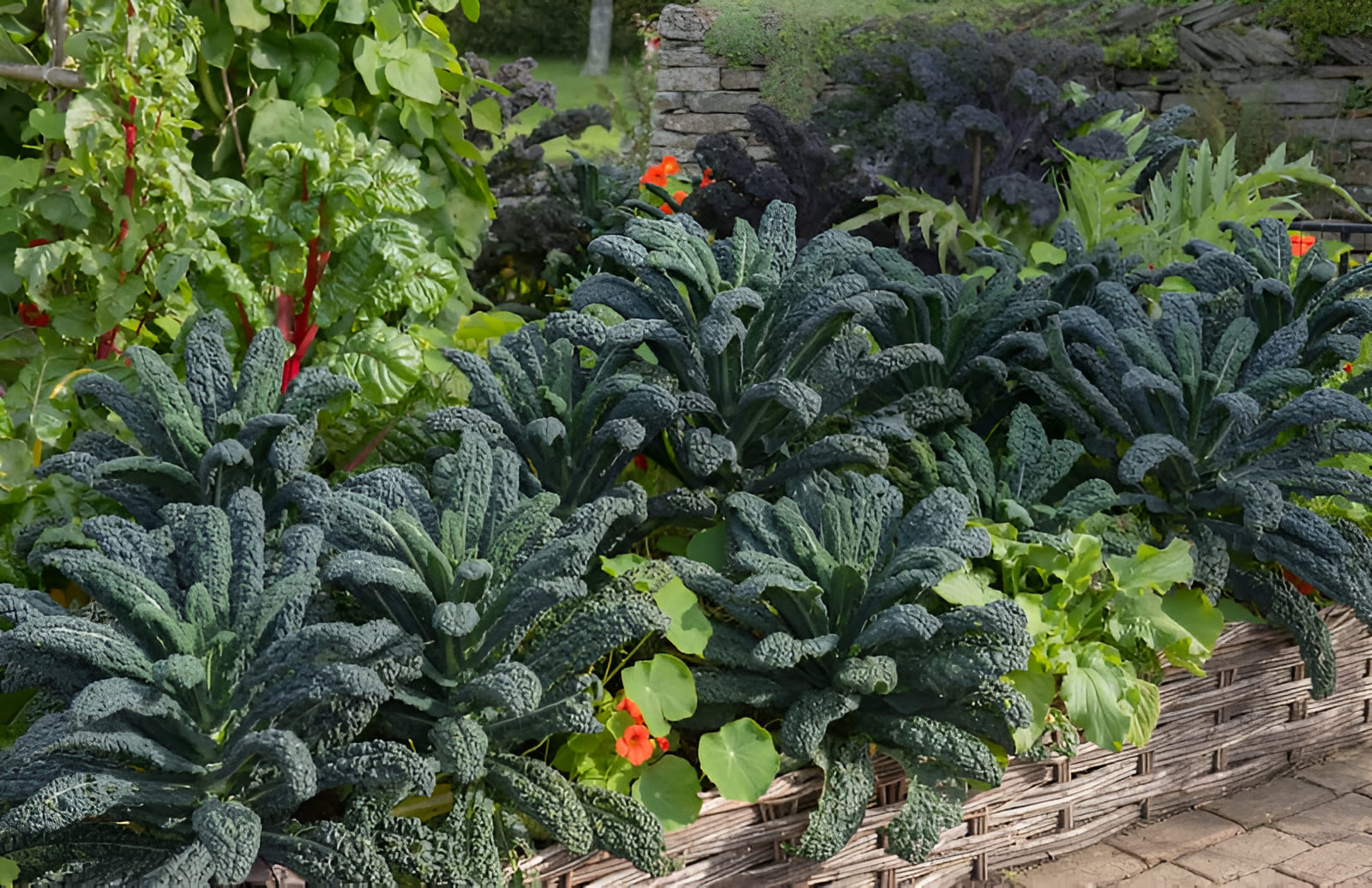
Ornamental edibles are plants with a dual purpose, grown for their beauty and ability to produce food in small spaces. These plants should be considered for any edible landscaping project for their additional use as pollinators for the other more common vegetables, herbs and flowers that grow in the garden.
Edible ornamental plants provide an opportunity for you to get creative around the garden, strategically placing specific plants next to others as companion plants to aid growth and ward off pests. They help blur the line between “flower beds” and “vegetable beds”, turning your entire yard into a multi-functional living pantry that looks like a carefully designed ornamental landscape.
They also create a canvas of living color and texture that can beautify any urban land space. A few ornamental edibles include nasturtiums, bright light rainbow chard, purple-leaf white-flowering basil, daylilies, pineapple guava, runner beans, and Russian scarlet kale. These plants provide edible leaves, flowers, or fruits while also contributing to visual interest, pollinator habitat, and seasonal color in your edible garden.
Permaculture is a set of design principles centered around simulating or directly utilizing patterns and features observed in a natural ecosystem. The goal of permaculture in edible landscaping is to create sustainable and self-sufficient agricultural systems that are in harmony with nature, instead of fighting against it with excessive inputs and continual disturbance.
Core principles of permaculture include diversity, stability, resilience, the observation of natural systems, and the mimicking of these systems in a man-made design. For example, plant guilds (combinations of plants that work well together) and food forests (the layering of ground covers, shrubs, vines, and trees) are key strategies used to make the most efficient use of space and resources in an edible landscape.
Permaculture encourages the use of perennial plants which live for more than two years, reducing the need for constant replanting. Examples of perennials include fruit trees, berry shrubs, asparagus, rhubarb, and herbs like rosemary and thyme. The use of perennial plants helps increase soil stability, improve soil quality, and enhance biodiversity by providing long-term root systems and permanent habitat for soil organisms and beneficial insects.
It is also common to use native plants, as these are well adapted to local conditions and generally require less maintenance. Other important plants in a permaculture edible landscape are nitrogen-fixing plants, like legumes and certain shrubs, which improve soil fertility. Companion plants are also a core component of permaculture design. Planting marigolds alongside tomato plants can help to deter pests, reducing the need for chemical intervention, for example.
As a general rule, the plant types you choose should align with the overall goal of creating a balanced, sustainable ecosystem that is beautiful, productive, and water-smart—exactly the kind of environment that Crop Circle Farms & Gardens is designed to support.
A food forest, a form of agroforestry, is a highly productive and innovative concept grounded in permaculture principles. Designed to mirror the dynamics of a natural forest, it grows plants beneficial to humans while maintaining a rich, layered structure that supports wildlife and soil health.
The objective is to co-grow trees, shrubs, vines, herbs, and vegetables in an eco-friendly, sustainable, self-maintaining system with relatively minimal upkeep. By stacking plants into layers—canopy, understory, shrub, herbaceous, ground cover, root crops, and climbers—a food forest turns a small area into a diverse, high-yield edible landscape.
Food forests provide a nurturing habitat for an array of wildlife, including insects and birds which play a vital role in natural pest control and pollination. By integrating a food forest into your edible landscape, you are creating a biodiverse ecosystem in an urban environment that not only secures a source of healthy, fresh food for the community but also supports a wide variety of wildlife and improves local microclimates.
Guild planting and the planting of companion plants are two strategies that can enhance the productivity and health of your edible landscape. A guild is a group of plants that support each other's growth and productivity. When you plant a guild, you're creating a miniature ecosystem where each plant contributes something beneficial to the group—shade, nutrients, pollinator attraction, pest deterrence, or ground cover.
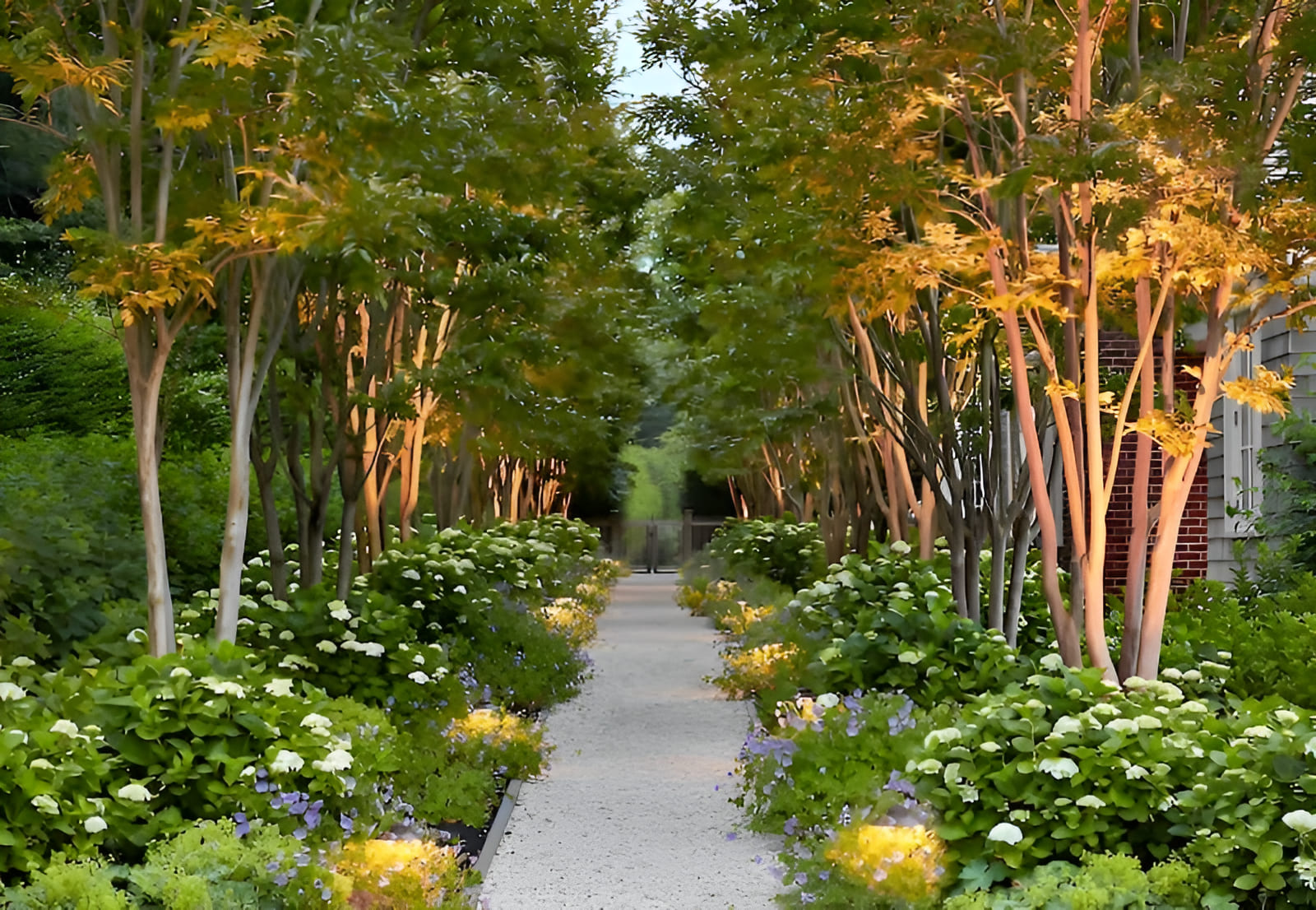
Companion planting, on the other hand, is the practice of planting different plants close to one another for pest control, improved pollination, and increased yield. The planting of companion plants provides habitat for beneficial insects, maximizes use of space, shades soil to reduce evaporation, and increases overall plant productivity. Classic combinations include basil with tomatoes, beans with corn, and carrots with onions.
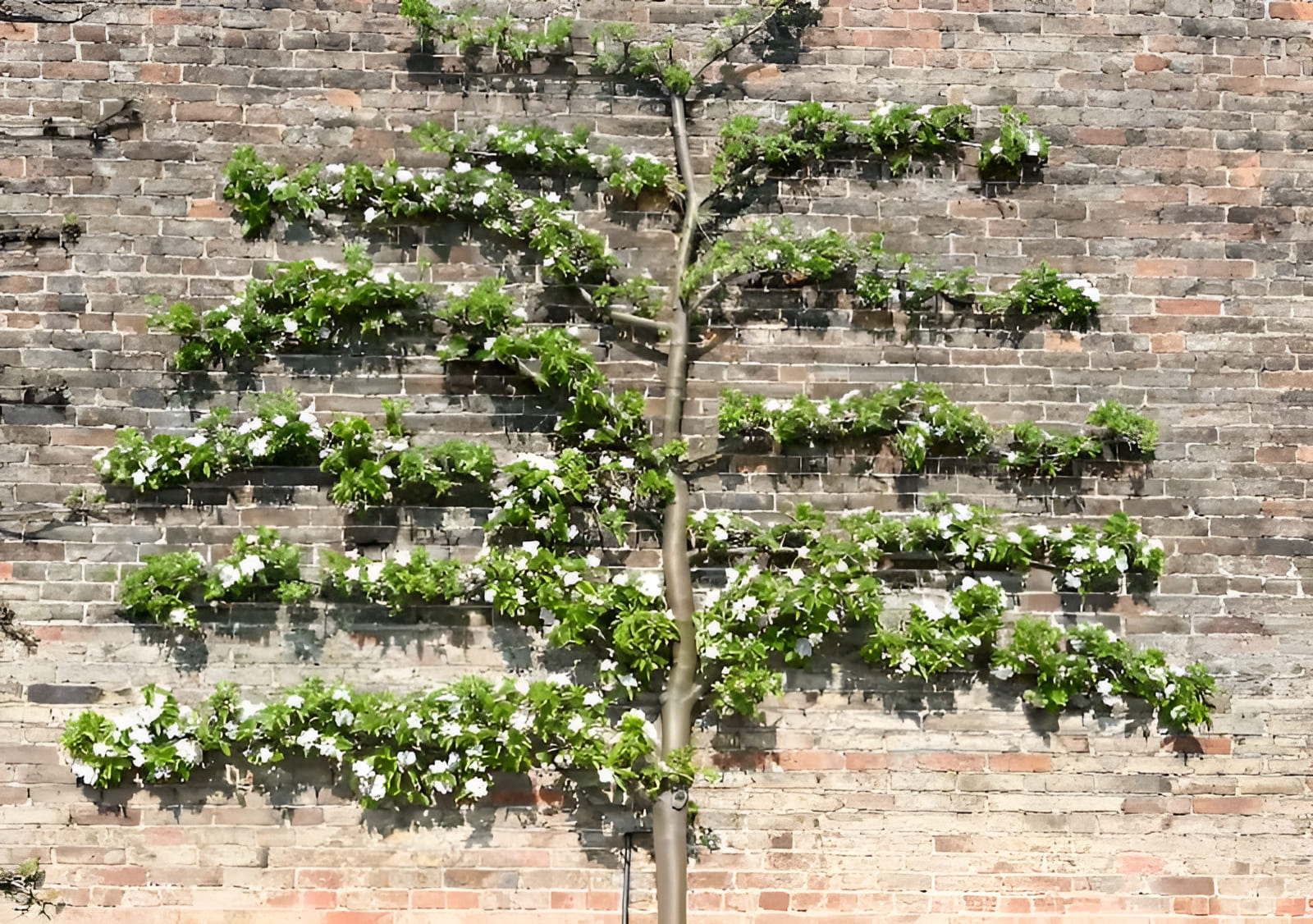
Espalier is a horticultural technique that involves training trees, shrubs, and other plants to grow flat against a wall, fence, or trellis. This technique not only creates a stunning visual effect but also allows you to grow fruit trees in small spaces—an ideal solution for urban agriculture and community gardens.
Espalier techniques can be a game changer for edible landscaping in an urban center because they can be used to grow woody fruit-bearing plants like apples, pears, figs, or persimmons along a west-facing, sun-drenched wall of a building using just two or three feet of soil space. Espaliered fruit trees also allow for easier pruning, harvesting, and pest monitoring, making them a practical choice for home gardeners and community garden coordinators.
Integrating raised beds into your edible landscape design is a fantastic and functional strategy that adds a whole new dimension to your gardening space. Raised beds give you a higher level of control over the soil quality, enabling you to customize the soil mix to meet the specific needs of specific plants. By enriching your raised beds with the appropriate soil, compost, and fertilizers, you can create a fertile environment where your plants will grow best.
Raised beds also improve drainage, an essential element for many plant types like peppers and tomatoes. They help prevent root rot and many common waterborne afflictions associated with plants that are overwatered. The defined edges of raised beds also make it easier to install drip irrigation systems and mulch, both of which are key tools in water-smart edible landscaping.
Gardening in raised beds provides easy access for gardeners. They can be built to a height that eliminates the need to bend or kneel, which is much easier on the back and is often wheelchair accessible. This makes raised bed edible landscaping an inclusive option for school gardens, senior communities, and anyone with limited mobility.
Organic gardening is about more than just avoiding synthetic pesticides and fertilizers. It's about nurturing the soil, promoting biodiversity, and creating a healthy ecosystem in your garden. By following the principles of organic gardening, you can ensure that your edible landscape is not only productive but also sustainable and environmentally friendly.
Organic gardening works with nature, rather than against it, to cultivate a lush, eco-friendly environment that ensures your garden is a source of nourishment for you and a sanctuary for life above and below the soil. This includes practices such as composting, crop rotation, mulching, and encouraging beneficial insects instead of relying on harsh chemical controls.
Composting turns organic material like leaves, grass clippings, and kitchen scraps into a nutrient-rich soil conditioner that is an essential component of creating an edible landscape. It helps you recycle garden and kitchen waste, reduces the need for artificial fertilizers, improves soil fertility, and promotes healthy, productive plant growth.
Not only is composting beneficial to plants, it also helps the environment by reducing the amount of organic waste that goes to landfills, where it can create methane, a potent greenhouse gas. In a well-designed edible landscape, compost bins or worm farms are just as important as raised beds and trellises.
Rainwater harvesting plays an integral role in edible landscaping, providing a sustainable and eco-friendly water source that nurtures your plants. Implementing a rainwater harvesting system in your garden allows you to reduce your dependence on municipal water supplies and presents an opportunity for significant savings on the cost of water.
In addition, rainwater possesses natural qualities that are highly beneficial for plants. It is inherently soft, devoid of the chlorine, fluoride, and various other chemicals commonly found in municipal water, thus offering a healthier alternative for watering your garden. Having a supply of stored rainwater on hand can prove to be invaluable during drought conditions or periods of imposed water restrictions, ensuring your garden remains hydrated and thriving even in times of scarcity.
Choosing drought-tolerant plants for your edible landscape is a smart move, especially if you live in a region with a dry climate or where water use is restricted or scarce. Planting an edible landscape with drought-tolerant plants will save water and require less effort to maintain over the long term.
Herbs like rosemary, thyme, sage, and oregano are naturally drought-tolerant, and some varieties of vegetables, including peppers, tomatoes, and eggplant, can also tolerate dry conditions once established. Succulents such as aloe vera and prickly pear cactus not only thrive in hot, dry conditions but are also partially edible and medicinal, making them excellent additions to a water-wise edible landscape.
Vertical gardening is a technique that allows you to grow plants upwards, rather than spreading them out horizontally. This can be a great way to maximize space in a small garden, and it can also add visual interest and structure to your edible landscape.
There are many ways to incorporate vertical gardening into your edible landscape, including the use of trellises, towers, walls, and even inverted planters to grow a variety of fruits, vegetables, and herbs. Vertical gardening not only makes efficient use of space, but it can also make your garden more productive when used in tandem with the plant propagation technologies offered by Crop Circle Farms & Gardens.
Pollinators play a crucial role in your garden. These vital creatures, which include bees, butterflies, birds, and even bats, are responsible for plant reproduction through the transfer of pollen from male to female flower parts.
Planting a variety of flowering herbs, vegetables, and fruit trees into your edible garden can attract a diverse array of pollinators. Lavender and rosemary are irresistible to bees, while butterflies are drawn to plants like dill and parsley. Fruit trees, especially those with blossoms like apple, cherry, and peach, are often buzzing with honeybees and hummingbirds.
Sunflowers, with their large and pollen-rich heads, attract everything from bees to birds to ants. Native plants such as wildflowers and shrubs are particularly effective because they are well-adapted to the dietary needs of local pollinators. By including a blend of these plants in your garden, you're not only enhancing the aesthetic appeal and productivity of your space, but also helping to protect pollinators like the honey bee from decline and potential extinction.
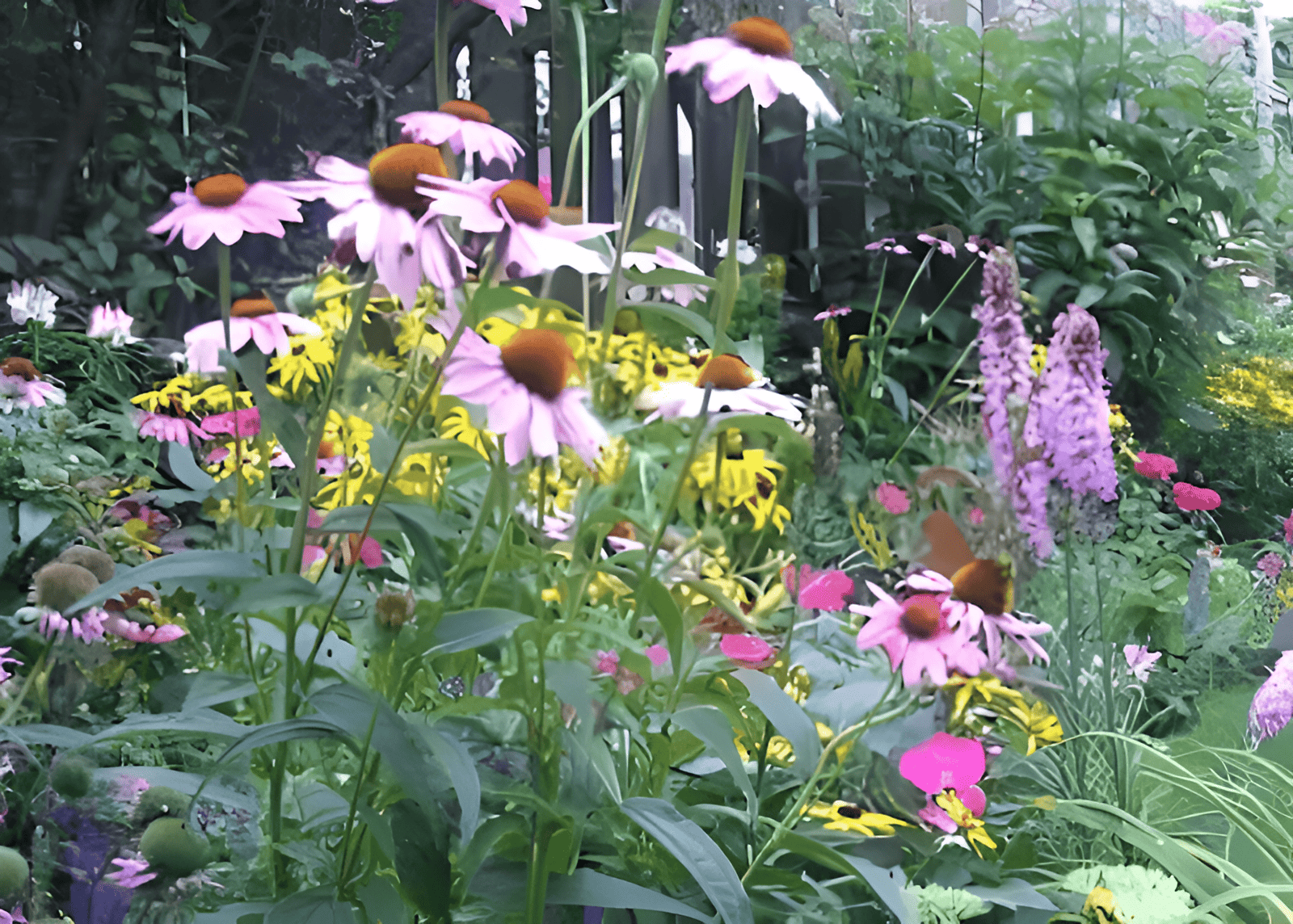
Edible flowers offer an intriguing dimension to edible landscaping, adding both aesthetic and culinary value to a garden. In an edible landscape, they serve multiple functions: they beautify the garden with their colors and textures, attract beneficial insects, and provide a unique source of flavors for a variety of dishes.
From salads and desserts to teas and garnishes, edible flowers can be utilized to add a dash of color and a hint of unusual taste, transforming ordinary meals into extraordinary culinary experiences that will impress your friends and family. Some edible flowers are used for their medicinal properties as well—for instance, calendula flowers are renowned for their anti-inflammatory and wound-healing properties, while chamomile flowers are often used in teas for their calming effect.
Many edible flowers like nasturtiums, marigolds, and sunflowers can lure beneficial insects, contributing to natural pest control and pollination. By integrating edible flowers around vegetable beds and fruit trees, you create a more resilient and visually stunning edible landscape.
Mulching involves spreading a layer of material on the surface of the soil to retain moisture, suppress weeds, regulate soil temperature, and improve soil health. In edible landscaping, mulching with pine straw, shredded leaves, or crushed bark can also contribute to the overall aesthetic of your garden.
Materials like pine straw or crushed bark not only perform the standard functions of mulch but also contribute to the overall appearance of your outdoor space. The unique texture and color of organic mulch can complement the plants in your garden, providing a natural yet appealing contrast while supporting long-term soil fertility and water conservation—both essential for productive urban food gardens.
Designing your edible landscape calls for a multitude of decisions, one of which is choosing between perennial and annual plants. Perennials are plants that grow for more than two years, re-sprouting and re-growing year after year.
They require less care compared to annual plants, so they are an excellent choice for those who prefer low-maintenance gardening. Perennials provide a reliable, consistent structure to your garden due to their longevity, establishing continuity for plant subterranean ecosystems and long-term soil health.
In contrast, annuals are plants that complete their life cycle within a single year. This rapid lifecycle requires more maintenance, with the planting of new plants each year, but it also gives you the opportunity to grow an ever-evolving garden. The changing tapestry of annual plants can inject vibrancy and excitement into your landscape, presenting a continual change of scenery as seasons progress.
Annuals often have the capacity to produce more food per square foot compared to perennials, making them a great choice if you are looking for maximum production from your edible garden in a short time. A balanced edible landscape typically includes both—perennial "anchors" like fruit trees and berry bushes, surrounded by annual vegetables and herbs that rotate with the seasons.
Local adapted plants, also known as native or indigenous plants, are plants that have evolved to thrive in your local climate and soil conditions. They are naturally resistant to local pests and diseases, require less maintenance, and are more likely to thrive with less watering and fertilizing than non-native plants.
In edible landscaping, choosing locally adapted food plants—such as regionally suited fruit trees, native berries, and herbs—can help you create a sustainable and resilient garden. Plus, local plants can help preserve biodiversity and provide habitat for local wildlife, strengthening regional ecosystems while feeding people.
As we become more aware of the importance of sustainable practices and self-sufficiency, edible landscaping is likely to become even more popular. It offers a solution to many of the challenges we face today, such as food security, environmental degradation, and loss of arable land from urbanization.
Moreover, edible landscaping can play a role in building communities, supporting education, improving public health, and changing our relationship with food. The future of edible landscaping is bright, and you can be part of it—at home, at school, in community gardens, or on commercial sites that embrace beautiful, productive landscapes.
It's a movement that brings together gardeners, foodies, environmentalists, and anyone who values sustainability and self-sufficiency. By adopting the practices and principles of edible landscaping, you can create a garden that is beautiful, productive, and good for the planet. Get started on your edible landscape today—it's a decision you won't regret.
Turn your 1 acre into a high-yield, profitable farm.
Crop Circle Farms specializes in designing and building fully engineered, low-impact farm systems that use 90% less water, 85% less fertilizer, and deliver two to three times the yield of traditional farming.
Whether you have a vacant lot, an empty field, a resort, school, island community, or small family farm, we’ll build it from the ground up for you. Our team handles everything from farm layout and installation to irrigation, root systems, training, and first planting.
Contact Us to explore a custom Crop Circle Farm design for your property.
Help us expand our mission to revolutionize agriculture globally. We are seeking partners to implement Crop Circle Farms to feed people in need. Together, we can build scalable food production systems that save water, reduce costs, and feed thousands of people. Contact Growing To Give
Answers to common questions about designing beautiful, water-smart edible landscapes with fruit trees, berry shrubs, herbs, vegetables, pollinator flowers, and permaculture-inspired layouts.
Edible landscaping is a design approach that blends traditional landscape aesthetics with food production. Instead of planting purely ornamental shrubs and flowers, you use attractive fruit trees, berry bushes, herbs, edible flowers, and vegetables as the main structure of the yard. The result is a landscape that looks like a beautiful garden but quietly functions like a small, water-smart farm.
A traditional vegetable garden is usually separate from the rest of the yard, often in rows or raised beds tucked away at the back of the property. In contrast, edible landscaping integrates food-producing plants into the entire landscape—front yard, side yard, and backyard—using layered plantings, shrubs, groundcovers, and decorative beds. It focuses equally on curb appeal, long-term structure, and harvest.
Yes. Edible landscaping is ideal for small and urban agriculture spaces where every square foot matters. You can use dwarf or columnar fruit trees, narrow berry hedges, vertical trellises for beans and cucumbers, and herb-filled containers to turn patios, courtyards, and even balconies into productive edible gardens. Smart layering, vertical gardening, and raised beds make small spaces surprisingly productive.
Great starter plants include tough culinary herbs (rosemary, thyme, oregano, chives, mint in containers), colorful greens like rainbow chard and kale, and reliable fruiting crops such as cherry tomatoes, peppers, and bush beans. Where climate and soil allow, add low-maintenance fruits like figs, pomegranates, blueberries, or dwarf citrus. Edible flowers such as calendula, nasturtiums, and violas are also easy and add instant color and pollinator appeal.
Absolutely. The key is structure and repetition. Use defined edges, clear paths, and consistent materials—such as matching raised bed borders, gravel or stone walkways, and a unified mulch color—to create a polished look. Choose compact or dwarf fruit trees, clipped herb hedges (rosemary, lavender, boxwood-style thyme), and colorful but tidy annuals. Many HOAs are comfortable with edible landscaping when it looks intentional, well maintained, and visually cohesive.
Maintenance depends on your design. A landscape built around perennial plants, native species, and mulched beds will require far less ongoing work than one dominated by high-input annuals. Once trees and shrubs are established, you’ll mostly prune, top up mulch, refresh annual beds seasonally, and harvest. Automated drip irrigation and good plant spacing reduce weeding, watering, and pest issues dramatically.
Drip irrigation is the gold standard for edible landscapes. Inline drip lines or point-source emitters deliver water directly to plant roots under the mulch, which reduces evaporation, discourages weeds, and keeps leaves drier to limit disease. Trees, shrubs, and annual beds are usually placed on separate zones so each layer can be watered according to its needs—saving water and improving plant health in the process.
You can do either, and many edible landscapes use both. Raised beds are ideal where soil is poor, contaminated, compacted, or shallow—they give you total control over soil quality and drainage and are easier to access for people with limited mobility. In-ground beds work well where you have healthy soil and space for fruit trees, hedges, and perennials. A hybrid approach often provides the best mix of structure, access, and productivity.
Start with a generous layer of high-quality compost mixed into new beds, then top-dress with compost each year. Keep soil covered with organic mulches such as shredded leaves, wood chips, or straw to protect soil life and reduce evaporation. Over time, adding homemade compost, using cover crops where appropriate, and limiting deep tillage will build structure, fertility, and microbial diversity—your best defense against pests and disease.
Yes, many edible landscapes are designed specifically for hot, dry regions. The strategy is to pair drought-tolerant herbs, fruits, and vegetables with efficient drip irrigation, heavy mulch, and thoughtful plant spacing. Deep-rooted perennials, Mediterranean herbs, peppers, eggplant, okra, prickly pear, figs, pomegranates, and certain native edibles all perform well in low-water designs when established correctly and watered deeply but infrequently.
A food forest is a layered planting that mimics a natural forest, but with species chosen for human use—fruit and nut trees, berry shrubs, perennial herbs, groundcovers, root crops, vines, and flowers. While you don’t “need” a full food forest to have an edible landscape, borrowing its principles (layering, diversity, and perennial structure) can dramatically increase resilience and yield. Even a single ring of fruit trees with underplanted herbs and flowers can function as a small-scale urban food forest.
Pollinators such as bees, butterflies, hoverflies, hummingbirds, and even bats are essential for strong fruit and seed set in many crops. Include a wide range of flowering herbs (lavender, thyme, oregano, sage), annuals (sunflowers, zinnias, cosmos), and native wildflowers to provide nectar and pollen from early spring through fall. Avoid broad-spectrum pesticides, leave some undisturbed habitat, and plant in clusters so pollinators can feed efficiently in your edible landscape.
Only eat flowers that are known to be edible, grown organically, and free from roadside or pet contamination. Popular edible flowers include nasturtiums, calendula, violas, pansies, chive blossoms, chamomile, and some rose petals. They can be added to salads, desserts, drinks, and garnishes. Always double-check the species before eating, and introduce new flowers in small amounts to see how your body responds.
It can be, with a few precautions. Keep the most sensitive crops—especially leafy greens—farther from busy roads, and prioritize fruiting crops and herbs in higher-exposure spots. Raised beds or large containers add a layer of protection where soil quality is uncertain, and soil testing is wise in older urban areas. Always wash produce thoroughly, and if contamination is suspected, avoid root crops in those zones and focus on woody perennials and fruit.
Permaculture provides the framework for designing edible landscapes that are self-sustaining, diverse, and resilient. It encourages you to observe sun, wind, water, and microclimates; group plants into guilds that support one another; favor perennials and native species; and close nutrient loops with compost and mulch. The goal is a garden that requires fewer outside inputs over time while producing more food, habitat, and ecological benefits.
Crop Circle Farms uses radial, spiral, and ring-based layouts to organize fruit trees, shrubs, annual beds, and pollinator strips into efficient, visually striking patterns. These designs make it easier to zone irrigation, manage fertility, and move through the site for planting and harvest. When combined with drip irrigation, deep mulching, and high-density plantings, Crop Circle layouts can dramatically increase yield per square foot while reducing water use and labor.
If you want a turnkey system, we can design and build a custom Crop Circle edible landscape or micro-farm on your property to maximize production, water efficiency, and long-term resilience.