Autonomous Tractors
Redefining Field Work in Modern Agriculture
Autonomous tractors represent a major evolution in farming technology. By removing the need for a human driver while retaining the power and versatility of traditional tractors, these machines promise to reduce labor dependence, improve precision, and optimize farming operations across diverse crops and terrains.
Unlike traditional tractors that require drivers for navigation and operation, autonomous tractors combine GPS guidance, machine vision, real-time sensors, and advanced control systems to operate independently or with minimal human oversight. They can execute cultivation, tillage, planting, spraying, and other tasks on scheduled paths with consistent accuracy.
As farms grow in size and labor becomes scarcer, autonomous tractors are becoming more than a futuristic idea — they are practical tools for modern agriculture.
An autonomous tractor is typically defined by the following systems:
These systems work in concert to allow an autonomous tractor to move, steer, adjust implements, and perform predefined tasks without a human driver in the seat.
Farm labor shortages are a persistent challenge globally. Autonomous tractors fill a gap by performing repetitive and time-sensitive fieldwork without constant human oversight.
GPS-guided paths, obstacle avoidance, and consistent implement control mean lines are straighter, overlaps are minimized, and resource use (fuel, seed, fertilizer) can be reduced.
Removing drivers from long hours of monotonous operation reduces fatigue-related accidents and improves overall farm safety.
Large farms benefit especially, where long hours of fieldwork can be automated across multiple machines, increasing throughput without proportional labor increases.
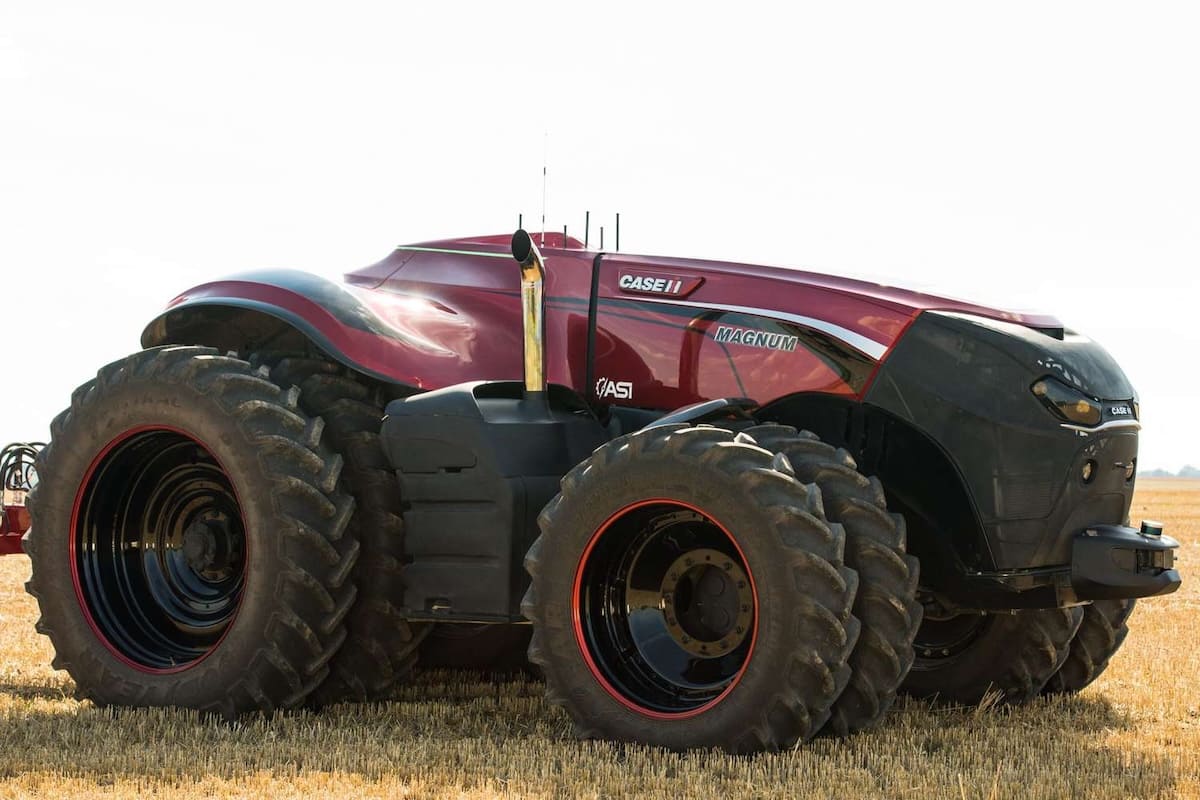
Brand / Model: Case IH Autonomous Concept Tractor
Indicative Pricing: Not commercially sold yet but estimated in concept phases at
$250,000 – $350,000+ depending on autonomy kit and implement integration. (As of 2026 projections — pricing varies widely for prototype/autonomy kits.)
Use on the Farm: Case IH has showcased autonomous tractor concepts that can operate with or without a driver. Typically paired with planters or tillage equipment, these tractors are used for:
Case IH’s autonomous concepts use a combination of RTK GPS and sensor fusion to guide implements and can be monitored remotely using tablet or workstation interfaces.
How It’s Used: On large grain farms, the autonomous Case IH is often deployed at dawn to make early passes for soil preparation, continuing through variable light conditions that would otherwise cause fatigue in human drivers.
Brand / Model: John Deere 8R Series with Autonomy Kit
Pricing: Base 8R series tractors start around $250,000+; adding an autonomy kit and associated sensors can bring the total to approximately $300,000 – $380,000 depending on options and service contracts.
Use on the Farm: Deere’s autonomy solution retrofits existing 8R tractors with:
This setup lets farms continue using their preferred implement lineup — planters, sprayers, spreaders — while automating routine passes.
How It’s Used: Many large row-crop farms deploy these units for:
Because John Deere’s ecosystem integrates with operations software (JDLink, Operations Center), farmers can schedule tasks and monitor progress remotely from office dashboards.
Brand / Model: Fendt Xaver (AGCO Group)
Pricing: Concept/early systems don’t have fixed retail pricing, but fringe estimates place fully autonomous configurations around $280,000 – $400,000+ once commercialized with navigation and sensor packages.
Use on the Farm: The Fendt Xaver concept focuses on modular robotics and fleet coordination. It’s designed to:
How It’s Used: For farms with interlocking operations, Fendt autonomous tractors act as “fleet nodes” — executing directed, coordinated passes. For example:
In vegetable production, one unit follows a wide-row planter to lay crop rows, while another immediately follows for shallow cultivation.
In cereal systems, multiple Xaver units can be tasked with seeding, then return later for early weed control.
Autonomous tractors replicate traditional field power while reducing labor dependency and increasing operational precision. The comparison below outlines structural differences.
| Category | Manual Tractor | Autonomous Tractor |
|---|---|---|
| Labor Requirement | Full-time operator required | Remote supervision or scheduled autonomy |
| Operating Hours | Limited by human shifts | Extended or continuous operation possible |
| Precision | Dependent on operator skill | RTK-guided, centimeter-level repeatability |
| Fuel & Input Efficiency | Overlap and fatigue variability | Reduced overlap and optimized pass planning |
| Data Collection | Limited manual tracking | Integrated telematics & field analytics |
| Scalability | One operator per machine | Fleet deployment with centralized oversight |
Farmers upload field boundaries, implement details, and task plans into a central farm management platform. These may include:
RTK base stations or network corrections ensure centimeter-level accuracy, critical for repeatable work.
With autonomously guided pathing, tractors execute:
Autonomy systems constantly monitor surroundings and pause or reroute if obstacles are detected.
Operators can:
Autonomy regulations vary by region. Farms must comply with:
Highly irregular terrain, dense obstacles, or intermittent signal zones can affect performance.
Upfront costs remain high, and full ROI often depends on:
However, cost savings accrue through labor reduction, fewer input overlaps, and improved timing.
Autonomous tractors are moving toward:
As sensor technology improves and regulatory frameworks mature, autonomous tractors will continue moving from early-adopter farms into mainstream commercial agriculture.
These machines represent the convergence of robotics, precision guidance, data integration, and operational autonomy — answering the modern agricultural imperative to be more efficient, sustainable, and resilient than ever before.
Actual performance varies by crop system and field conditions. The figures below reflect common industry targets and operational benchmarks.
*Results depend on terrain, crop type, autonomy system configuration, and supervision level.*
An autonomous tractor is a self-driving farm machine that uses GPS guidance, sensors, and onboard software to perform field tasks without a human driver.
Pricing typically ranges from $300,000 to $400,000+ depending on brand, horsepower class, and autonomy package configuration.
Regulations vary by region. Many systems operate under supervised autonomy models while regulatory frameworks continue evolving.
They are commonly used for planting, tillage, fertilizer application, spraying, and other repetitive field operations.
They can reduce labor costs, improve fuel efficiency, minimize input overlap, and extend operating hours, improving overall operational efficiency.
Agricultural automation adoption continues to expand globally as labor costs rise and precision agriculture technologies mature.