Scoville Index: Understanding the Scoville Heat Scale (SHU)
Scoville Heat Scale chart, SHU explained, and pepper heat comparisons
Hot peppers have been a staple food for thousands of years, adding a distinct taste, some color, and varying degrees of spiciness to many cultures worldwide. The heat factor in peppers can differ significantly, ranging from mild and sweet to intensely hot. The Scoville Scale was devised to quantify this heat level.
The Scoville Scale, or Scoville Heat Units (SHU), is a system designed to measure the heat intensity of peppers. It was established by Wilbur Scoville, an American pharmacist, in 1912. Scoville pioneered a test that gauged the capsaicin content - the chemical compound accountable for a pepper's heat. The test diluted a pepper extract in sugar water until a panel of testers could no longer perceive its heat. The required number of dilutions to reach this point determined the pepper's Scoville score.
In modern times, the Scoville score is ascertained using High-Performance Liquid Chromatography (HPLC). This method provides a more accurate and reliable measurement of the capsaicin concentration in peppers.
The Scoville Scale's primary use is to gauge and compare the spiciness level of different peppers. It is commonly employed in the food industry to label products like hot sauces and salsas, aiding consumers in selecting peppers aligning with their flavor preferences.
The Scoville Scale has also proven invaluable for medical and scientific research. Capsaicin, the heat-producing compound in peppers, has many health benefits, including pain relief. The Scoville rating can determine the capsaicin quantity in peppers intended for medicinal use.
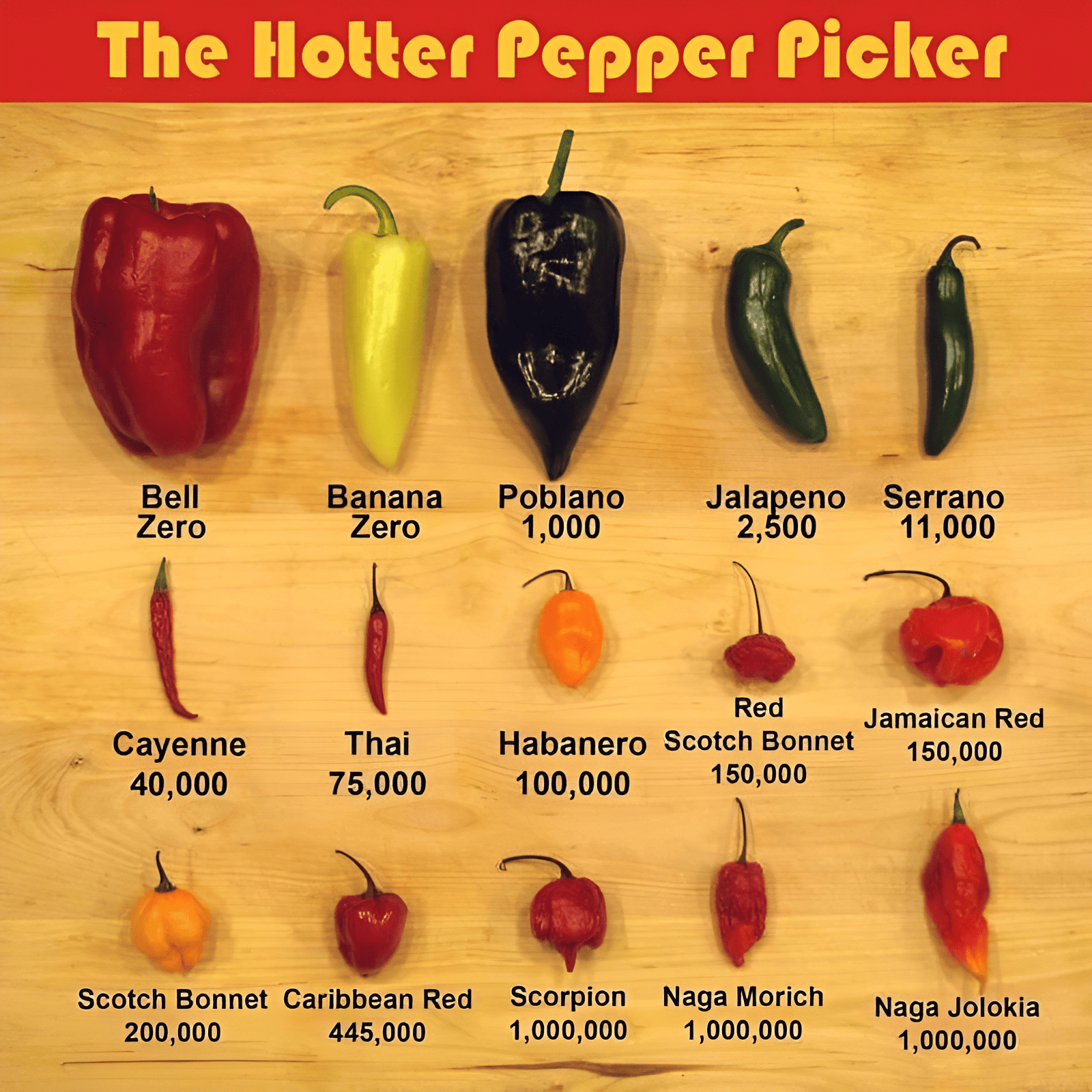
Peppers are grouped into five categories on the Scoville Scale:
| Pepper | Typical SHU range | Heat level |
|---|---|---|
| Bell pepper | 0 | No heat |
| Banana pepper | 0–500 | Very mild |
| Poblano | 1,000–2,000 | Mild |
| Jalapeño | 2,500–8,000 | Mild–medium |
| Serrano | 10,000–23,000 | Medium |
| Cayenne | 30,000–50,000 | Hot |
| Thai chili | 50,000–100,000 | Very hot |
| Habanero | 100,000–350,000 | Very hot |
| Ghost pepper | 800,000–1,000,000+ | Extreme |
| Carolina Reaper | 1,400,000–2,200,000+ | Extreme |
| Pepper X | 2,693,000 average | Extreme |
Note: SHU ranges vary by cultivar, growing conditions, and testing method.
Most jalapeños measure about 2,500–8,000 SHU. A jalapeño’s heat can vary a lot because plants respond to growing conditions. Hot days, bright sun, and slightly drier watering schedules can concentrate capsaicinoids and push heat upward, while cooler weather and consistent moisture often yield milder peppers. Even fruit position on the plant matters—peppers that mature longer in strong sun can taste noticeably hotter.
The Pepper X is currently recognized by Guinness World Records as the hottest chili pepper in the world. Developed by Ed Currie of the PuckerButt Pepper Company, Pepper X averages approximately 2,693,000 Scoville Heat Units (SHU). It surpassed the Carolina Reaper, the previous record holder. Individual peppers can vary in heat because of genetics, growing conditions, fruit maturity, sampling, and laboratory testing methods.
The original Scoville Scale relied on dilution taste tests, which were subjective. Today, heat is typically measured by lab methods (often HPLC) that quantify capsaicinoids. Those lab results are then converted into a Scoville Heat Unit equivalent. In practice: more capsaicinoids = higher SHU. This approach is more repeatable than taste testing, but ranges still vary by genetics, environment, and harvest timing.
Pepper heat is partly genetic, but environment strongly affects the final result. Temperature swings, intense sunlight, and mild water stress can increase capsaicinoid production. Over-fertilizing with nitrogen may create big plants with diluted heat, while balanced nutrition and good potassium levels support fruit quality. Harvest timing matters too: peppers often become hotter as they mature. Storage and drying can also change how heat is perceived.
Learn how to grow jalapeños, serranos, and habaneros using our pepper growing guide or explore high-yield systems like Crop Circle Gardens. Plan plant counts and harvest totals with the Garden Yield Calculator.
For consumers, understanding the Scoville rating when buying peppers or pepper-containing products is crucial. It helps them select suitable peppers based on their taste preferences and avoid excessively spicy ones. Some hot peppers varieties must be handled with care due their capsaicin content, which can cause skin irritation and burning if inadvertently rubbed into the eyes.
Note: This page is for educational purposes and is not medical advice. Research on capsaicin and health outcomes is ongoing; consult a qualified professional for health-related decisions.
Capsaicin, responsible for the heat in hot peppers, has found extensive use in traditional medicine. Indigenous peoples learned thousands of years ago of their anti-inflammatory and analgesic properties.
Capsaicin's potential health benefits are not limited to inducing heat. It has also been shown to be an effective remedy for treating conditions like arthritis, neuropathy, and shingles. Topical applications can mitigate conditions like arthritis, neuropathy, and shingles by interacting with a receptor on nerve cells, TRPV1, which communicates pain signals to the brain. Capsaicin's binding with this receptor desensitizes it, thereby reducing the volume of pain signals transmitted to the brain.
Moreover, capsaicin exhibits anti-inflammatory properties. It's been employed to manage conditions such as psoriasis, and studies suggest it may have potential uses in treating inflammatory bowel disease and other autoimmune disorders.
Research has also indicated that capsaicin may contribute to weight loss. It has been observed to boost metabolic rate, potentially leading to increased calorie burn and weight reduction. Hot pepper capsaicin may help suppress appetite and help with weight loss.
While capsaicin is primarily known for creating culinary heat, it has demonstrated a host of potential health benefits, including:
Aiding Digestion: Capsaicin stimulates the digestive system, helping the body break down food and assimilating nutrient. Studies have also shown that capsaicin helps alleviate symptoms associated with digestive disorders such as irritable bowel syndrome (IBS).
Capsaicin and cancer research (early evidence): Preliminary research suggests that capsaicin may possess properties that can combat cancer. Laboratory experiments have shown capsaicin's capability to eliminate specific cancer cells, including those from prostate and lung cancers, without damaging the surrounding healthy cells.
Promoting Heart Health: Initial studies point towards capsaicin potentially offering cardiovascular advantages. It may contribute to lowering blood pressure and reducing cholesterol levels, thereby supporting overall cardiac health.
The Scoville Index, also known as the Scoville Heat Scale, ranks the heat of chili peppers using Scoville Heat Units (SHU). The rating reflects the concentration of capsaicinoids, the compounds responsible for the burning sensation associated with hot peppers.
The original Scoville test relied on human taste panels and repeated dilution of pepper extract until the heat could no longer be detected. Modern laboratories generally use High-Performance Liquid Chromatography (HPLC) to measure capsaicinoid concentrations. The laboratory results can then be converted into an equivalent Scoville Heat Unit rating.
Pepper genetics establish a typical heat range, but actual heat can vary considerably. Temperature, sunlight, soil fertility, water stress, fruit maturity, growing conditions, harvest timing, and post-harvest handling can all influence capsaicinoid levels. Sampling and laboratory testing methods can also create differences between reported Scoville ratings.
Scoville Heat Units are related to capsaicinoid concentration, but the way people experience heat is not perfectly linear. A pepper rated at 100,000 SHU contains far more capsaicinoids than a pepper at 10,000 SHU, but individual tolerance, serving size, food composition, and other ingredients affect how intense that heat actually feels.
Common pepper ranges include bell peppers at 0 SHU, banana peppers at about 0–500 SHU, poblanos at 1,000–2,000 SHU, jalapeños at 2,500–8,000 SHU, serranos at 10,000–23,000 SHU, cayenne peppers at 30,000–50,000 SHU, habaneros at 100,000–350,000 SHU, and ghost peppers at roughly 800,000–1,000,000+ SHU.
At the extreme end, Carolina Reaper peppers can exceed 2 million SHU, while Pepper X has an average rating of approximately 2,693,000 SHU.
Most jalapeño peppers measure approximately 2,500–8,000 SHU. Individual peppers can vary noticeably in heat depending on variety, maturity, sunlight, temperature, watering, and other growing conditions.
Gardeners interested in producing jalapeños, serranos, habaneros, and other peppers can visit our pepper growing guide.
Pepper X currently sits at the top of the commonly referenced Scoville rankings, averaging approximately 2,693,000 Scoville Heat Units. It exceeds the heat of the Carolina Reaper, Ghost Pepper, Trinidad Scorpion, and most other commonly known super-hot varieties.
Much of a pepper's capsaicin is concentrated in the inner white placental tissue surrounding the seeds. Removing this tissue can reduce the amount of heat added to a dish. You can also dilute spicy foods with additional non-spicy ingredients.
Dairy products and other foods containing fat can help reduce the sensation of capsaicin because capsaicin dissolves more readily in fats than in water.
No. Concentrated pepper extracts can reach several million Scoville Heat Units because capsaicinoids have been extracted and concentrated. These products are considerably different from eating a whole pepper and should be handled with particular care.
Wear gloves when cutting or processing very hot peppers and avoid touching your eyes, nose, or face. Wash knives, cutting boards, containers, and work surfaces thoroughly with soap after use. Good ventilation is especially important when cooking, grinding, or dehydrating very hot peppers.
Water alone does not remove capsaicin particularly well. Soap helps remove oily pepper residue from surfaces and skin, while dairy or fatty foods can help reduce the burning sensation in the mouth.
Drying removes water and concentrates a pepper's flavor, which can make the heat seem stronger. The actual Scoville rating depends on the concentration of capsaicinoids in the tested sample. Smoking primarily changes flavor, while drying can increase the concentration of capsaicinoids relative to the pepper's weight.
Yes. Jalapeños, serranos, habaneros, cayenne peppers, and many other hot pepper varieties grow well in home gardens when provided with warm temperatures, adequate sunlight, consistent irrigation, and suitable fertility.
See our Growing Peppers guide, explore Crop Circle Gardens, or use the Garden Yield Calculator to help plan plant numbers and expected harvests.
Turn your 1 acre into a high-yield, profitable farm.
Crop Circle Farms specializes in designing and building fully engineered, low-impact farm systems that use 90% less water, 85% less fertilizer, and deliver two to three times the yield of traditional farming.
Whether you have a vacant lot, an empty field, a resort, school, island community, or small family farm, we’ll build it from the ground up for you. Our team handles everything from farm layout and installation to irrigation, root systems, training, and first planting.
Contact Us to explore a custom Crop Circle Farm design for your property.
Help us expand our mission to revolutionize agriculture globally. We are seeking partners to implement Crop Circle Farms to feed people in need. Together, we can build scalable food production systems that save water, reduce costs, and feed thousands of people. Contact Growing To Give