Raised Bed Soil Calculator
Estimate how much soil you need for a raised bed
The Raised Bed Soil Calculator helps you estimate how much soil is needed to fill one raised bed or multiple beds based on bed length, width, and fill depth.
Use this calculator to convert dimensions into cubic feet, cubic yards, and approximate bag count for common soil bag sizes.
This tool is useful for homeowners, schools, nonprofits, community gardens, market gardens, and anyone planning a raised-bed growing project.
It is especially helpful during project budgeting because bagged soil and bulk soil are often priced differently, and the total volume can be easy to underestimate.
Feel free to share this raised bed calculator infographic on your website or blog. Please include a link back to this page as the source.
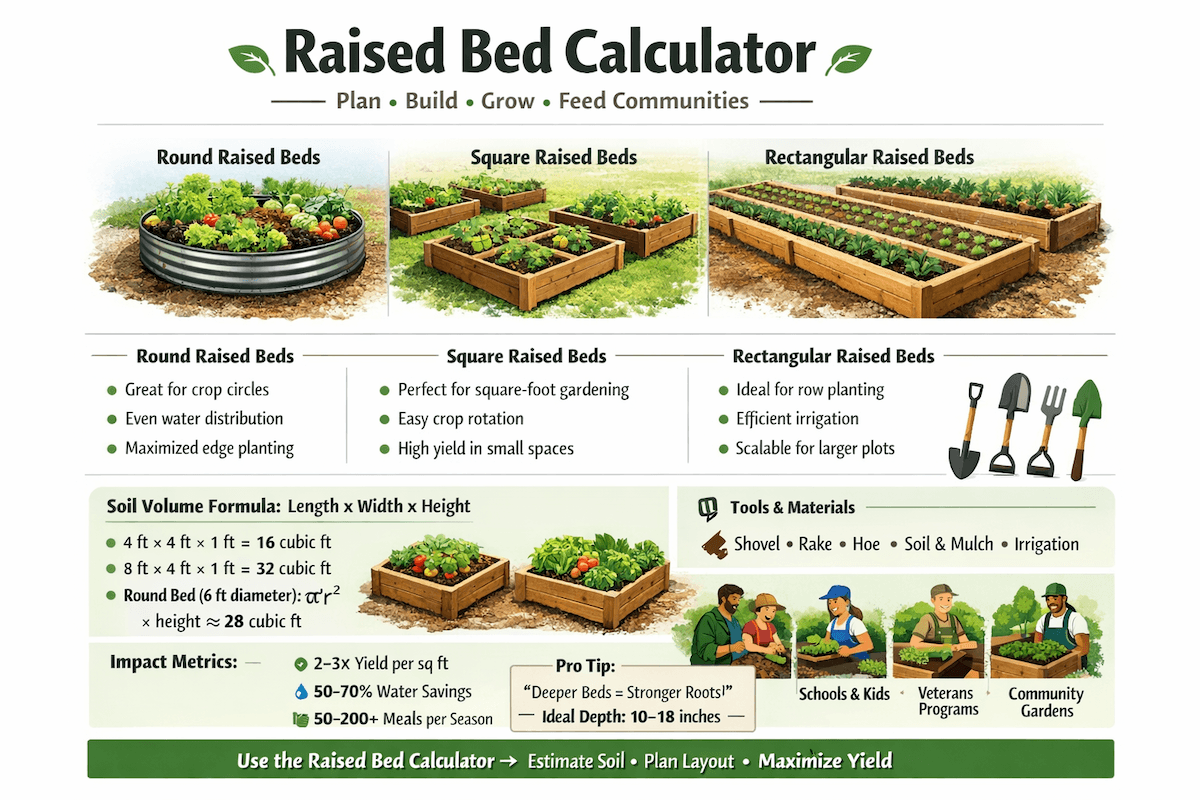
Soil volume for a raised bed is based on the inside growing dimensions of the bed and the actual depth you plan to fill.
Cubic feet = Length × Width × Depth
Once cubic feet are known, they can be converted into cubic yards or bag count:
Many growers do not fill a raised bed exactly to the top edge. Leaving a little space for mulch and watering is common, which is why this calculator uses a true fill depth rather than wall height alone.
Enter bed dimensions, fill depth, bed count, bag size, and extra allowance to estimate cubic feet, cubic yards, and bag count for the whole project.
Use inside bed dimensions and your true fill depth, not just wall height.
Quick planning view for total volume, cubic yards, and bag count.
Notes: Results are estimates. Actual soil purchase needs vary with compaction, settling, bed shape, blended inputs, and whether you use bulk soil, bagged soil, compost, or layered fill.
Raised beds, small-space systems, and garden setup planning.
Related tool
Estimate what your filled raised bed may produce once planting begins.
Related tool
Plan surface protection and water savings after the bed is filled and planted.
See it in practice
Raised beds are one of the most practical ways to grow food in smaller spaces.
Raised beds are often easier to plan than in-ground gardens, but they still require accurate volume estimates. Soil is heavy, expensive, and usually one of the first major costs in any raised-bed project.
The Raised Bed Soil Calculator helps avoid guesswork by translating bed dimensions into real purchase quantities. That makes it easier to budget, compare suppliers, and decide whether bagged or bulk soil makes more sense.
Final soil purchase volume depends on more than bed size alone. Important factors include:
Raised beds are one of the most practical ways to build organized, water-efficient growing spaces for homes, schools, nonprofits, and urban agriculture projects. They make layout, irrigation, and crop planning more predictable.
Accurate soil planning is often the first step in getting those systems built well.
The Raised Bed Soil Calculator gives growers a quick way to estimate how much fill material is really needed before a project starts. That can prevent cost overruns, repeated store trips, and underfilled beds.
Once you know the real volume, you can make better decisions about:
Good bed planning begins with accurate soil estimates.
Want help planning a raised-bed layout, water-smart growing system, or productive food garden? Crop Circle Farms can help evaluate layout, bed sizing, soil planning, irrigation, and overall system strategy. Contact Us to discuss your project.
We are also interested in working with partners, schools, nonprofits, and sponsors who want to build resilient, productive food-growing systems in communities that benefit from more local production. Contact Growing To Give to support a food-security project.
Jump to the next tool, or explore supporting resources.