Regenerative Chicken Farming
Pasture-Raised Poultry Hub
Regenerative chicken farming combines poultry production with managed pasture rotation, mobile housing, manure management, composting, and soil-building practices. When carefully managed, chickens can become part of a broader farm system that produces eggs or meat while contributing nutrients and organic matter to crop-production areas.
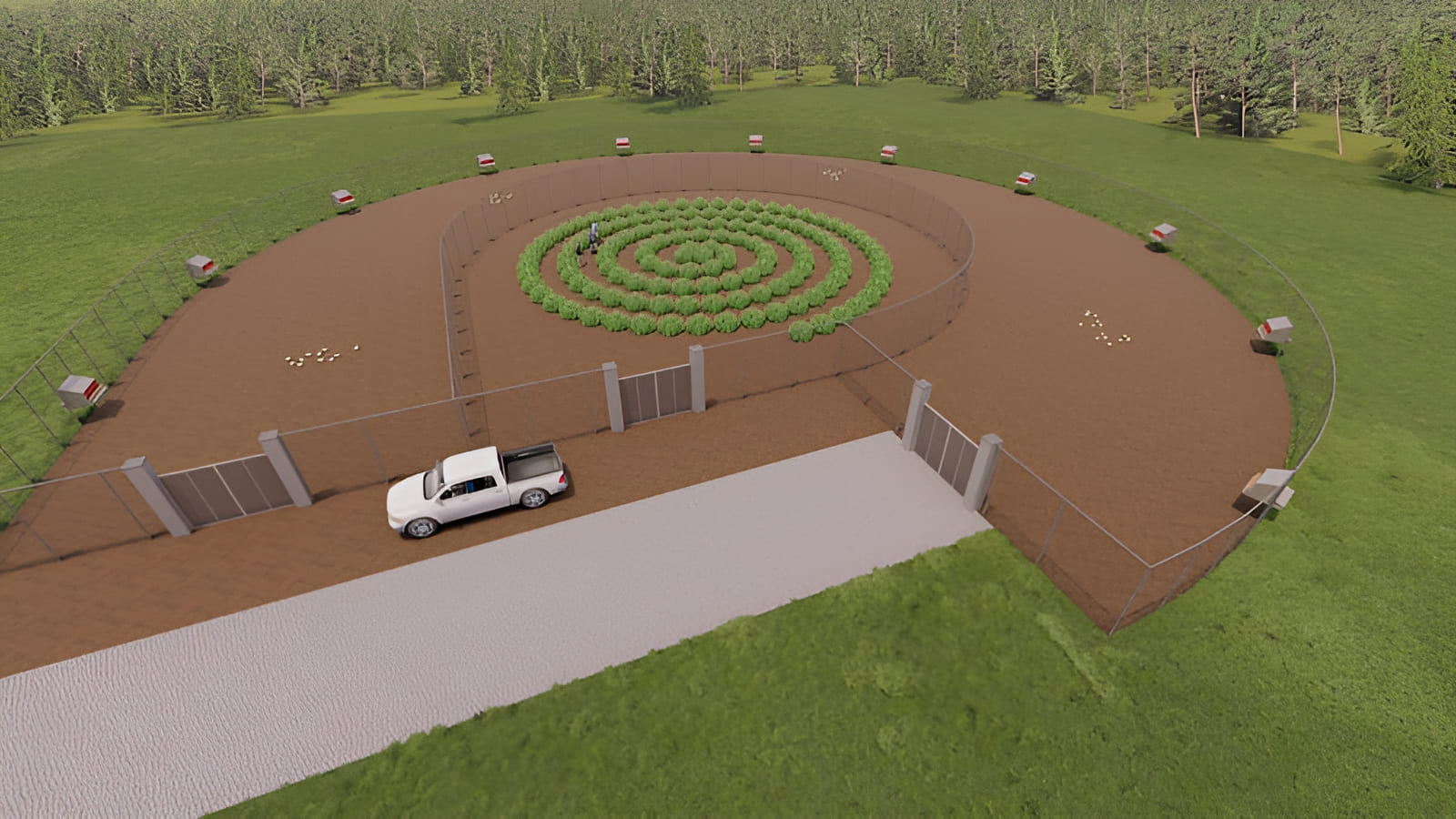
The Crop Circle Poultry Model explores how pasture-raised chickens, rotational grazing, mobile coops, compost systems, and market gardens can work together within an integrated agricultural design. The objective is to use multiple farm outputs efficiently while protecting pasture, managing manure, and returning nutrients to productive use.
These poultry systems can also connect with circular agriculture , closed-loop farming , compost production, vegetable growing, and community-scale food production. Results depend on flock size, breed, climate, feed program, stocking density, pasture conditions, rotation timing, labor, and overall farm design.
Explore poultry production, egg-yield planning, manure and compost management, circular agriculture, and closed-loop farm systems.
Estimate egg production, dozens per week, feed costs, flock performance, and potential gross egg revenue for poultry-farm planning.
Explore manure collection, carbon-rich bedding, composting, curing, nutrient recovery, and ways poultry waste can become a useful soil amendment.
Learn how farms can reuse nutrients, organic materials, water, and agricultural by-products to reduce waste and create more integrated production systems.
Explore farming systems designed to cycle nutrients and organic materials between livestock, compost, soils, crops, and other farm enterprises.
Together, these resources connect poultry production with farm economics, nutrient recovery, composting, crop production, and integrated regenerative agriculture.
| Factor | Industrial Poultry | Regenerative Crop Circle Model |
|---|---|---|
| Stocking & Movement | Often concentrated in fixed housing | Managed rotation across pasture or paddocks |
| Outdoor Access | Varies by production system | Designed around regular pasture access |
| Health Management | Managed within higher-density production environments | Rotation, sanitation, pasture recovery, and preventive management |
| Manure Management | Collected and managed as an agricultural by-product | Potential input for compost and soil fertility |
| Soil Interaction | Often limited in housed production | Managed grazing can support nutrient cycling and ground-cover management |
| Potential Revenue Streams | Typically poultry-focused production | Eggs, meat, compost value, and integrated crops |
*Illustrative planning figures, not guaranteed production levels. Actual output varies by breed, flock age, climate, feed program, mortality, stocking density, rotation timing, pasture quality, market-garden design, and management.
Rotation timing, paddock sizing, parasite break cycles, stocking density guidance, and water-smart layouts.
Turning waste into fertility: deep bedding, carbon ratios, curing, and compost/compost-tea integration.
Model eggs per hen, dozens per week, feed costs, and projected revenue. Use it for planning, grant language, or investor snapshots. Open the calculator →
Crop Circle Farms designs regenerative poultry systems—layout, rotation planning, coop strategy, fertility loops, and market-garden integration. Contact us for a feasibility + design package.
We support impact-aligned poultry projects (islands, water-stressed regions, community food hubs). Inquire via Growing To Give.
Sponsor pilots, workforce training, or community poultry hubs that connect eggs, compost, and vegetables through circular agriculture .
These frequently asked questions cover pasture-raised chickens, rotational grazing, mobile coops, egg production, manure management, composting, flock planning, and regenerative poultry systems.
Regenerative chicken farming integrates poultry with managed pasture rotation, soil protection, manure management, composting, and other farm enterprises. Rather than treating chickens as a stand-alone production unit, the goal is to cycle nutrients and organic materials through a broader agricultural system.
Results depend heavily on flock size, stocking density, pasture conditions, climate, feed program, rotation timing, and management.
The Crop Circle Poultry Model explores how pasture-raised chickens, mobile coops, rotational grazing, compost systems, and market gardens can operate together.
The design objective is to produce eggs or meat while managing manure, protecting pasture, recovering nutrients, and integrating poultry with crop production and other farm activities.
There is no single rotation interval that works for every farm. Rotation timing depends on stocking density, flock age, pasture growth, soil moisture, weather, season, vegetation recovery, and parasite pressure.
Birds should generally be moved often enough to prevent excessive vegetation loss, manure accumulation, muddy conditions, and prolonged pressure on the same area.
Mobile coops allow housing, nesting, shade, and shelter to move with the flock as birds rotate through different pasture areas. This can help distribute manure and reduce repeated pressure on one section of ground.
Coop design should account for flock size, ventilation, predator protection, nesting space, water access, feeding, weather protection, and ease of movement.
Egg production varies substantially by breed, age, daylight, nutrition, health, climate, molt, stress, and management. Productive laying breeds may produce eggs frequently during their peak laying period, but production normally changes throughout the year and over the life of the hen.
For farm planning, use realistic annual production assumptions rather than assuming every hen will lay one egg every day.
It can be, but profitability is project-specific. Important variables include feed cost, flock productivity, mortality, labor, housing, land, processing, egg or meat pricing, distribution, and local market demand.
Integrated farms may also create value through compost, manure nutrients, crop production, or direct-to-consumer sales. Use the Chicken Yield & Egg Revenue Calculator to explore planning scenarios.
Chicken manure contains nutrients and organic matter, but it must be managed carefully. On pasture, appropriate stocking and rotation can distribute manure across the landscape. Manure and bedding collected from coops can also become feedstock for controlled composting systems.
Learn more in our Chicken Manure Compost Systems guide.
Fresh poultry manure is concentrated and can contain high levels of nitrogen as well as microorganisms that require careful management. For many food-growing applications, controlled composting is preferable to applying fresh manure directly around actively harvested crops.
Composting manure with suitable carbon-rich materials can create a more stable soil amendment when the composting and curing process is properly managed.
Yes. Poultry can be incorporated into broader crop-production systems when movement, manure, crop protection, food safety, and timing are carefully managed.
Chickens may be rotated through designated areas or used within a larger fertility strategy in which manure and bedding are composted before nutrients are returned to crop-growing areas.
Poultry can become one component of a circular agricultural system by turning feed, vegetation, bedding, and other organic materials into eggs, meat, manure, and compostable nutrients.
Those nutrients can potentially be cycled into soils and crop production rather than treated only as waste.
Start with land availability, flock size, poultry regulations, zoning, water access, feed supply, pasture condition, predator pressure, climate, housing, processing requirements, labor, waste management, and local markets.
A practical feasibility plan should also estimate capital costs, operating expenses, expected egg or meat production, mortality, selling prices, and the amount of pasture needed for the intended rotation system.
Yes. Poultry can be incorporated into closed-loop farming systems that connect livestock, manure, compost, soils, vegetable production, and other farm enterprises.
The objective is not to eliminate every external input, but to recover and reuse useful nutrients and organic materials wherever practical while maintaining animal health, soil health, and productive farm operations.