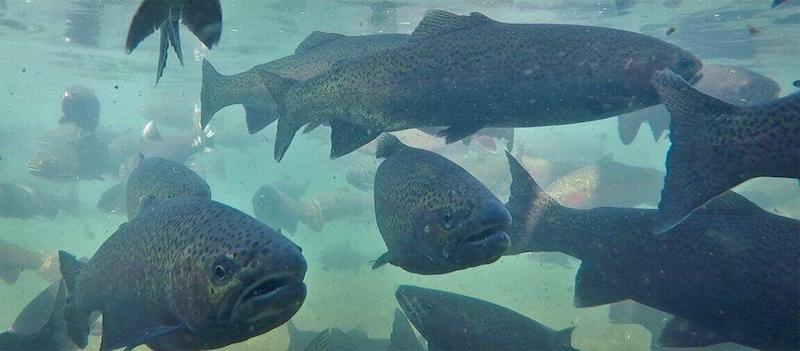
Growing Fish
Land-Based Aquaculture
Land-based aquaculture offers new ways to produce fish closer to the communities that consume them while providing greater control over water quality, circulation, filtration, waste management, fish health, and production conditions.
Crop Circle Farms explores established Recirculating Aquaculture Systems (RAS) as well as emerging approaches such as Artificial River Fish Farming . These systems can combine water reuse, continuous circulation, oxygen management, filtration, and nutrient recovery within land-based fish-production environments.
Fish production can also integrate with circular agriculture , aquaponics, greenhouse production, urban food hubs, and community food-security projects. The best system depends on species, climate, available water, energy costs, regulations, markets, production scale, and project objectives.
Explore land-based fish farming systems, food-security projects, aquaculture production, and species-specific growing guides.
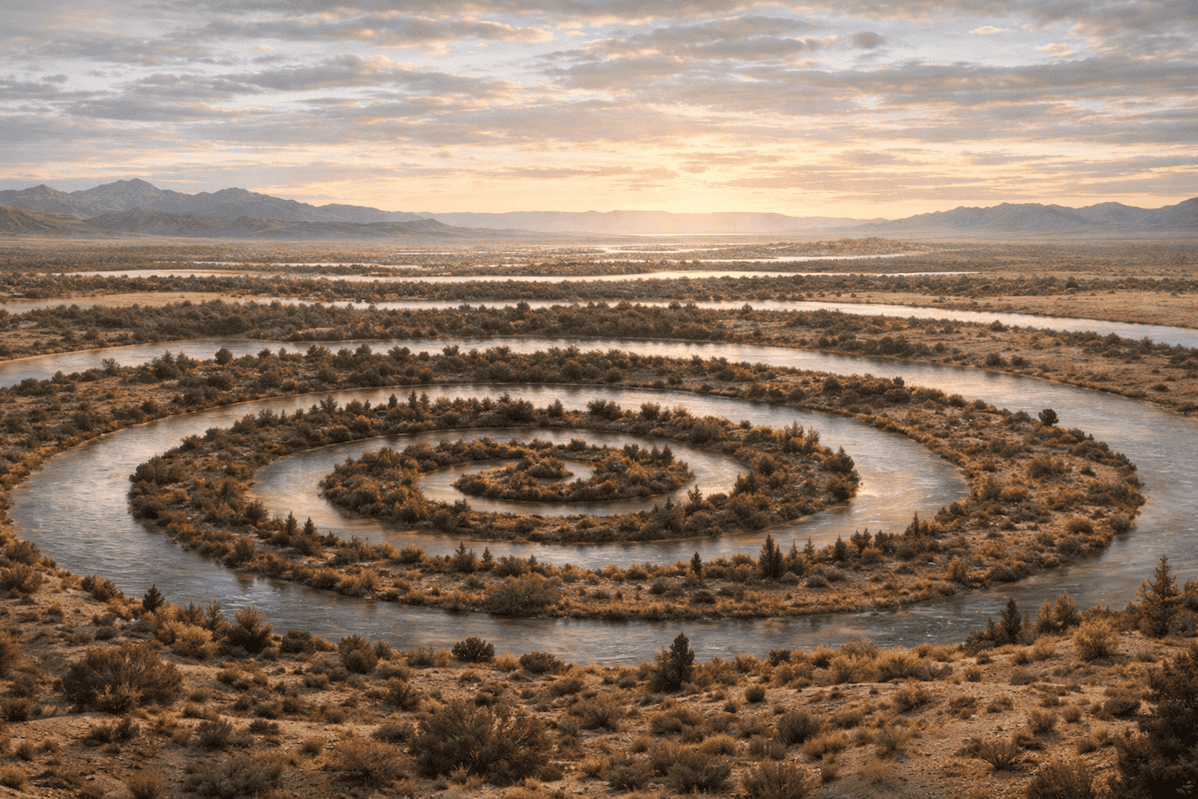
Explore the Crop Circle Farms artificial river concept using continuous directional flow, filtration, oxygen management, and nutrient recovery.
Learn how Growing To Give is exploring fish production, circular nutrient recovery, and community food security through the Spiral River Project.
Explore aquaculture production, fish farming systems, species selection, feeding, water quality, sustainability, and production considerations.
Learn about tilapia production, water temperature, feeding, stocking, growth, and applications in land-based aquaculture.
Compare production systems, project models, and fish species to identify the best approach for land-based aquaculture and community food production.
| Question | RAS | Artificial River |
|---|---|---|
| Best for tight water-quality control? | Yes | Yes (when paired with filtration) |
| Best for nature-mimicking continuous flow? | Possible | Yes |
| Strongest commercial data for modeling costs and ROI? | Yes | Emerging / project-specific |
| Best integration with circular nutrient recovery? | Yes | Yes |
If you are planning a fish project, the fastest path is to pick your system type, define capacity, and validate core constraints: water availability, energy costs, market pricing, regulations, and nutrient reuse opportunities.
We provide feasibility, conceptual design, and performance-first planning for land-based aquaculture. Contact Crop Circle Farms.
We support impact-aligned aquaculture projects (islands, water-stressed regions, urban hubs). Inquire via Growing To Give.
Sponsor pilot hubs that connect fish production with nutrient recovery and circular agriculture .
Planning a land-based fish farming project? These frequently asked questions cover Recirculating Aquaculture Systems (RAS), artificial river systems, aquaponics, water quality, species selection, energy requirements, nutrient recovery, and project feasibility.
Recirculating Aquaculture Systems (RAS) are the better-established option when the project requires tight control of water quality, filtration, oxygen, stocking density, and production conditions. RAS systems also have a larger body of commercial operating and economic data available for feasibility modeling.
The Crop Circle Farms Artificial River Fish Farming concept is intended for projects that want to explore continuous directional flow, river-like currents, engineered channels, filtration, and nutrient recovery within a land-based production system. The best choice depends on species, site, water availability, energy, production goals, and budget.
A Recirculating Aquaculture System is a land-based fish production system that repeatedly treats and reuses water rather than continuously replacing the entire water volume. Typical systems combine fish tanks with solids removal, biological filtration, oxygen management, carbon dioxide removal, circulation pumps, monitoring, and water-quality controls.
The amount of water reused and the equipment required vary with species, stocking density, system design, climate, and production objectives.
Artificial River Fish Farming is a Crop Circle Farms concept that explores raising fish in engineered channels with continuous directional water movement rather than relying only on conventional circular or rectangular tanks.
The concept is designed around river-like flow, circulation, oxygen stability, filtration, access for management, and the potential recovery of nutrients for other agricultural uses. Individual projects require site-specific engineering and feasibility analysis.
Yes. Both RAS and artificial river concepts can potentially support aquaponics or nutrient-recovery systems when solids management, water chemistry, filtration, and plant nutrient requirements are designed together.
Fish waste contains nutrients that may be recovered for plant production, but not all fish-system water can simply be routed directly to crops. Solids, nutrient concentrations, pH, salinity, pathogens, and crop requirements must all be considered in the design.
Important water-quality variables include dissolved oxygen, temperature, pH, ammonia, nitrite, nitrate, alkalinity, carbon dioxide, and suspended solids. The acceptable range for each variable depends on the fish species, life stage, stocking density, feed rate, and system.
Reliable monitoring is especially important in intensive land-based systems because changes in oxygen, temperature, filtration, or circulation can affect a large number of fish quickly.
Species selection depends on climate, water temperature, market demand, regulations, feed availability, growth rate, tolerance of stocking conditions, and the type of system being used.
Tilapia are widely used in warm-water land-based systems because they grow well under controlled conditions and are familiar in commercial aquaculture. Other species may be appropriate where local temperature, water chemistry, markets, and regulations support them.
Water use varies greatly by system. A conventional flow-through farm may require a continuous supply of replacement water, while a well-designed RAS can reuse a large portion of its system water after treatment.
Even recirculating systems still require makeup water to compensate for evaporation, solids removal, cleaning, harvesting, and water-quality management. Water availability and water chemistry should therefore be evaluated early in project planning.
They can be. Pumps, aeration or oxygen systems, filtration, heating, cooling, monitoring, and backup equipment can all require energy. Energy demand varies substantially according to species, climate, system design, stocking density, water temperature, and the amount of water being circulated.
Because electricity can be a significant operating cost, energy price, reliability, efficiency, and backup power should be evaluated during feasibility planning.
Uneaten feed and fish waste must be removed or biologically treated to maintain water quality. Mechanical filtration can capture suspended solids, while biological filtration converts toxic ammonia produced by fish into less harmful nitrogen forms.
Depending on the project, captured nutrients may also become inputs for circular agricultural systems, composting, fertilizer production, or plant-growing systems when appropriate treatment and management are provided.
Start with the fundamentals: water availability and quality, species selection, production volume, energy cost and reliability, permitting, market demand, feed supply, site conditions, labor, waste management, and distribution.
A feasibility study should also estimate capital costs, operating costs, expected production, mortality assumptions, market pricing, and the backup systems required to protect fish if circulation, oxygen, or power is interrupted.
Land-based systems can be considered in locations where local seafood production is limited by access to coastal sites, transportation costs, water constraints, or environmental conditions. They can also be located closer to consumers than some conventional fisheries or marine aquaculture operations.
Their practicality still depends on local water, energy, infrastructure, feed, technical expertise, regulation, and market conditions. Crop Circle Farms and Growing To Give are exploring how fish production, nutrient recovery, and other food-production systems can be combined in community-scale projects.