Food Crisis
Global Food Crisis
A food crisis occurs when large populations lose reliable access to affordable, nutritious food due to overlapping shocks such as climate extremes, conflict, economic instability, supply-chain disruption, or spikes in fertilizer and fuel prices. Food crises raise hunger risk, accelerate price inflation, and can destabilize communities and regions.
| Driver | What it does | Why it matters |
|---|---|---|
| Climate shocks | Drought, heat waves, floods | Reduces yields, increases volatility |
| Conflict and instability | Disrupts production and trade | Limits supply; raises local prices |
| Fertilizer and fuel costs | Raises input costs | Farmers plant less; food becomes more expensive |
| Supply-chain disruption | Logistics delays + spoilage | More waste; less food reaches markets |
| Water scarcity | Less irrigation capacity | Shrinks production in arid regions |
Local food resilience improves when communities diversify food sources, strengthen regional production, reduce dependence on vulnerable supply chains, improve food storage, and adopt water-efficient growing systems. Local gardens and small farms cannot replace national or international food systems, but they can provide an important additional layer of food security during periods of disruption or high prices.
Explore Crop Circle Gardens, learn about Circular Agriculture, and review Water-Smart Technologies. For information about government agricultural support and conservation programs, see Farm Subsidies.
The global food crisis is driven by overlapping pressures including conflict, climate extremes, water scarcity, economic instability, high agricultural input costs, displacement, and disrupted food supply chains. These pressures can reduce food production, increase prices, and make nutritious diets more difficult for vulnerable households to afford.
Food insecurity rarely has a single cause. Conflict can interrupt farming and food distribution, drought can reduce harvests, high fertilizer and fuel prices can increase production costs, and inflation can make food unaffordable even where supplies remain available. These pressures often compound one another, creating particularly severe consequences for low-income households, smallholder farmers, displaced populations, and communities dependent on imported food.
Building more resilient food systems requires both immediate assistance and long-term investment. Emergency food and cash assistance can protect people during a crisis, while improved agricultural productivity, irrigation efficiency, storage, transportation, market access, social protection, and diversified local production can reduce vulnerability to future shocks.
Food insecurity occurs when people lack reliable physical or economic access to sufficient, safe, and nutritious food. According to the 2026 State of Food Security and Nutrition in the World report, approximately 2.1 billion people experienced moderate or severe food insecurity in 2025.
Hunger represents a more severe and persistent lack of adequate dietary energy. An estimated 645 million people faced hunger in 2025. Although this represented an improvement from recent years, progress remains uneven, and hunger continues to be particularly severe in regions affected by conflict, displacement, poverty, and climate shocks.
Acute food insecurity occurs when a sudden or worsening crisis seriously threatens people's ability to obtain enough food. At its most extreme, prolonged food shortages can result in widespread acute malnutrition, starvation, increased mortality, and famine conditions.
Famine is not simply another word for hunger. It is an extreme classification based on evidence showing exceptionally severe food deprivation, acute malnutrition, and mortality within a population. Conditions can change rapidly as conflict, humanitarian access, harvests, food prices, displacement, and international assistance change.
The June–November 2026 FAO and World Food Programme Hunger Hotspots assessment warns that acute food insecurity is expected to worsen across multiple countries and territories. The most critical situations are concentrated in areas affected by conflict, displacement, economic disruption, restricted humanitarian access, and climate extremes.
FAO and the World Food Programme identify Sudan, South Sudan, Yemen and Palestine among the world's most critical hunger hotspots in 2026, while conditions in northeast Nigeria and Somalia have also deteriorated to exceptionally dangerous levels. Because food-security conditions can change quickly, current humanitarian assessments should be consulted when evaluating specific countries or regions.
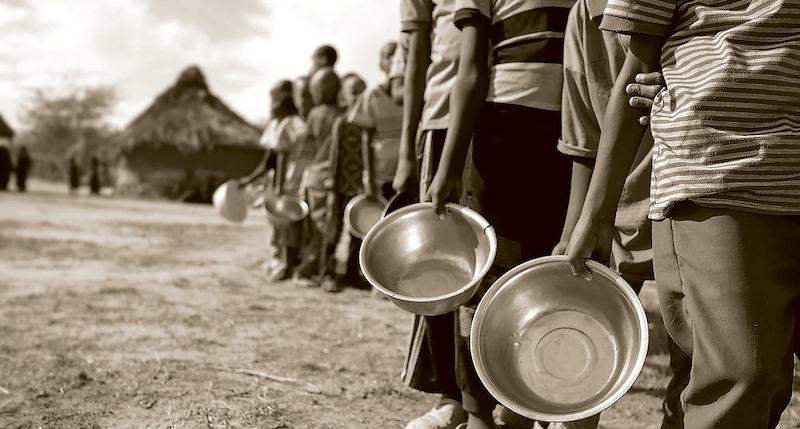
Drought and changing climate patterns can reduce agricultural production by limiting soil moisture, increasing crop stress, and reducing the amount of water available for irrigation. Regions that depend heavily on rainfall or depleted groundwater supplies can be particularly vulnerable to prolonged dry periods.
Agriculture accounts for approximately 72% of global freshwater withdrawals, making reliable water supplies fundamental to global food production. Improving irrigation efficiency, protecting groundwater, capturing rainfall, and selecting crops suited to local conditions can help farms adapt to increasing water scarcity.
A diet deficient in calories, protein, vitamins, or essential minerals can contribute to malnutrition. Children are particularly vulnerable because prolonged nutritional deficiencies can affect growth, immune function, learning, and long-term health. Food insecurity and malnutrition are closely connected, especially where households have limited access to diverse and nutritious foods.
Food loss and waste place additional pressure on the global food system. Approximately 13% of food is lost between harvest and retail, while another 19% of food available to consumers is wasted at retail, food-service, and household levels. Better harvesting, storage, refrigeration, transportation, processing, and consumer practices can reduce these losses.
Food autonomy is the right of people to control their food systems, encompassing production, distribution, and consumption, independent of external interference or exploitation. This autonomy is crucial for small-scale farmers who can be vulnerable to exploitation by larger entities or foreign investors.
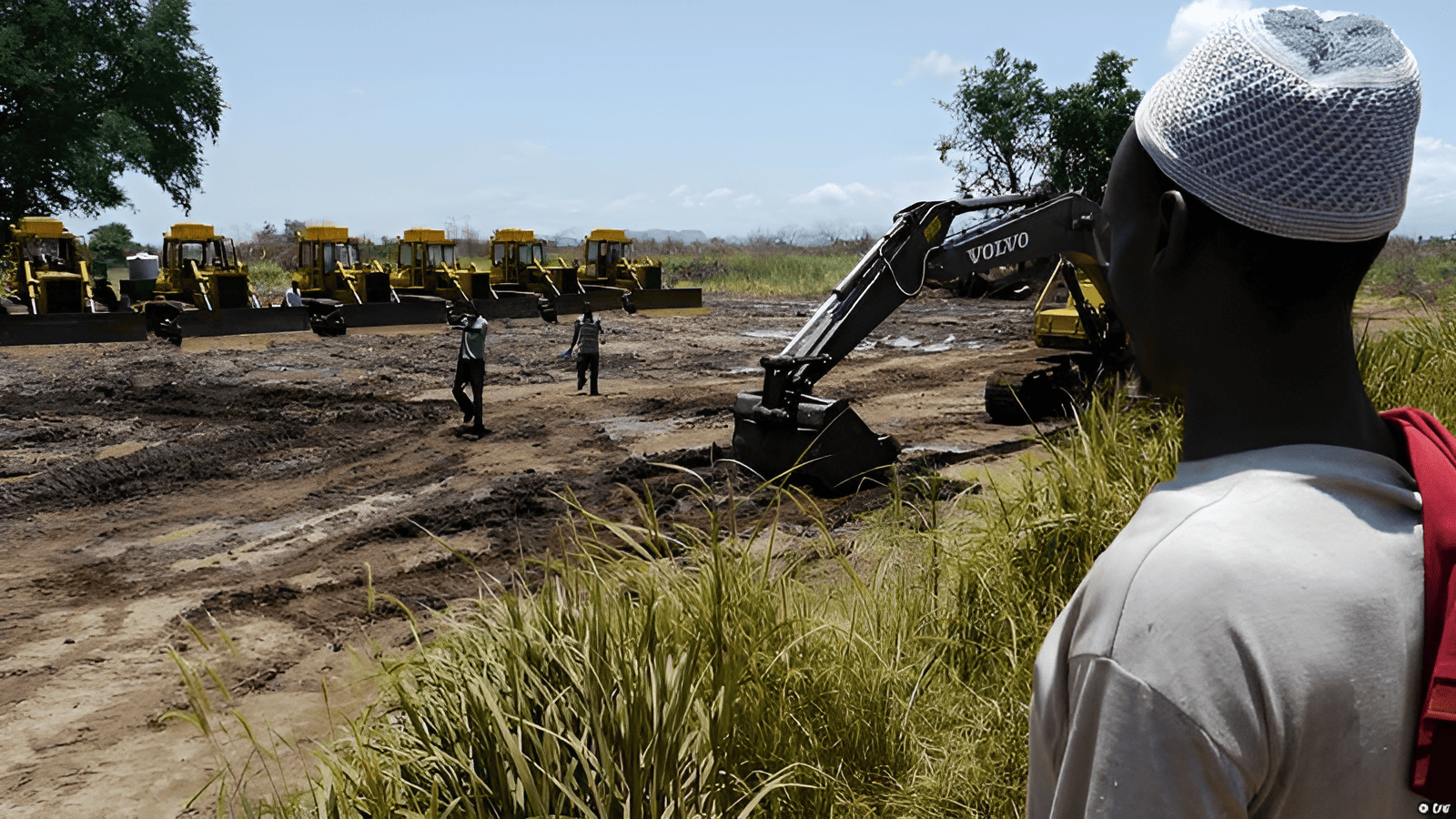
Land seizure or 'land grabbing' is another element contributing to the global food crisis. More land is needed for agriculture; however, securing land by manipulative or nefarious means is causing unintended consequences with local populations that are poised to disrupt production of food grown to be shipped elsewhere.
Land grabbing exacerbates this issue, displacing local communities and small-scale farmers, often in developing nations. Large-scale investors like foreign governments, corporations, or affluent individuals, seize vast land areas for commercial agriculture, leading to job loss, displacement, and heightened poverty for those relying on the land for survival.
Foreign governments and Investors often grow profit driven crops like biofuels, palm oil, or soybeans over local staple crops, causing food shortages and price hikes in the countries where the land is located. A “food revolution” is brewing in countries most affected by these often-illegal land grabs.
Land grabbing can also lead to detrimental environmental consequences such as deforestation, soil degradation, and water scarcity, which can intensify climate change impacts and undermine agricultural resilience.
Addressing the issue of land grabbing requires robust policies and regulations that protect local communities and small-scale farmers' rights, promote sustainable agricultural practices, and prioritize food production for local consumption. What is needed is collaboration among governments, international organizations, and civil society groups to monitor land acquisitions and to ensure that these foreign interests adhere to the wishes and needs of the locals.
Fractured supply chains pose another major hurdle in the global food crisis. Disruptions in the food supply chain hinder farm to market delivery, which usually leads to food shortages and higher prices.
Fertilizer prices can directly affect the cost of food production. Nitrogen fertilizer manufacturing is particularly energy-intensive and commonly relies on natural gas as both an energy source and production feedstock. Rising fertilizer, fuel, electricity, and transportation costs can reduce farm profitability and contribute to higher food prices throughout the supply chain.
Food insecurity affects both developing and developed economies, although its causes and severity differ widely. Conflict and displacement remain major drivers of acute hunger in several regions, while high food prices, poverty, climate shocks, and inadequate access to nutritious food affect households around the world. Even countries with large agricultural sectors can contain communities that struggle to afford a healthy diet.
To tackle the global food crisis, numerous solutions have been proposed. One such strategy involves boosting agricultural investment, particularly in developing countries. This can involve providing farmers with improved seeds, fertilizers, and superior transportation and storage infrastructure. A substantial investment in Crop Circle Farm crop propagation technologies could revolutionize global agriculture and mitigate many issues associated with the global food crisis.
Promoting sustainable agriculture, like agroforestry and conservation agriculture, can also help. These practices can boost soil health, enhance crop yields, and lessen agriculture's environmental impact. An innovative agroforestry method developed by Tree Plantation LLC in Florida combines climate change mitigation and food security.
Reducing food waste and loss can also contribute to addressing the global food crisis. Improved storage and transportation infrastructure, along with changes in consumer behavior, can help reduce food waste.
In order to address the underlying causes of food shortages, nutritional instability, and malnutrition, there must be concerted effort by governments to strive for a more sustainable and fair food system.
A global food crisis can develop when several pressures overlap, including drought, floods, extreme heat, conflict, displacement, economic instability, fertilizer and fuel price increases, water scarcity, trade disruption, and fragile food supply chains.
These pressures can reduce agricultural production, increase transportation and production costs, raise food prices, and make nutritious food harder for vulnerable households to access.
According to the 2026 State of Food Security and Nutrition in the World report, approximately 645 million people faced hunger in 2025, while about 2.1 billion people experienced moderate or severe food insecurity.
Food insecurity means people do not have reliable access to sufficient, safe, and nutritious food. Hunger represents a more severe and persistent lack of adequate dietary energy.
Low-income households, displaced populations, communities affected by conflict, import-dependent regions, and smallholder farmers without reliable irrigation, storage, or market access are often among the most vulnerable.
High food prices can also make nutritious diets unaffordable even in regions where food remains physically available.
Major hunger hotspots in 2026 include Sudan, South Sudan, Yemen, and Palestine, with exceptionally serious conditions also affecting parts of northeast Nigeria and Somalia.
Conditions in hunger hotspots can change quickly because of conflict, displacement, humanitarian access, food prices, climate shocks, harvest conditions, and the availability of international assistance.
Agriculture accounts for roughly 70% or more of global freshwater withdrawals, making food production highly dependent on reliable water supplies.
Drought, declining groundwater, changing rainfall patterns, and competition for water can reduce irrigation capacity, lower crop yields, and make food-producing regions more vulnerable to shortages and price increases.
Fertilizer, fuel, electricity, and transportation costs directly affect the cost of producing and distributing food. Nitrogen fertilizer production is particularly energy-intensive and commonly relies on natural gas.
Sharp increases in these input costs can reduce farm profitability, limit fertilizer applications, increase transportation expenses, and contribute to higher food prices for consumers.
Approximately 13% of food is lost between harvest and retail, while around 19% of food available to consumers is wasted at the retail, food-service, and household levels.
Reducing food loss and waste can improve food availability while also reducing pressure on farmland, water, fertilizer, energy, and transportation systems.
Immediate responses can include emergency food assistance, targeted cash support, school meal programs, restoring transportation and distribution routes, maintaining humanitarian access, and supporting local food markets.
Short-term programs are especially important for protecting vulnerable households during periods of severe food-price inflation, conflict, displacement, or crop failure.
Long-term food resilience can be strengthened through diversified regional production, efficient irrigation, healthier soils, improved storage and transportation, stronger local processing, crop insurance, reduced food waste, and more resilient supply chains.
Agricultural systems that use water and fertilizer more efficiently can also reduce dependence on increasingly expensive or unreliable inputs.
Cities and communities can support community gardens, urban agriculture, regional farms, food hubs, local processing, and food-storage infrastructure. Procurement relationships with nearby growers can also strengthen regional supply networks.
Local production cannot replace national or international food systems, but it can provide an important additional layer of food security during supply disruptions or periods of unusually high food prices.
Crop Circle Farms develops compact and scalable growing systems designed to increase local food production while reducing dependence on water, fertilizer, and vulnerable supply chains.
Crop Circle Gardens and larger Crop Circle Farm systems can support food production for homes, schools, communities, municipalities, and small farms. You can also explore our water-smart agricultural technologies.
A useful first step is to assess local food production, water availability, storage, transportation, processing capacity, available farmland, and populations most vulnerable to food disruption.
Practical early projects can include water-efficient irrigation, community growing sites, food hubs, local storage, and pilot farms that demonstrate measurable improvements in food production and resource efficiency.
Communities can also explore Circular Agriculture and review Farm Subsidies for additional approaches to building resilient local food systems.
Turn your 1 acre into a high-yield, profitable farm.
Crop Circle Farms specializes in designing and building fully engineered, low-impact farm systems that use 90% less water, 85% less fertilizer, and deliver two to three times the yield of traditional farming.
Whether you have a vacant lot, an empty field, a resort, school, island community, or small family farm, we’ll build it from the ground up for you. Our team handles everything from farm layout and installation to irrigation, root systems, training, and first planting.
Contact Us to explore a custom Crop Circle Farm design for your property.
Help us expand our mission to revolutionize agriculture globally. We are seeking partners to implement Crop Circle Farms to feed people in need. Together, we can build scalable food production systems that save water, reduce costs, and feed thousands of people. Contact Growing To Give