Subsidies
Programs, Eligibility, Payments & Small Farm Impact
Farm subsidies are government programs that help stabilize farm income, support food supply chains, and encourage land stewardship. In the U.S., support may come as crop insurance premium assistance, conservation cost-share, disaster relief, and other payments tied to production history, acreage, or risk management.
Subsidy programs typically have an application process (often through USDA service centers), eligibility requirements, and defined payment formulas. Some programs are triggered by market prices, some by weather disasters, and others reward conservation practices or verified outcomes.
Federal crop insurance helps farmers manage revenue and yield risk. Support often comes in the form of premium subsidies and disaster-related coverage.
Conservation programs can share costs for improvements like irrigation efficiency, soil health, habitat restoration, and erosion control. Some programs reward long-term stewardship and maintenance of practices.
Certain programs support commodity markets when prices fall below reference levels. Eligibility often depends on production history and program enrollment.
Disaster programs may provide relief after major weather events. Requirements vary, and documentation is usually required.
Some support flows through grants and technical assistance, including programs that target specialty crops, food systems, training, and beginning farmers.
| Program type | Federal / state | Who it tends to help | Support type |
|---|---|---|---|
| Crop insurance | Federal | Many farm types | Premium subsidy + risk coverage |
| Conservation cost-share | Federal | Producers adopting practices | Cost-share + technical support |
| Stewardship payments | Federal | Ongoing conservation managers | Annual payments for outcomes |
| Specialty crop grants | State-administered | Specialty crop growers | Grants + market development |
| Beginning farmer support | Federal / state | New farmers and ranchers | Training, loans, and grants |
Program names and rules vary by year; check USDA program pages for current requirements.
Eligibility depends on the program. Common requirements include documented farm operation status, land control (ownership or lease), conservation compliance, and accurate production records. Some programs are designed for specific crop types, regions, or practice adoption.
Payment methods vary. Some are based on acreage and historical yields, some are triggered by prices or revenue loss, and others reimburse a percentage of approved conservation costs. Most programs have payment limits and documentation rules.
High-efficiency growing systems can reduce input dependency. Explore Crop Circle Gardens and Circular Agriculture for water-smart production models.
Farm subsidies in the United States serve to bolster farmers and ensure food stability, however, their impact on small farms is often disproportionate. These farms find it challenging to compete with large-scale industrialized farming ventures and to gain access to the vital subsidies they need to flourish.
The effect of farm subsidies on small farms can differ considerably between states.
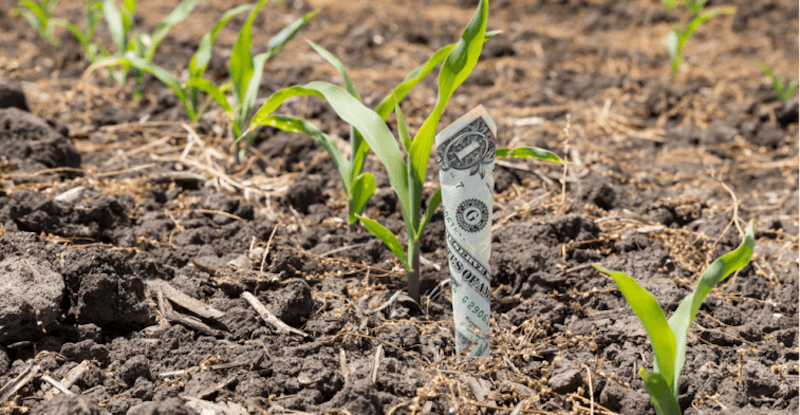
Let's look at a summary of the subsidies offered by select states as well as the federal government.

In addition to federal programs, many states operate their own agricultural grant, loan, conservation, and business-development programs. These programs can be particularly useful for small farms, specialty-crop growers, beginning farmers, food businesses, and producers investing in equipment, infrastructure, water efficiency, or market expansion.
State agricultural assistance should not be viewed as a single uniform subsidy system. Programs vary significantly by state, crop, farm size, project type, and available funding. Traditional commodity programs may be a better fit for farms producing covered commodities, while small and specialty-crop operations often rely more heavily on conservation incentives, grants, loans, technical assistance, crop insurance, and state or regional development programs.
Because funding levels, eligibility requirements, and application periods change frequently, farmers should check with their state department of agriculture, local USDA Service Center, Cooperative Extension office, and relevant conservation agencies before beginning an application.
Agricultural support varies considerably by program and farm type. Commodity-oriented programs may be more relevant to farms with eligible covered commodities and base acres, while small and specialty-crop farms often rely more heavily on conservation incentives, crop insurance, agricultural loans, grants, technical assistance, and state or regional programs.
Farmers should evaluate programs individually rather than assuming that one type of assistance fits every operation. Farm size, crops produced, location, land history, conservation practices, and program eligibility can all affect which forms of support are available.
The application process for a farm subsidy can change based on the country and specific subsidy program in question. Here are some general steps to follow:
Farm subsidies are government programs that provide financial assistance, risk protection, conservation incentives, technical support, or other benefits to agricultural producers. In the United States, assistance can include crop insurance premium support, commodity programs, disaster assistance, conservation payments, grants, loans, and state or regional agricultural-development programs.
Major categories include crop insurance and risk-management support, commodity and income-support programs, disaster assistance, conservation incentives, agricultural loans, and programs supporting specialty crops, beginning farmers, rural businesses, and local food systems.
Not every program provides a direct payment to a farmer. Some reduce insurance premiums, reimburse part of an approved conservation project, provide financing, or fund organizations and public projects that benefit a broader agricultural sector.
Agriculture Risk Coverage (ARC) and Price Loss Coverage (PLC) are USDA Farm Service Agency programs that provide income support for eligible farms with covered commodities and base acres. ARC generally provides protection when eligible crop revenue falls below specified benchmarks, while PLC can provide payments when the effective price of a covered commodity falls below its reference price.
Eligibility and payments are tied to program rules, covered commodities, base acres, elections, and enrollment rather than simply to the total acreage currently planted on a farm.
Eligibility varies considerably by program. Requirements can include operating an eligible farm or ranch, controlling agricultural land through ownership or lease, producing an eligible commodity, maintaining required farm and production records, meeting conservation requirements, documenting losses, or implementing approved conservation practices.
Income limits, payment limits, acreage history, participant status, and other requirements may also apply. Farmers should verify eligibility with the agency administering the specific program before applying.
There is no single formula for farm subsidy payments. Depending on the program, payments may be based on base acres, historical production, market prices, revenue changes, insured losses, disaster losses, or approved conservation costs.
Conservation programs may pay an established amount toward an approved practice, while insurance programs subsidize part of the producer's premium. Commodity programs use their own formulas and eligibility rules. Payment limitations and documentation requirements can also apply.
Yes. Small farms can qualify for many agricultural support programs, but the programs that fit them best may differ from those commonly used by large commodity operations. A small diversified farm may find opportunities through conservation programs, crop insurance, disaster assistance, agricultural loans, beginning-farmer programs, specialty-crop initiatives, and state or regional grants.
Program eligibility should be evaluated individually because farm size alone does not determine whether a producer qualifies.
Specialty crops include fruits, vegetables, tree nuts, dried fruits, horticultural crops, and nursery crops. Specialty-crop growers may benefit from crop insurance, conservation programs, research and marketing initiatives, state agricultural grants, loans, technical assistance, and projects funded through programs such as the Specialty Crop Block Grant Program.
Specialty Crop Block Grant funds are awarded by USDA to state departments of agriculture. Individual growers and other organizations generally pursue project opportunities through their appropriate state department of agriculture rather than applying directly to USDA for these block-grant funds.
USDA conservation programs can help farmers improve irrigation efficiency, soil health, water quality, wildlife habitat, erosion control, nutrient management, and other natural-resource priorities. Programs such as the Environmental Quality Incentives Program (EQIP) provide financial and technical assistance for eligible conservation practices.
Available practices, payment rates, ranking criteria, and funding levels vary by state, location, participant eligibility, and program year.
They can influence farm-management decisions, although the effect varies by program. Commodity and income-support programs may reduce financial risk associated with particular covered crops, while conservation incentives may encourage farmers to adopt practices that improve soil health, water efficiency, habitat, or resilience.
Market demand, climate, land capability, production costs, crop rotation, and available infrastructure usually remain major factors in determining what a farmer ultimately grows.
Start by identifying programs that fit your farm, crop, location, and proposed project. For many federal programs, a local USDA Service Center is a useful starting point. State departments of agriculture and Cooperative Extension offices can also help identify state and regional opportunities.
Before applying, confirm eligibility, review current deadlines, assemble required records, and make sure your farm information is accurate. Applications may require acreage records, leases or ownership documents, production history, financial information, maps, conservation plans, or documentation of losses.
Good recordkeeping can make applications and compliance much easier. Useful records can include acreage and field maps, leases, ownership documents, crop and livestock records, yields, sales records, receipts, insurance information, documented losses, conservation-practice records, photographs, soil tests, and other supporting information required by a particular program.
Because requirements vary, producers should follow the recordkeeping instructions provided by the agency administering each program.
Turn your 1 acre into a high-yield, profitable farm.
Crop Circle Farms specializes in designing and building fully engineered, low-impact farm systems that use 90% less water, 85% less fertilizer, and deliver two to three times the yield of traditional farming.
Whether you have a vacant lot, an empty field, a resort, school, island community, or small family farm, we’ll build it from the ground up for you. Our team handles everything from farm layout and installation to irrigation, root systems, training, and first planting.
Contact Us to explore a custom Crop Circle Farm design for your property.
Help us expand our mission to revolutionize agriculture globally. We are seeking partners to implement Crop Circle Farms to feed people in need. Together, we can build scalable food production systems that save water, reduce costs, and feed thousands of people. Contact Growing To Give