Circular Agriculture Benefits
Why Circular Agriculture Matters?
Circular agriculture is a regenerative farming approach that designs agricultural systems to eliminate waste, reuse nutrients, conserve water, and continuously restore soil health. Instead of operating in a linear model — where inputs are extracted, used, and discarded — circular agriculture mimics natural ecosystems, where outputs from one process become inputs for another.
As global food systems face mounting pressure from soil degradation, water scarcity, fertilizer costs, and climate volatility, circular agriculture offers measurable economic and environmental advantages.
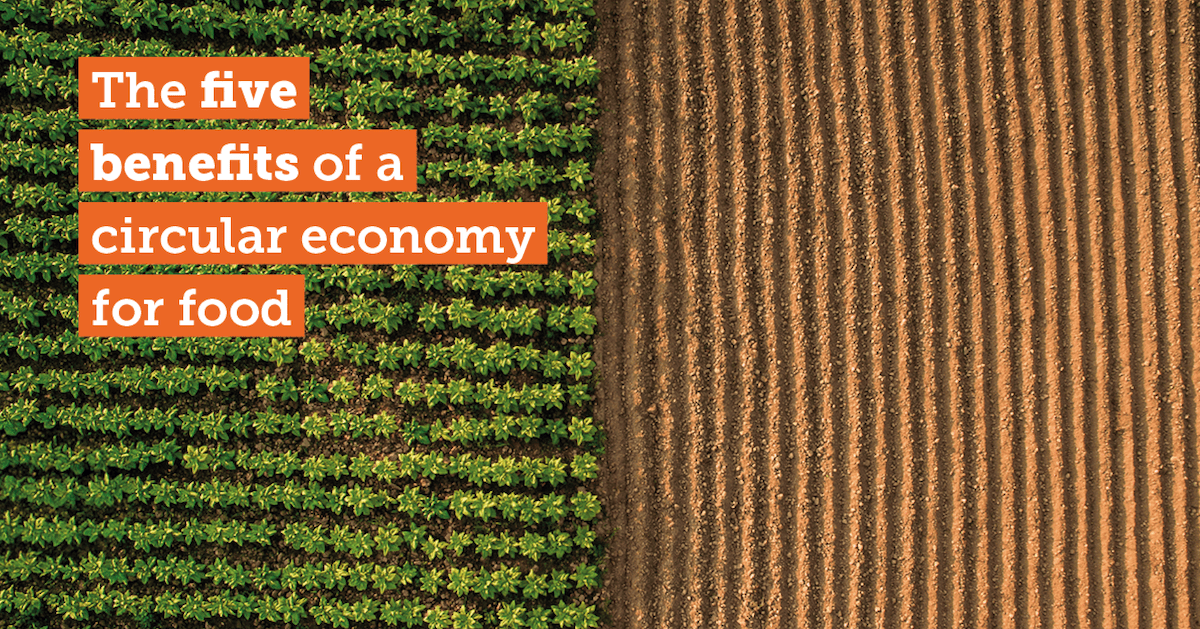
Healthy soil is the foundation of agricultural productivity. Circular systems build soil organic matter through compost, manure management, crop residues, and cover crops. Increased organic matter improves:
Over time, farms become more fertile rather than depleted.
Fertilizers, water, feed, and energy are major expenses for farmers. Circular systems reduce dependence on purchased inputs by:
This improves long-term profitability and cushions farms against volatile global commodity prices.
Circular farms are more resilient to drought, flooding, and extreme weather because:
Resilience is not just environmental — it is economic stability.
Conventional agriculture often results in nutrient runoff that pollutes waterways. Circular agriculture minimizes this through:
This reduces nitrogen and phosphorus runoff, helping protect aquifers, rivers, and coastal ecosystems.
While yields may not spike immediately, circular systems often produce more stable and sustainable yields over the long term because soil fertility improves year after year rather than declining.
| Factor | Linear Agriculture | Circular Agriculture |
|---|---|---|
| Nutrient Flow | One-way (input → crop → waste) | Closed-loop (waste → resource) |
| Soil Organic Matter | Declines over time | Increases over time |
| Fertilizer Dependency | High | Reduced |
| Water Efficiency | Moderate to low | High (reuse + retention) |
| Waste Production | Significant | Minimal |
| Carbon Impact | Net emitter | Carbon-sequestering potential |
| Resilience to Drought | Lower | Higher |
| Long-Term Profitability | More volatile | More stable |
Circular agriculture aligns environmental stewardship with economic performance. Benefits include:
As markets increasingly reward sustainability, circular farms gain competitive advantages.
Circular agriculture contributes to:
It shifts agriculture from being part of environmental degradation to becoming part of ecological restoration.
Circular agriculture is not simply a technique — it is a systems redesign. It reconnects soil, water, crops, livestock, and people into a regenerative loop.
Rather than asking, “How much can we extract this season?” circular agriculture asks, “How can this land be healthier next year than it is today?”
In a world facing climate instability and resource constraints, circular agriculture provides a pathway toward food security, economic resilience, and ecological renewal — all at once.