AI In Agriculture
Smart Farms of the Future
Artificial intelligence (AI) is rapidly reshaping agriculture, moving farming from experience-based decision making toward intelligent, data-driven production systems. As climate uncertainty grows, labor shortages increase, and food demand rises worldwide, AI is becoming one of the most powerful tools available to farmers, researchers, and food system planners.
AI in agriculture refers to the use of machine learning, computer vision, predictive analytics, robotics, and automated decision systems to improve how crops are grown, monitored, harvested, and distributed. Instead of reacting to problems after they occur, AI systems analyze massive datasets to anticipate outcomes and recommend optimal actions before risks impact production.
In many ways, agriculture is entering a new era—one where farms operate less like traditional fields and more like living, adaptive systems continuously learning from data.
Agriculture has experienced several technological revolutions. Mechanization increased farm scale during the industrial era. Chemical fertilizers and improved genetics boosted productivity in the Green Revolution. Precision agriculture later introduced GPS-guided equipment and variable-rate inputs.
Artificial intelligence represents the next step: autonomous agricultural intelligence.
Unlike traditional precision tools that follow preset instructions, AI systems learn patterns over time. They analyze soil moisture trends, plant growth behavior, disease signals, satellite imagery, weather forecasts, and historical yield outcomes simultaneously. The result is a continuously improving farming system capable of optimizing decisions daily.
AI allows farmers to answer questions such as:
These insights dramatically reduce uncertainty while improving productivity and resource efficiency.
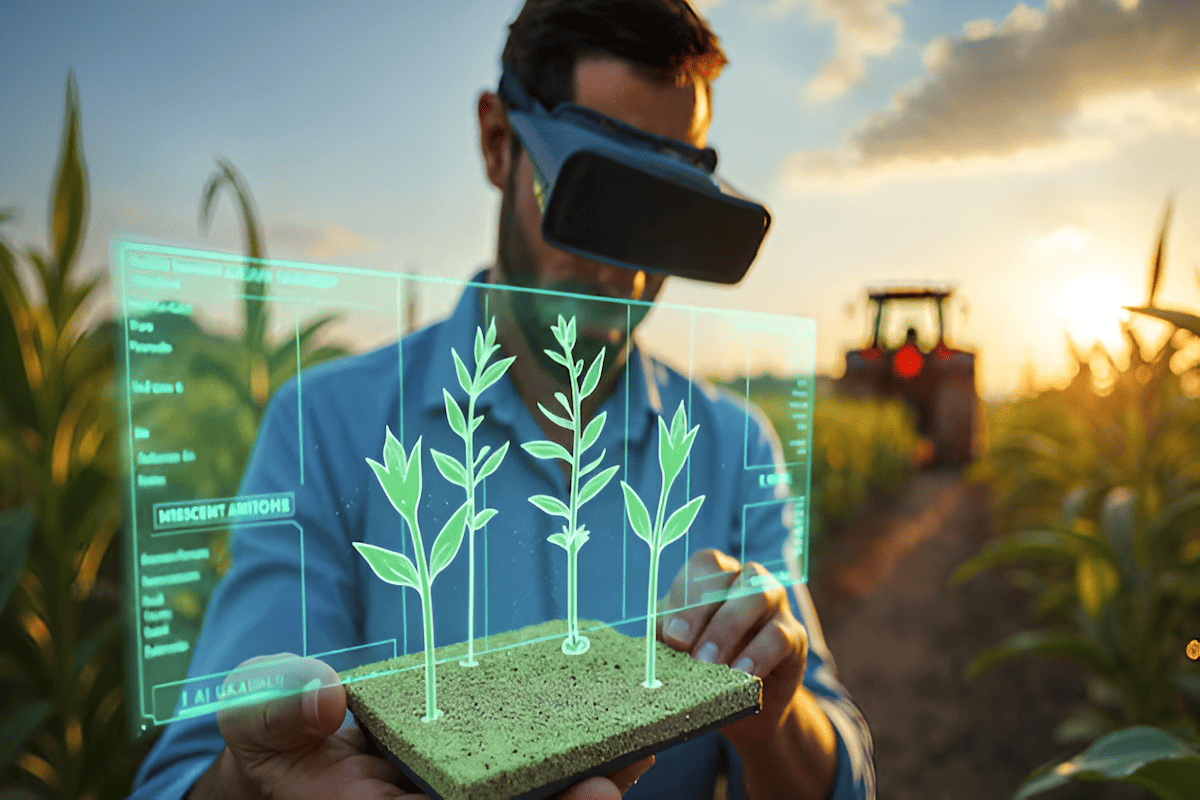
One of the most impactful applications of AI is predictive yield modeling—the ability to forecast agricultural output before harvest begins. Modern AI systems integrate satellite imagery, sensor networks, and historical farm performance data to simulate expected crop production.
AI models continuously refine predictions as conditions change throughout the growing season. If rainfall declines or temperatures rise, algorithms automatically adjust yield forecasts and recommend corrective actions such as irrigation adjustments or nutrient supplementation.
Systems similar to those used in predictive yield modeling platforms analyze factors including:
This approach allows growers to shift from reactive farming toward forecast-driven agriculture, where management decisions are guided by projected outcomes rather than historical averages. Predictive modeling platforms increasingly function as digital command centers for modern farms, helping producers manage both risk and profitability.
AI-powered computer vision is transforming how farms monitor crop health. Cameras mounted on drones, tractors, or autonomous robots scan fields daily, identifying subtle plant stress signals invisible to the human eye.
Machine learning algorithms analyze leaf color variation, canopy density, growth rate changes, and disease patterns in real time. Instead of spraying entire fields, farmers can apply treatments precisely where needed.
Real-world applications already include:
This targeted approach reduces chemical use, lowers costs, and minimizes environmental impact while improving yield consistency.
Labor shortages remain one of agriculture’s biggest global challenges. AI-driven robotics are increasingly filling this gap.
Autonomous tractors guided by AI navigation systems can plant, cultivate, and harvest crops with minimal human supervision. Robotic harvesters use computer vision to identify ripe fruits and pick them gently without damaging plants.
Examples include:
These systems operate continuously, improving efficiency while reducing operational risk during peak harvest periods.
Climate variability has become one of the greatest threats to global agriculture. AI is increasingly used to interpret climate data and forecast agricultural risk.
By combining historical weather patterns with real-time atmospheric data, AI models predict drought probability, heat stress events, frost risk, and flooding exposure weeks or months ahead.
Farmers can then adapt planting schedules, crop varieties, irrigation strategies, or protective infrastructure accordingly.
AI climate forecasting also supports regional food planning by helping governments estimate future production levels under changing environmental conditions. This capability is becoming essential for drought-prone regions and small island nations facing climate instability.
Artificial intelligence is also influencing how farms are physically designed. Instead of assuming traditional row layouts are optimal, AI simulations evaluate planting geometry, airflow dynamics, sunlight exposure, and water distribution efficiency.
Alternative systems such as circular farms, spiral agriculture layouts, and vertically integrated growing environments benefit particularly from AI analysis because their performance depends on complex spatial interactions.
AI modeling can simulate thousands of layout variations before construction begins, identifying configurations that maximize biological productivity while minimizing inputs like water and fertilizer.
This represents a major shift in agriculture—from managing fields to engineering ecosystems.
Across farming systems worldwide, AI adoption delivers several measurable advantages:
Perhaps most importantly, AI allows agriculture to scale productivity without expanding farmland—an essential requirement as global populations continue to grow.
Despite rapid advancement, AI adoption faces several challenges:
However, costs are declining rapidly as cloud computing, satellite access, and sensor technologies become more affordable.
The future farm will likely function as a connected intelligence network. Sensors embedded in soil, drones scanning crops, satellites monitoring climate patterns, and AI platforms analyzing production data will operate together in real time.
Farmers will increasingly rely on dashboards forecasting yield, water demand, labor needs, and market timing months in advance. Autonomous systems may handle routine operations while growers focus on strategic management.
Ultimately, AI in agriculture represents more than automation—it represents a transition toward adaptive, learning food systems capable of producing more food using fewer resources while protecting ecosystems.
As agriculture confronts climate pressure and population growth, artificial intelligence may become the defining technology that enables humanity to feed the future sustainably.
Artificial intelligence is moving agriculture from experience-based management toward measurable performance optimization. Field deployments and pilot programs worldwide consistently demonstrate significant efficiency gains.
*Performance ranges represent results reported across precision agriculture deployments, AI irrigation systems, autonomous field trials, and predictive farm analytics platforms. Actual outcomes vary by climate, crop type, and management practices.